Are Tokyo Winter Illuminations Free?
Some Tokyo winter illuminations cost nothing to view from the street and some sit behind ticket booths. Here is the free-versus-paid split, with dates, closing days and free walks that pass the lit districts.
In Short
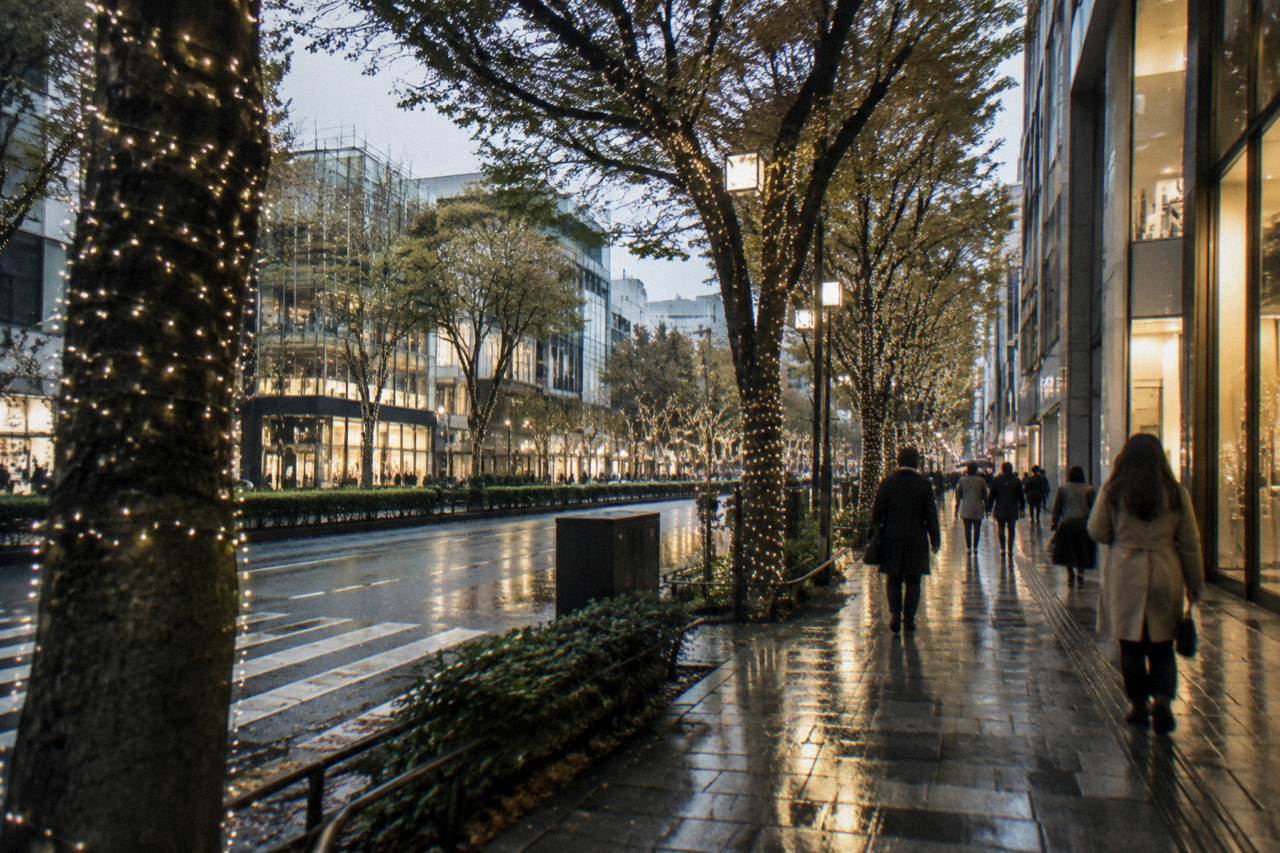
Not all of them, and the free ones are free in a specific way. The Marunouchi Illumination along Naka-dori runs 12 November to 25 December 2026 and is free to view from the street. Paid winter experiences sit nearby: Rikugien's night viewing from 25 November to 6 December 2026 costs JPY 300 garden entry, Shinjuku Gyoen charges JPY 500, and every observation deck except the free Tokyo Metropolitan Government observatories is ticketed.
This question sits inside the Free Vs Paid Tokyo Sights guide.
Quick Facts
| Question | Answer |
|---|---|
| Is a winter illumination free anywhere in Tokyo? | Yes. The Marunouchi Illumination along Naka-dori is free to view from the street, 12 November to 25 December 2026 |
| What does free mean here? | Standing on the public street and looking at the lights; no ticket, no entry gate |
| What winter light experiences are paid? | Rikugien night viewing (garden entry JPY 300, 25 November to 6 December 2026), observation decks, teamLab (JPY 3,800) |
| Are other big illuminations free? | Not confirmed as free in any official record; treat each one separately before travelling to it |
| Nearest free walk platform | GuruWalk; walks are free, pay what you want |
| Free viewing spot with no reservation | Tokyo Metropolitan Government observatories at 202 metres, free with no reservation |
Are Tokyo Winter Illuminations Free?
Some are and some are not, and the difference is the ground you stand on. An illumination strung above a public street, such as the Marunouchi Illumination along Naka-dori, costs nothing to view because the street itself is public. An illumination attached to a ticketed garden, deck or museum inherits that ticket. The Marunouchi Illumination along Naka-dori is free to view from the street this winter, and that is where the honest answer starts and works outward.
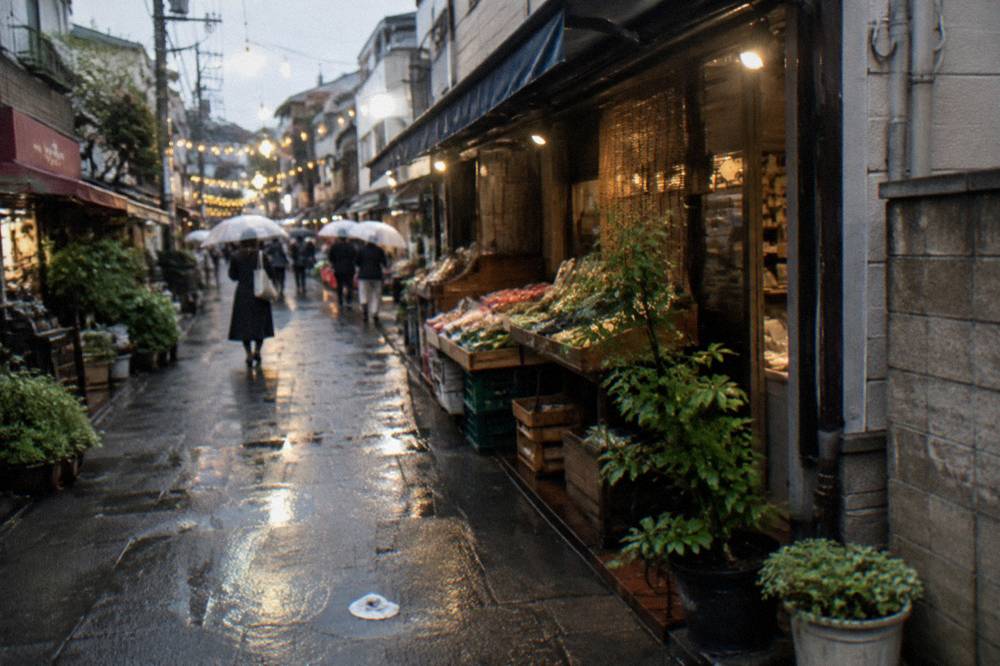
The one confirmed free display is the Marunouchi Illumination, which the Marunouchi area's official site lists as running 12 November to 25 December 2026 along Naka-dori, the avenue that serves the business district between Tokyo Station and the Imperial Palace. You can read the dates and the street on the official Marunouchi page. Viewing from the street is free in the plain sense: there is no gate, no ticket and no time slot. What is paid along Naka-dori is everything else, the cafes, the shops and the restaurants that line the avenue, and those are normal purchases rather than illumination fees.
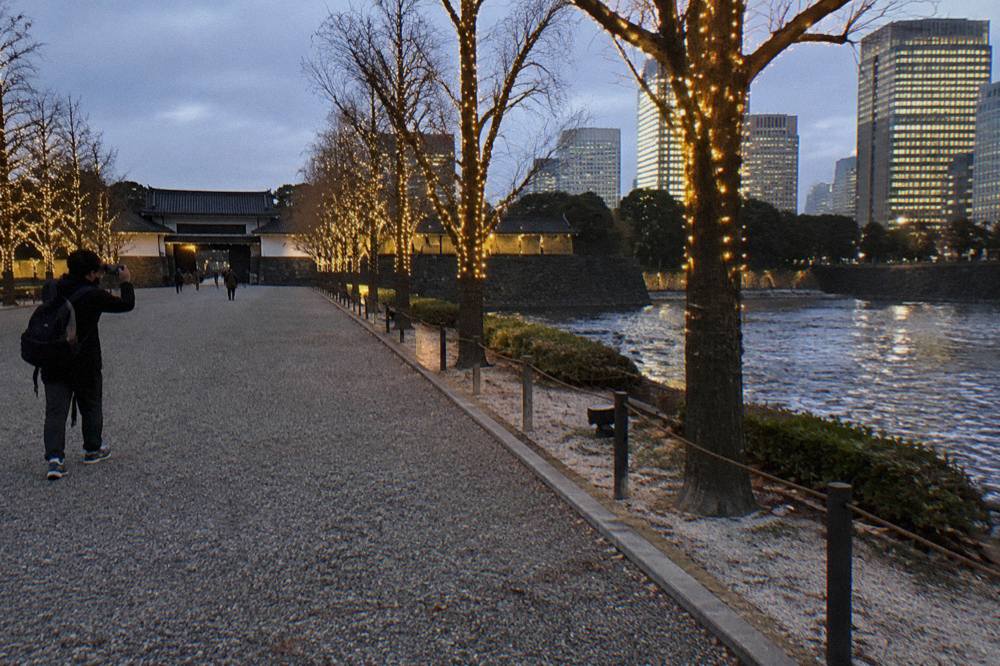
Beyond Marunouchi, caution is the honest position. Winter light displays in Tokyo are attached to office towers, shopping malls and waterfront developments, and their terms differ: the Marunouchi Illumination along Naka-dori, 12 November to 25 December 2026, is free to view from the street, while Rikugien's night viewing, 25 November to 6 December 2026, is paid. If a display is not in an official source with dates, treat it as unconfirmed rather than assuming the free label.
The second honest caution is that "illumination" sometimes gets used loosely for paid winter attractions. A light show inside a ticketed garden, a projection on a museum wall or a lit-up observation deck are all winter light experiences, and none of them is free just because lights are involved. The paid column of this season's record includes Rikugien's night viewing, which runs 25 November to 6 December 2026, 18:00 to 20:30, on top of the garden's JPY 300 entry, per the Tokyo Metropolitan Park Association site. That is a beautiful, paid winter light experience, and calling it free would simply be wrong.
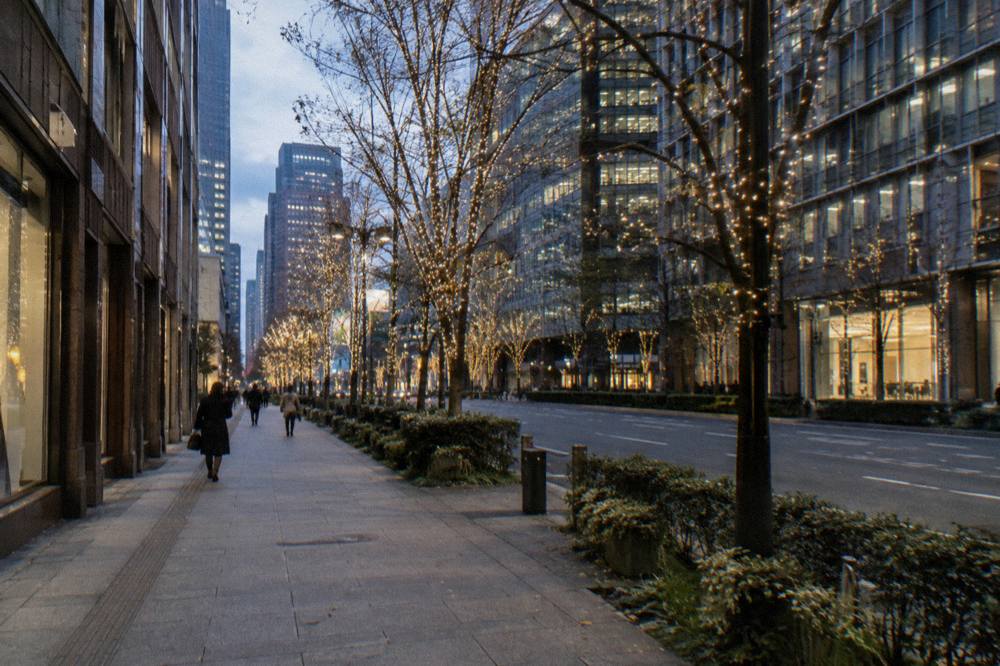
If your winter plan is built around lights that cost nothing, the structure that works is this: view the one confirmed free street illumination in Marunouchi, use the free Tokyo Metropolitan Government observatories for a lit-up skyline view, and put the paid light experiences in a separate budget. Both Metropolitan Government observatories at 202 metres are free with no reservation, and each has its own rotating closed weekday rather than closing as a pair. That pairing gives you a free street-level light experience and a free elevated night view in one district, with the paid options clearly marked.
What Does The Free Part Include?
The free part is the view from public ground: the light canopy above Naka-dori, the street itself, and the act of standing there for as long as you like between 12 November and 25 December 2026. It also includes the free elevated night views from the Tokyo Metropolitan Government observatories, which need no reservation. It does not include food, drinks, shops, or any light experience behind a ticket gate.
Naka-dori is a public avenue, so the free part is exactly what a public street gives anyone: the ability to walk it, stop on it and look up at it. The Marunouchi Illumination turns the avenue's trees into a lit corridor for the run of the season, and the street stays a street. There is no separate viewing area with a charge, no fenced zone and no premium vantage point sold to the public. What surrounds the lights is a commercial district, and the money you spend there is money you choose to spend on coffee or shopping, not on the illumination itself.
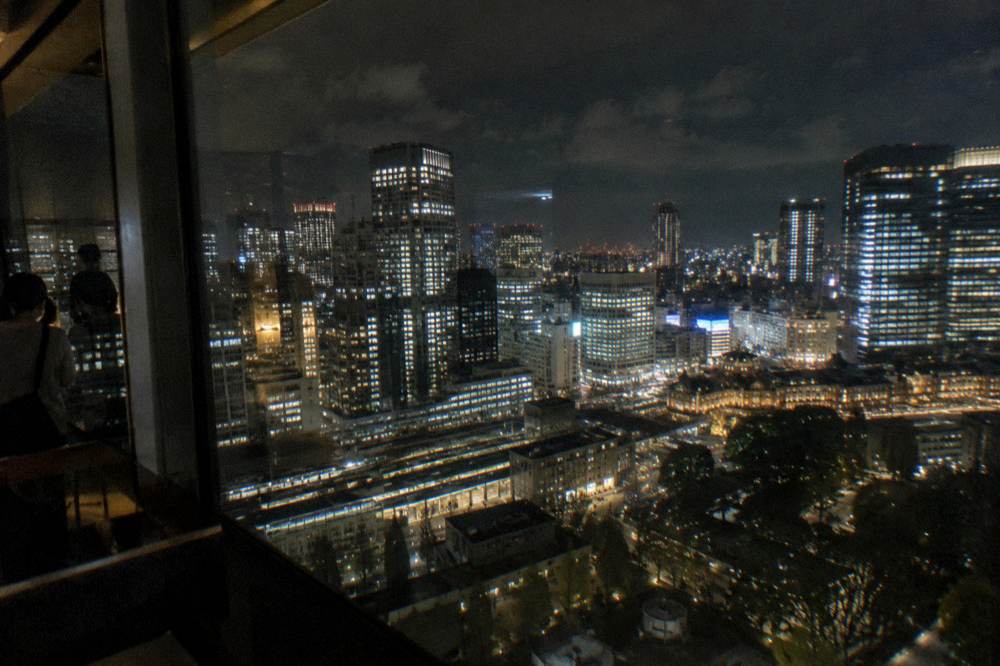
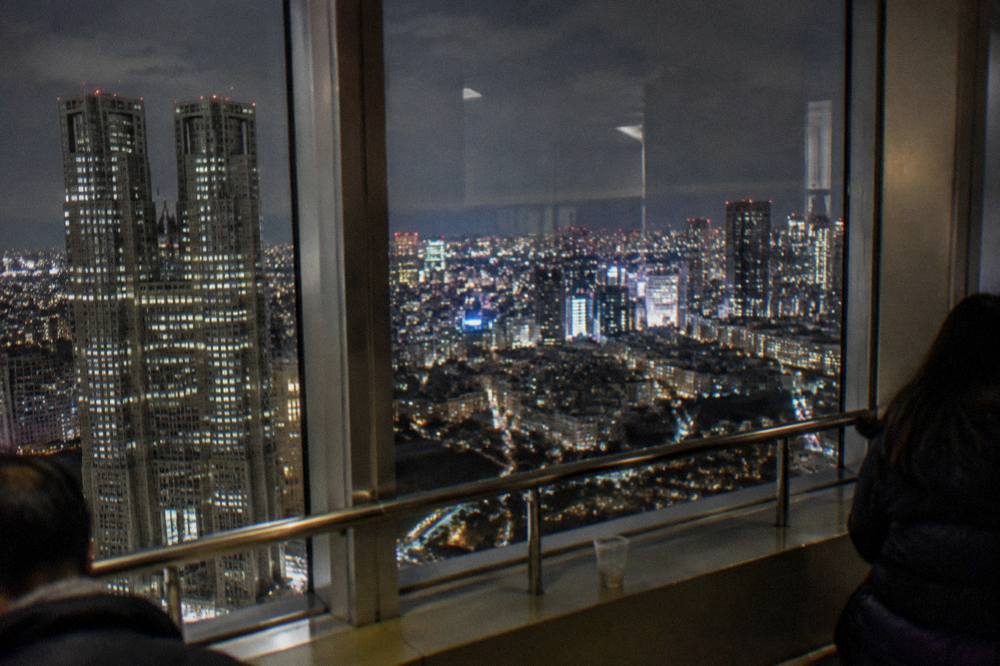
The free elevated view deserves its own paragraph because it pairs so naturally with the season. The Tokyo Metropolitan Government building's observatories at 202 metres are free with no reservation, and at night they give a lit-city panorama that no street-level illumination can match. The South Observatory is closed the 1st and 3rd Tuesday of the month, the North Observatory is closed the 2nd and 4th Monday, and both are closed 29 to 31 December and 2 to 3 January. North entry runs until 17:00. Those closures are per observatory, so the building does not go dark as a pair, and planning around them is simple: check which weekday closure applies to your date and use the other tower.
There is also a free winter light-adjacent tradition worth naming, though it is a festival rather than an illumination. The Tori-no-ichi market at Otori Shrine has its second day on 19 November 2026, entry is not ticketed, and the lucky rakes and food stalls are what cost money. It is a lit, lively, night-market street scene in the old Edo style, and the free part is the same as Marunouchi's: being there on public ground. The paid part is whatever you buy.
A useful habit for the whole season is to ask, of any light display, whose ground is it on. A public street or plaza is free in the plain sense: no ticket, no reservation, nothing to pay to stand and look. Private plaza or building lobby: access is the owner's call and should be checked on the operator's own page before you travel to it. Ticketed garden or deck: paid, full stop. Every mistake in this article comes from skipping that one question.
| Place | Free Or Ticketed | What Is Free | What You Still Pay For |
|---|---|---|---|
| Marunouchi Illumination | Free | Street lights along Marunouchi Naka-dori from 12 November to 25 December 2026 (marunouchi.com). | Viewing from the street has no ticket on the page read; food and shop events are paid. |
What Do You Still Have To Pay For?
The paid winter column is long: Rikugien's night viewing at JPY 300 entry, Shinjuku Gyoen at JPY 500, Tokyo Tower's Main Deck from JPY 1,500, Skytree decks from JPY 3,000, teamLab Planets at JPY 3,800 and teamLab Borderless at JPY 3,400. Any illumination attached to one of these inherits the ticket. Deck prices move with demand, so treat every deck figure as a floor, not a promise.
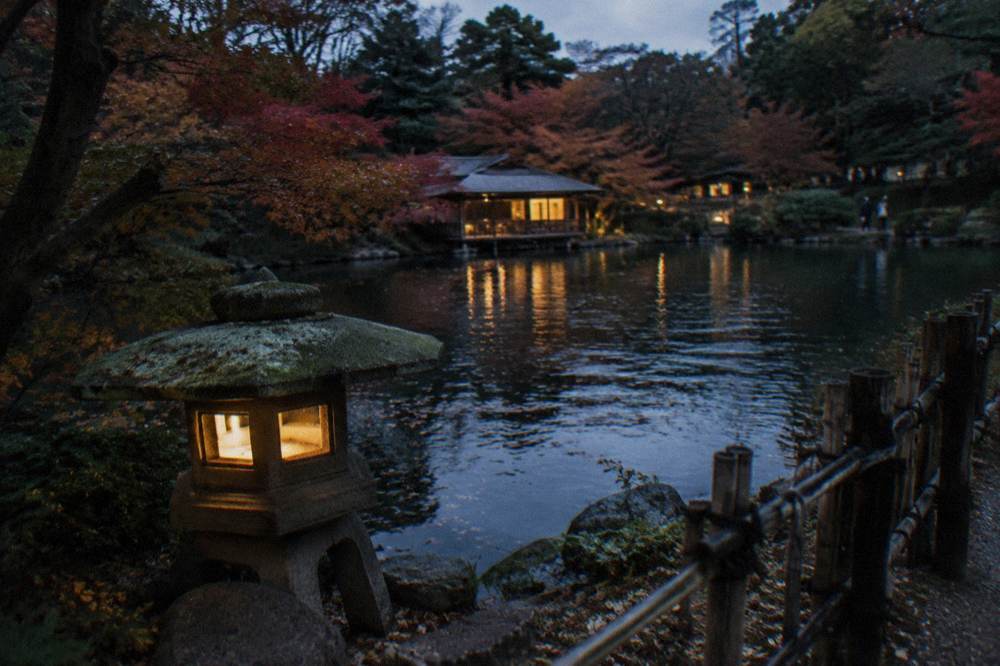
Rikugien's night viewing, 25 November to 6 December 2026, requires the garden's JPY 300 entry. Hama-rikyu and Koishikawa Korakuen also charge JPY 300 each, and the three metropolitan gardens share a closure from 29 December to 1 January. Shinjuku Gyoen is the trap in this family: it is a national garden, not a free park, charging JPY 500 for adults, JPY 250 for students and visitors over 65, and nothing for children 15 and under, and it is closed Mondays except during the special autumn period of 1 to 15 November, per the official Shinjuku Gyoen page.
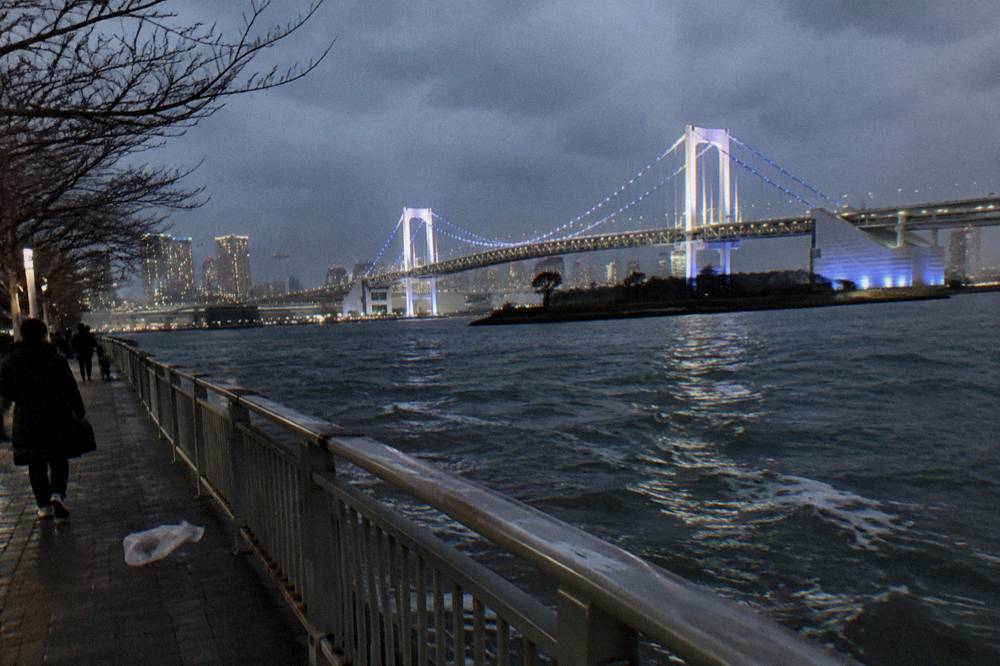
Then the towers, which are the classic paid winter night view. Tokyo Tower's Main Deck starts from JPY 1,500 for adults, and Tokyo Skytree's observation decks start from JPY 3,000 for adults, both with dynamic pricing that shifts the number up in peak windows. What is free at each is the base: you can walk the tower base, Foot Town and the Solamachi complex at Skytree without a ticket, and the lights on the tower exteriors are part of the free city skyline. Tokyo Tower's official page showed a 65th-anniversary retrospective light-up on 10 November 2026, sunset to 22:00, which is the kind of exterior display the street sees for nothing even though the decks above it are paid.
The immersive museums are the third paid group. teamLab Planets is JPY 3,800 for adults, and teamLab Borderless is ticketed as well. Both are dynamically priced, and neither has a free-entry window. They are light experiences, which is exactly why they get folded into "Tokyo lights" searches, and they belong firmly in the paid budget. The Ghibli Museum is another advance-reservation-only, ticketed winter favourite that no one should arrive at expecting a free hour.
| Winter light experience | Free or paid | The number |
|---|---|---|
| Marunouchi Illumination, Naka-dori | Free from the street | 12 Nov to 25 Dec 2026 |
| TMG observatories at 202 metres | Free, no reservation | Rotating per-tower closed weekdays |
| Rikugien night viewing | Paid | JPY 300 entry, 25 Nov to 6 Dec 2026 |
| Shinjuku Gyoen | Paid | JPY 500 adult, closed Mondays outside 1 to 15 Nov |
| Tokyo Tower Main Deck | Paid | From JPY 1,500 adult |
| Skytree observation decks | Paid | From JPY 3,000 adult |
| teamLab Planets | Paid | JPY 3,800 adult |
| Tori-no-ichi, Otori Shrine | Entry not ticketed | Rakes and food are paid |
Shibuya's version of the trap deserves a line of its own. Shibuya Crossing is free, always, and at night it is one of the great free light shows in the city, a full intersection of signage and motion. Shibuya Sky above it is a ticketed deck, and the two things share nothing but an address: the crossing is free, the deck charges admission. The crossing costs nothing; the deck costs whatever its ticket page says on the day.
When Is The Free Option Available?
The Marunouchi Illumination's free street viewing runs 12 November to 25 December 2026, and beyond those dates the avenue is simply an avenue. Rikugien's paid night viewing is a fixed window, 25 November to 6 December 2026, 18:00 to 20:30. Tori-no-ichi's second day is 19 November 2026.
Dates are the whole game in this season, so take them one at a time. The Marunouchi Illumination is a bounded event: 12 November to 25 December 2026. Before 12 November there are no lights to see on Naka-dori, and after 25 December the display comes down regardless of how the New Year holiday is running. If your trip sits in January, this particular free illumination is not part of it, and the free winter night view that remains confirmed is the observatory one.
The observatory closures are worth writing out plainly because they read confusingly in summary. The South Observatory closes on the 1st and 3rd Tuesday of each month. The North Observatory closes on the 2nd and 4th Monday. Both close 29 to 31 December and 2 to 3 January, which removes the observatories from the New Year window entirely. North entry runs until 17:00, so a winter visit there is an afternoon-to-dusk plan rather than a late-evening one. None of this is a pair closure: on almost any given day, one of the two towers is open and free.
The paid windows interlock with the free ones. Rikugien's night viewing runs 25 November to 6 December 2026, 18:00 to 20:30, which overlaps the back half of the Marunouchi run, so a single early-December evening could in principle pair the paid garden lights with the free street lights. Shinjuku Gyoen's special autumn period, 1 to 15 November, open all seven days, sits at the front of the season before its Monday closures resume. The metropolitan gardens, Rikugien included, close 29 December to 1 January. Building a winter plan around these fixed windows, rather than around an assumption that lights run all season everywhere, is what separates the informed itinerary from the disappointed one.
Knowing their closed days prevents a dead end at the end of Naka-dori.
| Place | Free Or Ticketed | What Is Free | What You Still Pay For |
|---|---|---|---|
| Rikugien | Paid | Ticketed metropolitan garden. | JPY 300 adult, JPY 150 over 65; primary school children and younger free; closed 29 December to 1 January. |
Where Does The Free Visit Start?
The free visit starts at the main entrance, the same starting point every visitor uses, so there is no separate gate or meeting spot to track down; you simply arrive during regular opening hours, walk straight in, and begin your self-guided tour from the moment you step inside.
The avenue serves the district that runs from the Marunouchi side of Tokyo Station toward the palace, which places the free illumination in the same quarter as the Imperial Palace Outer Garden plaza and the East Gardens gate. The palace's own grounds walk, the free Kokyo Gaien plaza, and the illuminated avenue are all in one compact central district, so the free evening here is a district-scale plan rather than a single sight.
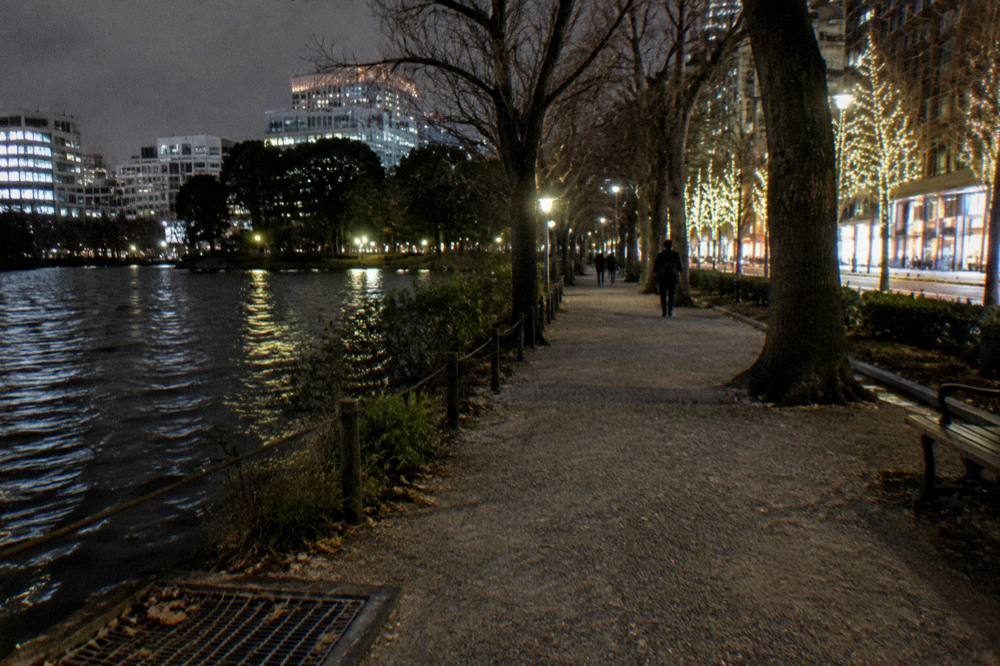
The Tokyo Metropolitan Government Building sits in Shinjuku, which makes the free observatory a different district's plan. That matters because Shinjuku is also the home of paid winter temptations: Shinjuku Gyoen's JPY 500 gate is here, and the paid night-deck circuit is elsewhere in the city. A Shinjuku winter day built on the free observatory, with the Gyoen treated correctly as a paid add-on with Monday closures, is coherent in a way a plan that mixes up the two is not.
The festival option starts at Otori Shrine for Tori-no-ichi, whose second day falls on 19 November 2026, with entry not ticketed. It is a different register of winter light entirely, lantern-lit market stalls rather than LED canopies, and the paid part is the rakes and the food. The free walk roster also reaches this season's districts directly, which is the subject of the next section.
If you want the winter plan anchored by something other than lights, the wider free-city picture is in the Free Things To Do In Tokyo guide, and the elevated-view side of the season is covered in the free observation decks guide.
“Jessica was our tour guide and she did a great job. Thank for showing us a gem view that is yet not so crowded, quite an interesting tour. Thank you!”
Maria, GuruWalk review of Secret Backstreets, 1h 30m
Which Free Walking Tours Cover This?
The winter light districts are exactly the districts the free walks serve. GuruWalk runs free, pay what you want walks that meet at the Hachiko Statue in Shibuya, in Asakusa, at the Imperial Palace and in Shinjuku; freetour.com carries the Shimokitazawa walk. No walk is a paid product and no walk carries a money figure, and the meeting points below come straight from each walk's listing.
Start with Shibuya and Harajuku, the district of the crossing's free nightly light show. The Bilingual Shibuya And Harajuku walk by Japan Navigators runs on GuruWalk, is rated 4.88 out of 5 across 1,470 GuruWalk reviews, meets at the Hachiko Statue, Shibuya Station, runs 2 hours in English and Spanish, and is free, pay what you want. The same meeting point serves the Pop Culture Walk by Scott/Inowa Japan, rated 4.78 out of 5 across 1,339 GuruWalk reviews, 2 hours 15 minutes in English. Neither walk is a light tour; both put you in a district that is itself a free light show after dark.
A paragraph later, the same district's other options: Bilingual Shibuya, Harajuku, Meiji by Hiraku Tours, 4.9 out of 5 across 937 GuruWalk reviews, meets at Shibuya Station, 2 hours, English and Spanish. Shibuya Only, English by Localized Walking Tours meets at Dogenzaka, Shibuya, 2 hours, rated 4.64 out of 5 across 217 GuruWalk reviews.
For the central districts where the Marunouchi lights hang, the Palace Storytelling Walk by 5 STORY meets at Imperial Palace, Kokyogaien, 2 hours in English, rated 4.85 out of 5 across 901 GuruWalk reviews. The Shogun History Walk, English by Local Guide Stars uses the same meeting point, 2 hours, 4.65 out of 5 across 295 GuruWalk reviews. The Palace Walk Ending At Tsukiji by Japan Navigators meets at Sakuradamon Gate, Imperial Palace, 2 hours in English and Spanish, 4.84 out of 5 across 587 GuruWalk reviews. Each is free, pay what you want on GuruWalk.
| Free walk | Platform | Meets at | Duration | Language |
|---|---|---|---|---|
| Bilingual Shibuya And Harajuku | GuruWalk | Hachiko Statue, Shibuya Station | 2 hours | English and Spanish |
| Pop Culture Walk, 2h 15m | GuruWalk | Hachiko Statue, Shibuya Station | 2 hours 15 minutes | English |
| Palace Storytelling Walk | GuruWalk | Imperial Palace, Kokyogaien | 2 hours | English |
| Asakusa Old Town, English | GuruWalk | Kaminarimon Gate | 2 hours | English |
| Secret Backstreets, 1h 30m | GuruWalk | Shinjuku Station, East Exit | 1 hour 30 minutes | English |
Shinjuku, the observatory's district, has its own roster: Secret Backstreets, 1h 30m by Local Guide Stars meets at Shinjuku Station, East Exit, rated 4.73 out of 5 across 612 GuruWalk reviews, and the Dark Side Night Walk by Wabisabi Trips meets at McDonalds, Seibu Shinjuku, 2 hours in English, 4.83 out of 5 across 352 GuruWalk reviews. Asakusa's Senso-ji precinct, lantern-lit and free to enter, carries the Asakusa Old Town walk by Tokyo Genki Tours, meeting at Kaminarimon Gate, and the Asakusa Classic English Walk by Localized Walking Tours, meeting at the Asakusa Culture Tourist Information Center, both 2 hours in English and both on GuruWalk. Spanish-language walks exist across these districts and are listed plainly as running in Spanish. For the wider picture of how the pay-what-you-want model works, see how much to pay for a free walking tour.
Mistakes That Trip People Up At Tokyo Winter Illuminations
The recurring mistakes are all versions of one error: assuming lights mean free. Travellers pay for a "free" garden, arrive at a deck expecting a complimentary view, or travel to an illumination whose dates were never official. The fixes are mechanical: check whose ground the lights stand on, check the closed weekdays, and check that the display's dates come from the operator rather than from a round-up list.
The first mistake is treating Rikugien, or any illumination-era garden, as a free park. The night viewing is a paid event on top of paid entry, JPY 300, in a fixed window, and the garden closes 29 December to 1 January with the other metropolitan gardens. The second is the Shinjuku Gyoen trap, the park-shaped JPY 500 national garden with Monday closures outside the 1 to 15 November autumn period. Neither garden's winter lights make its grounds free.
The third mistake is deck confusion. The Tokyo Metropolitan Government observatories are free; Tokyo Tower's Main Deck, Skytree's decks and Shibuya Sky are not, and their "from" prices are floors under dynamic pricing. Planning a free night view means the government building, and only the government building, in the observatory category. The fourth is dateless planning: travelling to an illumination outside its run, or to a display whose dates exist only on listicles, wastes an evening. The Marunouchi run ends 25 December 2026, and the record confirms nothing beyond that for the city's other displays.
The fifth mistake is bolting on the East Gardens without checking their calendar: free, but closed every Monday and Friday and from 28 December to 3 January, with winter entry stopping at 15:30. The sixth is expecting the free walks to be light tours. They are free, pay what you want neighbourhood walks on GuruWalk and, for the Shimokitazawa Offbeat walk, freetour.com, in districts that happen to glow after dark; their listings state a meeting point, a duration and a language, and that is the honest extent of what to expect.
Common Questions On This Topic
Are Tokyo Winter Illuminations Free?
One is confirmed free: the Marunouchi Illumination along Naka-dori, 12 November to 25 December 2026, viewed from the public street at no charge. Other light experiences are paid or unconfirmed: Rikugien's night viewing needs JPY 300 entry, and no other display is confirmed free this season.
What Time Is The Tokyo Light Show?
The Marunouchi Illumination is a street display viewable in the avenue's evening hours rather than a timed show.
Can You See Tokyo's Winter Lights For Free From Above?
Yes, from the Tokyo Metropolitan Government observatories at 202 metres, free with no reservation. The South Observatory closes the 1st and 3rd Tuesday, the North closes the 2nd and 4th Monday, both close 29 to 31 December and 2 to 3 January, and North entry runs until 17:00.
Is The Marunouchi Illumination Really Free?
Yes, in the street sense: Naka-dori is a public avenue, the display runs 12 November to 25 December 2026, and there is no gate, ticket or time slot. Food, shopping and cafes along the avenue are ordinary purchases, not illumination fees.
Do Free Walking Tours Pass The Illuminations?
The free walks serve the same districts, not the displays. GuruWalk walks meet at points such as the Hachiko Statue in Shibuya, the Imperial Palace at Kokyogaien, and Kaminarimon Gate in Asakusa, each free and pay what you want. Their listings state a meeting point, duration and language; they are neighbourhood walks rather than light tours.
What Happens To The Free Views Over New Year?
They narrow sharply. Both TMG observatories close 29 to 31 December and 2 to 3 January, the metropolitan gardens close 29 December to 1 January, and the East Gardens close 28 December to 3 January. The Marunouchi Illumination ends 25 December 2026, so plan the free light viewing before the holiday window.