Bilingual Shibuya And Harajuku
4.88 · 1,470 GuruWalk reviews
See this free tour
Reserve free on GuruWalk
Museums, temples and shrines, parks, and free days, each with the rule that comes attached. Plus 46 pay-what-you-want walking tours with local guides.
Free with no ticket or booking:
Tokyo's free sights sit in tight clusters, which makes planning a free day easier than it first looks. The pin map below plots every listing on the directory so you can see where the clusters form and where they thin out.
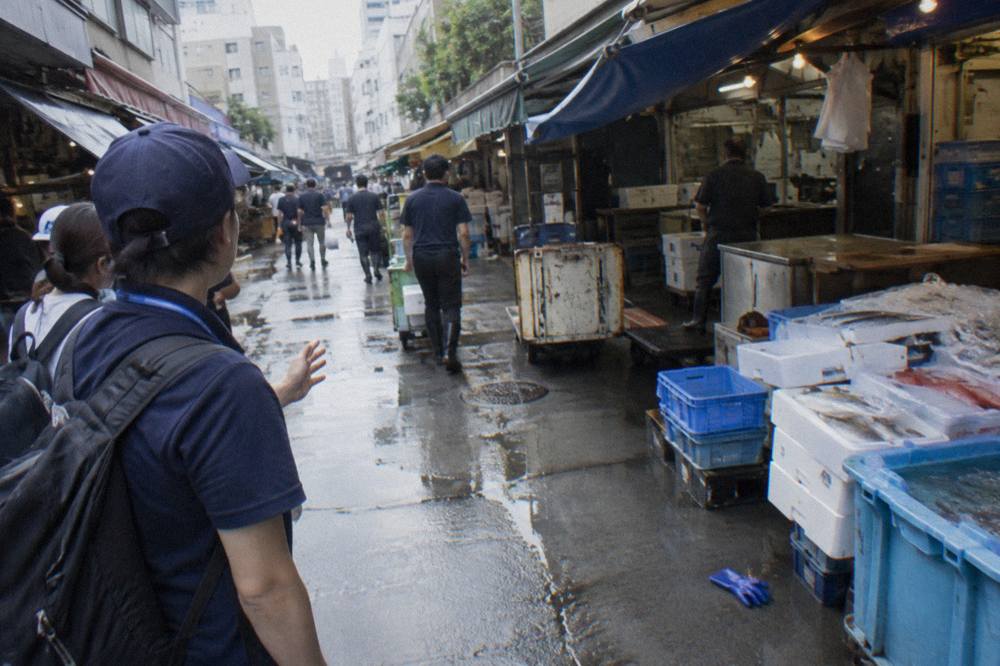
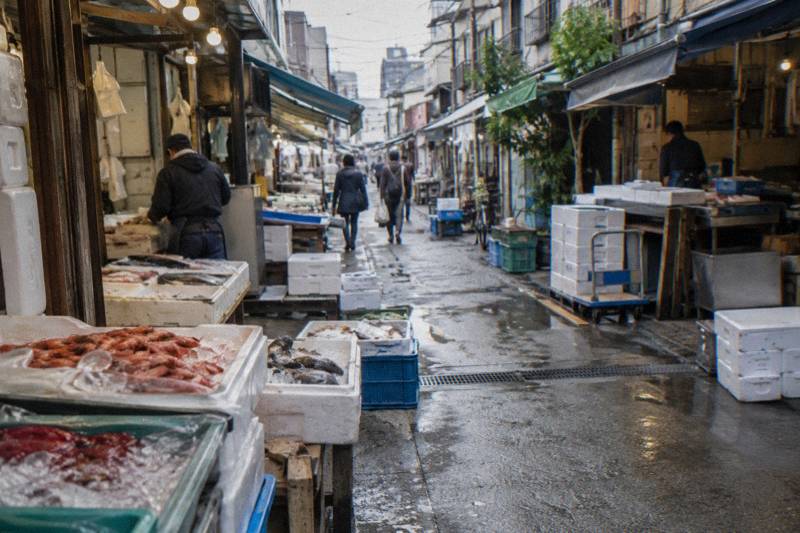
The densest cluster is on the east side. Asakusa and Ueno hold the old-town core: Senso-ji and its approach down Nakamise Street, the kitchenware shops of Kappabashi, the retro lanes of Yanaka Ginza and the market stalls of Ameyoko under the tracks. Kappabashi shops mostly close on Sundays or early evening, and Nakamise shops shut around dusk, so this cluster rewards a daytime start. South of there, Tsukiji's outer market lanes are free to walk, with food and shopping paid as you go.
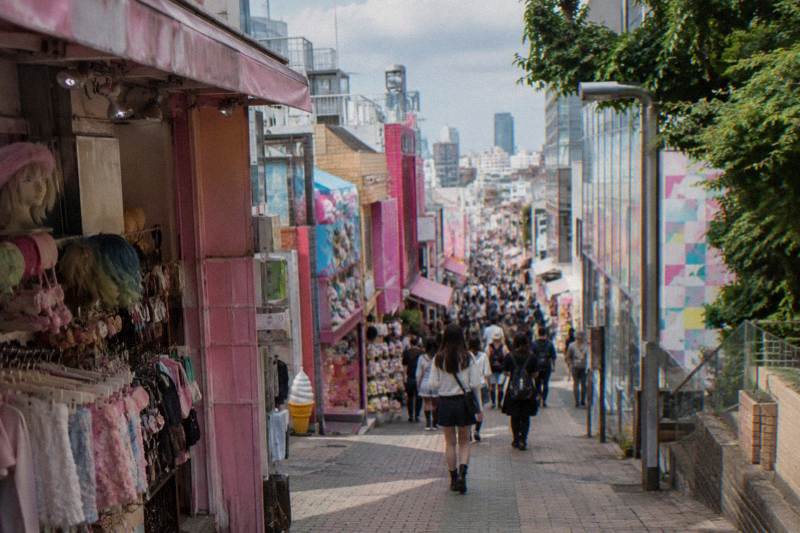
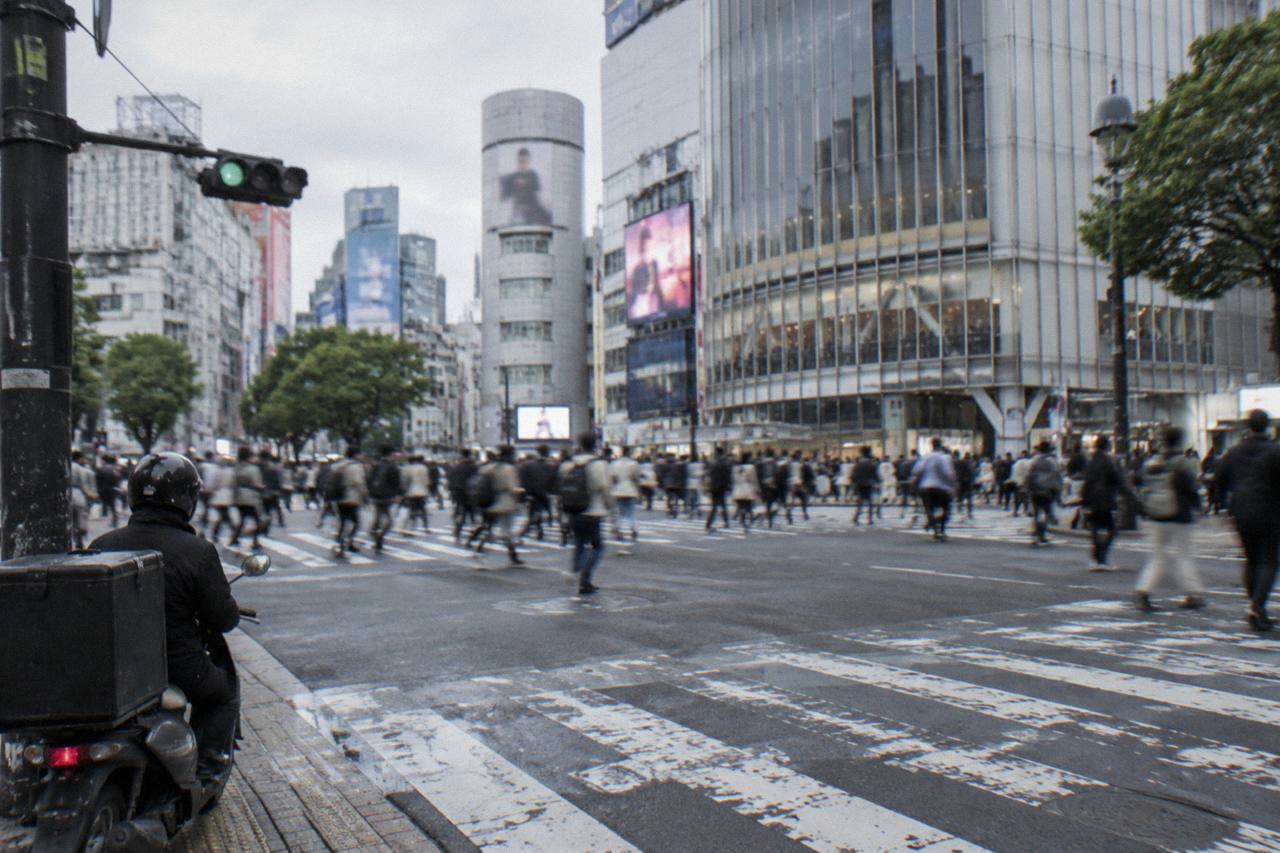
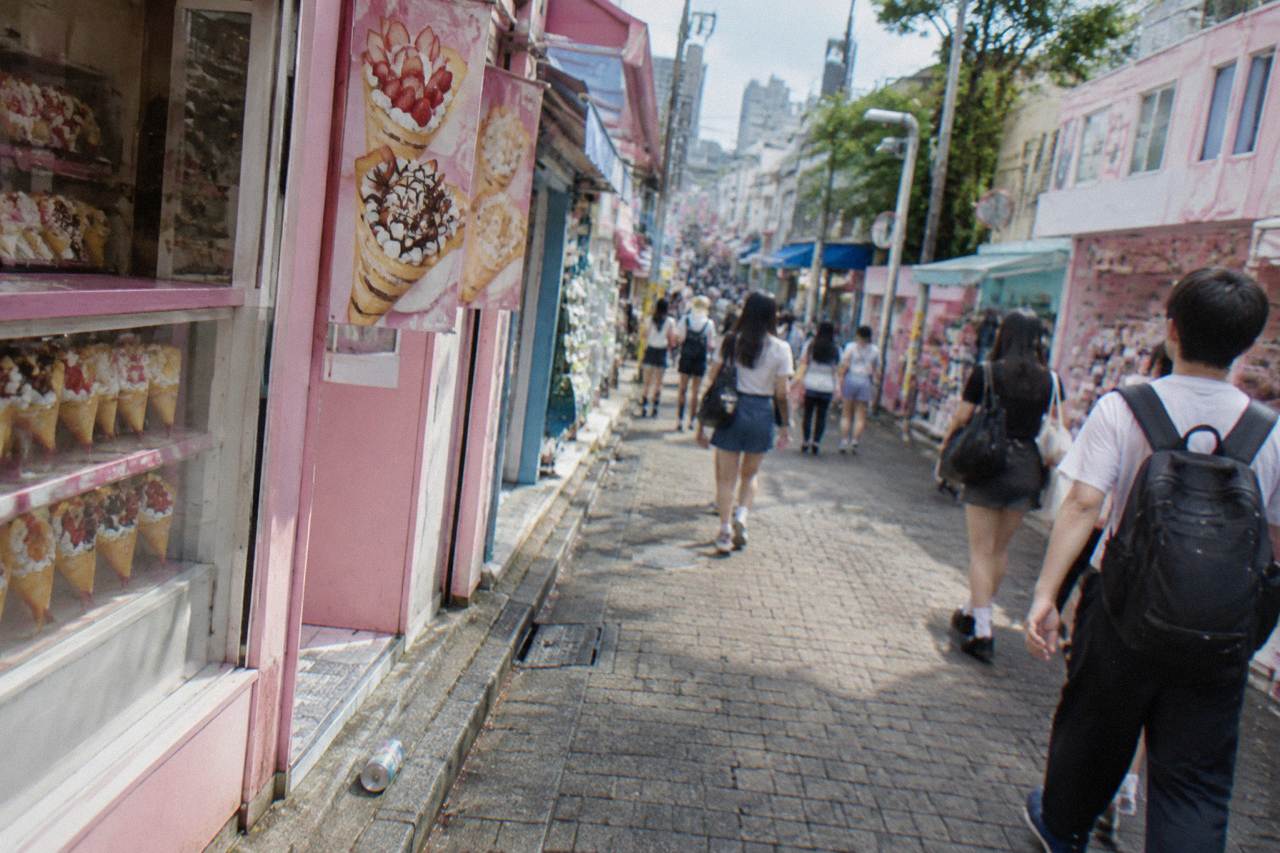
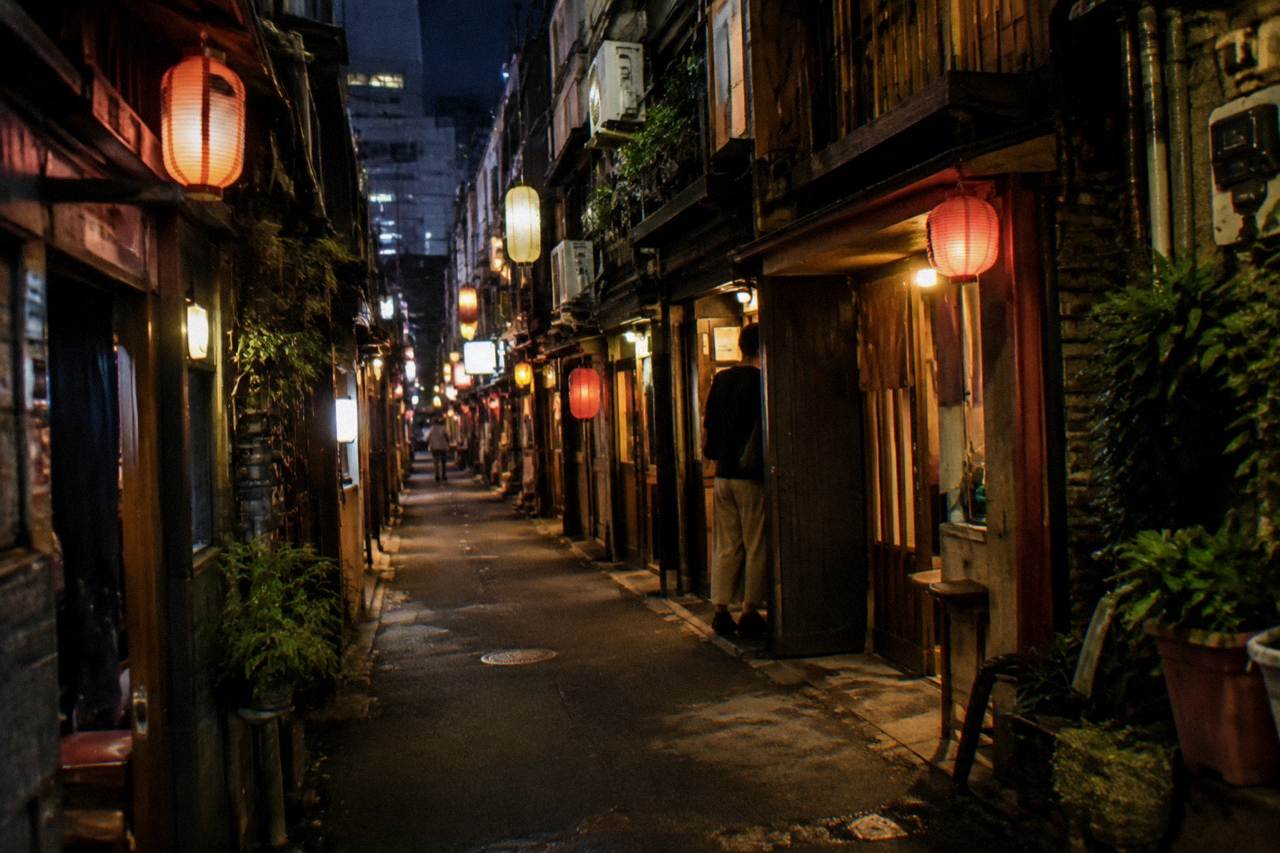
The west side splits into three clusters. Shibuya and Harajuku pair the crossing with the shrine forest of Meiji Jingu, the pedestrian crush of Takeshita Street and the architecture along Omotesando. Shinjuku stacks differently: the grounds and alleys are the attraction, from the smoky counters of Omoide Yokocho to the lanes of Golden Gai, where many tiny bars charge a cover or a minimum at the door. Nakano Broadway, a short train ride out, adds an indoor arcade of manga and collectible shops you can walk through for nothing.
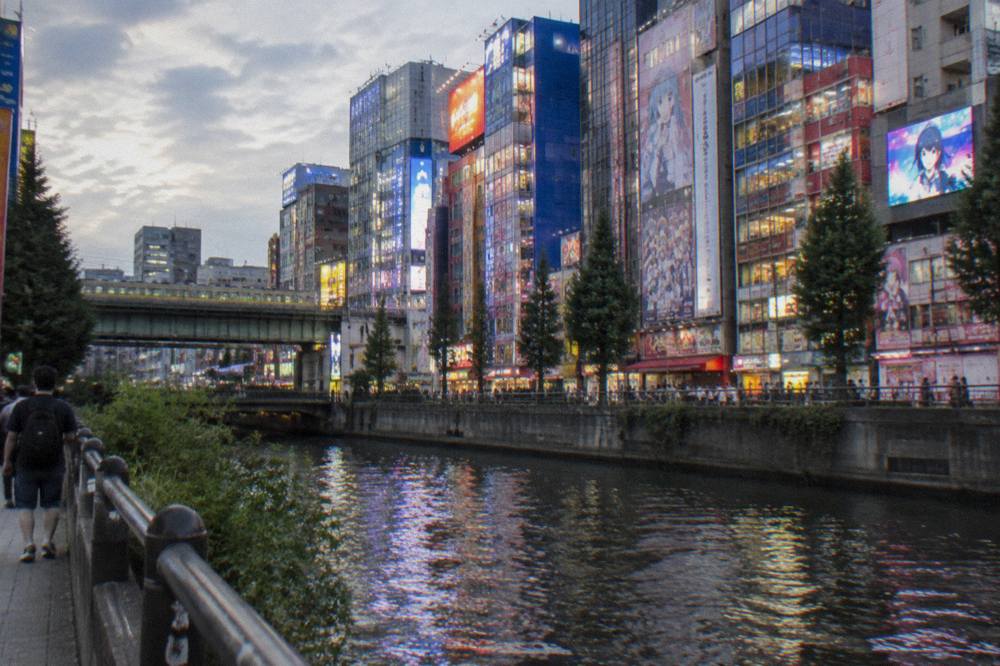
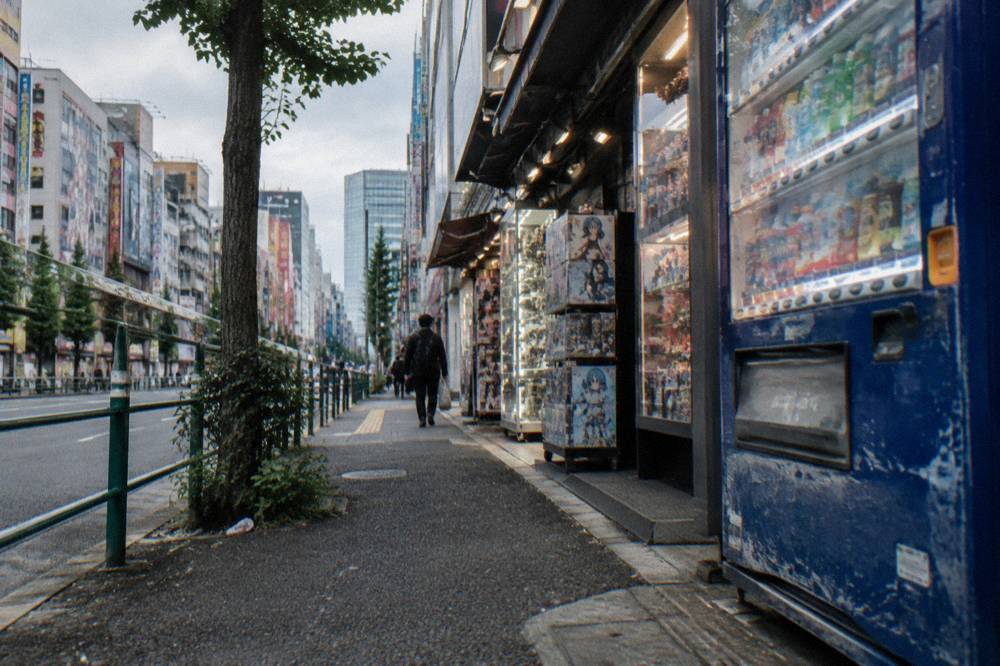
Between east and west sit the Imperial Palace side of Chiyoda and Akihabara. The palace cluster is generous with free ground: the East Gardens, the open plaza at Nijubashi, Kitanomaru Park and a free guided tour run by the Imperial Household Agency, which needs an advance application or a same-day numbered ticket. Akihabara's electronics and anime streets cost nothing to wander, and Kanda Myojin and Hie Shrine sit on the edges of the same district. Cross the whole set against the map before you commit to a route; the clusters are walkable internally but the gaps between them are train rides. The free streets and markets in each cluster, plus the paid decks and gardens that sit beside them, are all on the map so you can see exactly what a free day in each area adds up to.
Tap or click the map to pan and zoom. Numbers match the list.
Kanda Myojin
Shrine precinct entry is free; prayer services and amulets are paid.
Currency Museum Bank Of Japan
Admission is free; no entry after 16:00.
Free walk from here: Shogun History Walk, EnglishAdvertising Museum Tokyo (ADMT)
Admission is free; open Tuesday to Saturday, closed Sunday and Monday.
Free walk from here: Tsukiji Street Food, 1h 30mTokyo Fire Museum
Admission is free; last entry is 16:30.
Hie Shrine
Shrine precinct entry is free; treasure hall and prayer reception are separate paid services.
Free walk from here: Palace Walk Ending At TsukijiTsukiji Outer Market
Walking the market lanes is free; food and shopping are paid.
Free walk from here: Tsukiji Street Food, 1h 30mMeiji Jingu Gaien Ginkgo Avenue
Walking the public tree-lined avenue is free; festival stalls and food are paid.
Imperial Palace East Gardens
Admission to the East Gardens is free.
Free walk from here: Palace Storytelling WalkImperial Palace Outer Garden And Nijubashi
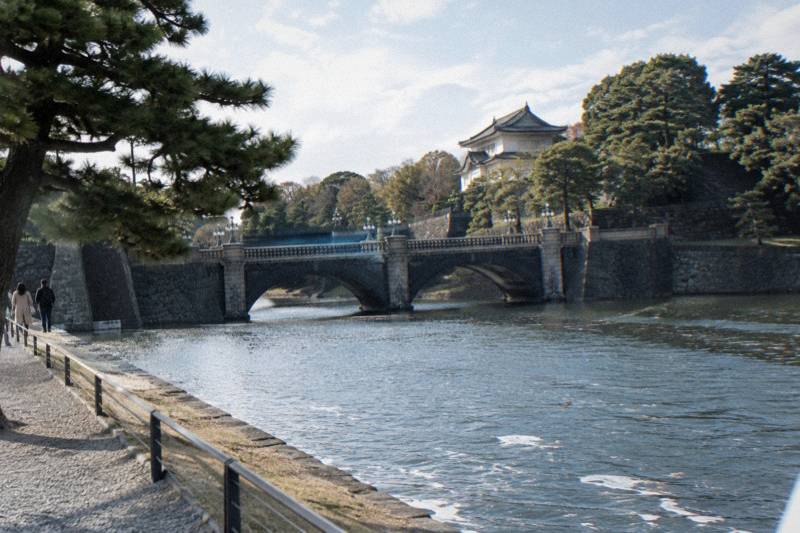
The public plaza, lawns and moat paths with the Nijubashi bridge view are free.
Free walk from here: Palace Walk Ending At TsukijiKitanomaru Park
Entry is free and open at all times, but public use is restricted on state function days.
Free walk from here: Palace Storytelling WalkHibiya Park
Park entry is free and open at all times; some facilities and events are paid.
Free walk from here: Palace Walk Ending At TsukijiAkihabara
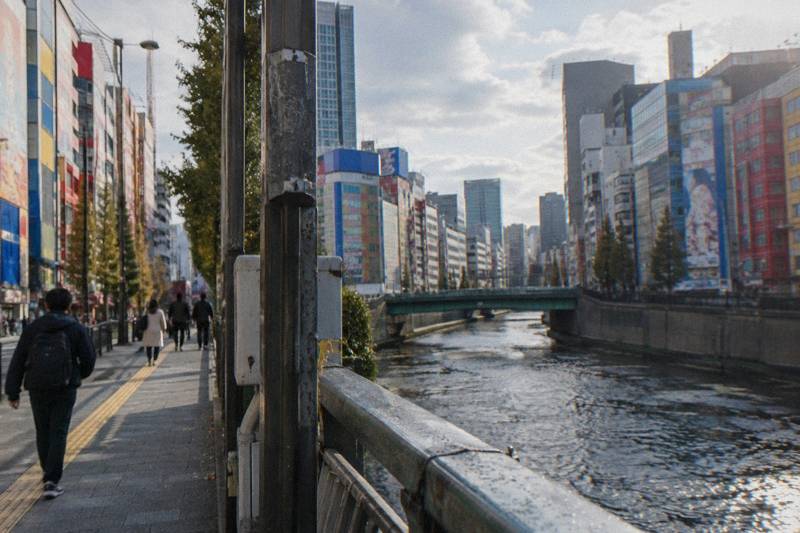
Walking the electronics and anime district is free; shop purchases and arcades are paid.
A free walking tour is not a discount version of a paid one. It is a pay-what-you-want walk: you reserve your spot for free on GuruWalk, join the guide at the meeting point, and at the end you decide what the walk was worth and pay the guide that amount. There is no fixed fee and no obligation set in advance. The guide's income depends entirely on what each guest chooses to give, so the tours are built to earn it.
The directory lists 46 free walks across Tokyo and features 15 of them. Most of the featured walks run in English, and several also run in Spanish. Most last about two hours, with a couple running a little shorter or longer, which leaves room for a second activity in the same day. Meeting points are specific and easy to find: the Hachiko statue at Shibuya Station, Kaminarimon Gate in Asakusa, the Tokyo Metropolitan Government Building in Shinjuku, Ueno Park, and the Kokyogaien side of the Imperial Palace.
The spread of themes is wide. Shinjuku night walks cover Kabukicho and the district's red-light history for adults only, plus a second night walk on the darker backstreets of the area. Shibuya and Harajuku walks mix the crossing, Takeshita Street and Meiji Jingu, some pairing all three. Two Imperial Palace walks tell the shogun and palace story, one finishing at Tsukiji. Asakusa walks stick to the old town around Senso-ji with local guides. An Akihabara and Ueno walk bridges maid cafes and samurai history in a single route. A Tsukiji walk starts at the Hongan-ji temple stairs and works through the street food and culture of the market lanes.
Reserve through the walk listings, read each guide's profile on the guides page, and check the blog for notes on individual routes before you pick one.
4.88 · 1,470 GuruWalk reviews
Reserve free on GuruWalk
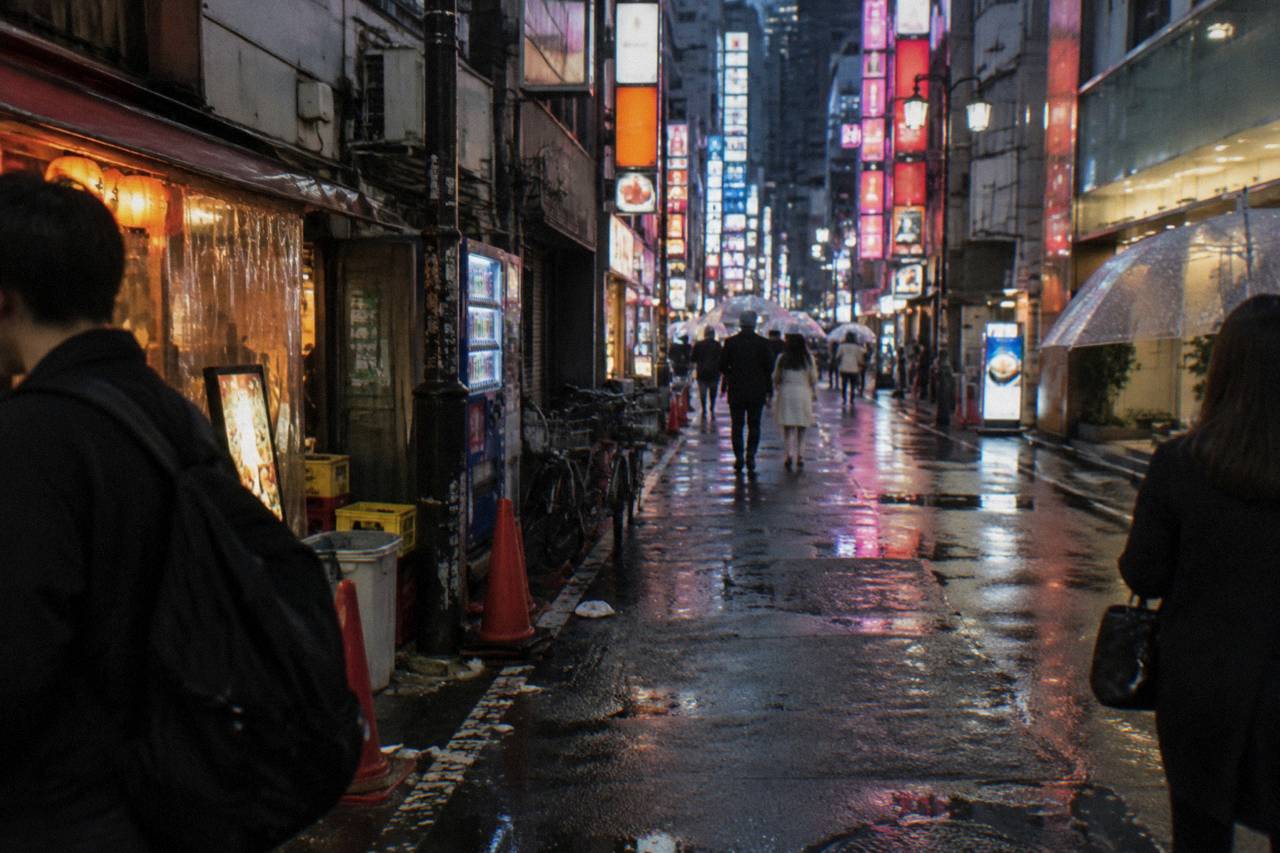
4.89 · 2,714 GuruWalk reviews
Reserve free on GuruWalk
4.83 · 1,155 GuruWalk reviews
Reserve free on GuruWalk
The filter below narrows the directory to what fits the day you actually have. Start with area. An Asakusa morning and a Shinjuku evening is a workable pairing; a day that tries to add Shibuya, Akihabara and Tsukiji on top will dissolve into train time. If you have one block of hours, pick a single cluster and stay inside it.
Then filter by time. Temples and gardens want daylight, and some streets, like Nakamise and Kappabashi, quiet down in the late afternoon. Night is when Shinjuku earns its walks, the bars of Golden Gai light up and Omoide Yokocho fills with yakitori smoke. Food markets work best in the morning, especially Tsukiji.
Theme is the third cut. Temples and shrines give you Senso-ji, Meiji Jingu, Nezu and the palace side. Pop culture points at Akihabara, Nakano Broadway, Takeshita Street and Shibuya. Food covers Tsukiji, Ameyoko and the shopping lanes. Night belongs to Shinjuku. Tap the filters that match your interests and the list shrinks to a plan.
This is a starting shortlist of six well-reviewed walks. Answer any question above to rebuild it around your choices.
4.89 · 2,714 GuruWalk reviews · free, pay what you want
Reserve free on GuruWalk
4.88 · 1,470 GuruWalk reviews · free, pay what you want
Reserve free on GuruWalk
4.78 · 1,339 GuruWalk reviews · free, pay what you want
Reserve free on GuruWalk
4.83 · 1,155 GuruWalk reviews · free, pay what you want
Reserve free on GuruWalk
4.9 · 937 GuruWalk reviews · free, pay what you want
Reserve free on GuruWalk
4.85 · 901 GuruWalk reviews · free, pay what you want
Reserve free on GuruWalk
"Free" in Tokyo usually means free to enter, not free to leave with nothing. The city gives away an unusual amount: temple and shrine grounds, palace gardens, river and moat paths, and whole shopping streets that charge nothing to walk. What you pay for is the food, the shopping and, in a few cases, the view from the top.
The walking tours work on a pay-what-you-want basis. You reserve free on GuruWalk, the walk itself has no fixed fee, and at the end you pay the guide whatever you decide the two hours were worth. There is no set tip and no minimum. Treat it as the price of the tour, set by you after the fact.
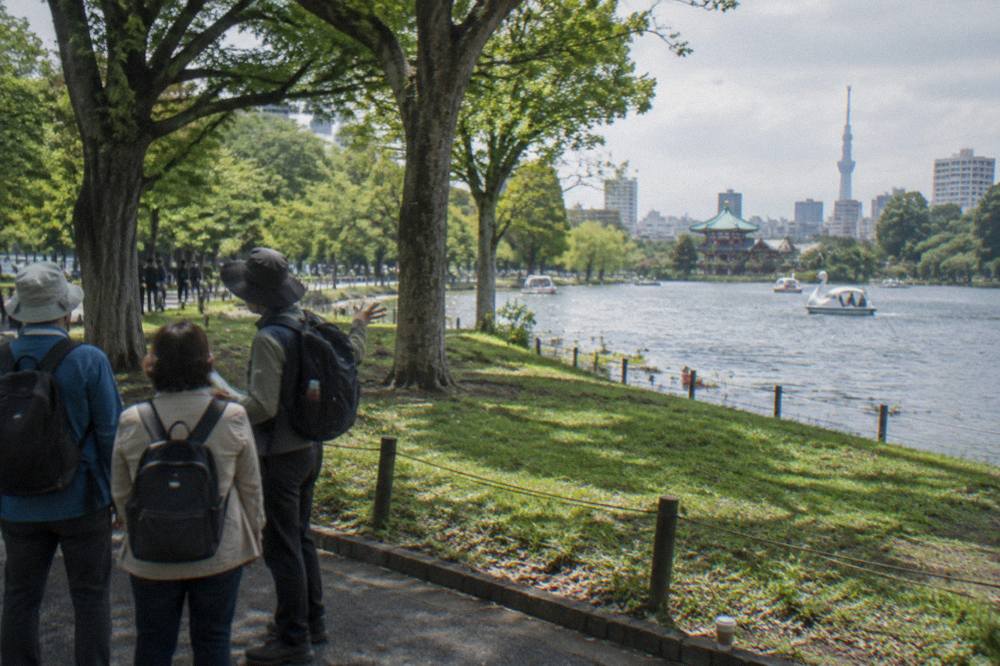
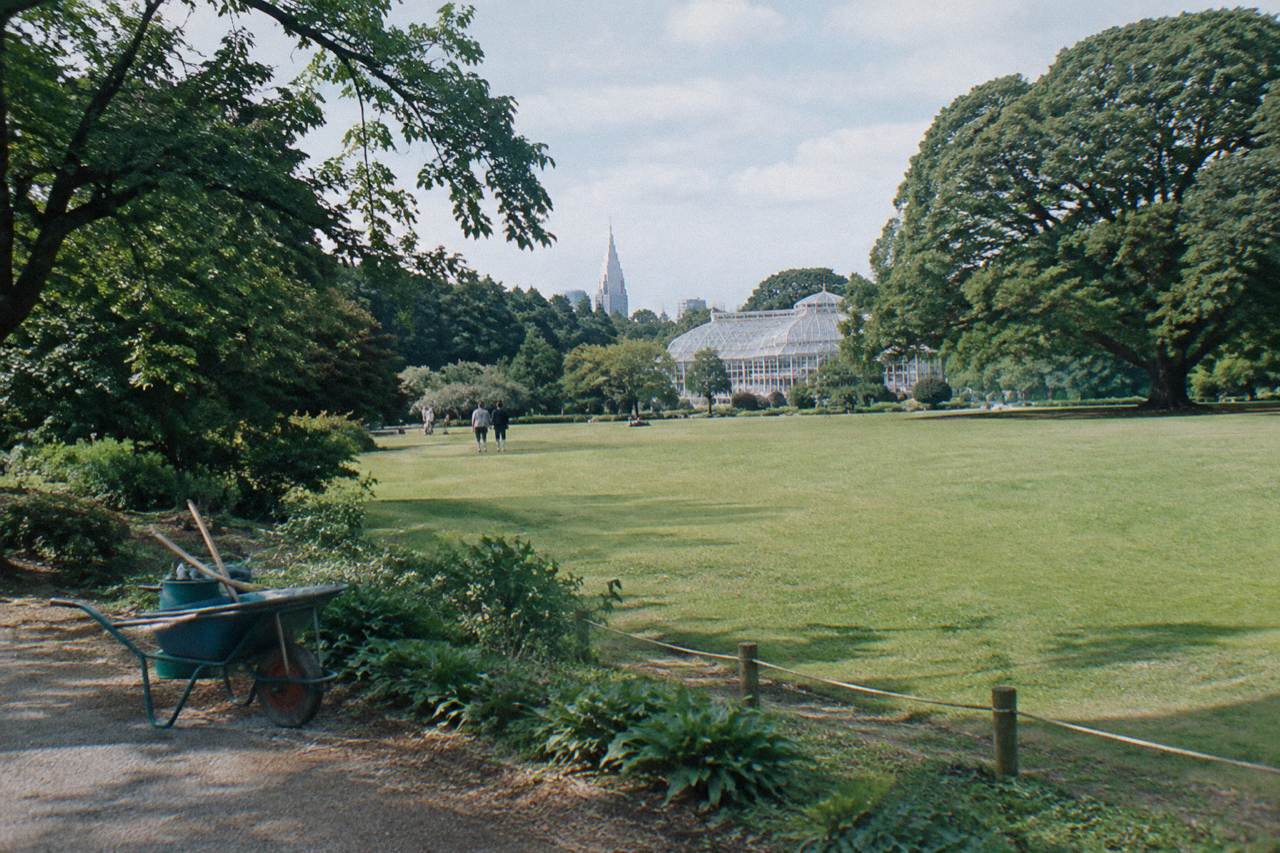
The headline sights that charge are mostly decks and gardens. Shinjuku Gyoen is the classic trap: everyone assumes the park is free, but it is a ticketed national garden at JPY 500 for adults, JPY 250 for over 65 and students, and free only for children 15 and under. The Metropolitan gardens follow the same pattern: Hama-rikyu, Koishikawa Korakuen and Rikugien each charge JPY 300 for adults and JPY 150 for over 65, with primary school children and younger free. The observation decks are all paid. Tokyo Tower's Main Deck starts at JPY 1,500 for adults, and walking up through its Foot Town floors costs nothing. Tokyo Skytree's decks start at JPY 3,000 for adults and JPY 1,500 for children 6 to 14, with a JPY 500 service fee if you buy at the counter, though the Solamachi mall at its base is open to walk. Shibuya Sky is ticketed, with prices that vary by date and time, while the crossing below it stays free. teamLab Planets (from JPY 3,800 adult) and teamLab Borderless (from JPY 3,400 adult, plus JPY 200 on site) are fully paid museums.
Several sights look free and mostly are, with a paid part inside. Meiji Jingu's forest and precinct are free every day, but the Inner Garden inside is ticketed at JPY 500. Zojo-ji charges nothing for its grounds and main hall, with Tokyo Tower rising behind the gate, while its Treasures Gallery costs JPY 700 for adults. Yasukuni Shrine's precinct is free, its Yushukan museum is JPY 1,000 for adults. Senso-ji charges nothing at all for the grounds, main hall and gates. Golden Gai's lanes are free to walk, but many bars charge a cover or a minimum at the door, and Omoide Yokocho's some counters add a seat charge.
| Place | Verdict | The condition | Free walks within 1 km |
|---|---|---|---|
| Meiji Jingu Museum | Paid | Ticketed museum | 5 |
| teamLab Planets | Paid | Paid ticket; dynamic pricing | 0 |
| teamLab Borderless | Paid | Ticketed immersive art museum at Azabudai Hills | 0 |
| Edo-Tokyo Museum | Paid | Ticketed entry, no free admission | 0 |
| Ghibli Museum | Paid | Ticketed, advance reservation only | 0 |
| Meiji Jingu Inner Garden | Paid | Ticketed entry, JPY 500 | 3 |
| Bunkyo Civic Center Observation Lounge | Paid | Closed for renovation | 0 |
| Shibuya Sky | Paid | Ticketed observation deck | 8 |
| Shinjuku Gyoen | Paid | Ticketed entry; children 15 and under exempt | 1 |
| Hama-rikyu Gardens | Paid | Ticketed entry; primary age and younger exempt | 0 |
| Zojo-ji | Condition | Treasures Gallery ticketed; grounds and hall without charge | 1 |
| Yasukuni Shrine | Condition | Yushukan museum ticketed | 1 |
| Tokyo National Museum Free Days | Condition | Selected 2026 dates; under 18s and over 70s any day | 5 |
| National Museum Of Western Art Free Sunday | Condition | Second Sunday monthly; 18 May, 3 November | 5 |
| Imperial Palace New Year General Greeting | Condition | 2 January; 2026 entry 9:30 to 14:10 | 3 |
Walk counts are the free walks' meeting points within 1 km of each place, measured from their coordinates.
Tokyo's shrines and temples are the easiest free day out in the city. Almost every precinct charges nothing at the gate, and the paid parts, when they exist, sit inside as museums, galleries or gardens you can simply skip. Here is what is free and what is not, place by place.
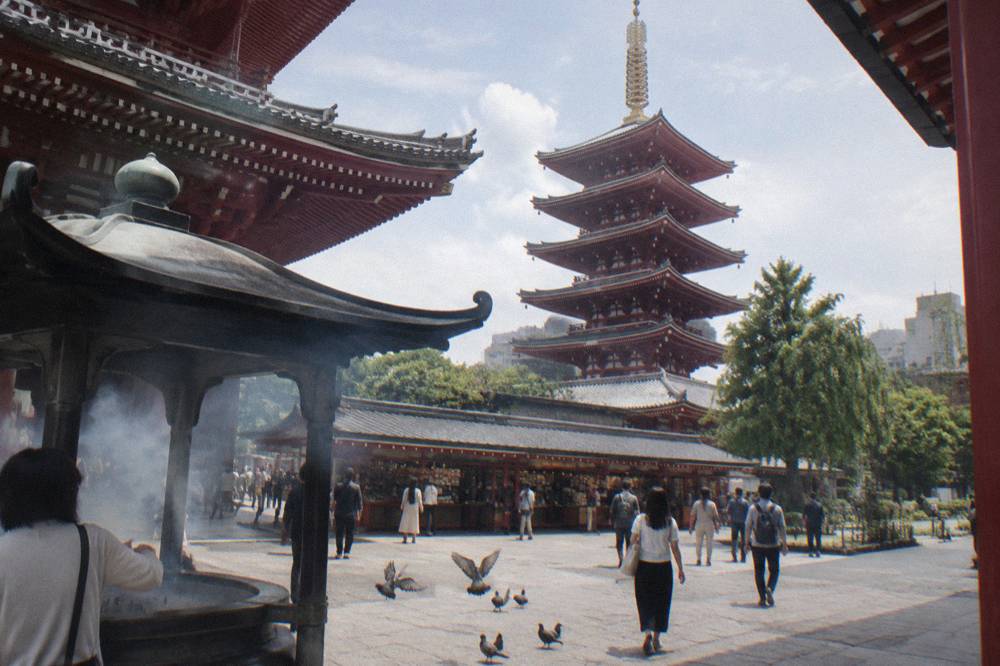
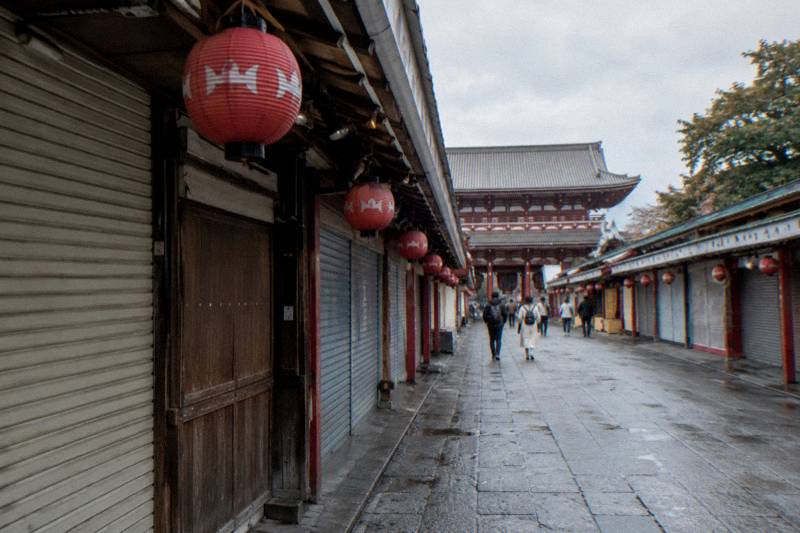
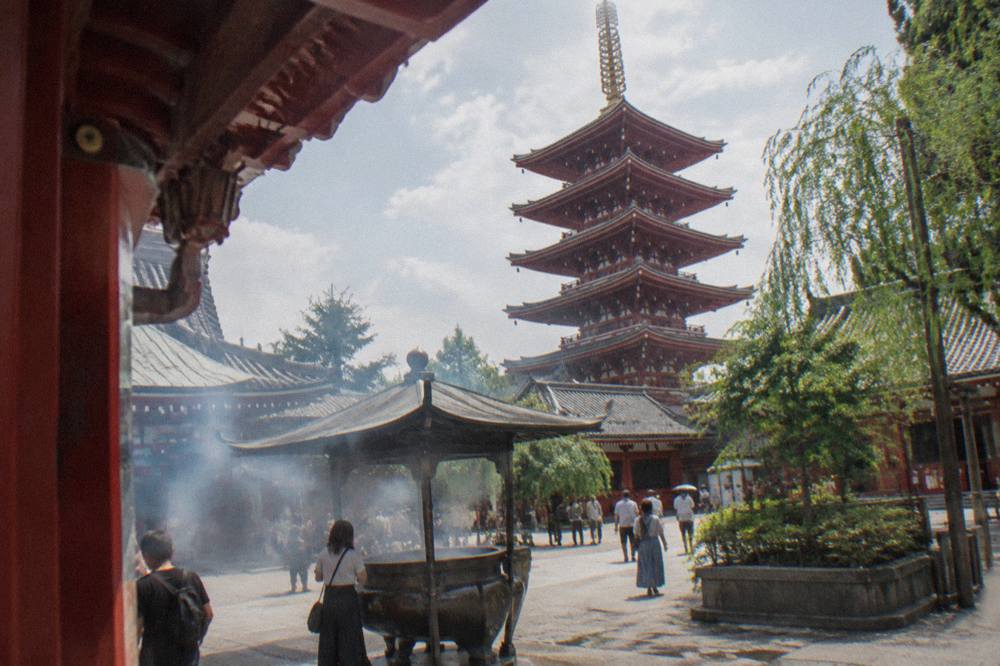
Senso-ji in Asakusa charges no admission for the grounds, the main hall or the gates. There is no ticket, because there is nothing to buy to walk in. Incense, fortunes and shopping are separate, and the temple's own garden is closed to the public, while the Denbo-in garden opens only on special dates as a separate paid visit.
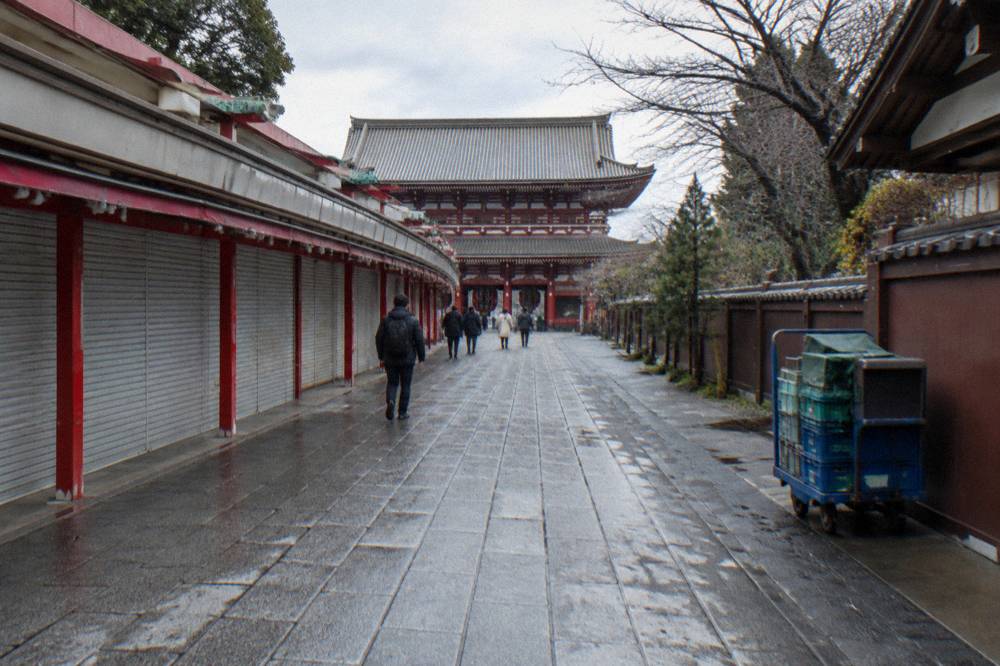
The approach to Senso-ji runs down Nakamise Street, a public shopping lane. Walking it costs nothing; the shops charge for what they sell. Shop hours vary and most shut around dusk.
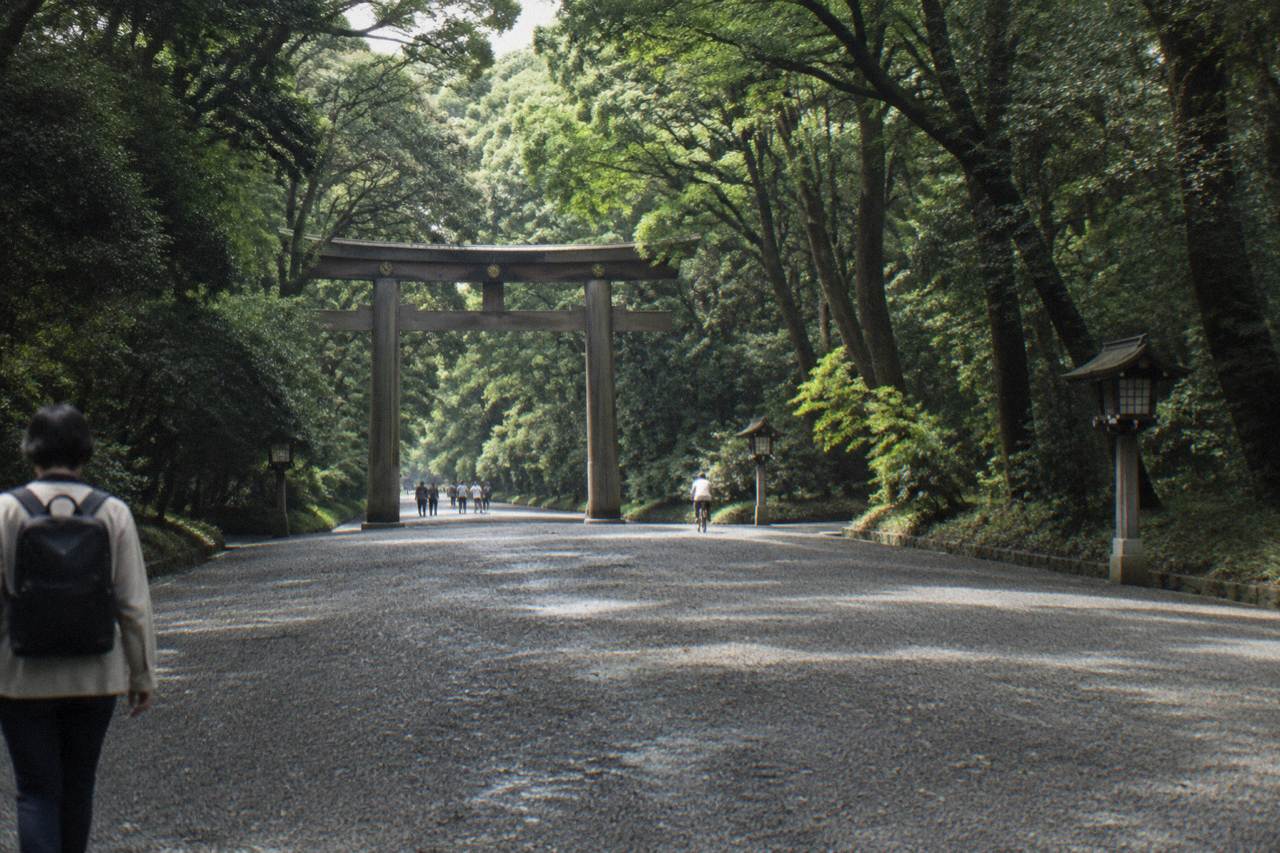
Meiji Jingu in Shibuya is open every day of the year free of charge, per the official site. The gates open at sunrise and close at sunset, which in November means 6:10 to 16:10 and in December 6:40 to 16:00. The Inner Garden and the Meiji Jingu Museum are separate paid visits inside the same forest, so do not assume the whole estate is free.
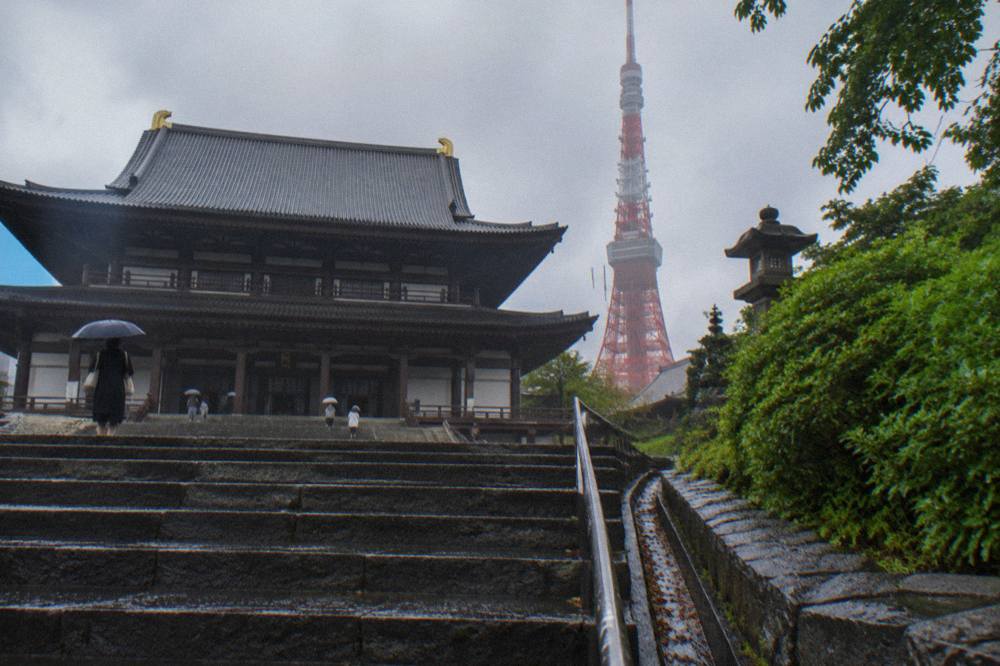
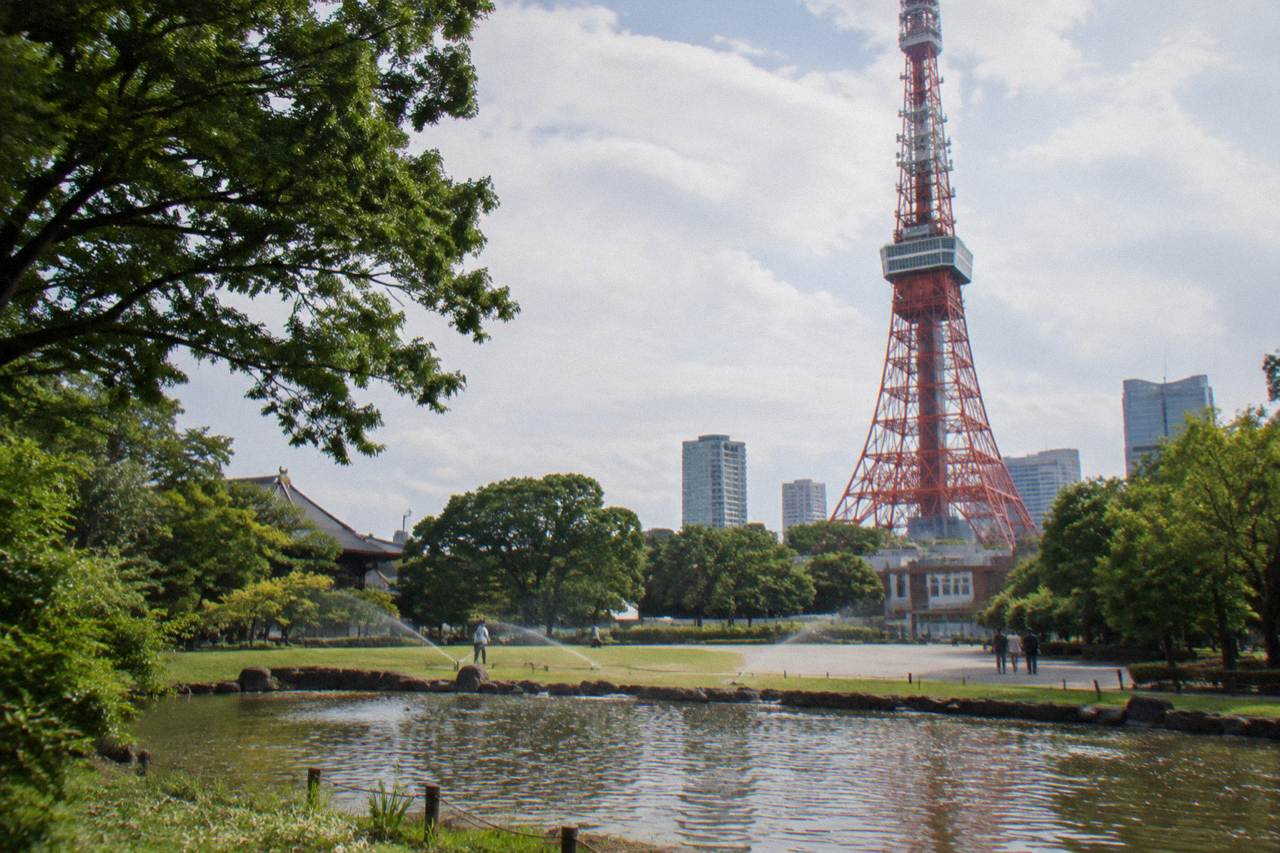
Zojo-ji in Minato has no admission charge for the grounds or the main hall, with Tokyo Tower rising behind the gate. The Treasures Gallery below the main hall is ticketed: JPY 700 for adults, JPY 300 for high school and younger, elementary and younger free, with a combination ticket with the Tokugawa Shogunate Graveyard at JPY 1,000. The gallery closes on Tuesdays.
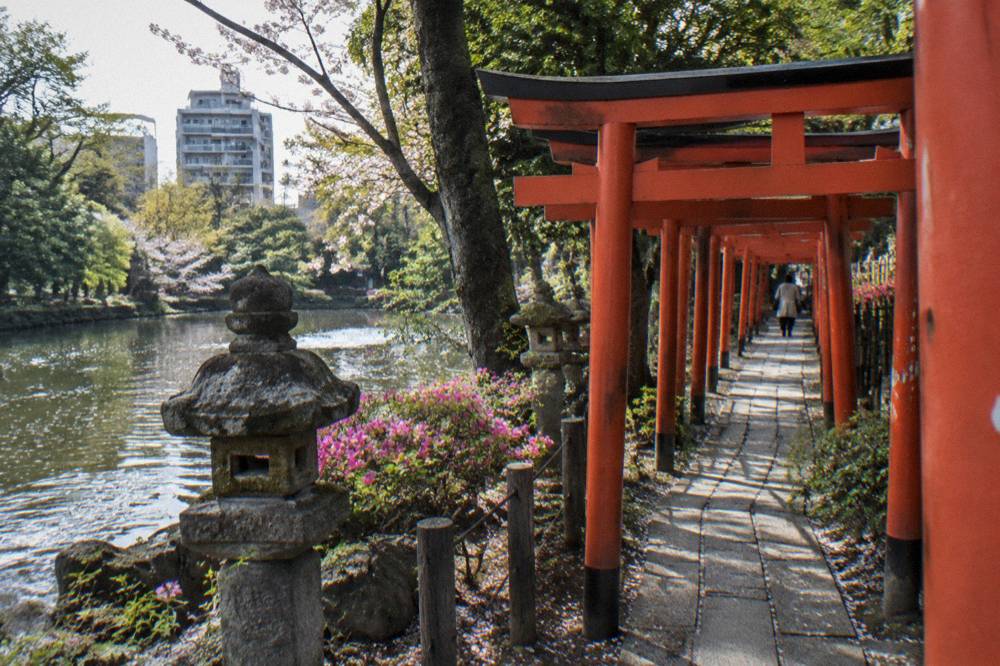
Nezu Shrine in Bunkyo is a free public precinct, and that includes the famous torii tunnel, which carries no admission charge. During the spring Azalea Festival a garden fee may apply, but it is unconfirmed, so budget nothing and check locally. Gotokuji in Setagaya, the maneki-neko temple, has no grounds fee either; the lucky cat figurines are bought in the temple office.
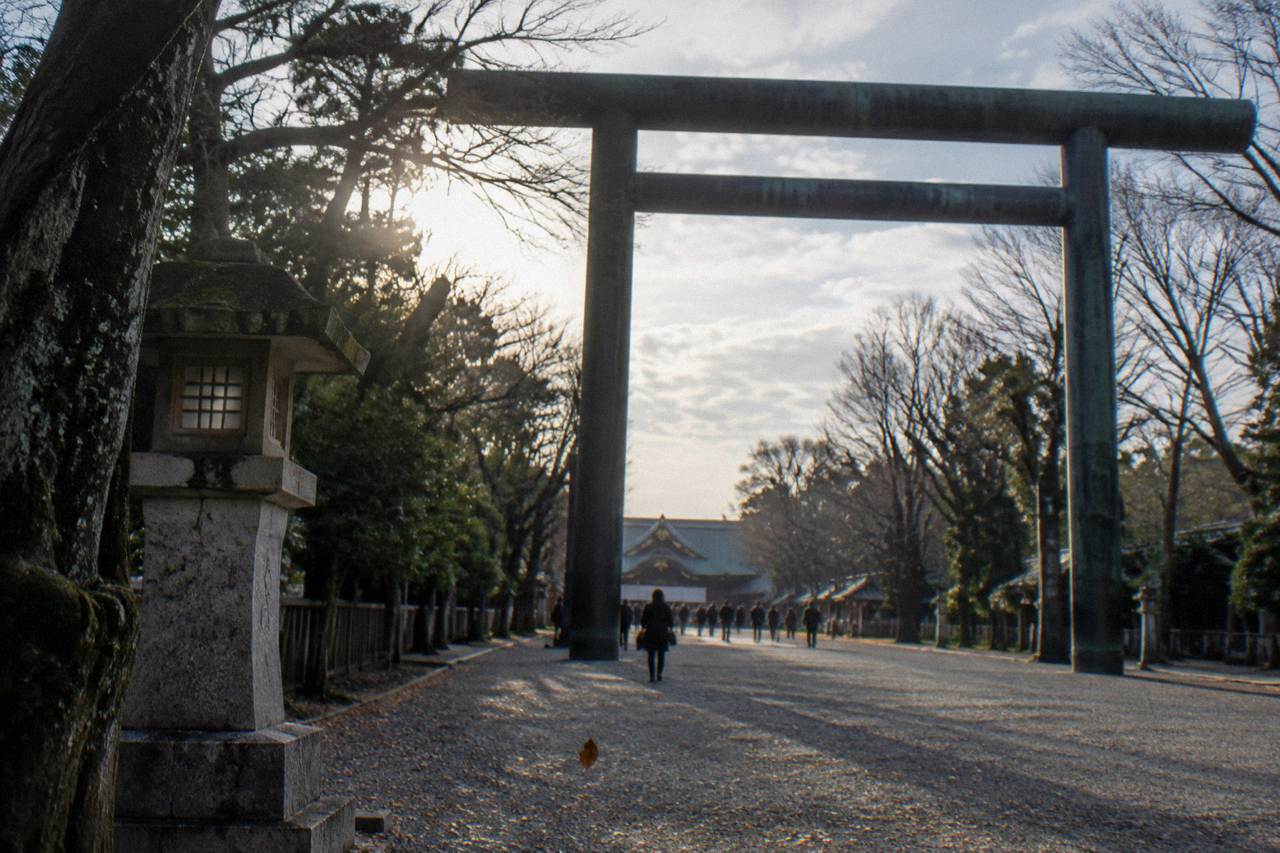
Yasukuni Shrine in Chiyoda opens its precinct daily from 6:00 to 18:00, shortened to 6:00 to 17:00 in January, February, November and December, with no admission charge. The Yushukan museum inside is ticketed: JPY 1,000 adult, JPY 500 university, JPY 300 high and junior high school, elementary and younger free, 9:00 to 16:30. It is a politically sensitive site, so read up before you go; access itself is simple.
Kanda Myojin, on its rise above Ochanomizu and Akihabara, lists no entry charge. Prayer services and amulets are paid. Hie Shrine in Chiyoda opens its gates 6:00 to 17:00 with no entry charge listed; the treasure hall and prayer reception, 9:00 to 16:00, are separate services.
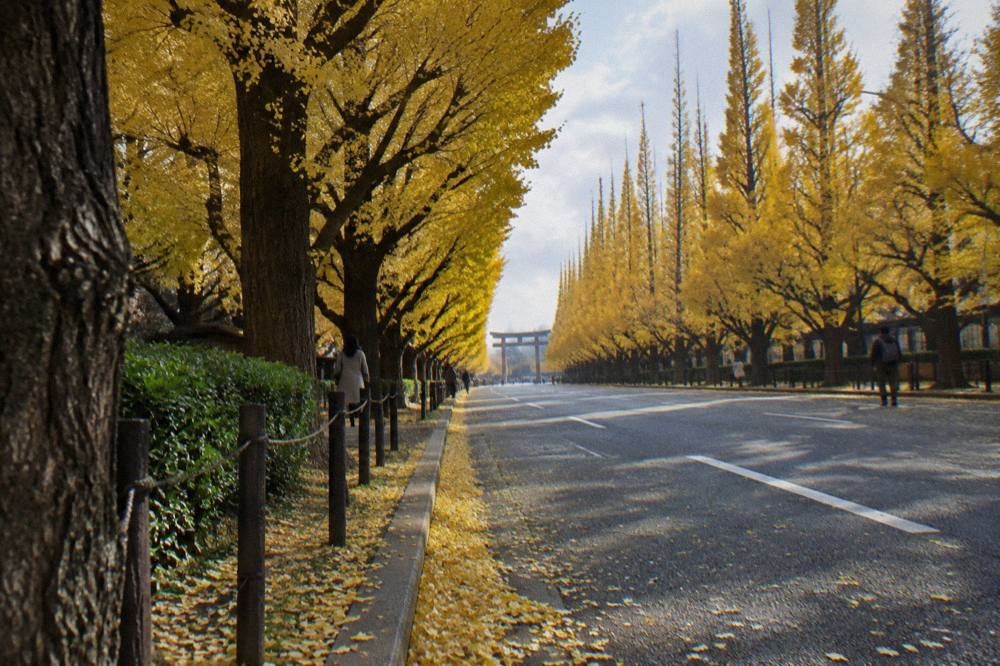
The Meiji Jingu Gaien Ginkgo Avenue in Minato is a public tree-lined avenue and walking it costs nothing. Festival stalls and food along it are paid. The exact colour peak shifts each year, so time a visit by eye rather than by a published date.
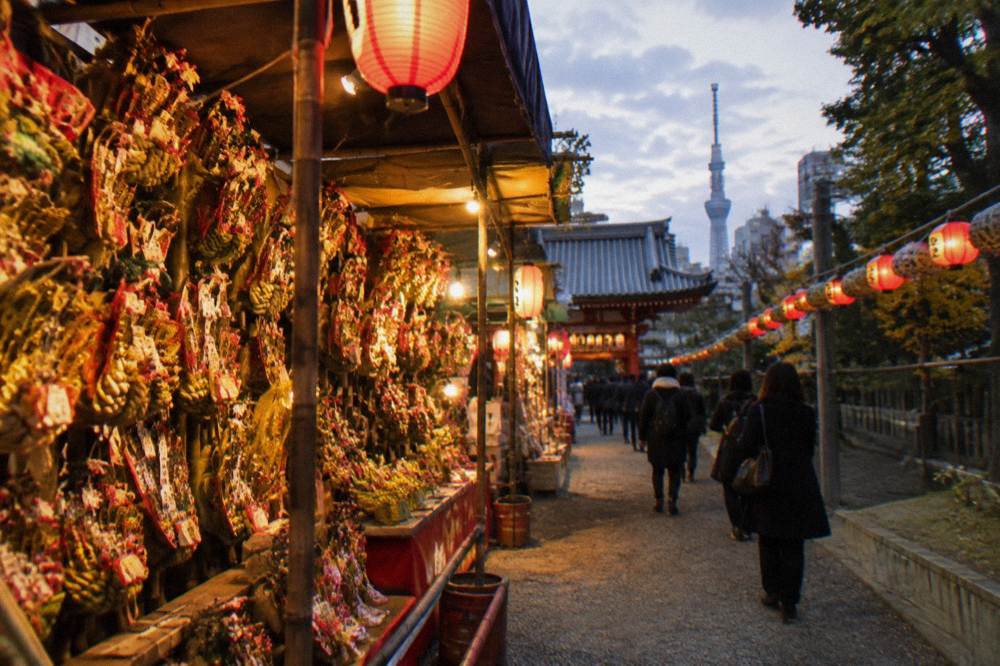
In November, the Tori-no-ichi fair at Otori Shrine in Asakusa fills the streets with lucky rake charms. The organiser gives 7 November and 19 November 2026 as the days. Entry is not ticketed; the rakes and food are paid.
On 2 January the Imperial Palace New Year General Greeting draws crowds to the east courtyard. The 2026 edition ran entry from 9:30 to 14:10 through the Main Gate, with exit via the Sakashita, Kikyo, Otemon or Inui gates, and the Emperor appeared on the balcony about five times. There is no charge. The 2027 schedule has not been announced, so treat the 2026 greeting times as the annual pattern until the Imperial Household Agency posts the next notice.
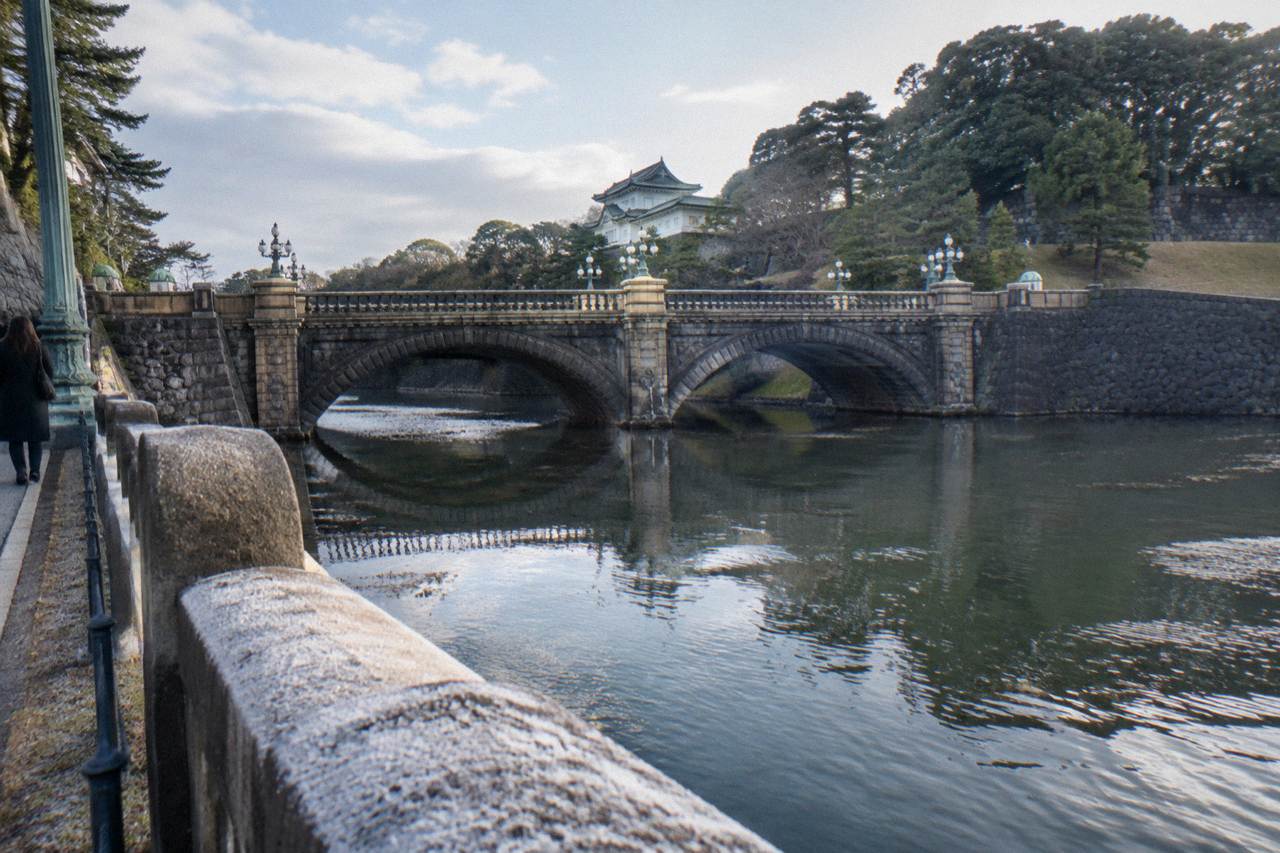
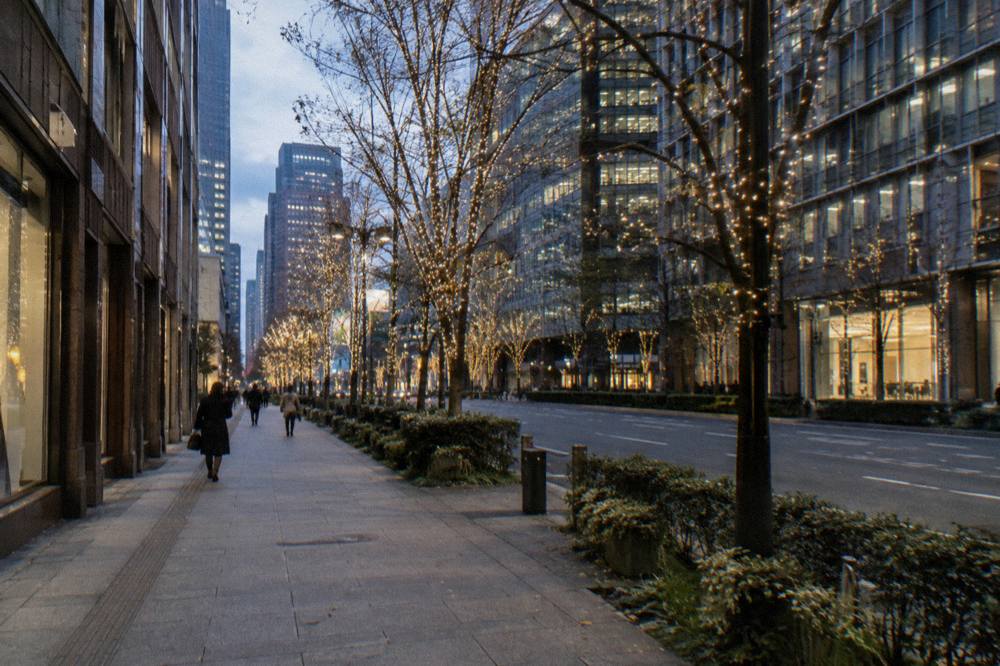
Around the palace, the Marunouchi Illumination lights Naka-dori from 12 November to 25 December 2026. Viewing from the street needs no ticket; food and shopping are paid.
If you want a guided angle on these districts, the free pay-what-you-want walking tours on this directory cover Asakusa and shrine neighborhoods with local guides. Each guest decides at the end what to pay. You can also read up on neighborhoods and seasonal timing in the blog.
Everything else on this page, every gate, hall, torii tunnel and shopping lane, is free to walk.
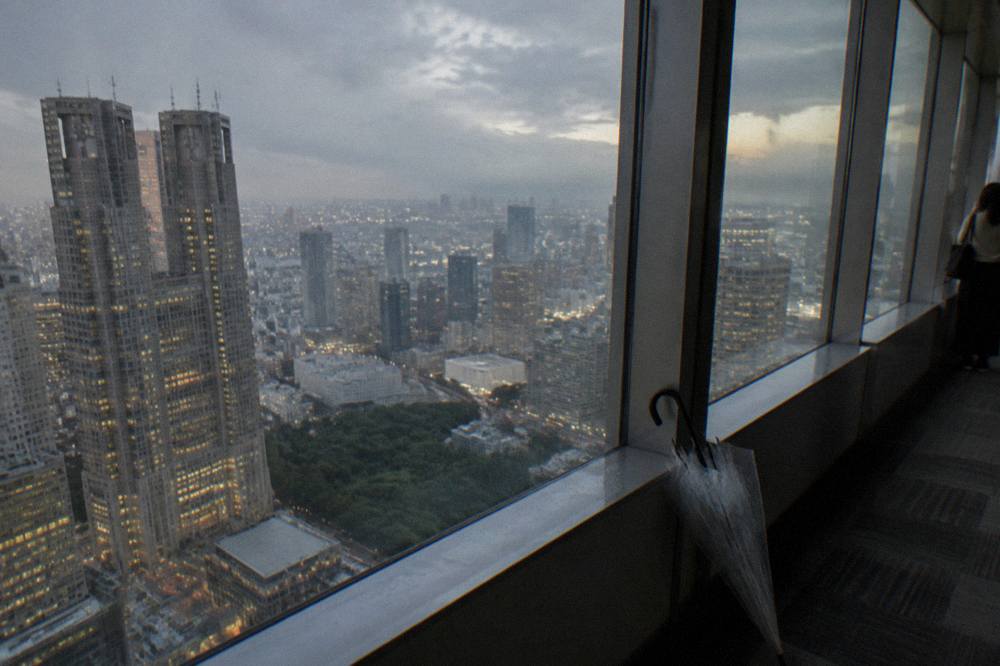
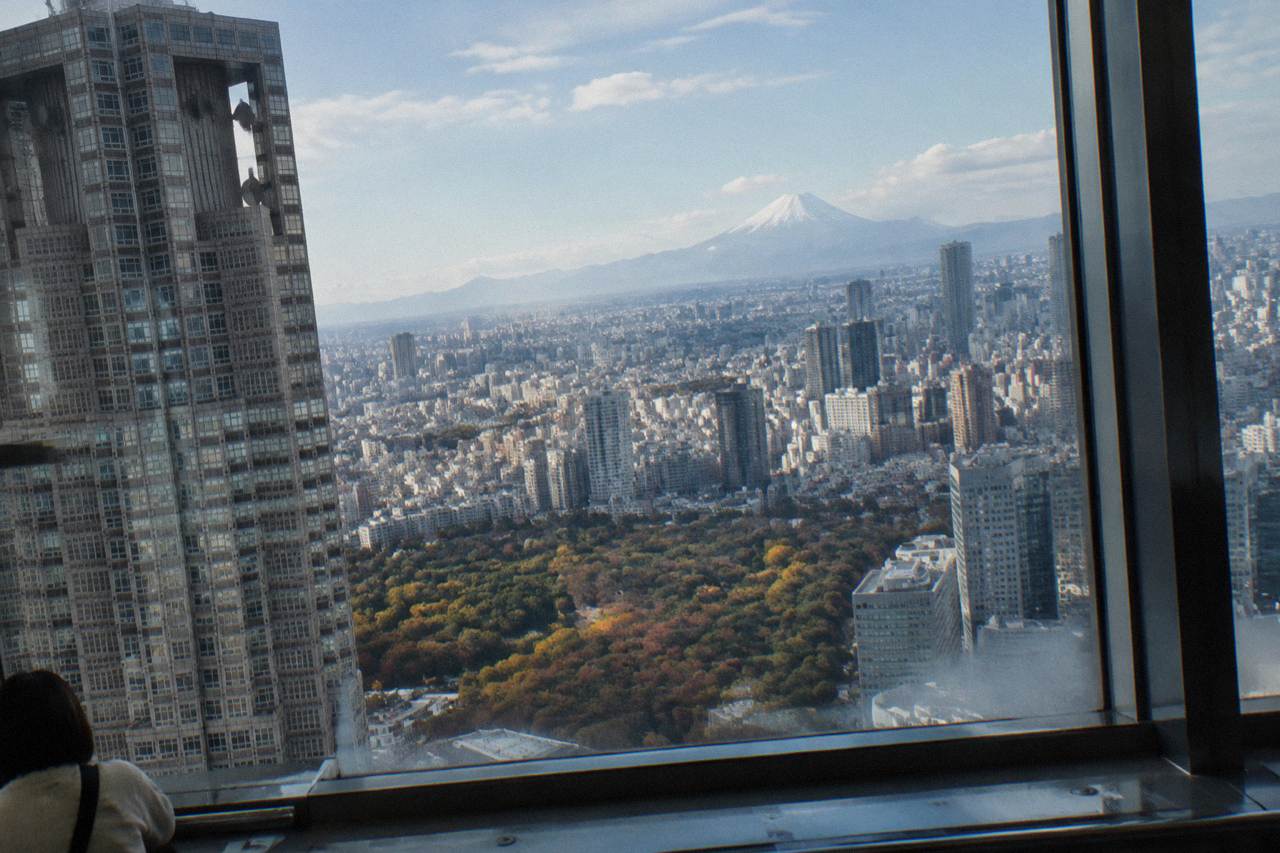
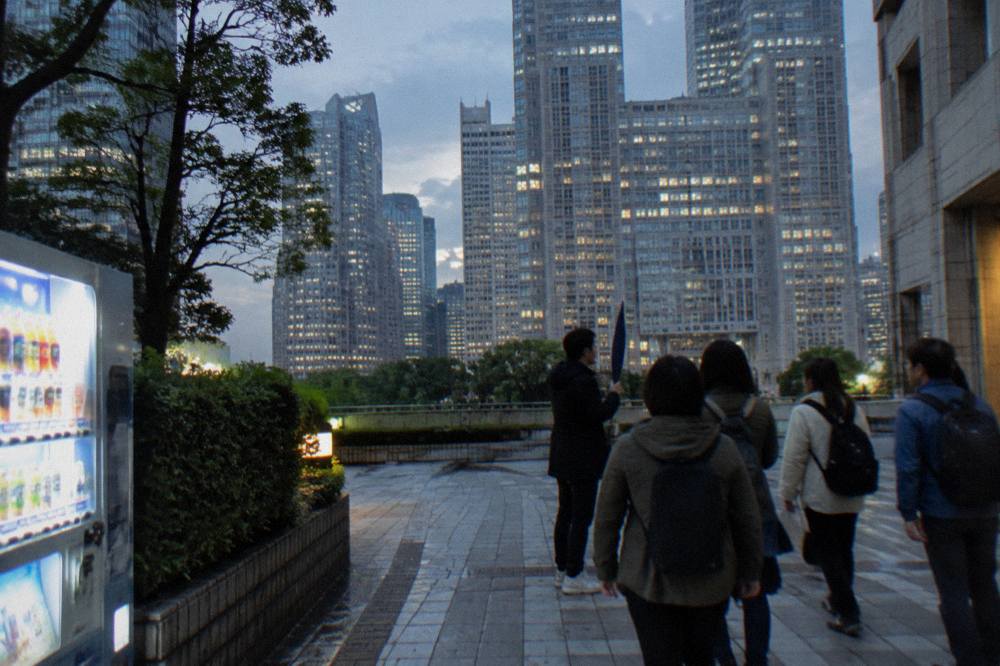
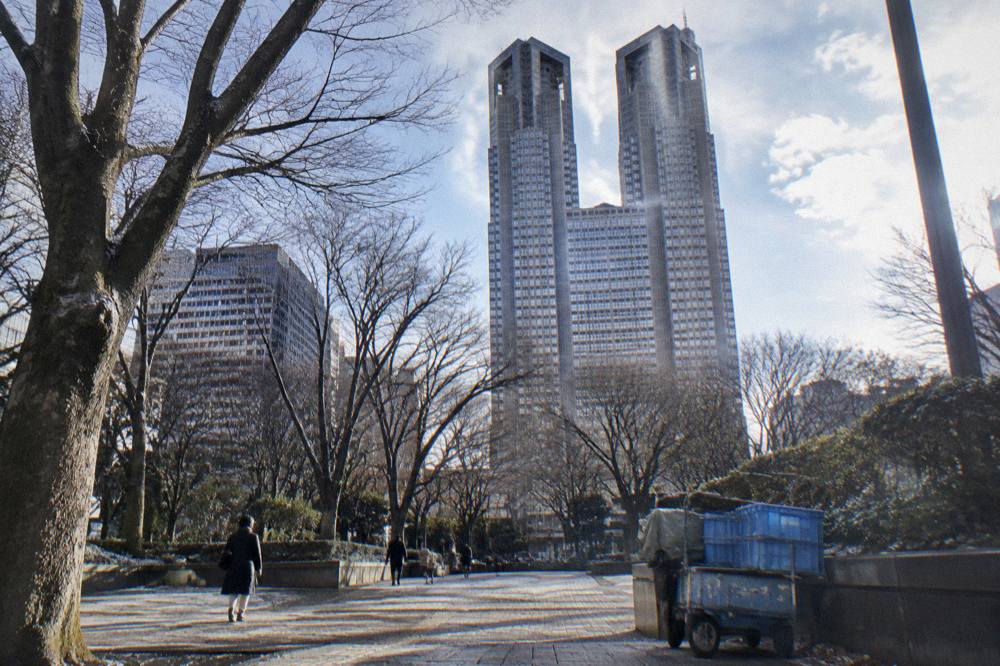
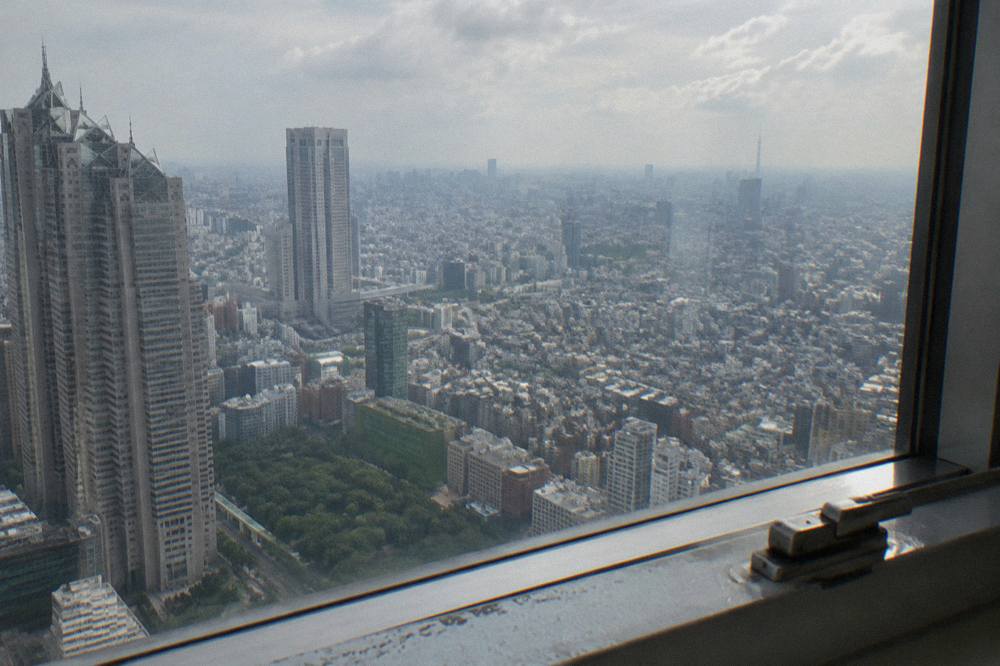
The best skyline view in Tokyo is free, and it is not a secret one. The Tokyo Metropolitan Government Building in Shinjuku runs two observatories at 202 metres, with no reservation and nothing to pay. You walk in, go up, and look.
The South Observatory takes entries from 9:30 to 21:30, which makes it the evening option. The North Observatory takes entries from 9:30 to 17:00. The closure pattern matters: South is closed the 1st and 3rd Tuesday of the month, and North is closed the 2nd and 4th Monday, though when that Monday is a holiday they open and close the next day instead. Both close 29 to 31 December and 2 to 3 January. Tripods are not allowed, the shops and cafe inside are separate, and bad weather can close either deck at short notice, so check the observatory account on the day.
Both towers remain open, with no renovation notice posted.
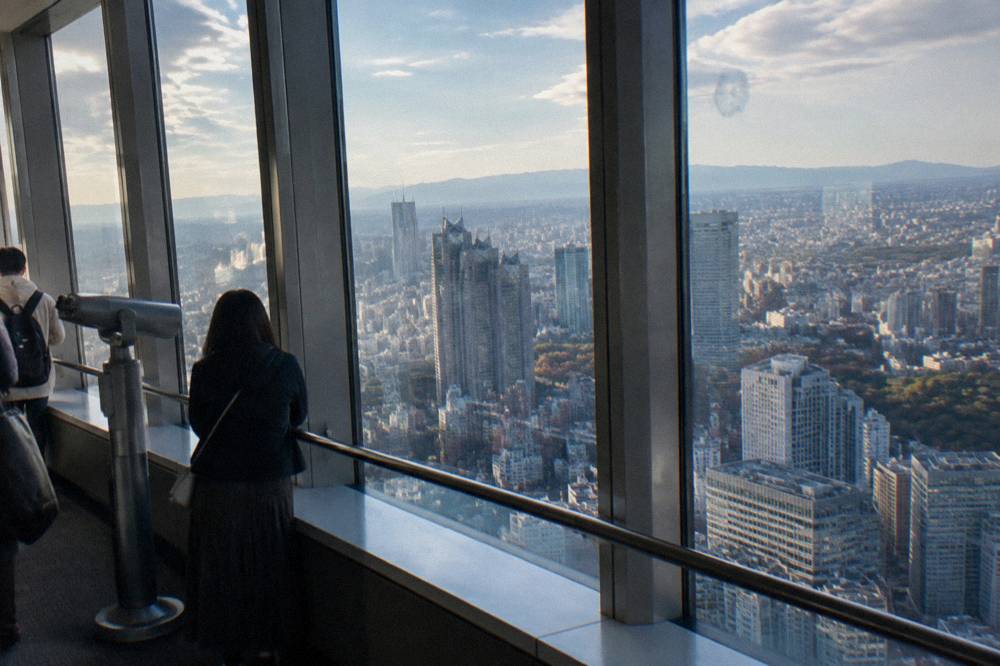
The Bunkyo Civic Center Observation Lounge, a free 25th-floor lounge at about 105 metres, is the other classic free deck, but it is closed for renovation since 1 March 2025. The ward plans a reopening in early December 2026. Do not plan around it until Bunkyo confirms the doors are actually open.
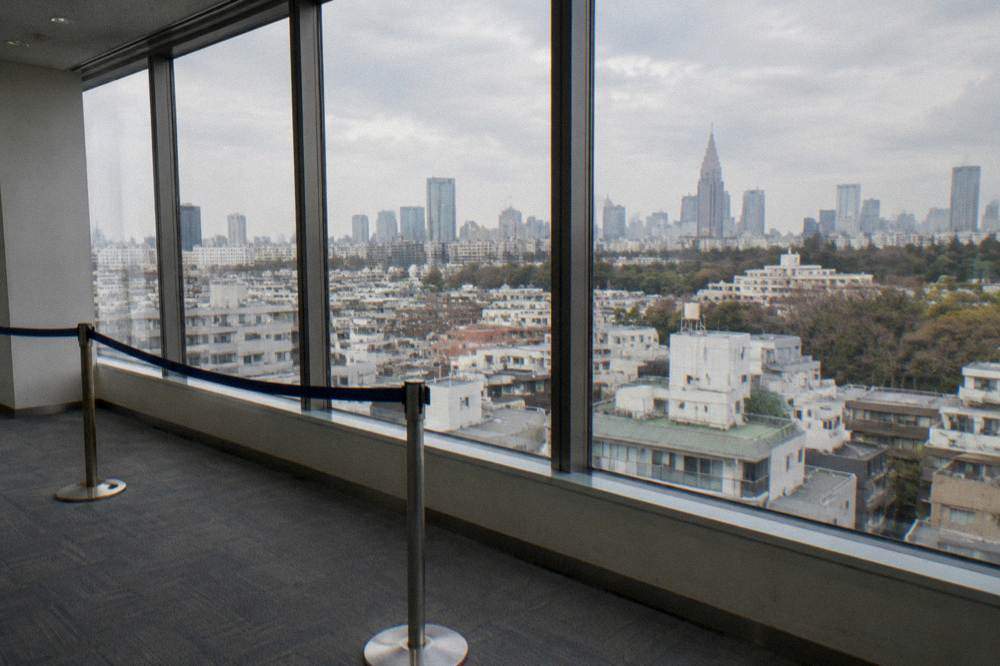
Each of the big three has a free base and a paid deck, and the distinction is where visitors get caught.
Tokyo Tower lets you walk up to the tower and through its Foot Town shopping floors without a ticket. The decks are another matter: the Main Deck at 150 metres starts from JPY 1,500 adult on the official web ticket site, and the Top Deck Tour from JPY 3,300 at the web price. If you want the tower for free, walk the base and then go see it from Zojo-ji grounds, or head to the Metropolitan Government observatories.
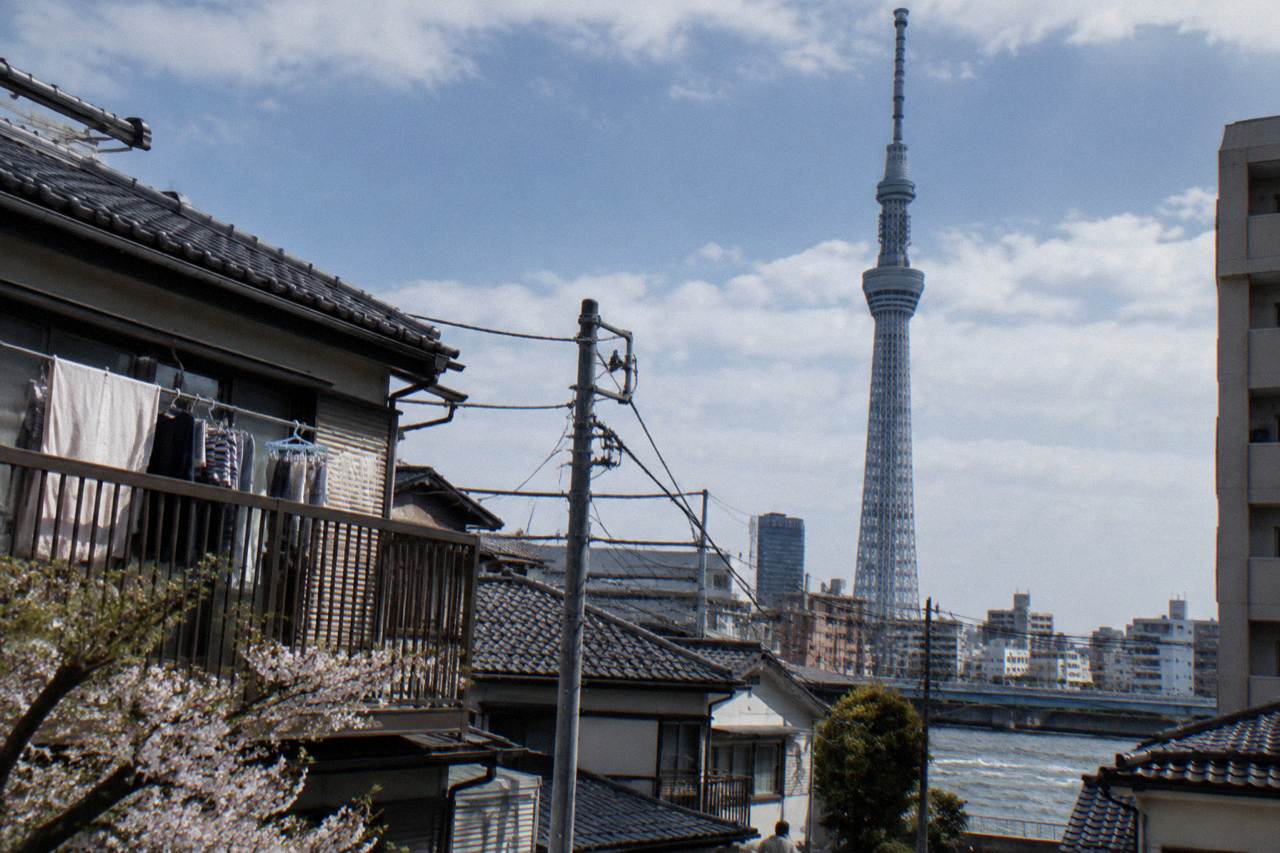
Tokyo Skytree works the same way. The Solamachi shopping complex and the tower base are open to walk through. The observation decks are ticketed from JPY 3,000 adult and JPY 1,500 for children 6 to 14, with children 5 and under free. Pricing is dynamic, and buying at the counter adds a JPY 500 service fee, so the web ticket is the cheaper route if you go.
Shibuya Sky is a ticketed rooftop deck with no free base tier at all. The price varies by date and time, so read the live figure on its official ticket page before you plan around it. The free alternative next door is Shibuya Crossing itself, best watched from above for nothing at the Metropolitan Government observatories.
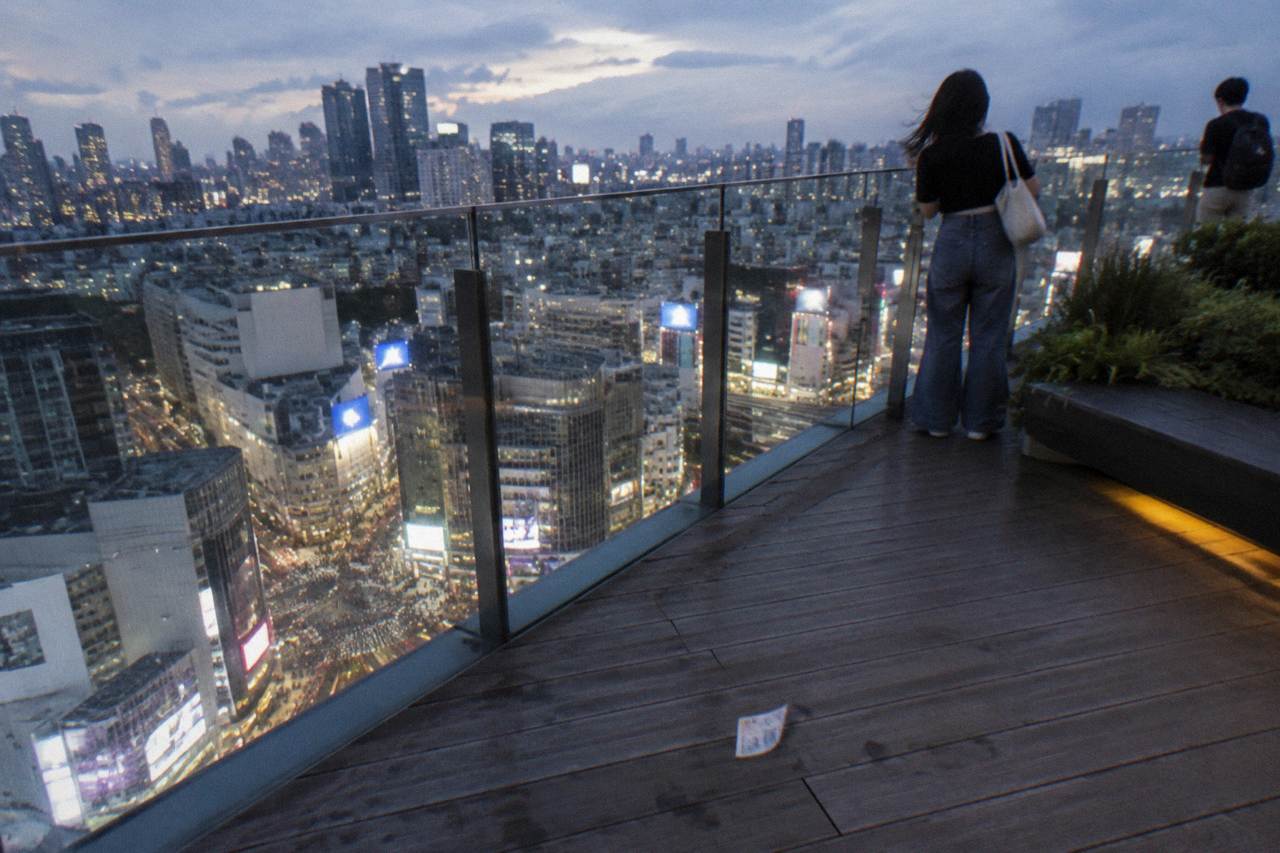
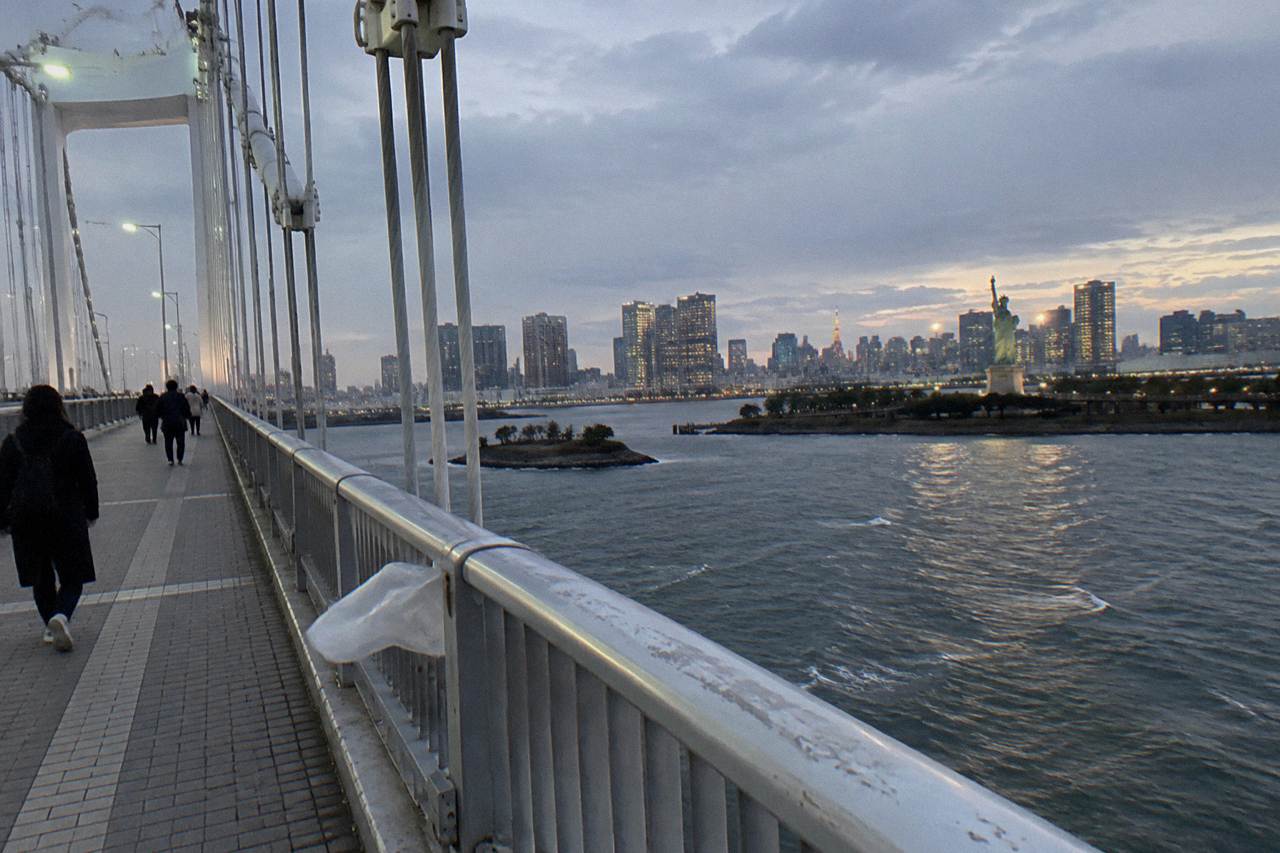
For a free skyline view that moves, walk the Rainbow Bridge Promenade, a free pedestrian walkway across Rainbow Bridge. From April to October it runs 9:00 to 21:00, and from November to March 10:00 to 18:00, with last entry 30 minutes before close. It closes the 3rd Monday of each month, or the next day if that is a holiday, and entry can be refused for maintenance or weather.
There is nothing to pay for the walk itself. The Odaiba-side teamLab and shopping options at the far end are separate, paid visits.
For a free guided walk with skyline stops, browse the free walking tours on this directory, where each guest pays the guide what they want at the end. The blog covers viewing spots and seasonal light-ups in more depth.
Most of Tokyo's big parks are free and open around the clock. The trap is the word "garden": several of the most famous gardens are ticketed, and one of them, Shinjuku Gyoen, is the park everyone assumes is free and is not. Here is the split.
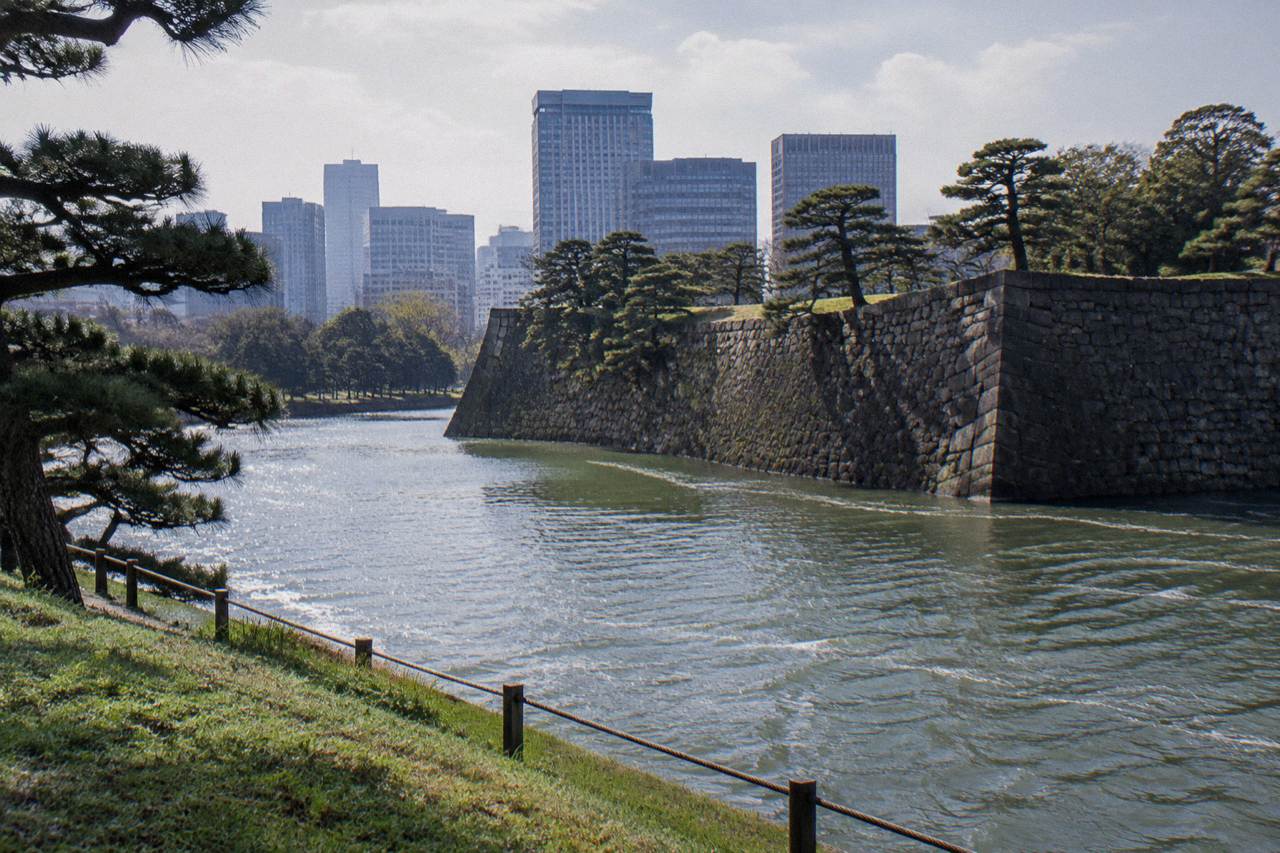
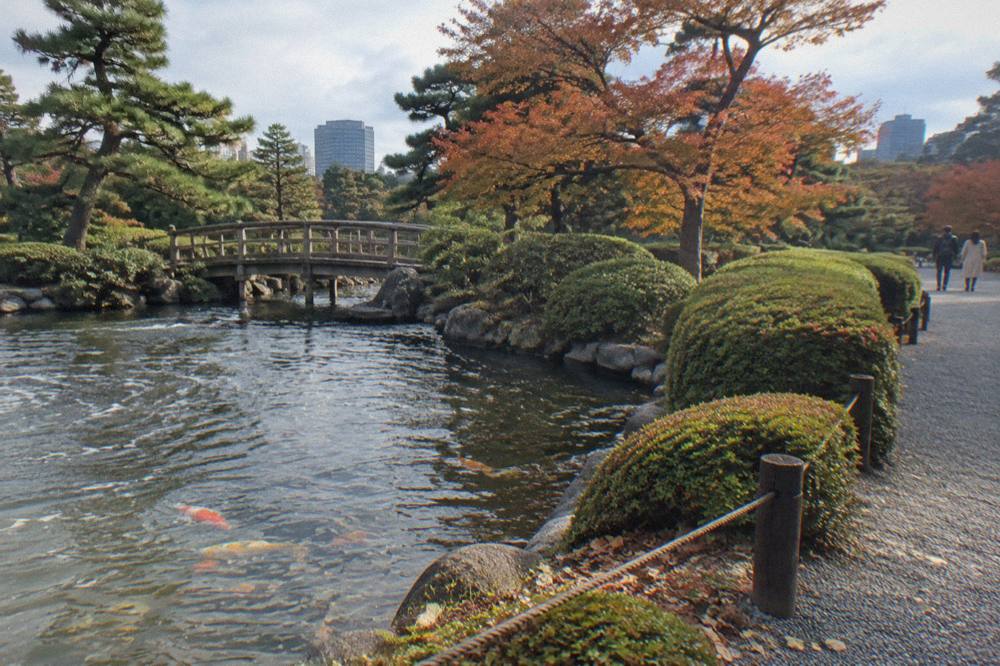
The Imperial Palace East Gardens charge nothing. They open 9:00 to 16:00 from November to the end of February, with entry until 15:30, and 9:00 to 16:30 in October, widening to 18:00 in summer. They are closed every Monday and Friday, on the Tuesday after a Monday holiday, from 28 December to 3 January, and on days of Imperial Court functions; they do open on national holidays except 23 February. Enter through the Otemon, Hirakawa-mon or Kitahanebashi-mon gates.
The Imperial Palace Outer Garden is an open public plaza of lawns and moat paths with the Nijubashi bridge view, managed by the Ministry of the Environment. There is no fee for the plaza. Rest houses and parking are paid, and the Wadakura Free Rest Spot is the official name of a rest area.
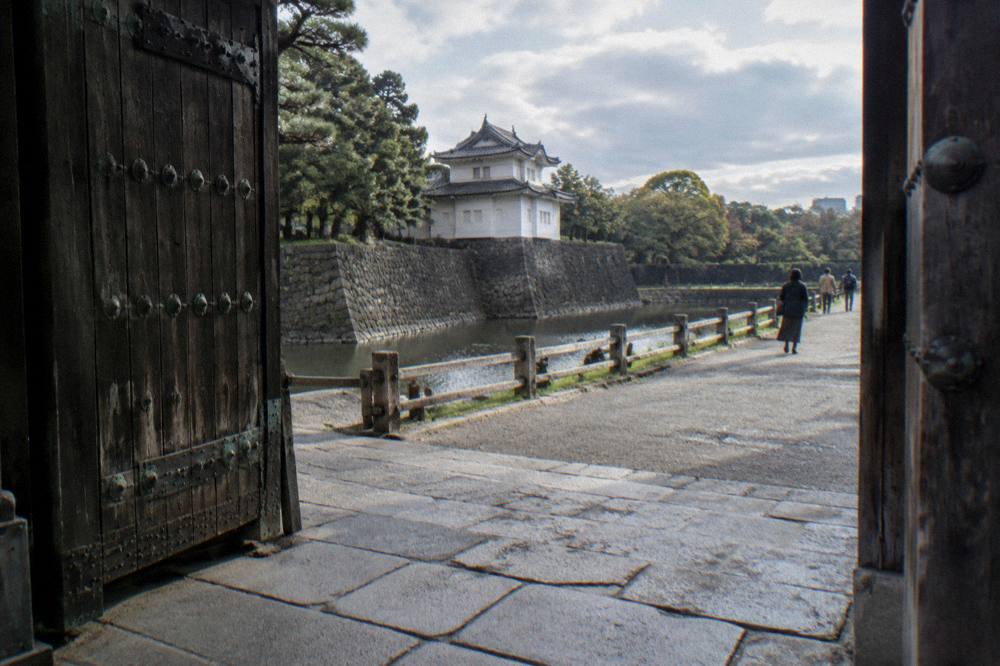
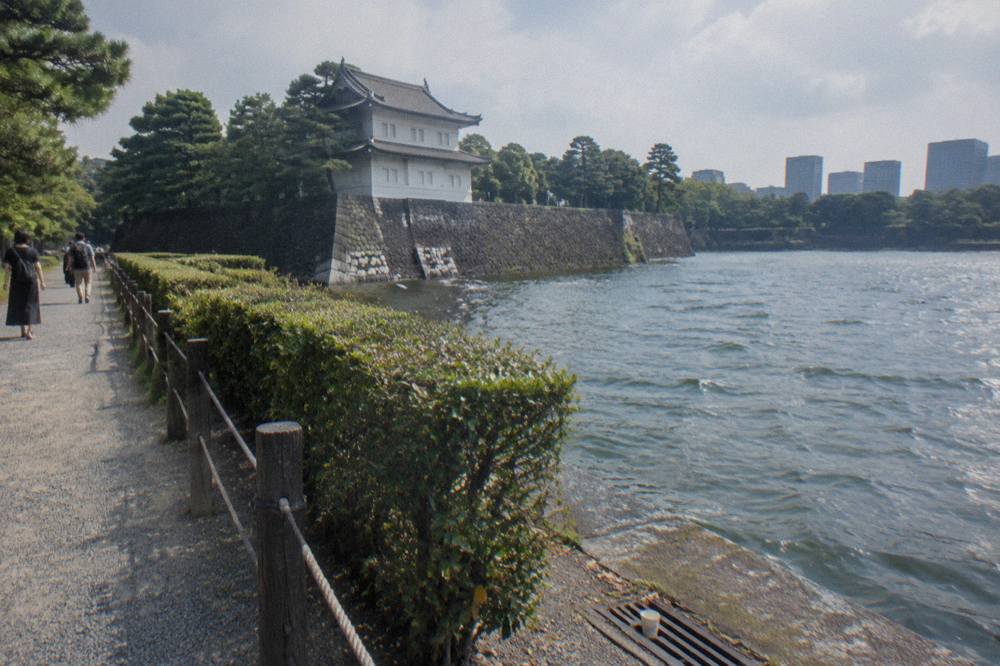
The Imperial Palace guided tour is also free: a walk of about 2.2 km, roughly one hour, run by the Imperial Household Agency. Entry needs an application, online from 5:00 on the 1st of the month before the visit until 4 days before, or a same-day numbered ticket at the Kikyomon gate, with ID. Tours pause on court functions, and same-day availability cannot be promised.
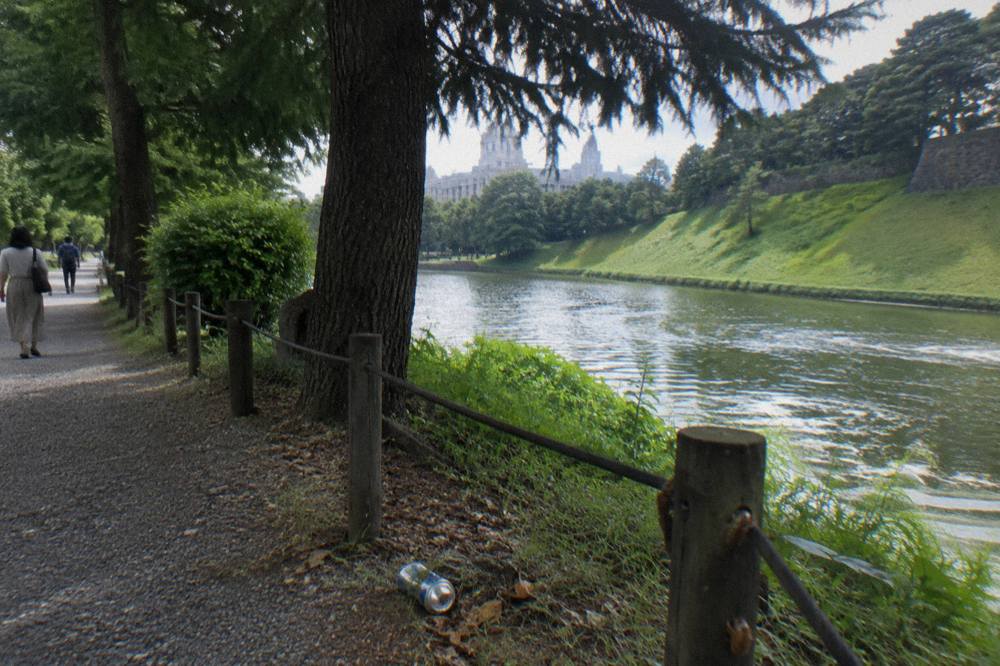
Kitanomaru Park, north of the palace, is free and open at all times with no closing days, though public use is restricted on days of state functions. Lights go off around 22:00 and the ministry asks people not to use the park late at night. Parking, the Science Museum and Budokan events are paid separately.
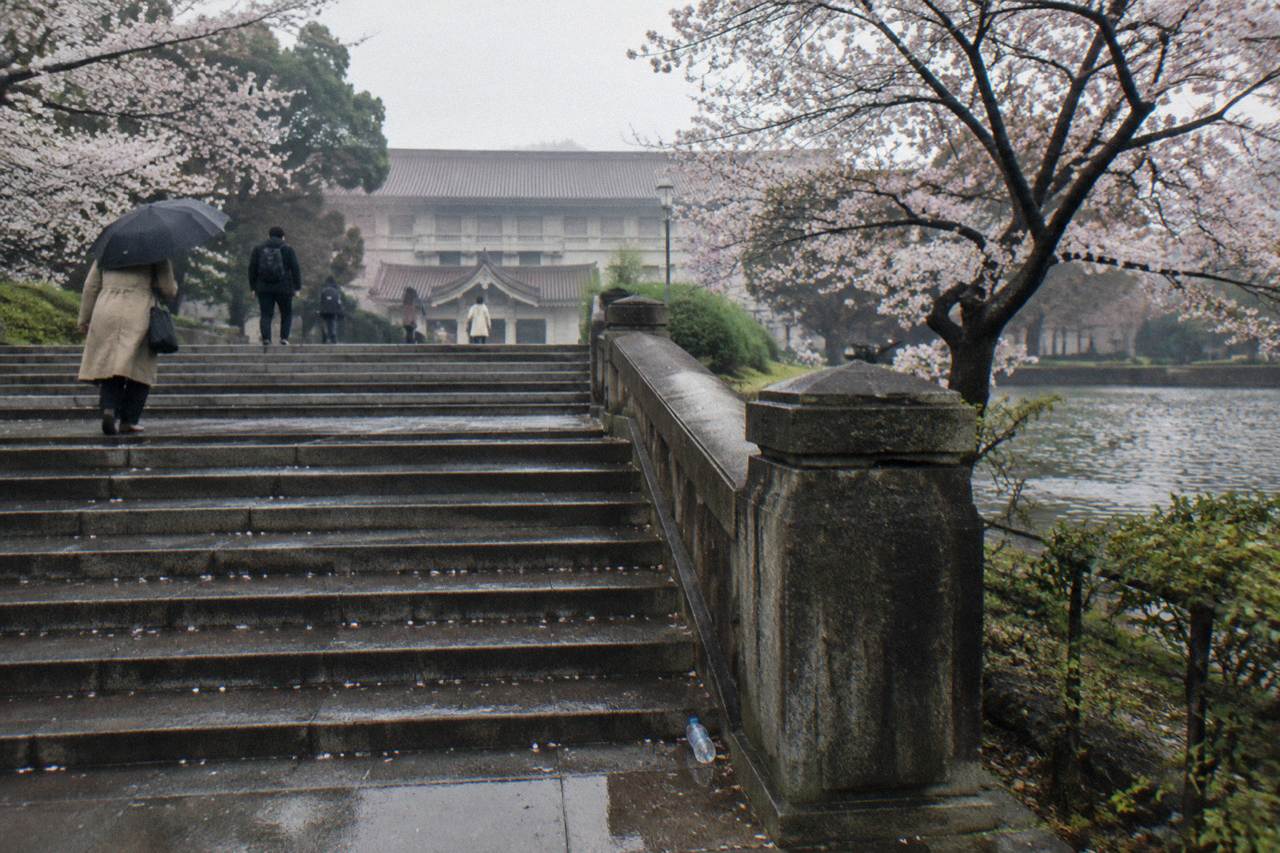
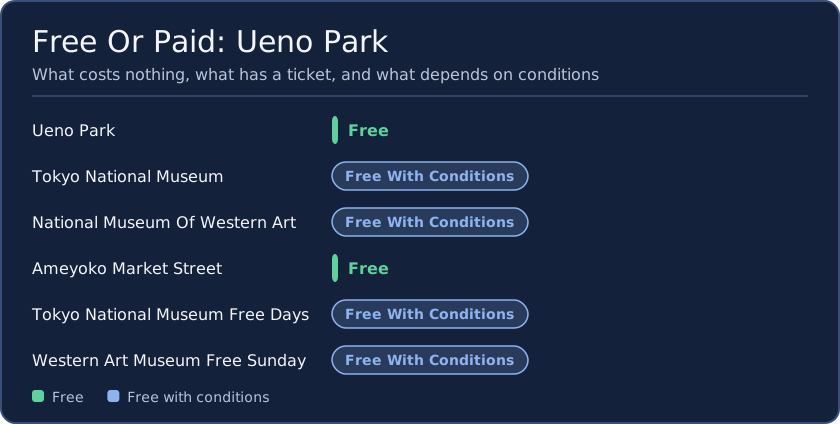
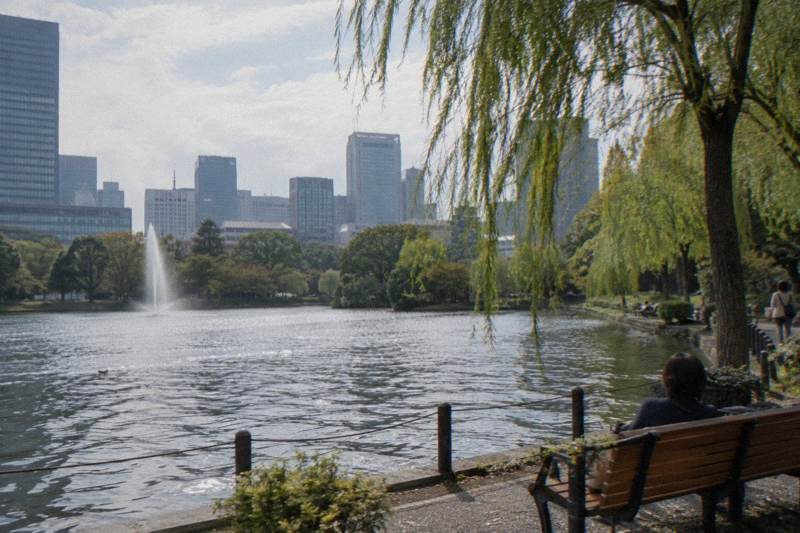
Hibiya Park is free and open at all times, with a service centre staffed 8:30 to 17:30 except at New Year; some facilities and events are paid. Yoyogi Park in Shibuya is free and open at all times, with some paid facilities, and the roads outside jam on weekends. Ueno Park is free and open at all times, though the museums and zoo inside charge their own admission, with the Tokyo National Museum at JPY 1,000 adult.
Inokashira Park in Musashino and Mitaka, outside the 23 wards, has free entry and stays open at all times; the rowboat pond has paid boat hire. Sumida Park and its river walk line both banks of the Sumida with Skytree views, and there is nothing to enter.
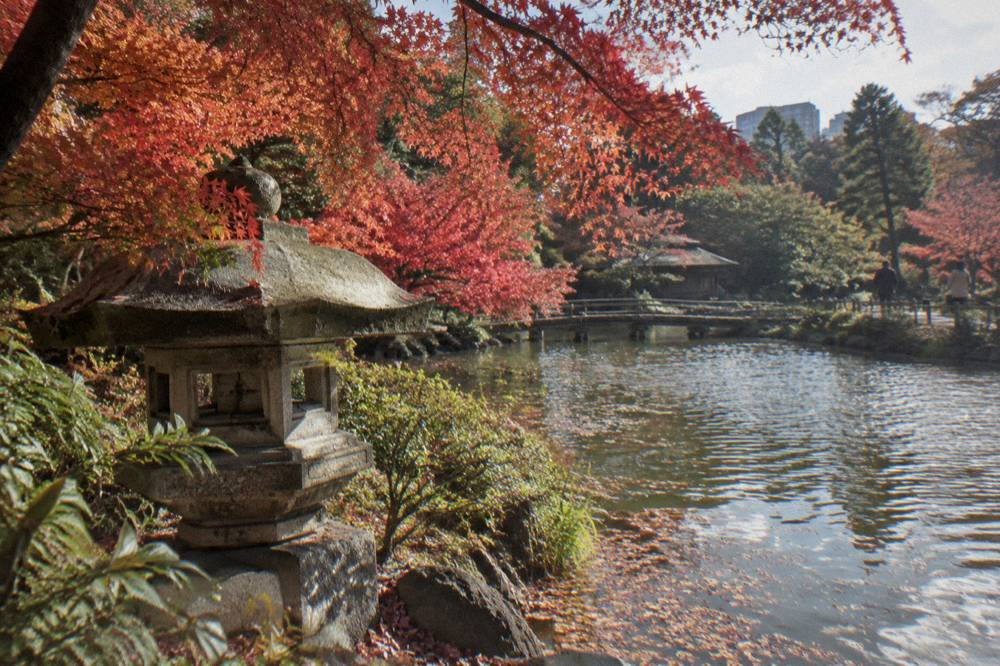
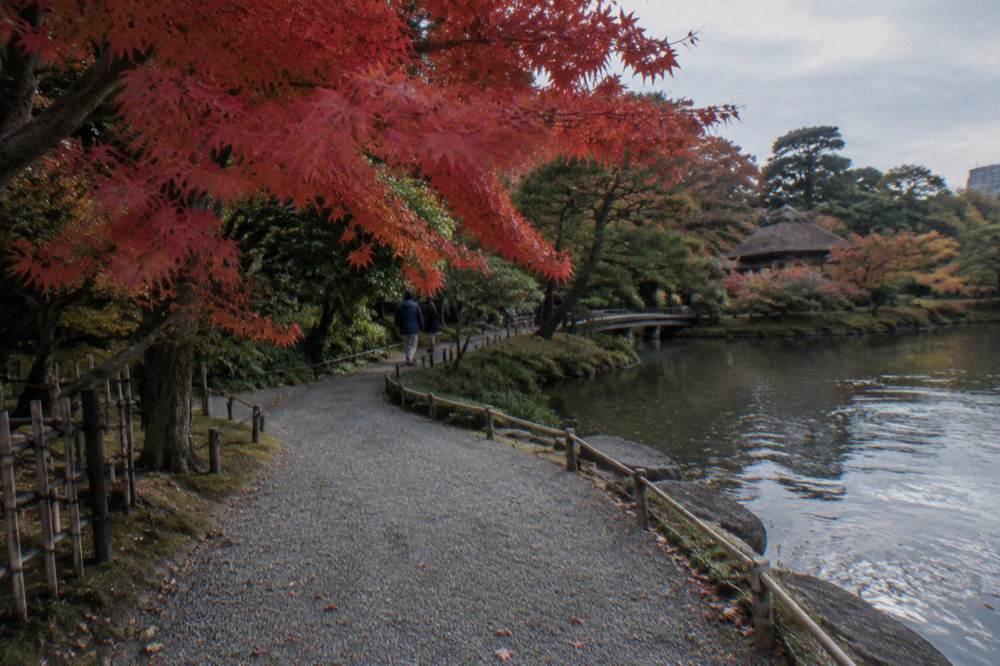
Five famous green spaces in Tokyo sell tickets. Know them before you plan a "free park day".
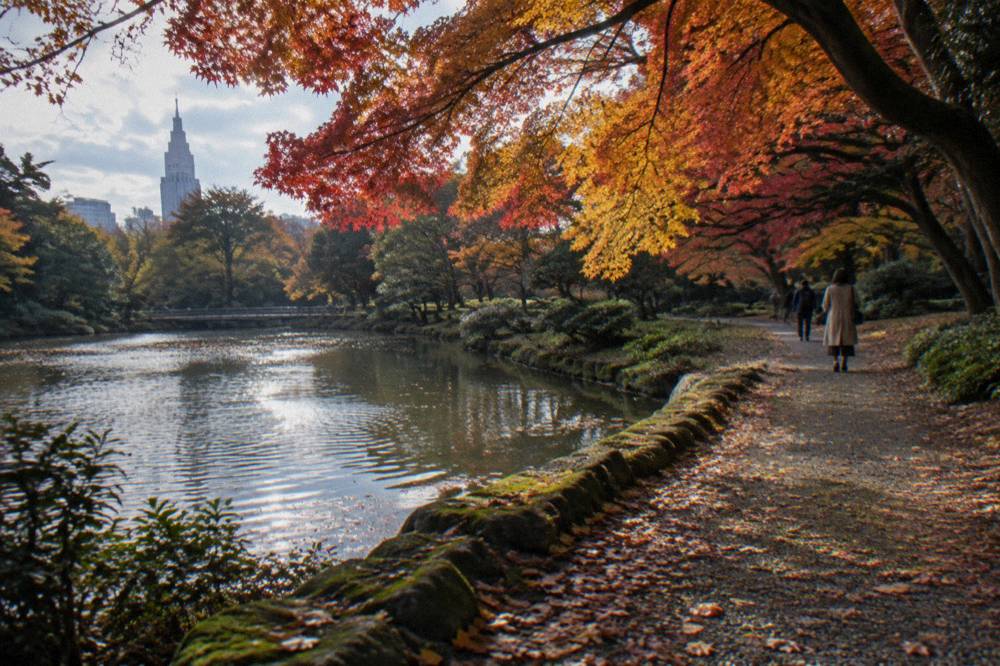
The free shrine does not mean a free garden at Meiji Jingu, and the same logic applies across this list. If a name has "garden" in it, check before you queue.
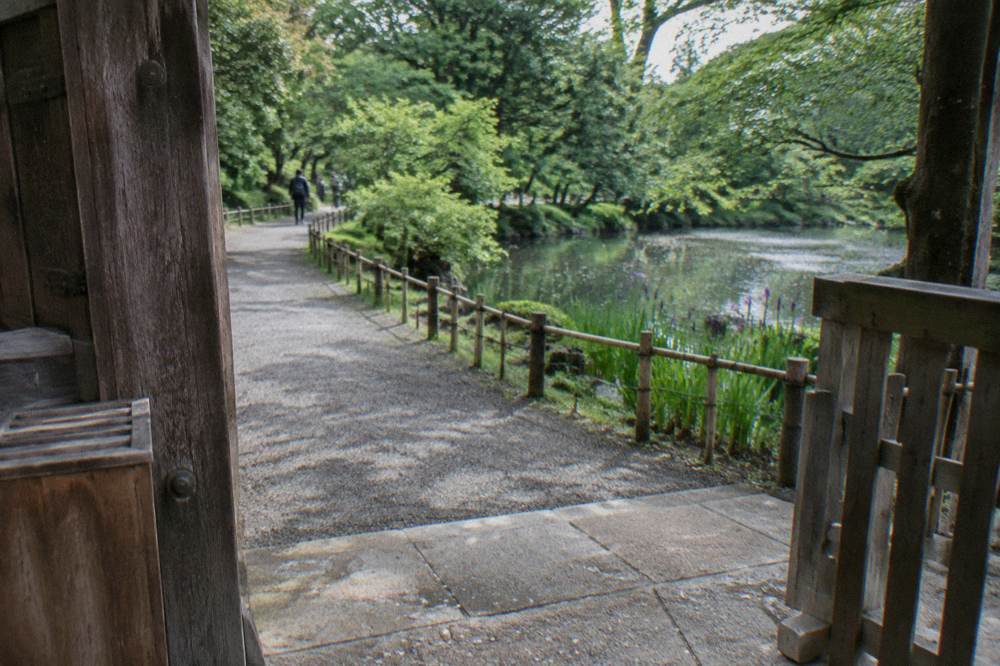
To cover several of these in one day with a local, look at the free pay-what-you-want walking tours in the directory: you join for free and decide at the end what to pay the guide. The guides page introduces who leads them, and the blog has seasonal notes on the gardens.
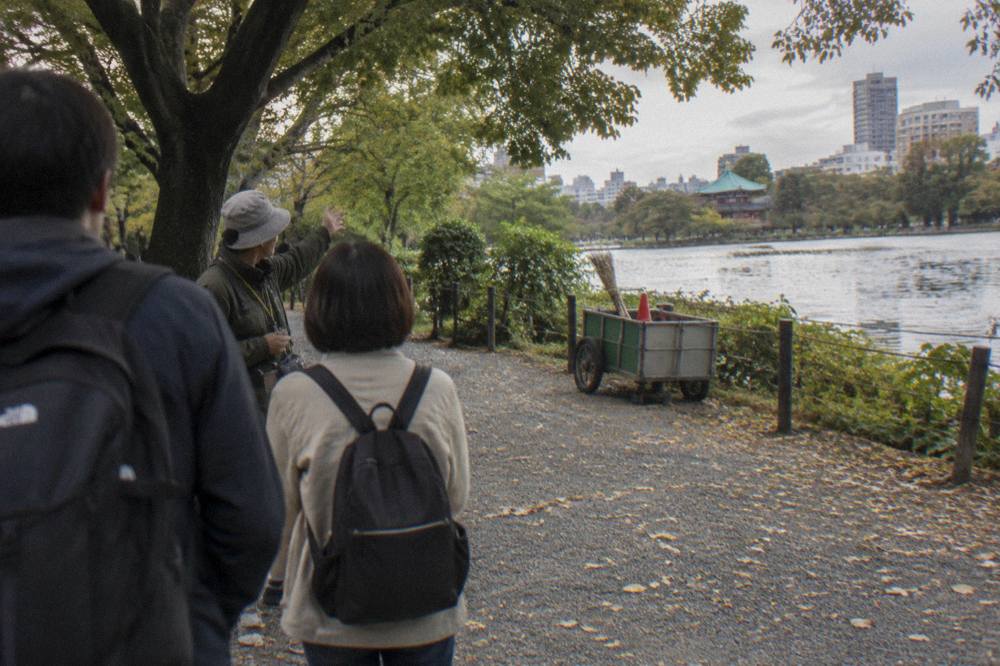
Tokyo splits its museums into three useful groups for a free day: museums that never charge, museums that are free only on set days or with conditions, and museums that always charge. This page's cards cover all three. Here is how the pieces fit together before you scroll.
The always-free list is longer than most visitors expect. The Currency Museum Bank Of Japan in Chuo is free, open 9:30 to 16:30 with no entry after 16:00, and closed Mondays, though it opens when a Monday falls on a holiday, plus a closure from 29 December to 4 January. The Meguro Parasitological Museum in Meguro is free with donations welcome, open 10:00 to 17:00, closed Mondays and Tuesdays (if a closure day is a holiday it opens and the nearest weekday closes instead) and at New Year. The Tokyo Fire Museum in Shinjuku is free, open 9:30 to 17:00 with last entry at 16:30, closed Mondays and from 29 December to 3 January.
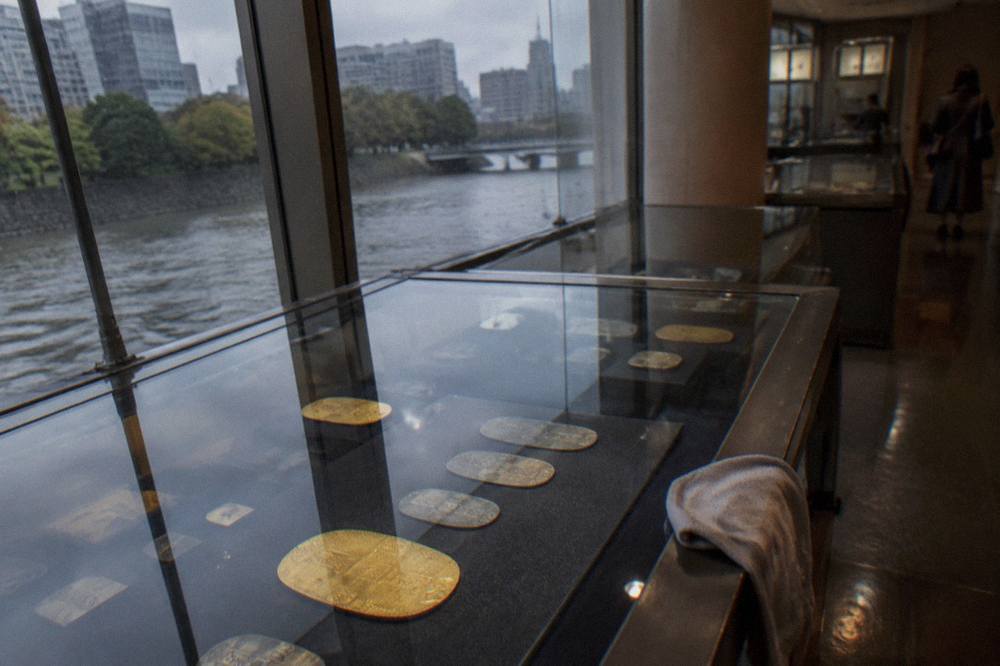
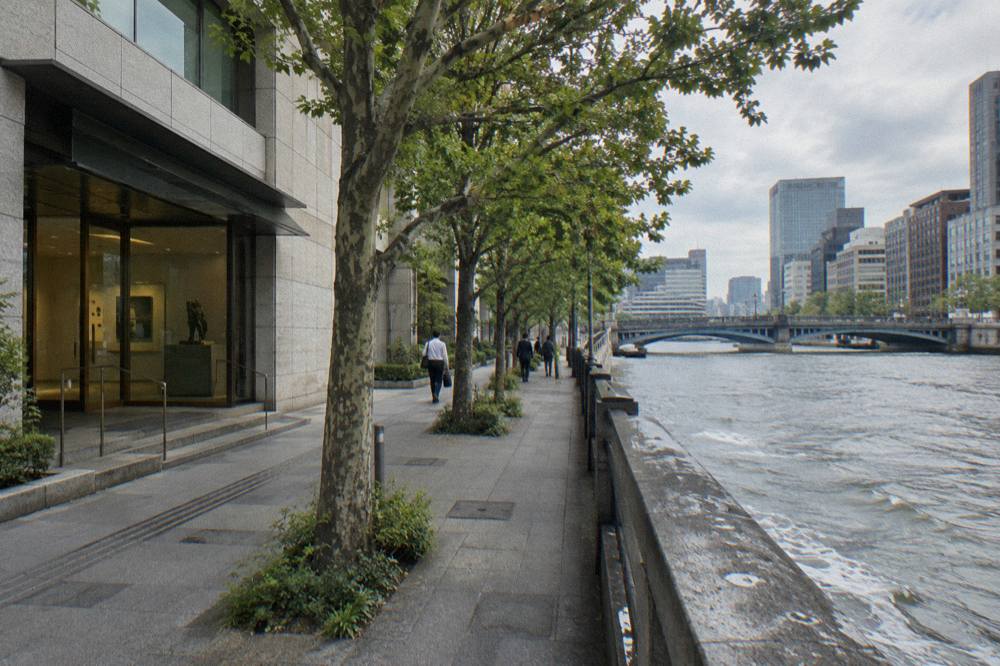
Two more free entries sit in Koto. The Tokyo Water Science Museum is free, open 9:30 to 17:00 with entry up to 16:30, and closed Mondays (or the next day if that Monday is a holiday) and 28 December to 4 January. That neighborhood also has teamLab Planets, but that one is paid, so treat the bay-side walking as the free half of the trip. In Minato, the Advertising Museum Tokyo is free, open Tuesday to Saturday 12:00 to 18:00 and closed Sunday and Monday. Its booking page can be down for maintenance, so check the official site before you go.
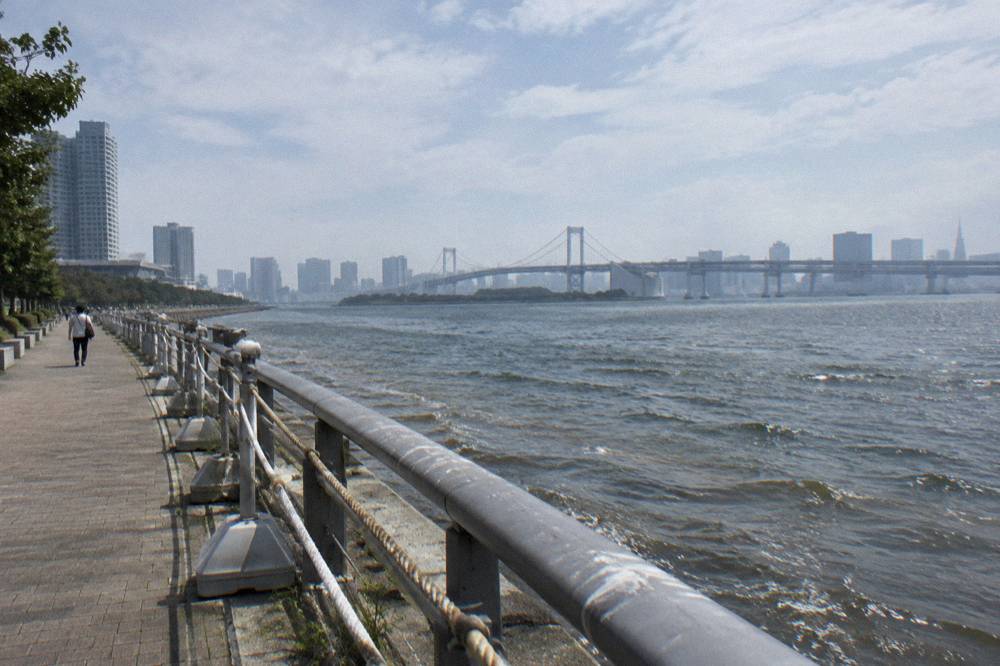
Two entries are conditional rather than simply free. The Sumo Museum inside Ryogoku Kokugikan in Sumida charges nothing for admission, opens 10:00 to 16:30 with last entry at 16:00, and closes Saturdays, Sundays, public holidays (with a few open days) and at New Year. During the Tokyo tournament weeks it instead opens 12:30 to 16:00 and requires a tournament ticket, so it is effectively a weekday, non-tournament stop. The next Tokyo tournament after now is in January 2027. The National Diet Building in Chiyoda runs free tours of the House of Representatives with English available, but only with an advance reservation made at least 24 hours ahead. Walk-ins are not accepted, so this one needs planning from home.
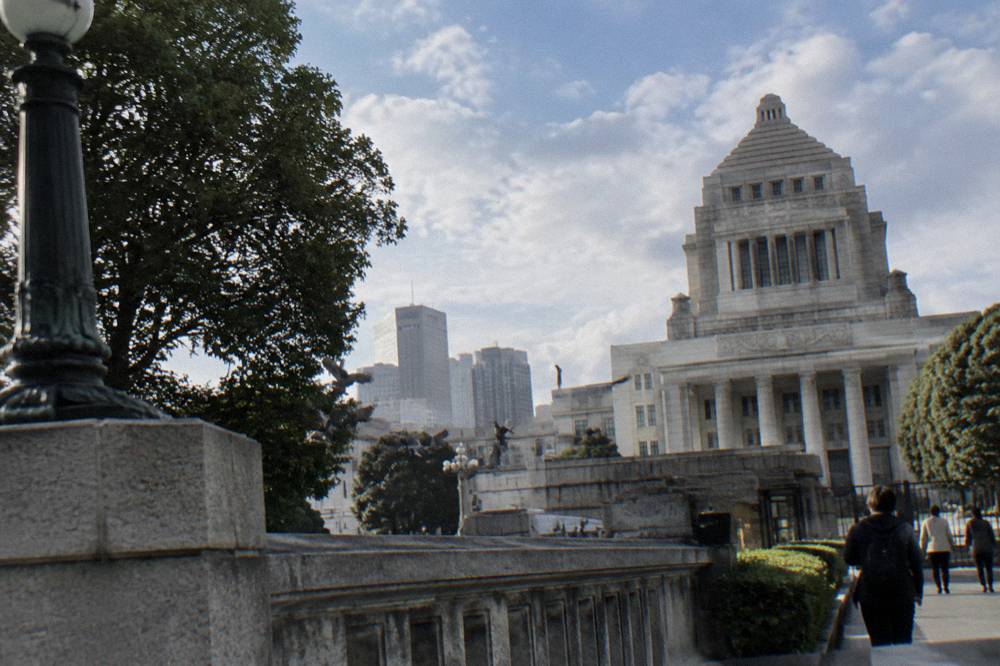
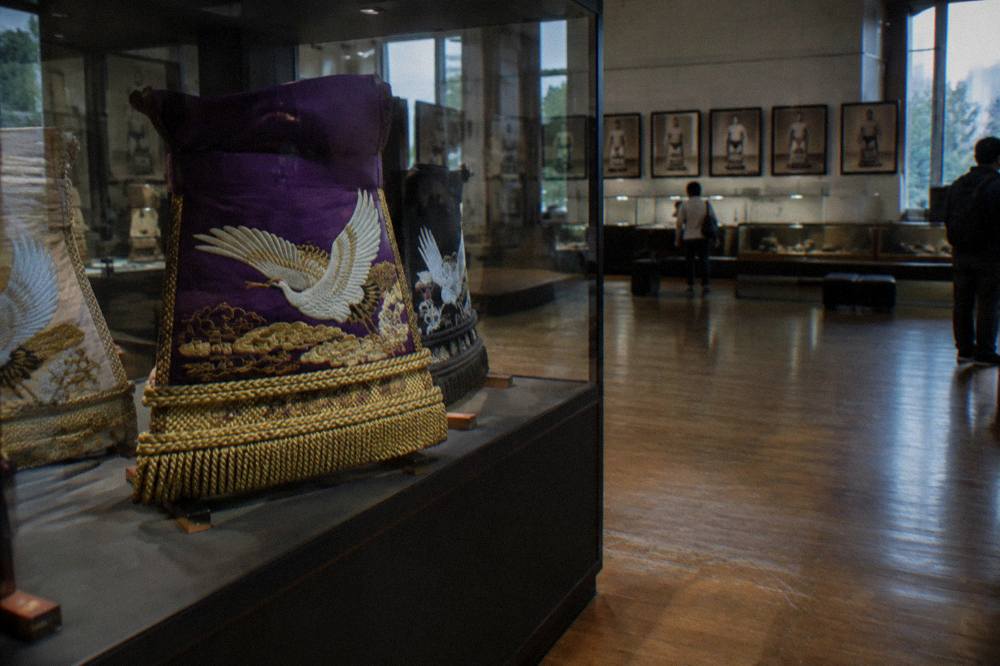
In Ueno, the two national museums have free days but charge most days. The Tokyo National Museum is free for under 18s and over 70s with proof of age on any day, and its collection exhibitions were free on 19 May, 21 September and 3 November in 2026. All of those dates have now passed and 2027 dates were not published, so check before counting on one. On every other day adults pay JPY 1,000 and university students JPY 500, and special exhibitions always need a separate ticket. The National Museum Of Western Art next door has the more reliable scheme: its permanent collection is free for everyone on the 2nd Sunday of each month, plus 18 May and 3 November, with the next 2nd Sunday on 13 December 2026. It is always free for high school students and younger, over 65s and under 18s. Otherwise adults pay JPY 500 and college students JPY 250, and special exhibitions are ticketed separately.
The rest charge every day. The Meiji Jingu Museum in Shibuya costs JPY 1,000 for adults and JPY 900 for high school age and younger, with free entry under elementary age, and it closes Thursdays unless that Thursday is a holiday, with last entry 30 minutes before closing. teamLab Planets in Koto is JPY 3,800 for adults, JPY 2,800 for junior and senior high school students and JPY 1,500 for ages 4 to 12, with 3 and younger free, under dynamic pricing. teamLab Borderless at Azabudai Hills is JPY 3,400 for adults, JPY 2,800 for ages 13 to 17 and JPY 1,500 for ages 4 to 12, with 3 and younger free, and it costs JPY 200 more if you buy on site. The Edo-Tokyo Museum in Ryogoku has reopened after its long rebuild and shows hours of 9:30 to 17:30, but it remains a ticketed museum. The Ghibli Museum in Mitaka sells no walk-up entry at all: every admission is by advance reservation only. Pair any of these with the free sights around them, and the paid ticket becomes one line of the day rather than the whole budget.
No residency test, no age gate, no time window.
4.65 · 295 GuruWalk reviews · 2 hours · English
Reserve free on GuruWalk, free, pay what you want
Every free walking tour on this directory starts at a fixed, named meeting point, and almost all of them are spots you can find without a map app: a famous gate, a statue in front of a station, or a specific station exit. Guides do not chase latecomers, so the meeting point matters as much as the start time.
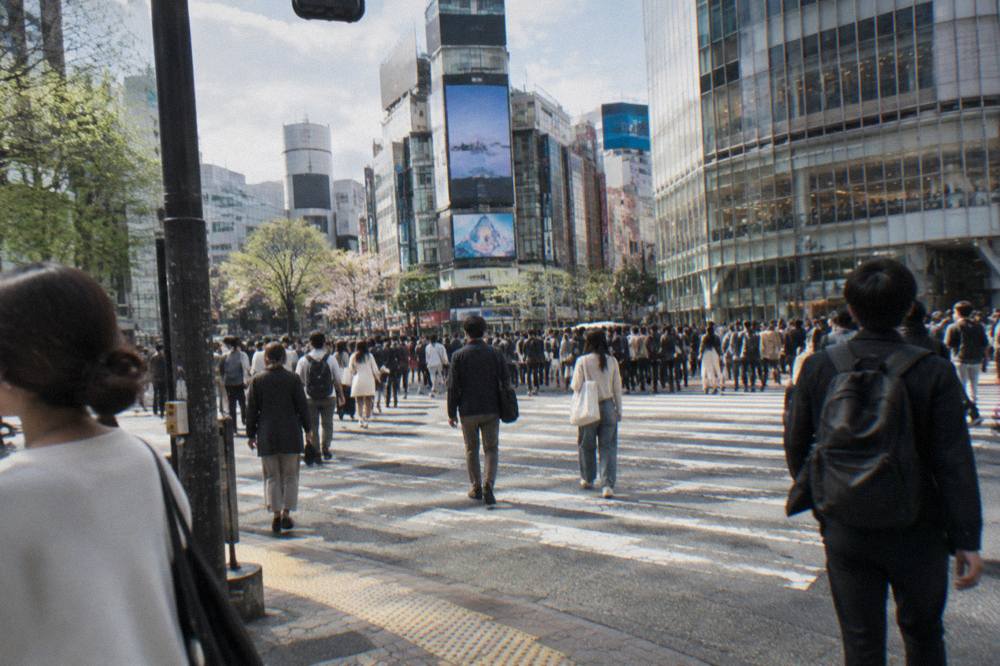
The pattern is simple. In Asakusa, walks gather at the Kaminarimon Gate, at the Kaminarimon Police Box beside it, or at the Asakusa Culture Tourist Information Center. In Shibuya, the meeting point is the Hachiko Statue at Shibuya Station, the station itself, or Dogenzaka. In Shinjuku, walks start at the Tokyo Metropolitan Government Building, the East Exit of Shinjuku Station, or the McDonald's at Seibu Shinjuku. Around the palace, look for Sakuradamon Gate or the Kokyogaien side of the Imperial Palace, while one Ueno-area walk begins in Ueno Park and the Tsukiji walk meets at the stairs of Tsukiji Hongan-ji.
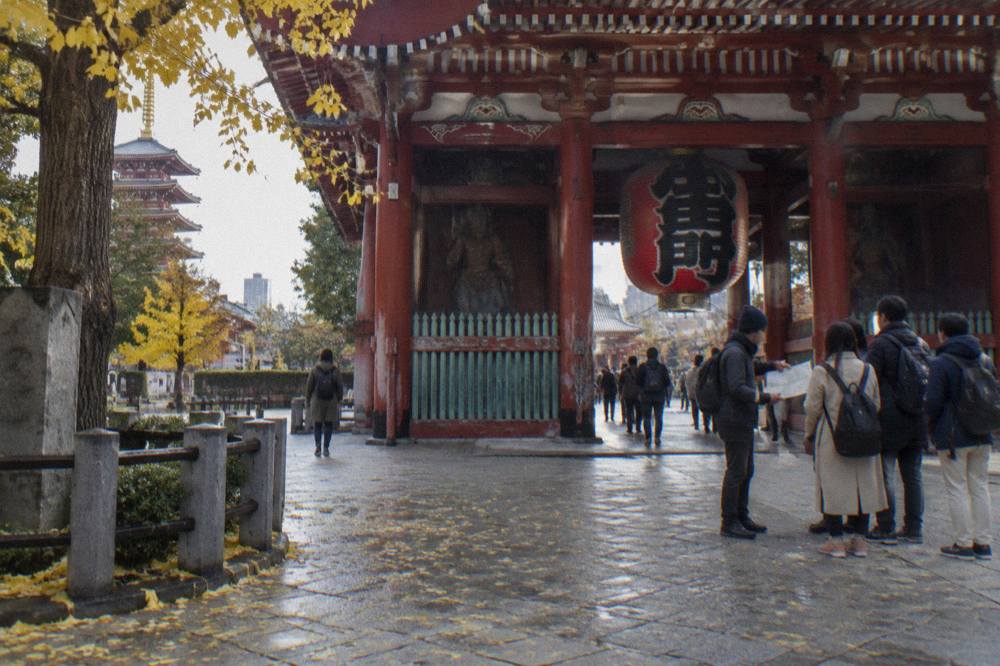
Arrive early rather than on time. A statue or a gate can host several tours at once, so find your guide by the tour name on a sign or phone screen, say hello, and let them check you in against the reservation list. Stations are large and exits are numbered, so if your meeting point says East Exit or a specific exit, follow that wording exactly instead of the first sign you see. The full table below lists the start point, area, length and languages for each walk.
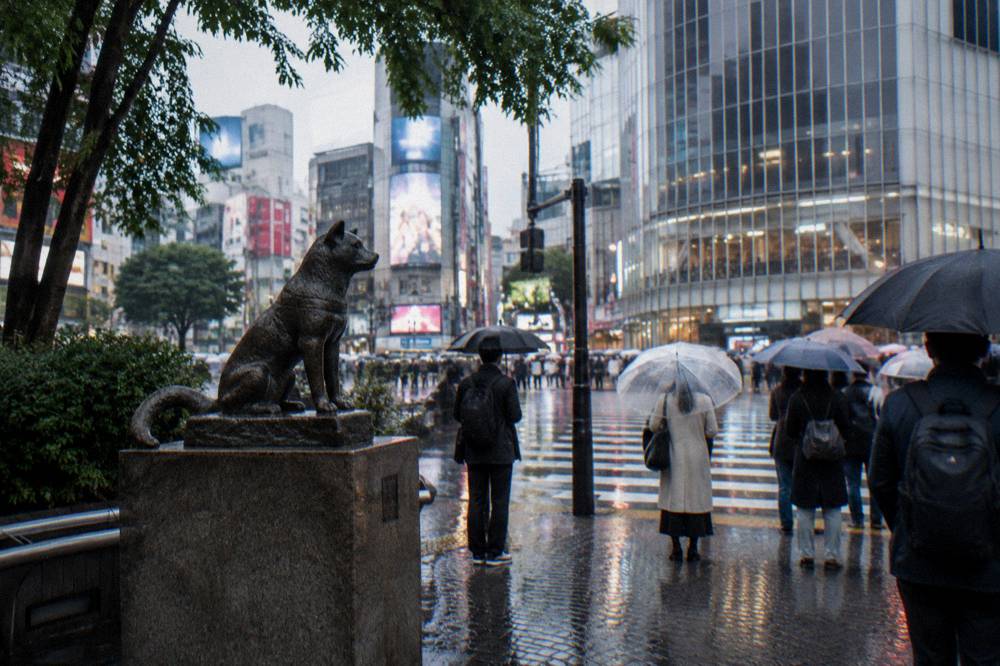
If you have not picked a walk yet, the full tour list covers all 46 free walks, and the guide pages introduce the people who lead them.
| Walk | Starts at | Area | Length |
|---|---|---|---|
| 18-Plus Night Walk, Kabukicho | Tokyo Metropolitan Government Building | Shinjuku | 2 hours |
| Bilingual Shibuya And Harajuku | Hachiko Statue, Shibuya Station | Shibuya | 2 hours |
| Pop Culture Walk, 2h 15m | Hachiko Statue, Shibuya Station | Shibuya | 2 hours 15 minutes |
| Maids Vs Samurai, Akihabara And Ueno | Ueno Park | Akihabara | 2 hours |
| Bilingual Shibuya, Harajuku, Meiji | Shibuya Station | Shibuya | 2 hours |
| Palace Storytelling Walk | Imperial Palace, Kokyogaien | Chiyoda | 2 hours |
| Asakusa Old Town, English | Kaminarimon Gate | Asakusa | 2 hours |
| Asakusa Classic English Walk | Asakusa Culture Tourist Information Center | Asakusa | 2 hours |
| Secret Backstreets, 1h 30m | Shinjuku Station, East Exit | Shinjuku | 1 hour 30 minutes |
| Palace Walk Ending At Tsukiji | Sakuradamon Gate, Imperial Palace | Chiyoda | 2 hours |
| Tsukiji Street Food, 1h 30m | Tsukiji Hongan-ji, Stairs | Tsukiji | 1 hour 30 minutes |
| Dark Side Night Walk | McDonalds, Seibu Shinjuku | Shinjuku | 2 hours |
| Shogun History Walk, English | Imperial Palace, Kokyogaien | Chiyoda | 2 hours |
| Oldest Temple Walk, English | Kaminarimon Police Box | Asakusa | 2 hours |
| Shibuya Only, English | Dogenzaka, Shibuya | Shibuya | 2 hours |
A free walking tour is reserved online, walked in person, and paid at the end, in that order. There is nothing to pay when you book. The whole amount the guide earns is decided by each guest after the walk finishes, which is what pay what you want means in practice.
Reserving takes a few minutes. Pick a walk from the directory, choose a date and time, and confirm the free reservation through GuruWalk. You will get a confirmation, and the meeting point, start time and guide's name come with it. Bring the reservation on your phone, either the message or the booking screen, because some guides check names against the list at the start. Nothing is charged at this stage, and no tour on this site carries a price.
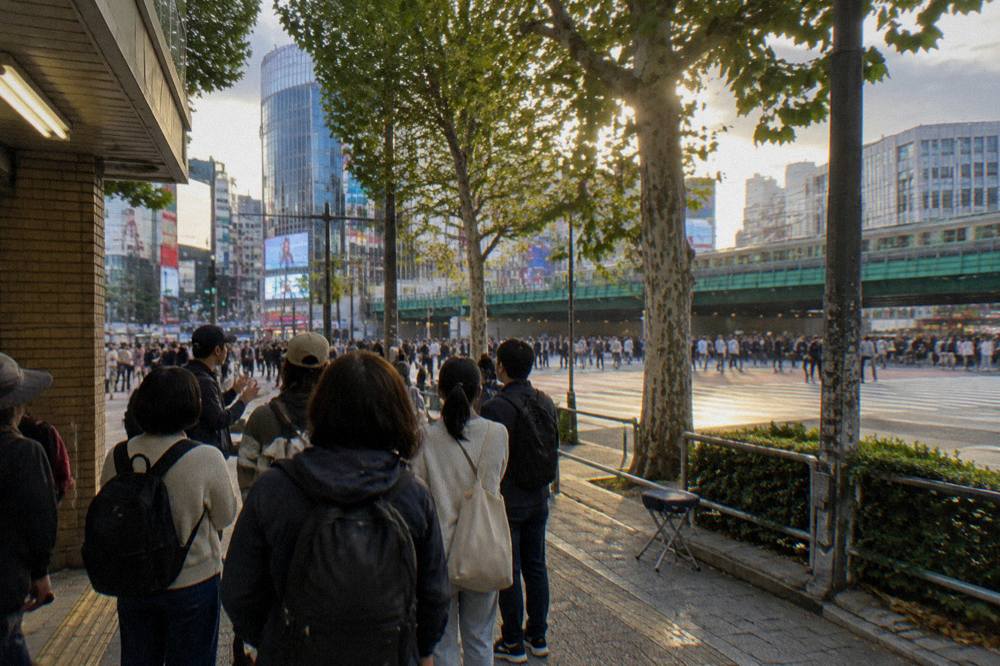
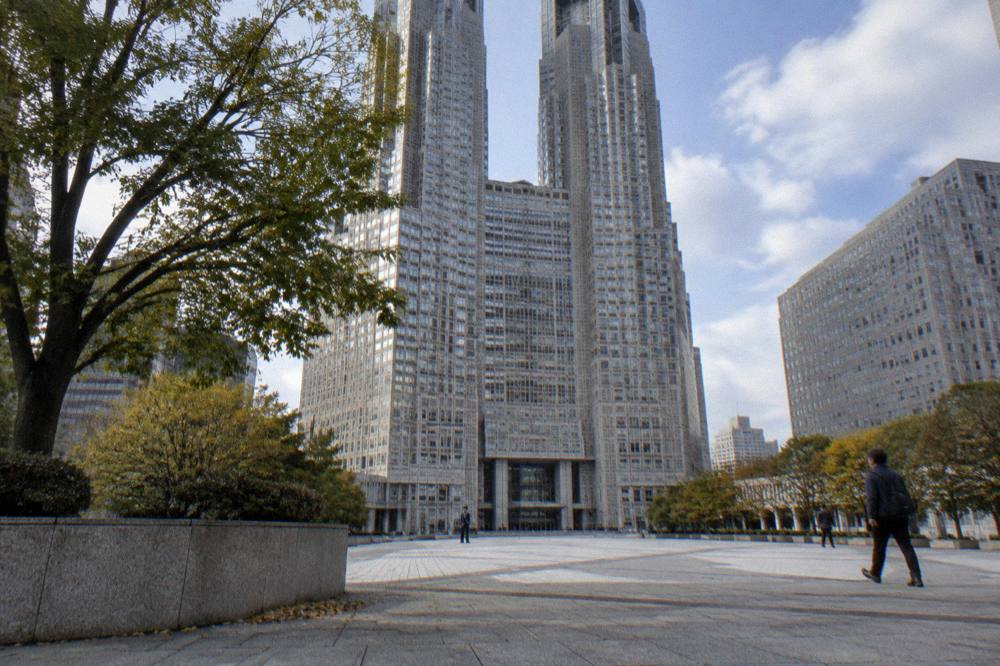
On the day, get to the meeting point ten minutes early. Guides wait at named landmarks, the Hachiko Statue, Kaminarimon Gate, a station exit, and they hold a sign or the tour name on a phone. After a short hello and a headcount, the walk sets off. That is also the moment to mention anything the guide should know, such as whether you need a slower pace.
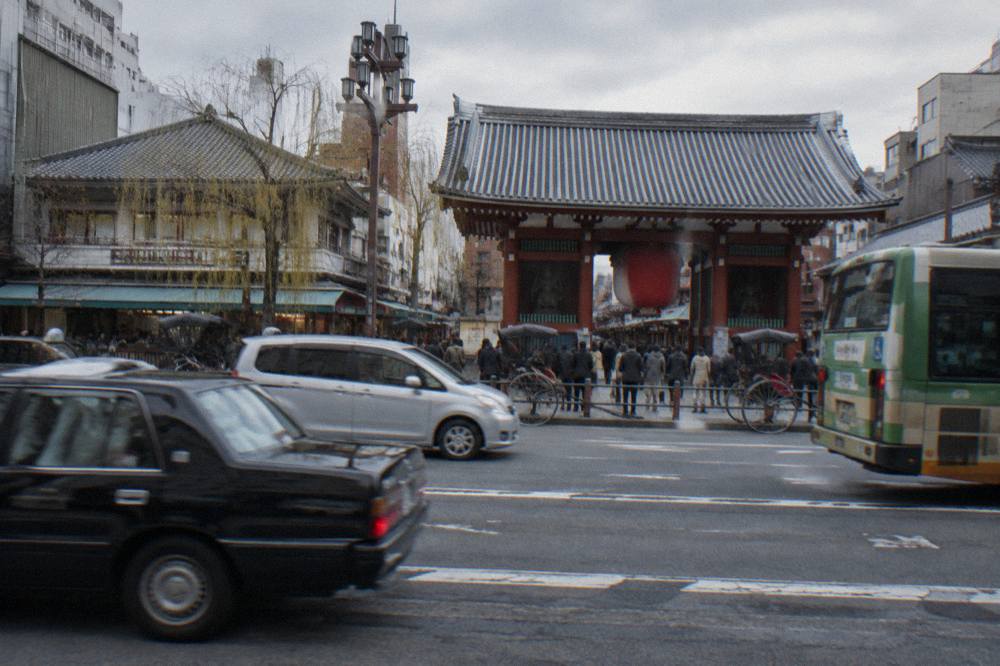
The walks run for roughly two hours. Some are shorter, at 1 hour 30 minutes, and a few run longer, such as the 2 hour 15 minute Tokyo Highlights Tour. The shape is the same either way: the guide leads the group from stop to stop, telling the story of each place, answering questions as they come up, and pausing at points where you can take photos or just look. A walk mixes the famous sights with backstreets and stories you would not find on your own, and the pace is set for walking and standing, not hiking.
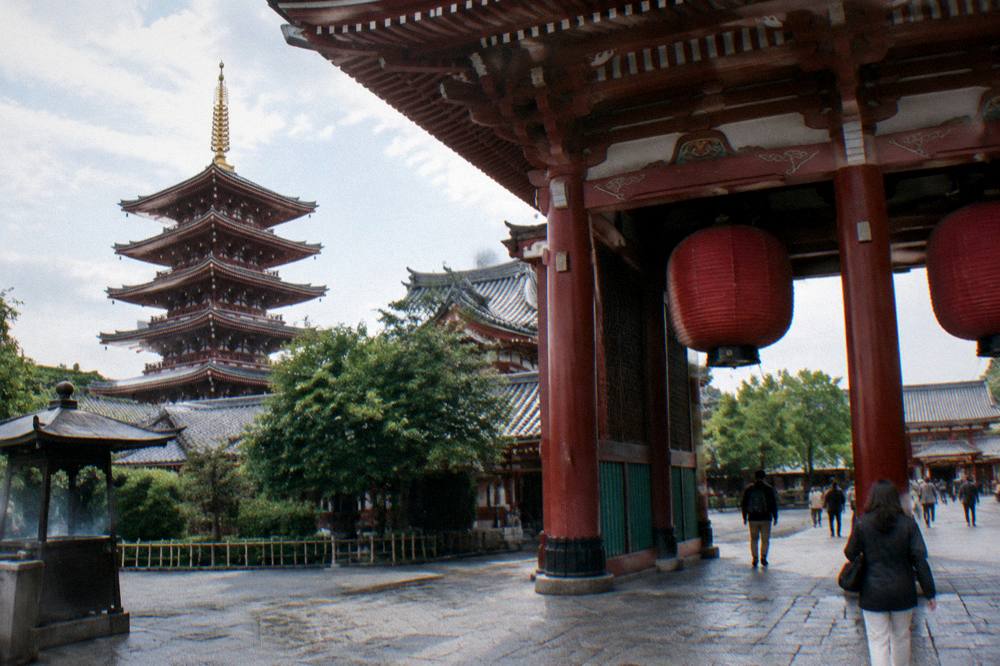
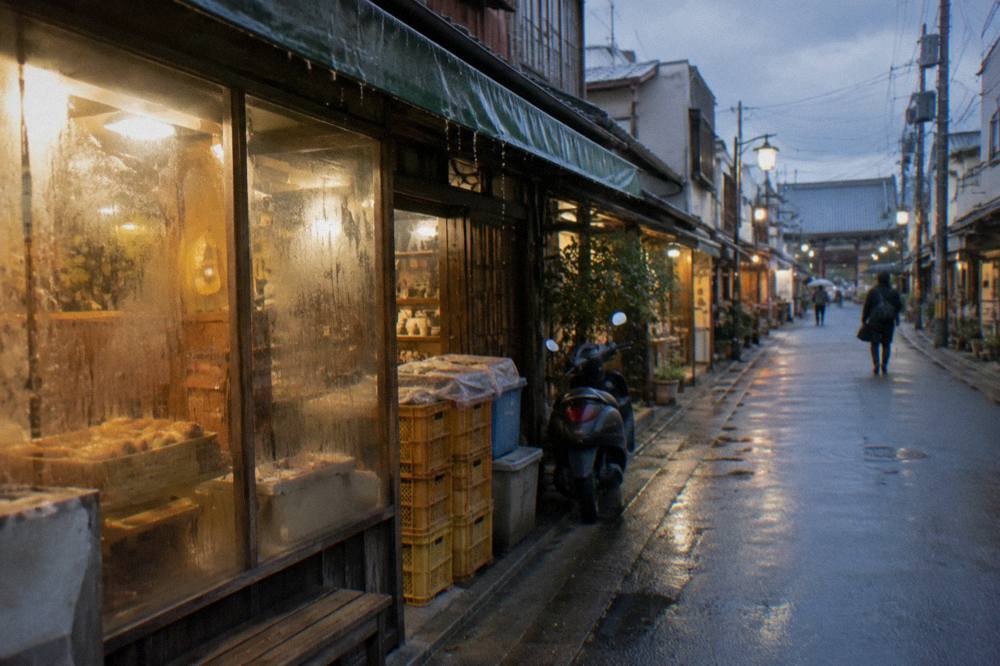
At the end, the guide wraps up at a final stop, often one that leaves you somewhere easy to continue from, like a market or a station. Then comes the payment. Each guest decides privately what to pay the guide, based on how much they enjoyed the walk and what they can afford, and hands it over directly, usually in cash. There is no fixed amount and no minimum stated on the tour page, by design: the tour stays free to join and the guide is paid what each guest feels it was worth.
One habit worth building: keep some coins and notes on you before the walk starts, so the ending is not a scramble for an ATM. For what else a free day in Tokyo asks of your pockets and shoes, read the blog alongside this page, and check the guides to see who leads each route.
A free day in Tokyo asks for very little kit, but the few things it does ask for matter. Here is the short list, along with the etiquette rules that come up on these routes.
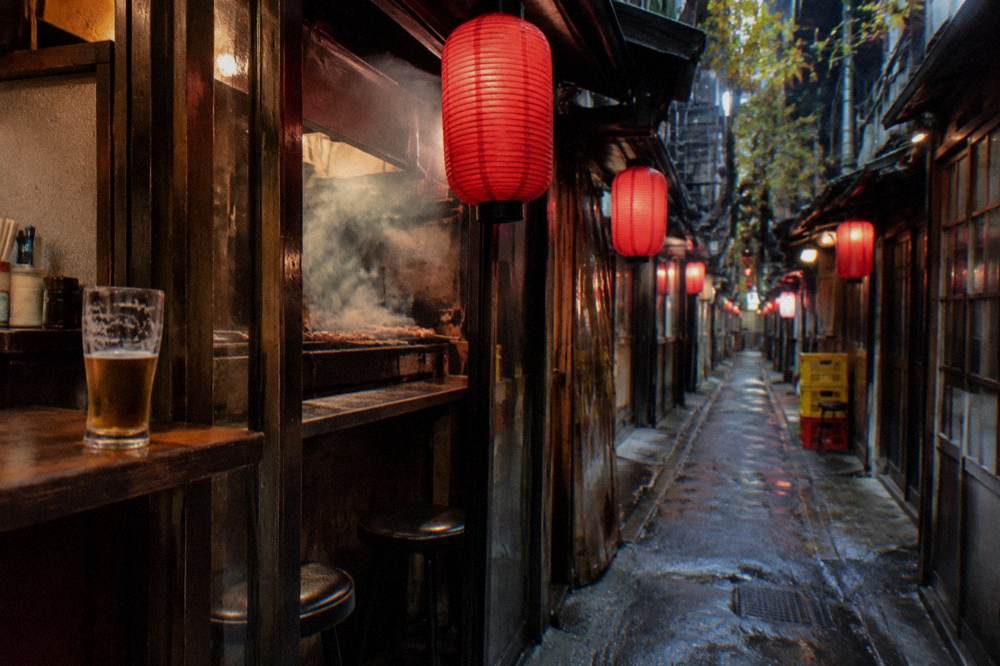
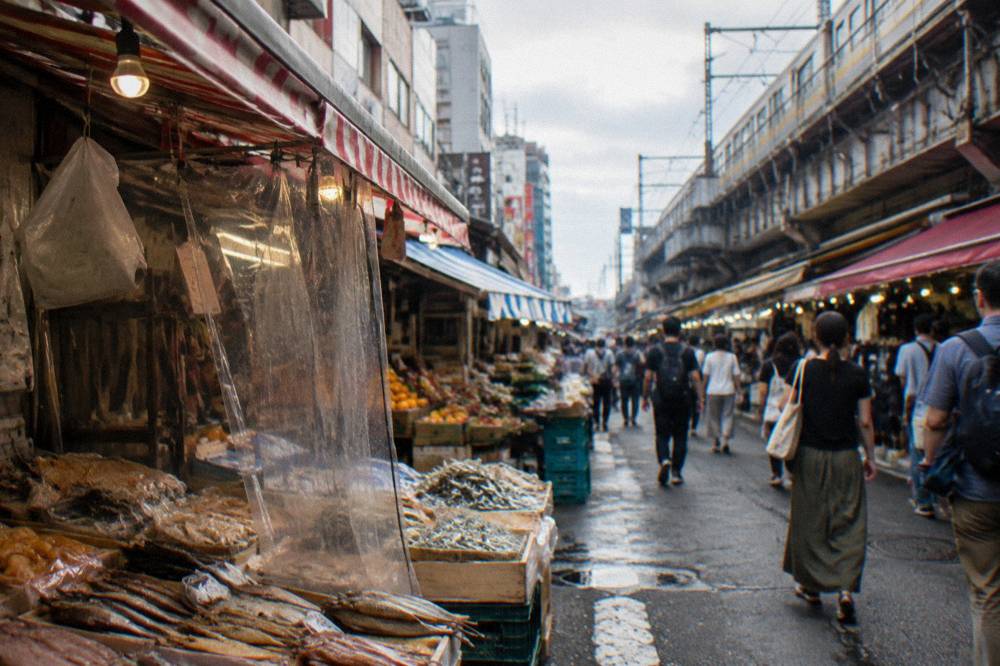
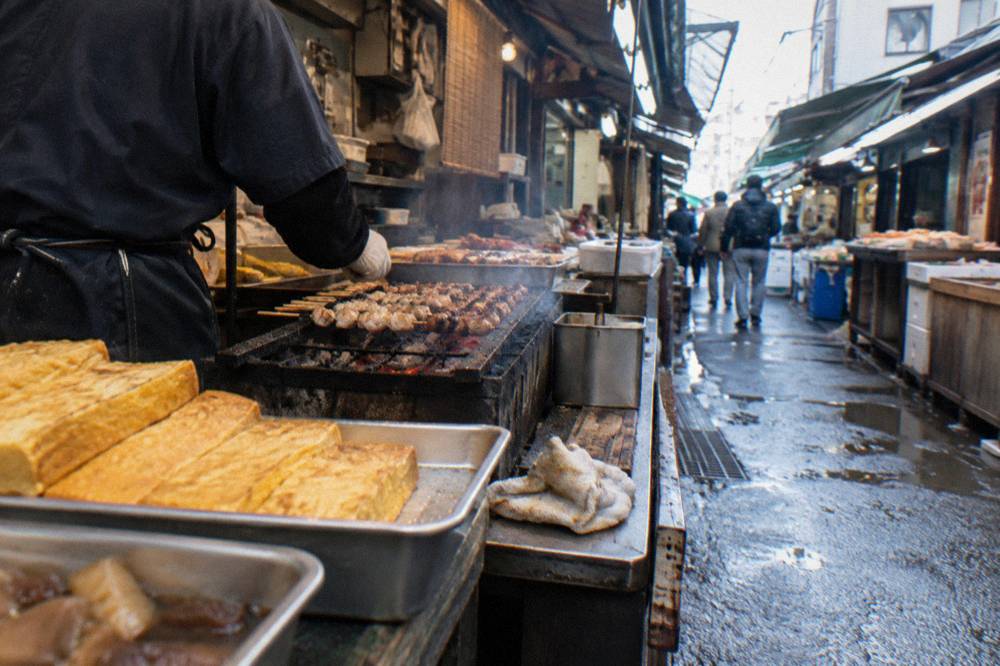
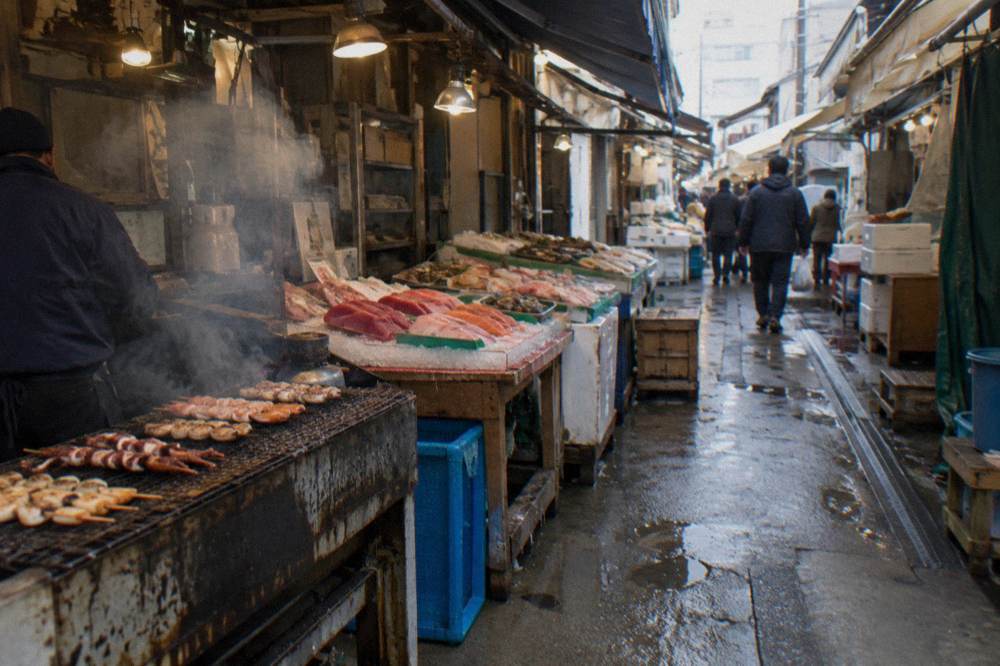
Then the rules of the places themselves. At Tsukiji Outer Market, the official site asks visitors not to eat while walking: eat in or in front of the shop you bought from. It also asks that luggage go into lockers, that visitors avoid coming in large groups, and that in December, during the New Year shopping rush, people refrain from sightseeing and group tours. At the Tokyo Metropolitan Government Building observatories, tripods are not allowed, so leave one behind or expect to check it.
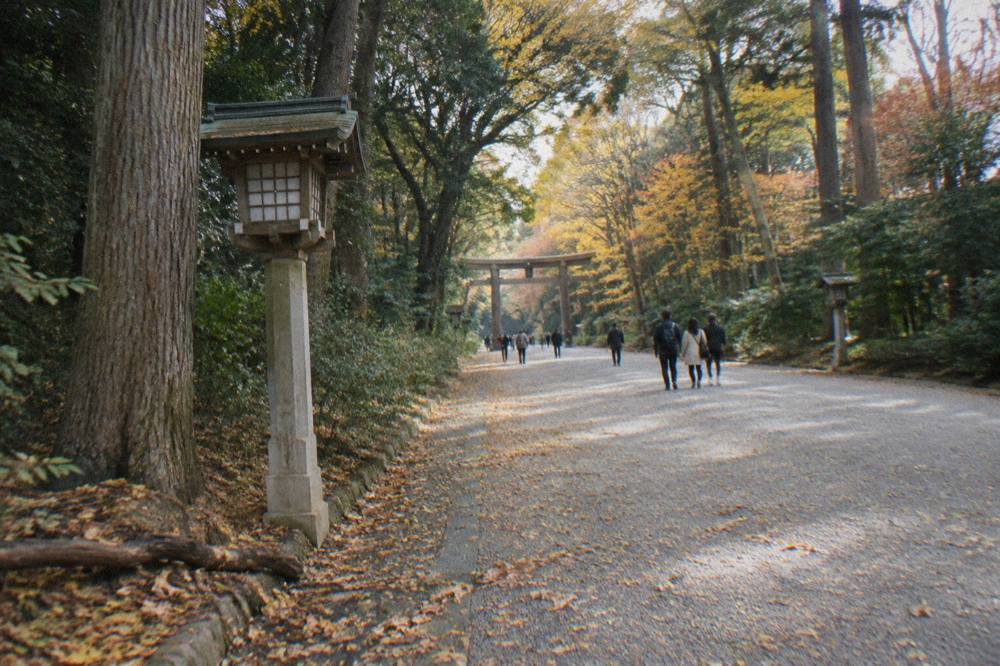
Temple timing shapes the day too. Meiji Jingu opens at sunrise and closes at sunset, which in December means 6:40 to 16:00, so a late start shrinks the shrine badly. Senso-ji's grounds, main hall and gates charge nothing, and incense, fortunes and Nakamise shopping are separate purchases. None of this needs booking, just a plan: pick your walk from the tour list, read the guides, and pack light.
Tokyo rewards a calendar check. Between November 2026 and January 2027, the city shifts from autumn leaves to illuminations to New Year closures, and several free sights change hours or shut for days at a time. Here is what the official pages say right now.
Early November belongs to autumn color. Shinjuku Gyoen opens seven days a week from 1 to 15 November, a special autumn period, then returns to closing Mondays. Note the garden is ticketed: adults pay JPY 500. Two other leaf spots are paid too. Hama-rikyu, Koishikawa Korakuen and Rikugien, the three metropolitan gardens, charge JPY 300 each, and Rikugien runs a paid night viewing from 25 November to 6 December, 18:00 to 20:30.
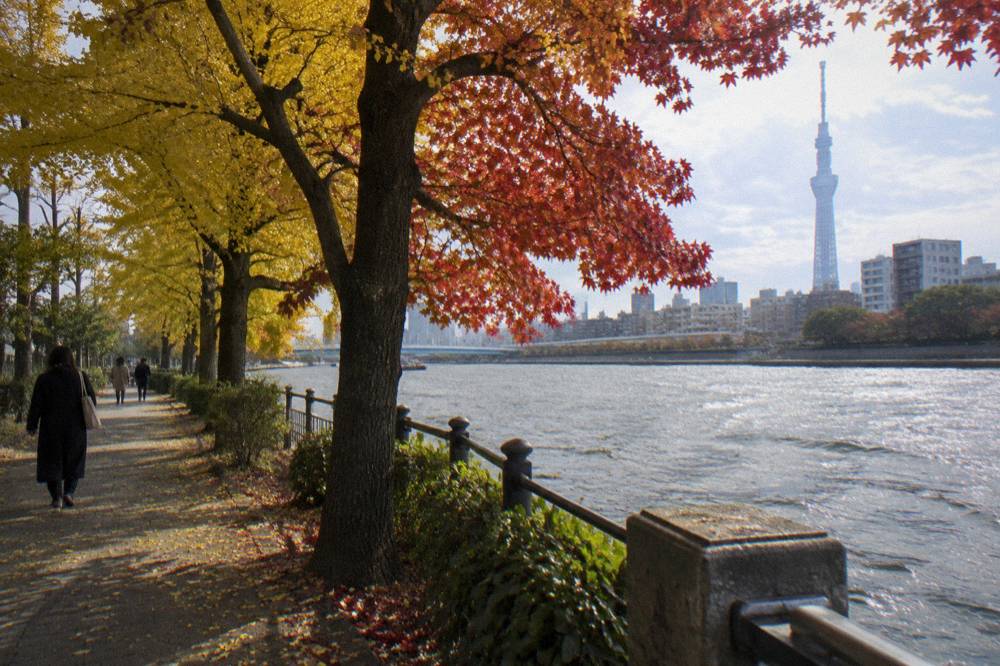
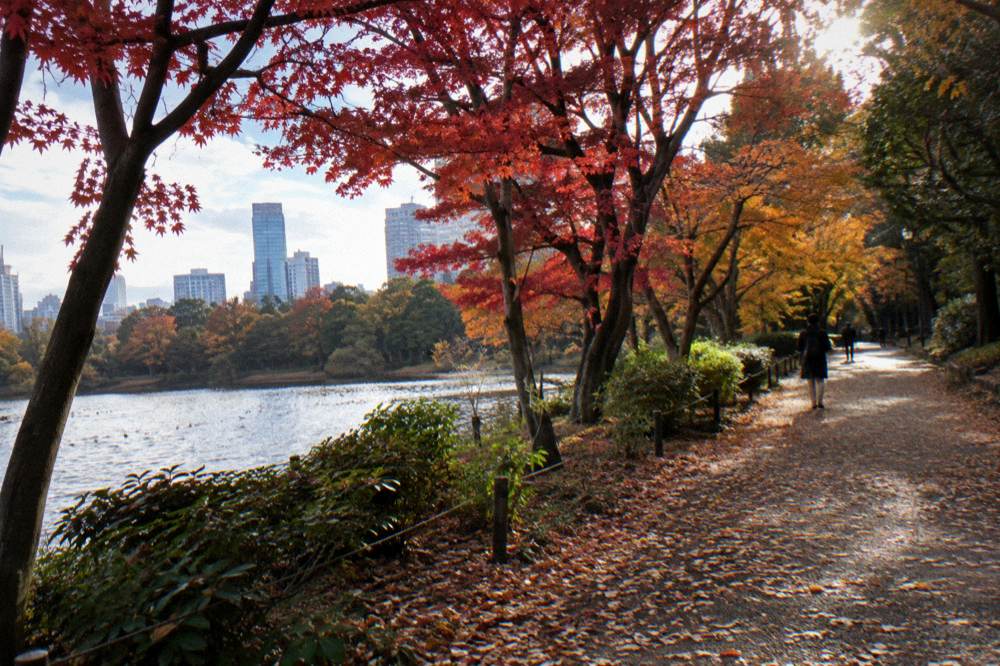
The Imperial Palace East Gardens are free and on winter hours from November: 9:00 to 16:00, entry until 15:30, closed every Monday and Friday. Marunouchi turns on its Naka-dori illumination on 12 November, running to 25 December, and viewing from the street carries no ticket. Tori-no-ichi, the rooster-market festival at Otori Shrine, falls on 7 and 19 November; 19 November is still ahead if you want to catch it.
The free Tokyo Metropolitan Government observatories are both open. Remember the split closures: the South Observatory closes the 1st and 3rd Tuesday, the North Observatory the 2nd and 4th Monday. Toyosu's tuna auction viewing is free, but the market closes on holidays and part of the viewing runs on a lottery, so check the market calendar before naming a day. Meiji Jingu opens 6:10 to 16:10 this month.
Two free museum days land in December. The National Museum of Western Art opens its permanent collection galleries to everyone on the 2nd Sunday of the month, which is 13 December 2026. Tokyo National Museum has no equivalent: its 2026 free days, 19 May, 21 September and 3 November, have all passed, and 2027 dates were not published. Under 18 and over 70 get in free on any day with proof of age, but other adults pay JPY 1,000.
At Tsukiji Outer Market, walking the lanes costs nothing, yet the official English page asks visitors to refrain from sightseeing and group tours in December during the New Year shopping rush. Respect that and go in another month if the market itself is your goal. Meiji Jingu runs 6:40 to 16:00 in December, and Yasukuni holds 6:00 to 17:00 through November to February.
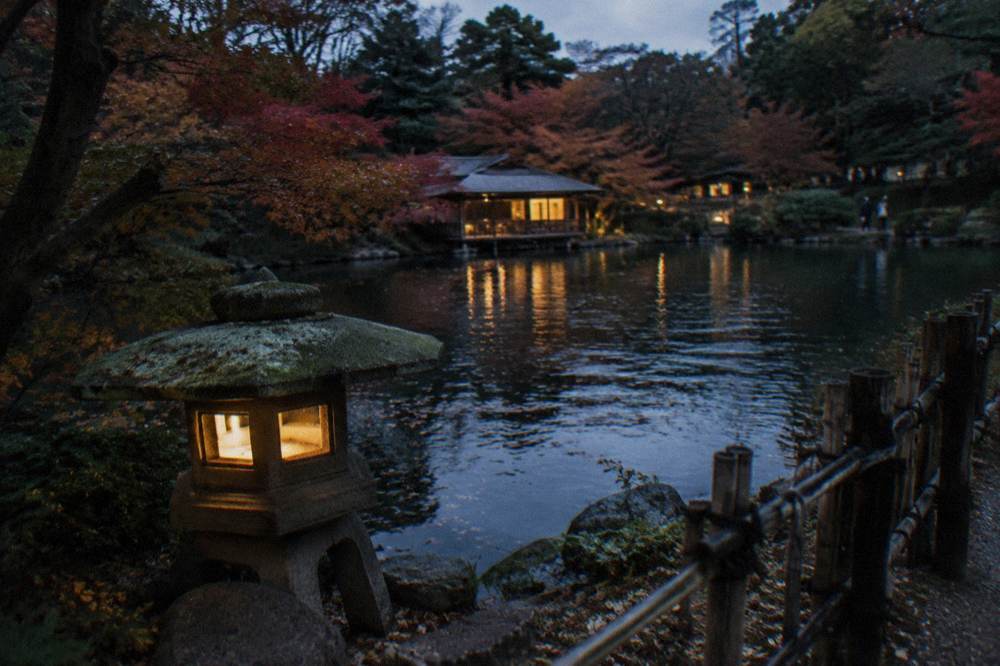
Toward the end of the month the city starts closing. Shinjuku Gyoen shuts 29 December to 3 January. The metropolitan gardens close 29 December to 1 January. Both TMG observatories close 29 to 31 December and 2 to 3 January. The East Gardens close 28 December to 3 January. Plan indoor alternatives for that week.
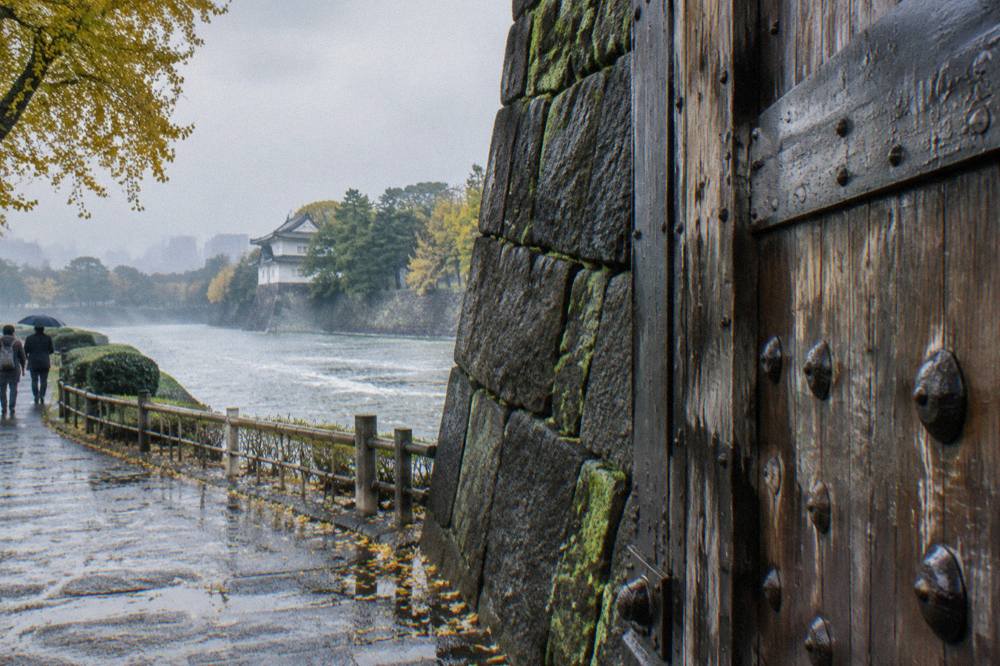
The Imperial Palace New Year General Greeting drew visitors on 2 January 2026, with entry from 9:30 to 14:10 through the Main Gate. The Imperial Household Agency has not posted the 2027 notice yet, so see the Agency's own page before counting on it. The Edo-Tokyo Museum is open again after its long closure, with a paid special exhibition running 28 November 2026 to 24 January 2027.
Winter hours persist through January. The East Gardens stay at 9:00 to 16:00, closed Mondays and Fridays. The Rainbow Promenade keeps its November-to-March schedule: 10:00 to 18:00, last entry 30 minutes before close, closed the 3rd Monday of the month. Cold days are ideal for the TMG observatories, where the indoor decks stay open until 21:30 on the South side.
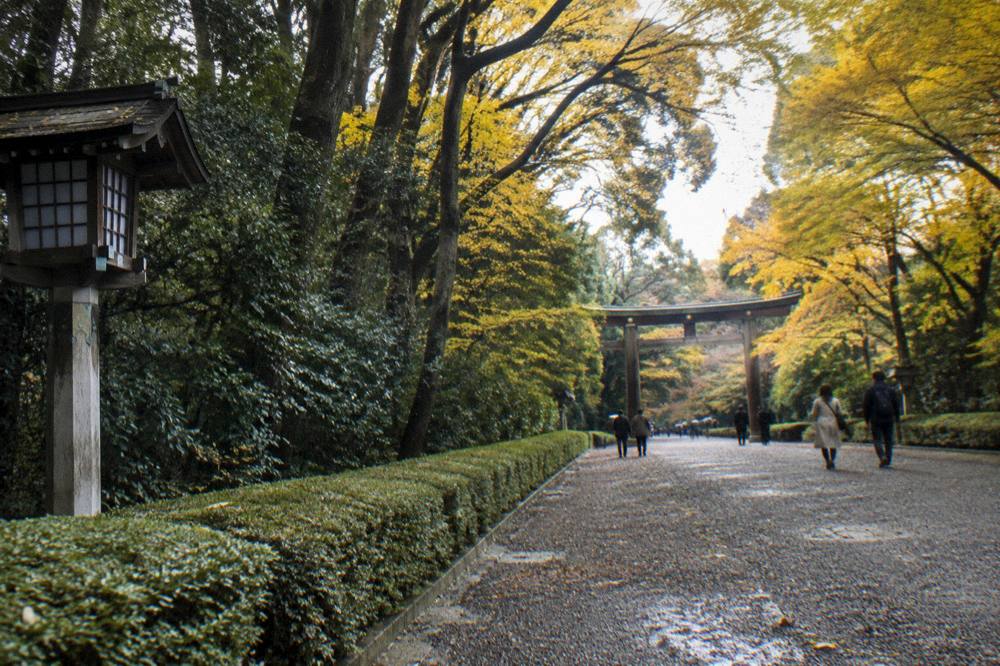
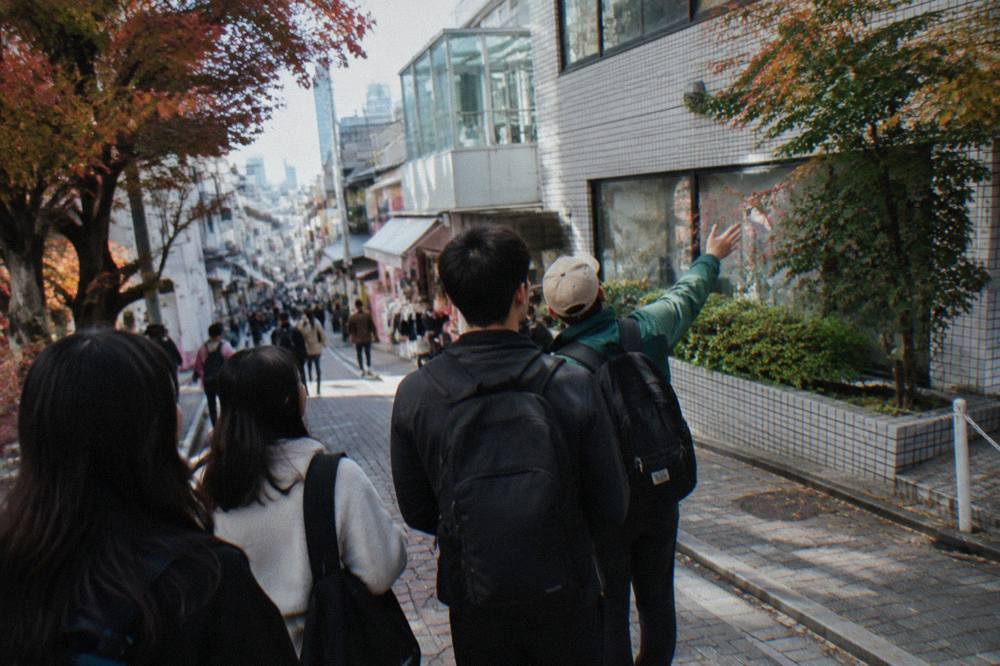
Outside this window, hours and event dates can shift, so confirm them with each venue directly. Autumn-leaf peaks, winter illuminations beyond Marunouchi, hatsumode arrangements at Meiji Jingu and Senso-ji, and the 23 February reopening pattern at the East Gardens all belong on the official pages, not on guesswork. Check the Imperial Household Agency, the garden operators and shrine sites directly before you lock a date. For free walks you can join any month, browse the directory of 46 free tours or read the blog for seasonal planning pieces.
Numbers on free tours move, so this block tracks them. The table below shows current ratings, review counts, meeting points and lengths for the featured walks, each figure as it appears on the guide's GuruWalk page. Use it to compare before reserving. Every walk is free to join, each guest decides at the end what to pay the guide, and you book through GuruWalk, where the guides behind the walks are listed. The full set of 46 tours lives in the directory.
| Walk | Rating and reviews | Meeting point | Length | Languages |
|---|---|---|---|---|
| 18-Plus Night Walk, Kabukicho | 4.89 · 2,714 GuruWalk reviews | Tokyo Metropolitan Government Building | 2 hours | English and Spanish |
| Bilingual Shibuya And Harajuku | 4.88 · 1,470 GuruWalk reviews | Hachiko Statue, Shibuya Station | 2 hours | English and Spanish |
| Pop Culture Walk, 2h 15m | 4.78 · 1,339 GuruWalk reviews | Hachiko Statue, Shibuya Station | 2 hours 15 minutes | English |
| Maids Vs Samurai, Akihabara And Ueno | 4.83 · 1,155 GuruWalk reviews | Ueno Park | 2 hours | English and Spanish |
| Bilingual Shibuya, Harajuku, Meiji | 4.9 · 937 GuruWalk reviews | Shibuya Station | 2 hours | English and Spanish |
| Palace Storytelling Walk | 4.85 · 901 GuruWalk reviews | Imperial Palace, Kokyogaien | 2 hours | English |
| Asakusa Old Town, English | 4.78 · 767 GuruWalk reviews | Kaminarimon Gate | 2 hours | English |
| Asakusa Classic English Walk | 4.91 · 671 GuruWalk reviews | Asakusa Culture Tourist Information Center | 2 hours | English |
| Secret Backstreets, 1h 30m | 4.73 · 612 GuruWalk reviews | Shinjuku Station, East Exit | 1 hour 30 minutes | English |
| Palace Walk Ending At Tsukiji | 4.84 · 587 GuruWalk reviews | Sakuradamon Gate, Imperial Palace | 2 hours | English and Spanish |
| Tsukiji Street Food, 1h 30m | 4.88 · 583 GuruWalk reviews | Tsukiji Hongan-ji, Stairs | 1 hour 30 minutes | English |
| Dark Side Night Walk | 4.83 · 352 GuruWalk reviews | McDonalds, Seibu Shinjuku | 2 hours | English |
| Shogun History Walk, English | 4.65 · 295 GuruWalk reviews | Imperial Palace, Kokyogaien | 2 hours | English |
| Oldest Temple Walk, English | 4.78 · 248 GuruWalk reviews | Kaminarimon Police Box | 2 hours | English |
| Shibuya Only, English | 4.64 · 217 GuruWalk reviews | Dogenzaka, Shibuya | 2 hours | English |
More than you might expect. Shrine precincts like Senso-ji, Meiji Jingu, Nezu Shrine and Kanda Myojin charge nothing to enter. Public parks such as Ueno Park, Yoyogi Park and Kitanomaru Park are free and open at all hours. The Tokyo Metropolitan Government observatories at 202 metres cost nothing and need no reservation. Several museums, including the Currency Museum, the Meguro Parasitological Museum, the Tokyo Fire Museum and the Tokyo Water Science Museum, have free admission. Walking streets from Nakamise to Takeshita Street to Akihabara cost nothing, and all 46 free walking tours on this directory are pay what you want.
Yes. No admission is charged for the temple grounds, the main hall or the gates, and the temple's official site lists no fee. Senso-ji is one of the easiest free visits in the city: you can walk through the Kaminarimon Gate, up Nakamise Street and into the main hall without paying anything. Incense, paper fortunes and shopping in the Nakamise lane are separate purchases. One note: the temple's own garden is closed to the public, and the separate Denbo-in garden opens only on special dates and charges admission.
Yes, the shrine precinct and forest are free. The shrine states it is open every day throughout the year free of charge, opening at sunrise and closing at sunset. In November the hours are 6:10 to 16:10, and in December 6:40 to 16:00. Two parts of the grounds are paid and separate: the Inner Garden, which charges JPY 500, and the Meiji Jingu Museum, which charges JPY 1,000 for adults. You can walk the forest paths, the main shrine buildings and the sake barrel displays without paying anything.
No, Shinjuku Gyoen is not free. It is a ticketed national garden and the park many visitors wrongly assume costs nothing. Adults pay JPY 500, visitors over 65 and students pay JPY 250, and children 15 and under enter free. It is normally closed Mondays, reopening the next weekday when Monday is a holiday, and closed 29 December to 3 January. During the special autumn period from 1 to 15 November it opens seven days a week. If you want a free green space nearby, the free observatories of the Tokyo Metropolitan Government Building are in the same district.
Yes. Both observatories sit at 202 metres and cost nothing, with no reservation needed. The South Observatory takes entries from 9:30 to 21:30 and is closed the 1st and 3rd Tuesday of the month. The North Observatory takes entries from 9:30 to 17:00 and is closed the 2nd and 4th Monday; when a closing day falls on a holiday it opens and closes the next day instead. Both close 29 to 31 December and 2 to 3 January. Tripods are not allowed, and bad weather can close either deck at short notice.
Partly. Walking up to the tower and through its Foot Town shopping floors is not ticketed, so the base is free to visit and photograph. The observation decks are paid: the Main Deck at 150 metres starts at JPY 1,500 for adults on the official ticket site, and the Top Deck Tour starts at JPY 3,300. For a free high view instead, the Tokyo Metropolitan Government observatories cost nothing, and Zojo-ji temple grounds sit right behind the tower with no admission charge, giving you the classic tower-over-the-gate photo for free.
No. Shibuya Sky is a ticketed rooftop observation deck, and its price varies by date and time, so there is no single figure to quote here. The good news is that the ground below it costs nothing. Shibuya Crossing is a public intersection, free to cross at all hours, and several free walking tours cover Shibuya and Harajuku, starting at the Hachiko statue and other nearby points. If you want a free elevated view of the city, the Tokyo Metropolitan Government observatories in Shinjuku are the established alternative.
Yes, several. The Currency Museum of the Bank of Japan in Chuo is free, open 9:30 to 16:30 and closed Mondays. The Meguro Parasitological Museum is free with voluntary donations, open 10:00 to 17:00 and closed Mondays and Tuesdays. The Tokyo Fire Museum in Shinjuku and the Tokyo Water Science Museum in Koto are both free, closed Mondays. The Sumo Museum in Ryogoku is free on ordinary weekdays but needs a tournament ticket during Tokyo tournament weeks. The Advertising Museum Tokyo is free, Tuesday to Saturday. Older visitors and children also get free entry at some otherwise paid museums.
Every walk listed on this directory is free to join and each guest decides at the end what to pay the guide. There is no fixed amount, no minimum and no ticket price: pay what you want, based on what the tour was worth to you, in cash or by whatever method the guide accepts. Guides run these walks for the tips alone, so if you enjoyed the two hours, a generous tip is the whole business model. You reserve a spot in advance through GuruWalk, show up at the meeting point, and settle up with the guide when the walk ends.
Each walk has a fixed meeting point, and the common ones are easy to find. Several Shibuya and Harajuku tours start at the Hachiko statue outside Shibuya Station, with one meeting at Dogenzaka instead. Asakusa tours meet at the Kaminarimon Gate, the Kaminarimon Police Box or the Asakusa Culture Tourist Information Center. Chiyoda walks start at the Imperial Palace at Kokyogaien or at Sakuradamon Gate. Shinjuku tours meet at the Tokyo Metropolitan Government Building, Shinjuku Station East Exit or the Seibu Shinjuku McDonald's. Tsukiji walks meet at the Tsukiji Hongan-ji stairs, and one Ueno tour starts in Ueno Park.
Yes, every walk on this directory runs in English. Several also run in Spanish, including the Shinjuku night tour of Kabukicho, the Shibuya-Harajuku culture walk, the Akihabara and Ueno tour, the combined Shibuya, Harajuku and Meiji shrine walk, and the Imperial Palace walk that finishes at Tsukiji. The rest are English only, among them the Asakusa and Senso-ji old town walks, the Imperial Palace storytelling walks and the Shinjuku backstreets tour. Check the individual tour page when booking to confirm the language for your date.
Yes, in all its free parts. The Outer Garden and Nijubashi plaza is an open public space with no fee. The East Gardens are free, open 9:00 to 16:00 in winter with entry until 15:30, though closed every Monday and Friday and from 28 December to 3 January. The Imperial Household Agency also runs a free guided tour of about 2.2 km inside the grounds, roughly one hour, which needs an online application or a same-day numbered ticket at Kikyomon gate. Adjacent Kitanomaru Park is free and open at all times.
Plenty. The Marunouchi Illumination lights Naka-dori street from 12 November to 25 December 2026, and viewing from the street needs no ticket. The Tokyo Tower area hosts a 65th-anniversary light-up shown on the official page for 10 November 2026, sunset to 22:00, visible from outside. The Tori-no-ichi rake fair at Otori Shrine in Asakusa runs 7 and 19 November 2026 with no entry charge. The Rainbow Bridge promenade stays free on winter hours, 10:00 to 18:00. Shrine visits, park walks and the free observatories all continue through the cold months.
The Tokyo Metropolitan Government South Observatory is the headline answer: entries run until 21:30, so you get a free night view from 202 metres. Walking districts are the other big one. The Kabukicho night tours of Shinjuku run two hours in English and Spanish. Omoide Yokocho, the smoky yakitori alley beside Shinjuku Station, is free to walk, and the lanes of Golden Gai are free to stroll, though many tiny bars charge a cover or minimum. Shibuya Crossing is free to cross at all hours, and Nakamise and its shops mostly shut around dusk.