How Much Should You Pay For A Free Walking Tour In Tokyo?
Free walking tours in Tokyo cost nothing up front and you pay what you want at the end. Here is what the free part covers, what you still pay for, and how to choose.
In Short
Every walking tour on this site is free, pay what you want, so there is no set price to pay at all. You reserve a spot on GuruWalk or freetour.com for nothing, walk, and afterwards give the guide whatever you think the walk was worth. There is no minimum, no published rate and no suggested figure. The only extra costs are things like food at markets or entry to paid gardens, which are never part of the guiding fee.
This question sits inside the free walking tours overview guide, which lists all 46 walks that ship on this site. This page owns just the one question: how much should you actually hand over.
Quick Facts
| Question | Answer |
|---|---|
| What does a free tour cost? | Nothing up front; free, pay what you want at the end |
| Where do you reserve? | GuruWalk for the walks here, freetour.com for the Shimokitazawa walk |
| Is there a minimum tip? | No minimum, no suggested amount is published |
| What is never included? | Food on market walks, entry to paid gardens, museum tickets |
| Is a card needed to book? | The walks are free, pay what you want, reserved on their platform |
| Do walks run in other languages? | Yes, several run in Spanish, one in Polish, one in English, Spanish and Japanese |
How Much Should You Pay For A Free Walking Tour In Tokyo?
There is no set amount, because every walking tour listed on this site is free, pay what you want. You pay zero to reserve and zero to start, and at the end you give the guide whatever figure you choose. Free, pay what you want is the price itself, not a discount or a trial.
The model confuses people, and reasonably so. A price tag that says free but an expectation that says something else feels like a trap, and in some cities it can be. That decision is genuinely yours. No fixed amount exists for these walks: each one is free, pay what you want, and every reservation happens on GuruWalk or freetour.com.
What you are actually paying for, if you choose to pay, is the guide's time and knowledge. Every walk here is run by an independent local guide or small operator with their own GuruWalk page: Japan Navigators, TokyoXplorers, Local Guide Stars, Hiraku Tours, 5 STORY, Tokyo Genki Tours, Localized Walking Tours and others. The walks are not operated by any booking platform, and reservations happen on GuruWalk itself.
A useful way to think about the amount is to compare it with what a fixed price tour in the same city would charge, then decide. But be careful with that comparison in the other direction too. A walk that is free to join is not a lesser product by definition: the 18-Plus Night Walk in Kabukicho by Japan Navigators, an adults only walk, is rated 4.89 out of 5 across 2,714 GuruWalk reviews, a review pool larger than many paid city tours anywhere. The pay what you want structure shifts the risk from you to the guide, which is precisely why the guides who survive on it tend to be the ones who run good walks.
One more thing worth saying plainly. If a walk does not land for you, walking away having paid little or nothing is a real option the model allows. Equally, if a guide spends two hours showing you a district you would never have found alone, the amount you choose is the only signal they get. Both directions are honest. What is not honest is treating "free" as meaning "no one expects anything", and the rest of this page is about drawing that line properly.
What Does The Free Part Include?
The free part includes the guiding itself: a guide, the stated duration, the stated language, and the walk's route through its neighbourhood. Reservation on GuruWalk or freetour.com costs nothing. There is no booking fee, no deposit and no minimum group spend. What the word free never includes is everything the walk passes: food on market walks, entry to paid gardens, museum tickets and anything you buy along the way.
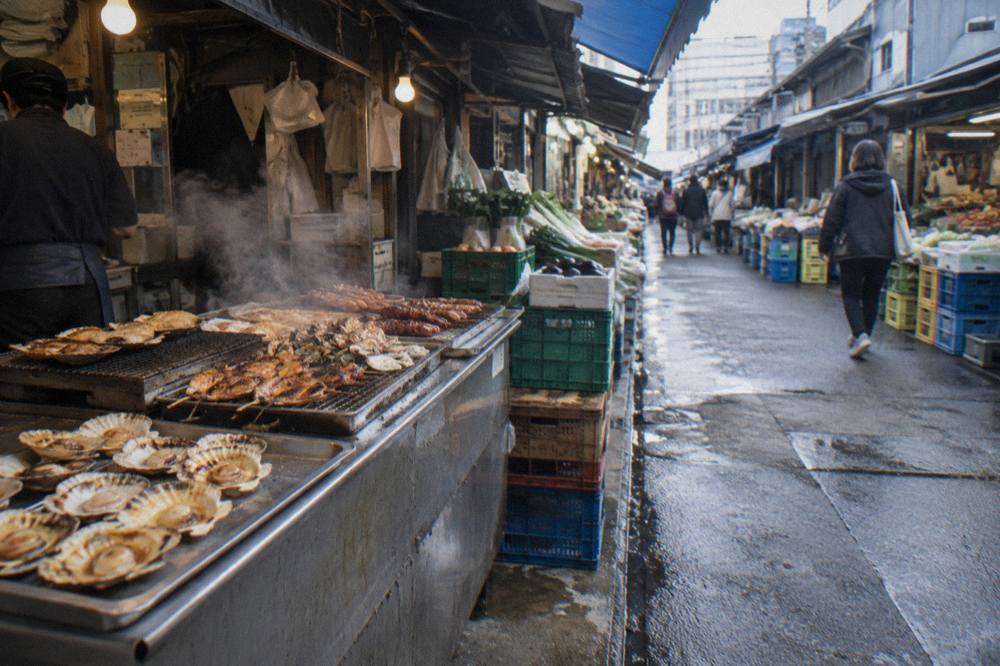
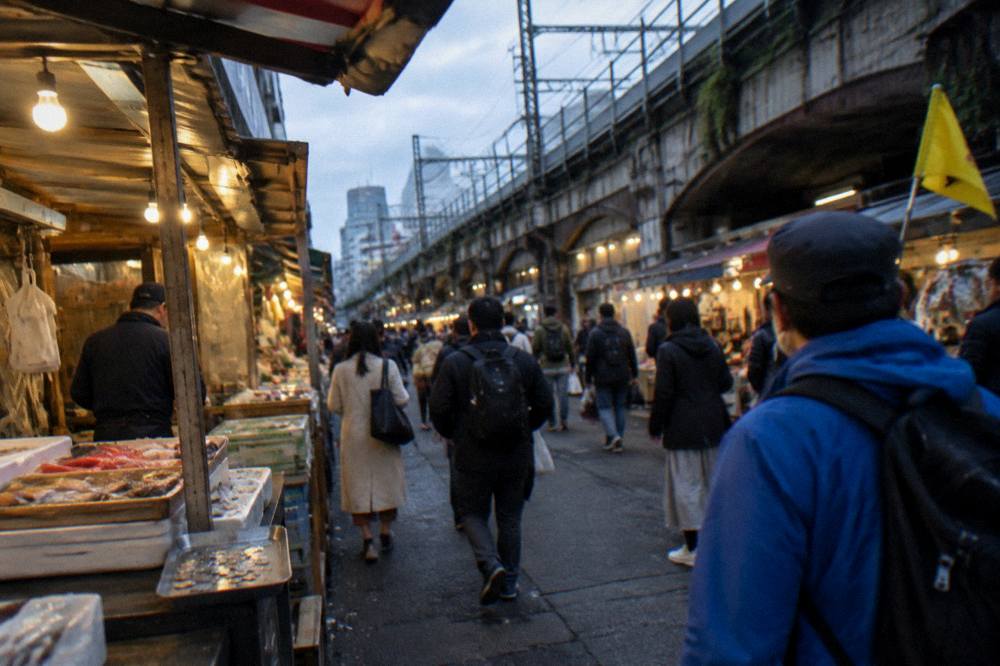
Take the clearest example on the roster, the Tsukiji Street Food walk by Local Guide Stars. It runs 1 hour 30 minutes in English, meets at Tsukiji Hongan-ji, Stairs, is rated 4.88 out of 5 across 583 GuruWalk reviews, and the guiding is pay what you want. The food is not. Anything you eat at the outer market you buy yourself, at the stall's own price, and that split is stated in the same breath as the free part because it is the one walk in the roster where the distinction matters most. The official Tsukiji market site is the place for market rules, including its request that visitors not eat while walking and its December request, covered below.
“George was really a great guide! He had lots of information and answered all of our questions. All the places we went to the food was great!”
Patrick P, GuruWalk review of Tsukiji Street Food, 1h 30m
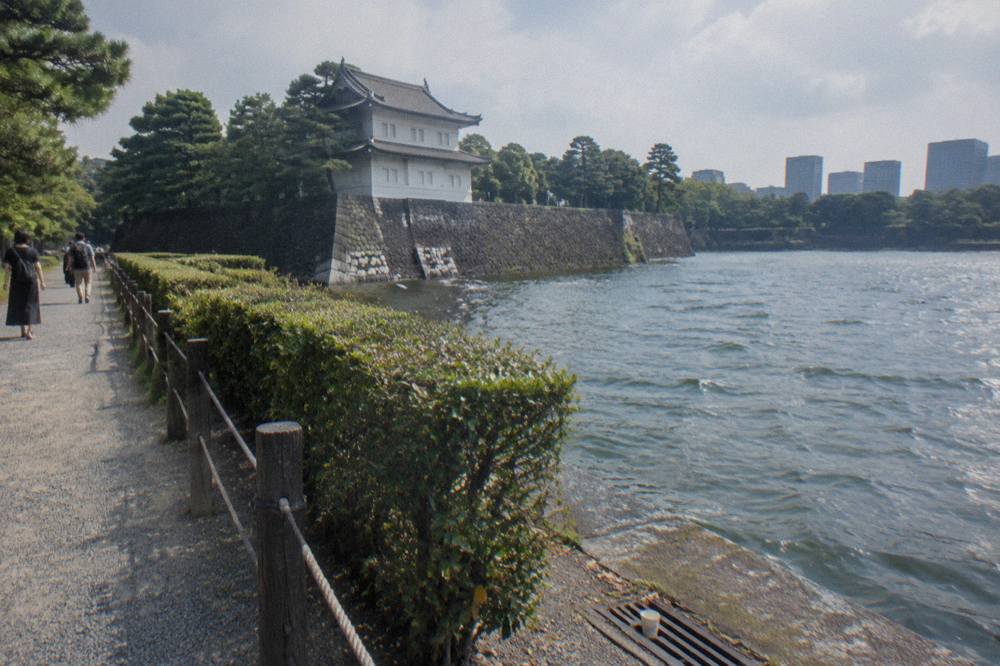
Every other walk keeps the same shape. The Palace Storytelling Walk by 5 STORY meets at Imperial Palace, Kokyogaien, runs 2 hours in English, is rated 4.85 out of 5 across 901 GuruWalk reviews, and the guiding is free, pay what you want. If that walk's neighbourhood leads you toward the East Gardens, those gardens are also free, though they close every Monday and Friday, with winter hours of 9:00 to 16:00 and entry until 15:30. The paid parts of Tokyo sit beside the free ones, and the guide fee never absorbs them.
Here is the honest division for the parts a walker actually meets:
| Included free, pay what you want | Never included, paid separately |
|---|---|
| The guide's time for the stated duration | Food and drink at Tsukiji or Ameyoko stalls |
| The walk in the stated language | Entry to Hama-rikyu, Rikugien or Koishikawa Korakuen, JPY 300 each |
| Reserving the slot on the platform | Museum entry, for example Tokyo National Museum at JPY 1,000 adult |
| Meeting at the stated meeting point | Shinjuku Gyoen entry at JPY 500 adult |
| The neighbourhood route as the guide runs it | Souvenirs, shrine charms, anything you buy |
The reason this split is worth a section of its own is that Tokyo is unusually generous with the free layer. Senso-ji is free to enter, as its official site confirms, and Meiji Jingu's shrine precinct and forest are free while the Inner Garden charges JPY 500 and the Meiji Jingu Museum charges JPY 1,000. So a walk through Asakusa or Harajuku can stay genuinely free from end to end, guiding included, if you simply do not buy anything. The same walk plus a museum stop is no longer free, and knowing which parts are which is the whole skill.
One further point on what "the walk" means. What you are reserving is the guide, the duration, the language and the neighbourhood. If a specific landmark matters to you, the walk's own page on GuruWalk is where the guide states what they cover.
What Do You Still Have To Pay For?
You pay for four kinds of things: food and drink on market walks, entry to ticketed gardens and museums, anything you buy in shops along the way, and travel to the meeting point. None of these are part of the guiding fee on any walk listed here. The paid amounts are fixed by the attraction, not by the guide, and they are the same whether you arrive on a walk or alone.
The market walks are the main case. The Tsukiji Street Food walk's food is bought separately, as above, and the same logic applies to any stroll through Ameyoko, where the market itself is free to walk and every skewer and snack is paid. The Ueno Temples And Ameyoko Market walk by Soul Defenders meets at JR Ueno Station, Central Exit and runs 2 hours in English, with 4 GuruWalk reviews so far, too few for an overall score yet. The guiding is free, pay what you want, and the shopping is yours.
“Kenny was the absolute best. Kindly helped us late when we were running late and gave us a highly entertaining and informative experience. Thank you Kenny!”
Heide, GuruWalk review of Tsukiji Street Food, 1h 30m
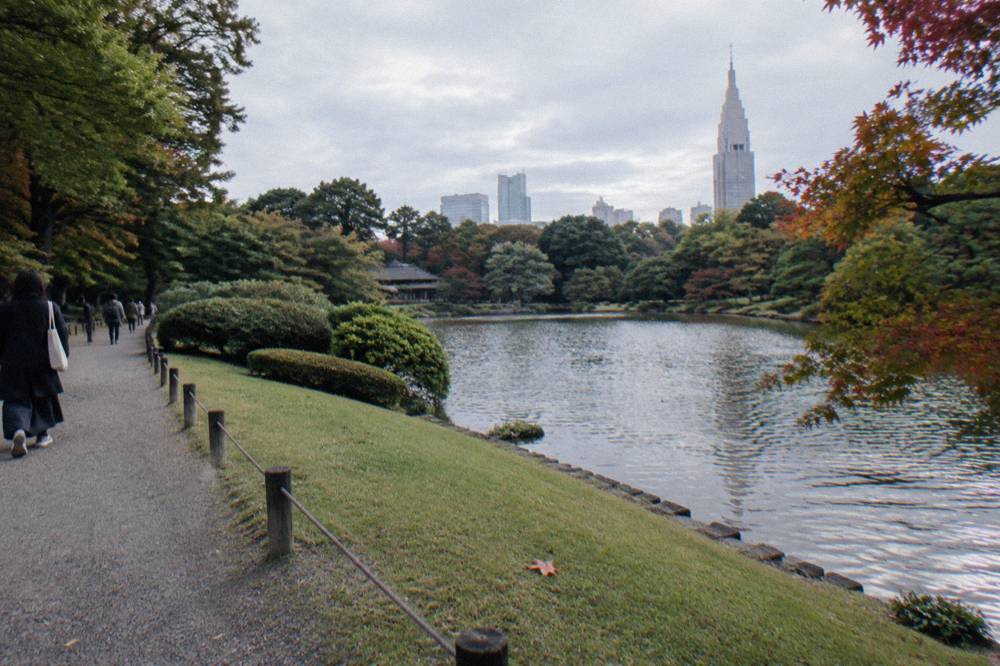
Gardens are the other main case, and here Tokyo has a genuine trap that catches people who assume "park" means free. Shinjuku Gyoen is a ticketed national garden, JPY 500 for adults, JPY 250 for over 65s and students, free for children 15 and under, and closed Mondays except during the special autumn period of 1 to 15 November when it opens seven days. Ueno Park, by contrast, is free and open at all times, while the Tokyo National Museum inside it charges adults JPY 1,000, with under 18s and over 70s free. The park is free; the museum never inherits that.
| Paid part | Price | Free counterpart |
|---|---|---|
| Shinjuku Gyoen | JPY 500 adult | Ueno Park, free at all times |
| Tokyo National Museum | JPY 1,000 adult | Ueno Park hill, free |
| Meiji Jingu Inner Garden | JPY 500 | Shrine precinct and forest, free |
| Hama-rikyu, Rikugien, Koishikawa Korakuen | JPY 300 each | Imperial Palace East Gardens, free |
| Tokyo Tower Main Deck | from JPY 1,500 adult | Tower base and Foot Town, walkable |
| teamLab Planets | JPY 3,800 adult | Rainbow Bridge Promenade, free |
The final paid category is simply getting there. Meeting points are stated exactly as the roster gives them, for example Hachiko Statue, Shibuya Station or Tokyo Metropolitan Government Building, and transport to them is your own cost.
When Is The Free Option Available?
Each walk keeps its own live calendar on GuruWalk, and those calendars change, so no fixed schedule is printed here. What stays stable is the shape of each walk, such as duration, language and meeting point. The fixed rules come from attractions: the Imperial Palace East Gardens close every Monday and Friday, and Tsukiji market asks sightseers to stay away in December.
What can be said is what the walks themselves state: a duration, a language and a meeting point per walk. The seasonal exceptions that matter are attraction side ones, such as the Imperial Palace East Gardens closing every Monday and Friday, and the Tsukiji market's December request.
Each of the 46 walks that ship on this site has its own calendar on GuruWalk, and those calendars change, so any schedule printed here would go stale the week it went up. What is stable is the shape of each walk. The Bilingual Shibuya And Harajuku walk by Japan Navigators runs 2 hours, in English and Spanish, from the Hachiko Statue. The Pop Culture Walk by Scott of Inowa Japan runs 2 hours 15 minutes in English from the same meeting point. The Secret Backstreets walk by Local Guide Stars runs 1 hour 30 minutes in English from Shinjuku Station, East Exit. Those facts do not move.
Attractions around the walks do have fixed rules worth planning around. The East Gardens close every Monday and Friday, and 28 December to 3 January, which matters if your palace walk lands on either closed day. The Tokyo Metropolitan Government observatories, both free at 202 metres with no reservation, rotate their closures: the South Observatory closes the 1st and 3rd Tuesday, the North the 2nd and 4th Monday, and both close 29 to 31 December and 2 to 3 January. The 18-Plus Night Walk in Kabukicho meets at the Tokyo Metropolitan Government Building, so the observatory closures can matter to its walkers too. That walk is adults only, as is the Crisis And Desire walk, which is worth knowing before you reserve either.
Seasonality cuts both ways. In December, the official Tsukiji market site asks sightseers and group tours to stay away during the New Year shopping rush, so if you are planning a market walk then, that request applies. In November and December the Marunouchi Illumination runs free to view from the street along Naka-dori, from 12 November to 25 December 2026, and the Tori-no-ichi festival at Otori Shrine has its second 2026 day on 19 November, with entry not ticketed and lucky rakes and food paid. None of these change a walk's price, but they change what your free evening in the same district looks like.
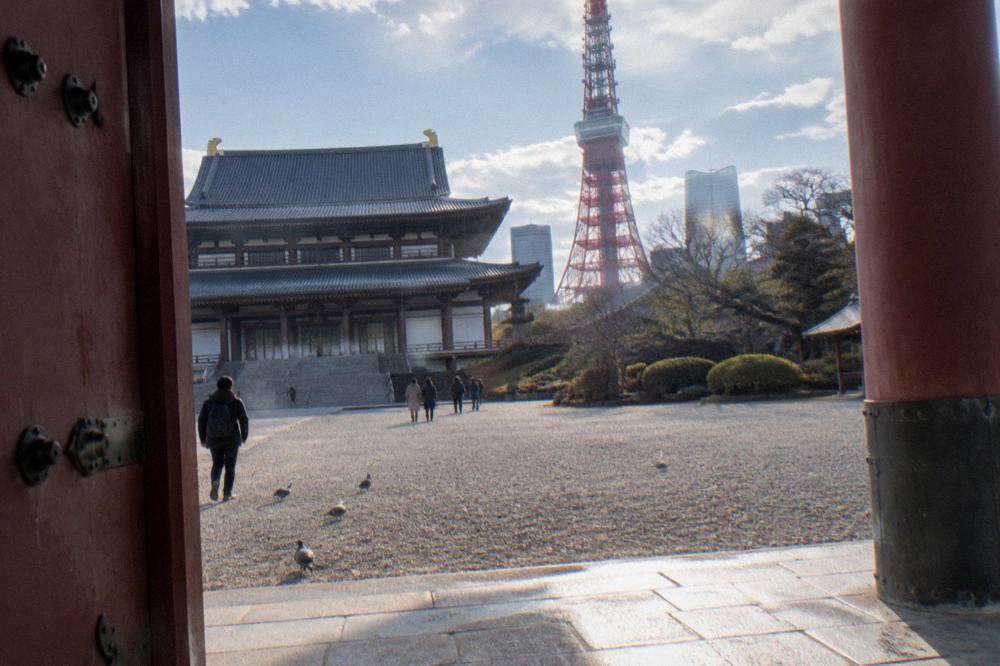
Where Does The Free Visit Start?
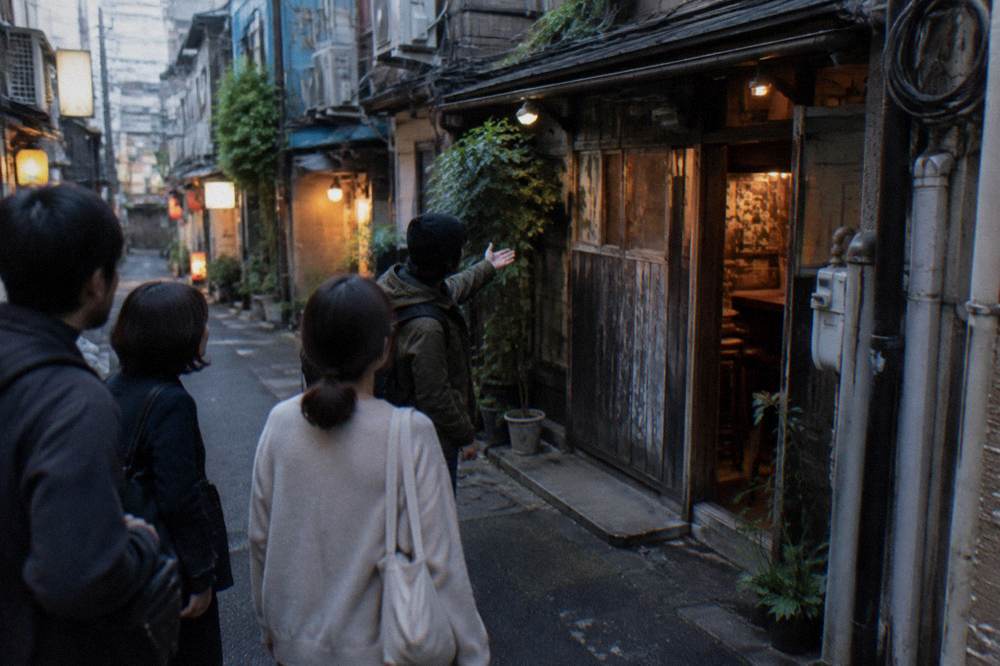
Every walk states a single meeting point, and that is where the free visit starts: no office to check into, no voucher desk, no equipment pickup. Meeting points on this site are written exactly as the guides give them, for example Kaminarimon Gate or Shibu Hachi Box, Dogenzaka.
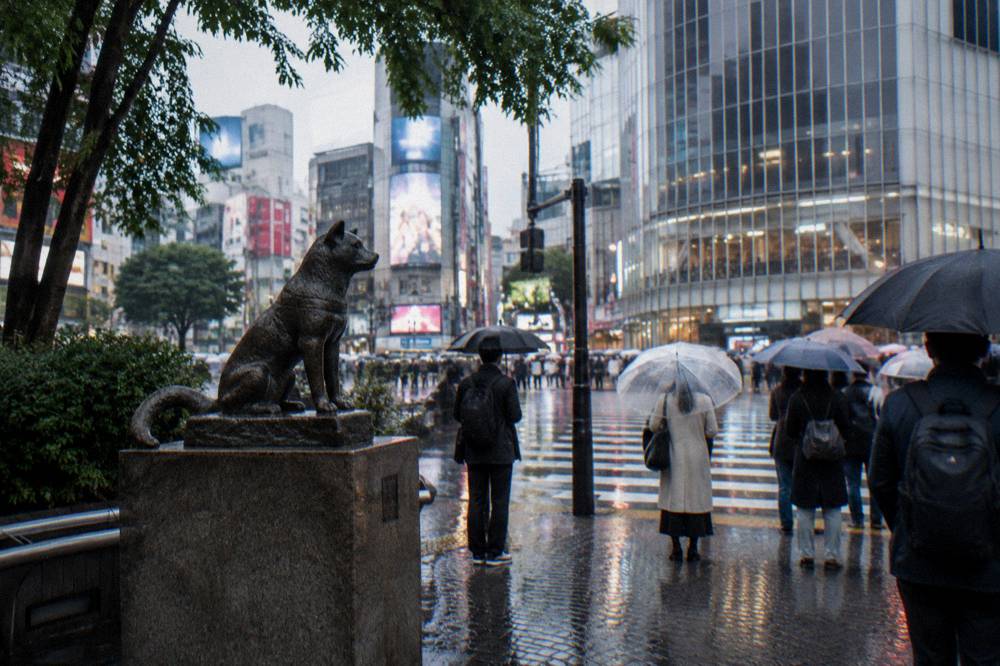
Shibuya walks cluster around a few named spots: the Hachiko Statue at Shibuya Station serves the Bilingual Shibuya And Harajuku walk and the Pop Culture Walk, Dogenzaka serves the Shibuya Only walk by Localized Walking Tours, and Shibu Hachi Box, Dogenzaka is the spot for the Secret View Spot walk. Asakusa's walks meet at Kaminarimon Gate, the Asakusa Culture Tourist Information Center or the Kaminarimon Police Box depending on the guide. Shinjuku's meet at Shinjuku Station East Exit, the Seibu Shinjuku McDonalds, the Shinjuku Tourist Information Center, Kabukicho or the Tokyo Metropolitan Government Building. The point is that the meeting point is the entire rendezvous instruction; nothing else is needed and nothing is collected there.
| Neighbourhood | Meeting points stated by the walks |
|---|---|
| Shibuya and Harajuku | Hachiko Statue; Shibuya Station; Dogenzaka; Shibu Hachi Box; JR Harajuku Station, West Exit |
| Asakusa and Ueno | Kaminarimon Gate; Asakusa Culture Tourist Information Center; Kaminarimon Police Box; Ueno Park; JR Ueno Station |
| Shinjuku | Shinjuku Station, East Exit; McDonalds, Seibu Shinjuku; Kabukicho; Tokyo Metropolitan Government Building |
| Imperial Palace and Central Tokyo | Imperial Palace, Kokyogaien; Sakuradamon Gate; Tokyo Station, Marunouchi South Exit |
| Tsukiji | Tsukiji Hongan-ji, Stairs; Tsukiji; Kachidoki Station, Exit A1 |
Because the meeting point is also where the pay what you want question eventually returns, it is worth being deliberate about it. You start free, you finish free, and what happens between the start and the finish is the only basis on which you decide an amount. If a listing ever asks you for money up front for the guiding itself, it is not one of the walks on this roster.
Which Free Walking Tours Cover This?
The walks that best answer the how much question are the pay what you want walks on GuruWalk across the Shibuya, Asakusa, palace and Shinjuku neighbourhoods, plus one walk on freetour.com. Each states its own duration, language, meeting point and rating, and every one is free, pay what you want. The Bilingual Shibuya And Harajuku walk, rated 4.88 out of 5 across 1,470 GuruWalk reviews, is this article's featured example.
That featured walk, run by Japan Navigators, meets at the Hachiko Statue, Shibuya Station, runs 2 hours in English and Spanish, and is reserved on its Free Things To Do In Tokyo listing page here, which links through to the guide's GuruWalk page. It suits anyone who wants the crossing and the backstreets explained rather than just photographed, and the bilingual departures make it one of the few that works for Spanish speaking visitors without booking a separate walk. Its review pool, 1,470 reviews at 4.87 out of 5, is among the largest on the whole roster.
It is one of the longer Shibuya options and one of the few English language walks that runs past the two hour mark in that neighbourhood.
Elsewhere the pattern holds. In Asakusa, the Asakusa Old Town walk by Tokyo Genki Tours meets at Kaminarimon Gate, runs 2 hours in English and is rated 4.78 out of 5 across 767 GuruWalk reviews; the Asakusa Classic English Walk by Localized Walking Tours meets at the Asakusa Culture Tourist Information Center and is rated 4.91 out of 5 across 671 GuruWalk reviews. At the palace, the Shogun History Walk by Local Guide Stars is rated 4.65 out of 5 across 295 GuruWalk reviews. In Shinjuku, the Dark Side Night Walk by Wabisabi Trips is rated 4.83 out of 5 across 352 GuruWalk reviews. And in Shimokitazawa, the offbeat walk by Real Tokyo Vibes is the one walk listed on freetour.com, rated 9.6 out of 10 across 26 freetour.com reviews on that platform's own scale, meeting at Shimokitazawa Station, East Exit for 1 hour 30 minutes in English.
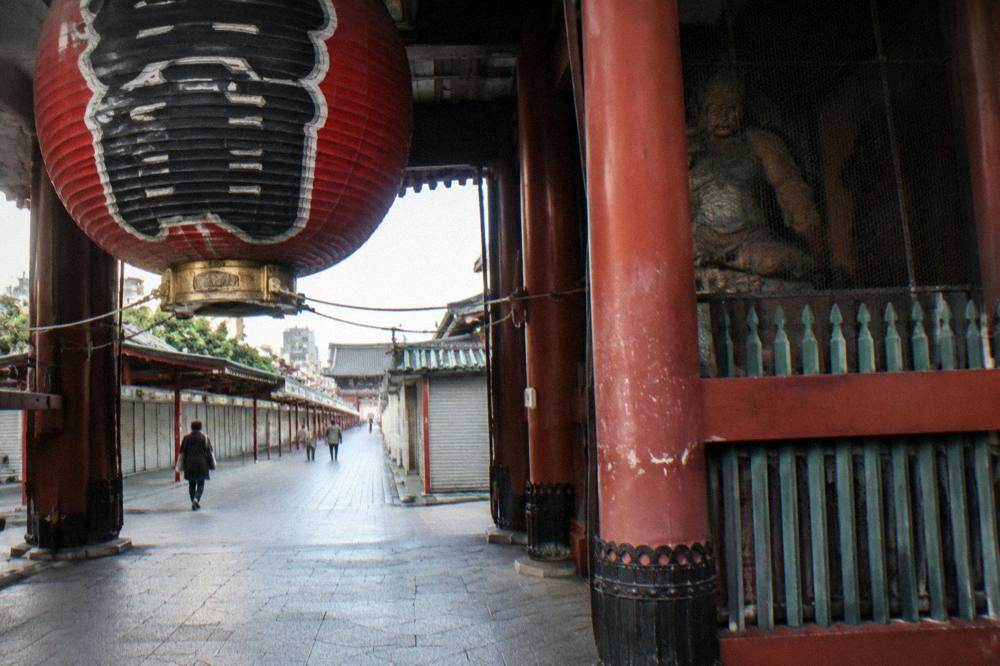
Spanish speakers have their own set, and it is a real set rather than an afterthought: the 3-Hour Imperial Gardens walk by Ignacio, rated 4.92 out of 5 across 718 GuruWalk reviews, the Tsukiji To Hamarikyu walk, also by Ignacio, rated 4.93 out of 5 across 449 GuruWalk reviews, and Hikari Tours' Asakusa, Harajuku and Shinjuku walks, all in Spanish. These walks run in Spanish, and arriving at one expecting English would be a genuine mistake, not a preference.
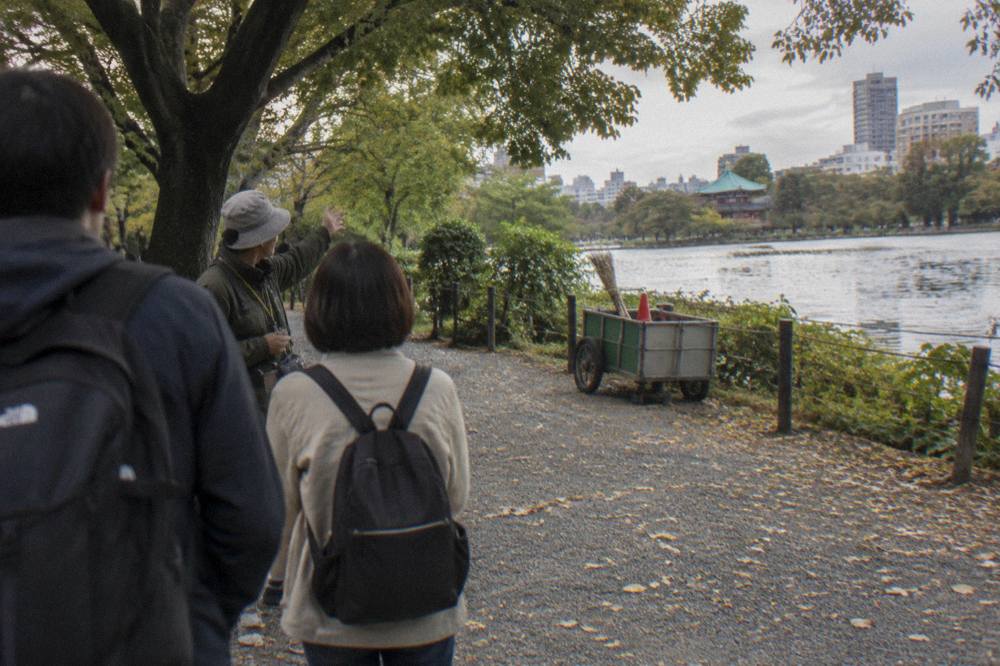
Mistakes That Trip People Up At Pay What You Want Tours
The mistakes are predictable and avoidable: assuming free means nothing is expected, paying a fixed figure read off some article, treating a paid garden as free, turning up to the East Gardens on a Monday or Friday, and booking a Spanish only walk expecting English. Each of these is fixed by reading the walk's own listing and the attraction's own rules rather than a rule of thumb. There is no fixed price: the walk is free, pay what you want.
The first mistake is treating "free" and "pay what you want" as the same claim when they describe one combined price. The guiding on every walk here is free to reserve and join, and the amount afterwards is yours to set, including low or nothing. But walking in with the idea that the model is a trick to be defeated, or the opposite, that a hidden standard rate exists, both miss how it works. No figure is published because no figure exists.
The second is the garden trap. People finish a Shinjuku walk and head into Shinjuku Gyoen expecting a free park, and find a JPY 500 ticket and, most Mondays, a closed gate. The free alternatives, including Ueno Park, Yoyogi Park and the Imperial Palace East Gardens on their open days, are covered in the Shinjuku Gyoen free alternatives guide. The third is the calendar trap: the East Gardens shut every Monday and Friday, the TMG observatories rotate their two closure patterns, and December brings both the market's request at Tsukiji and a cluster of holiday closures from 28 December into the first days of January.
The fourth is language. The Spanish language walks listed here are fine walks with strong ratings, but they run in Spanish, and the Shimokitazawa walk runs on freetour.com rather than GuruWalk, so its reservation and its 9.6 out of 10 rating live on a different platform with a different scale. Checking those two facts, language and platform, before reserving prevents the only disappointments the model cannot absorb.
Common Questions About Paying For Free Walking Tours In Tokyo
How Much Should You Pay For A Free Walking Tour In Tokyo?
Whatever you decide. Every walk on this site is free, pay what you want, with no minimum and no published figure. You reserve for nothing on GuruWalk, or on freetour.com for the Shimokitazawa walk, and hand the guide an amount of your choosing at the end.
Is A Free Walking Tour In Tokyo Really Free?
The guiding is. There is no booking fee, no deposit and no required payment. What is not free is everything around the guiding: food on market walks, entry to paid gardens such as Shinjuku Gyoen at JPY 500, and museum tickets.
Do You Need To Book A Free Walking Tour In Advance?
You reserve a spot through the walk's listing on GuruWalk, or on freetour.com for the Shimokitazawa Offbeat walk. Reserving costs nothing. Each guide's own page carries the departure calendar, since schedules live there rather than on this site.
What Is Not Included In A Free Walking Tour?
Food and drink, paid attraction entries, shopping, and your own transport to the meeting point. The Tsukiji Street Food walk is the clearest case: guiding is pay what you want, food is bought separately at the stalls.
Can You Take A Free Walking Tour In Spanish In Tokyo?
Yes. Several walks run in Spanish, including the 3-Hour Imperial Gardens walk by Ignacio, rated 4.92 out of 5 across 718 GuruWalk reviews, and Hikari Tours' walks in Asakusa, Harajuku, Shibuya and Shinjuku. These are Spanish language walks and are described as such.
Do You Tip The Guide In Cash Or Through The Platform?
How the tip is handed over depends on the guide and the walk. The one fact that holds everywhere: every walk is free, pay what you want, reserved on GuruWalk or freetour.com. For anything beyond that, check the walk's own page on GuruWalk or freetour.com, or ask the guide at the start.