Is Shinjuku Gyoen Free To Enter?
Shinjuku Gyoen charges JPY 500 for adults and closes on Mondays outside the autumn period. Here is exactly what is free, what costs money, and what to do nearby instead.
In Short
No. Shinjuku Gyoen charges adults JPY 500, with JPY 250 for students and visitors over 65, and children 15 and under enter free. The garden is closed on Mondays except during the special autumn period from 1 to 15 November, when it opens every day. It also closes fully from 29 December to 3 January. The truly free alternatives nearby are the Tokyo Metropolitan Government observatories and the unfenced public parks.
This question sits inside the Shinjuku Gyoen free alternatives guide, which covers the whole district's free options in depth. This post answers the single question of entry, in full.
Quick Facts
| Question | Answer |
|---|---|
| Is entry free? | No, adults pay JPY 500 |
| Reduced tickets | JPY 250 for students and visitors over 65 |
| Who enters free | Children 15 and under |
| Closed days | Mondays, except 1 to 15 November |
| Full closure | 29 December to 3 January |
| Free view nearby | Tokyo Metropolitan Government observatories, 202 metres |
| Free parks nearby | Yoyogi Park, Hibiya Park, Ueno Park |
Is Shinjuku Gyoen Free To Enter?
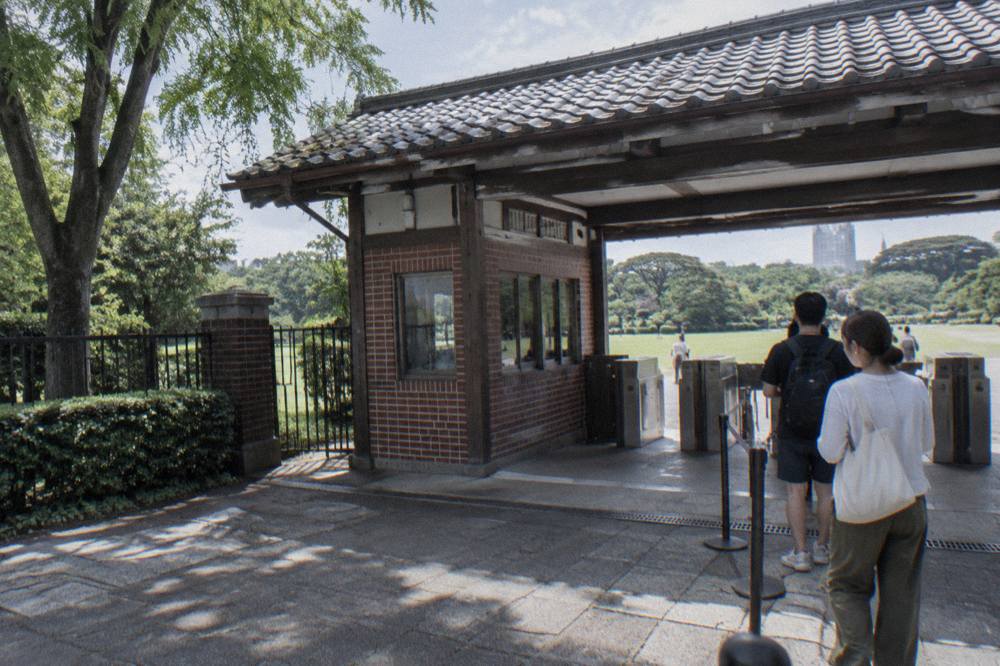
No, Shinjuku Gyoen is not free to enter. Adults pay JPY 500 at the gate, students and visitors over 65 pay JPY 250 with proof, and only children 15 and under walk in at no charge. The garden is also closed on Mondays outside the special autumn period from 1 to 15 November, when it opens every day of the week. It is a ticketed national garden, not a public park.
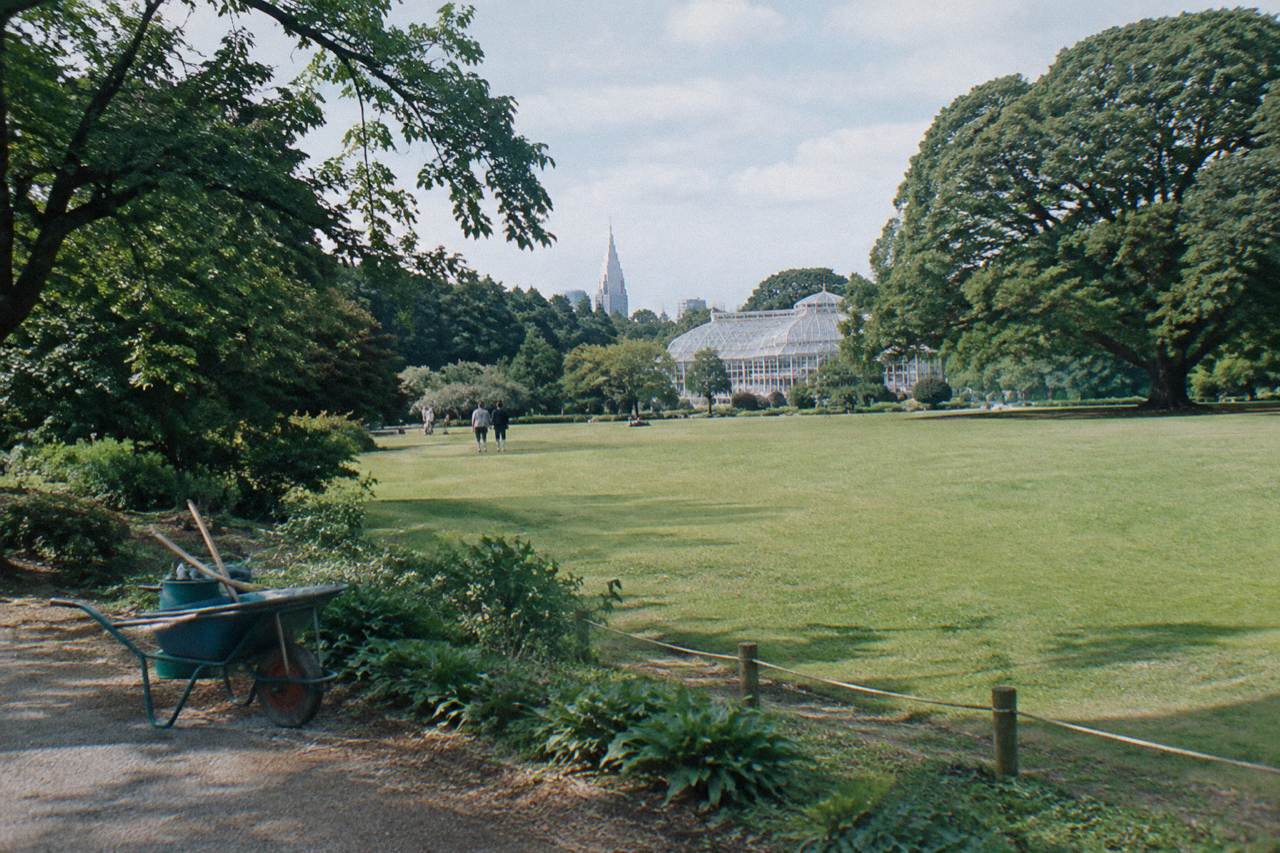
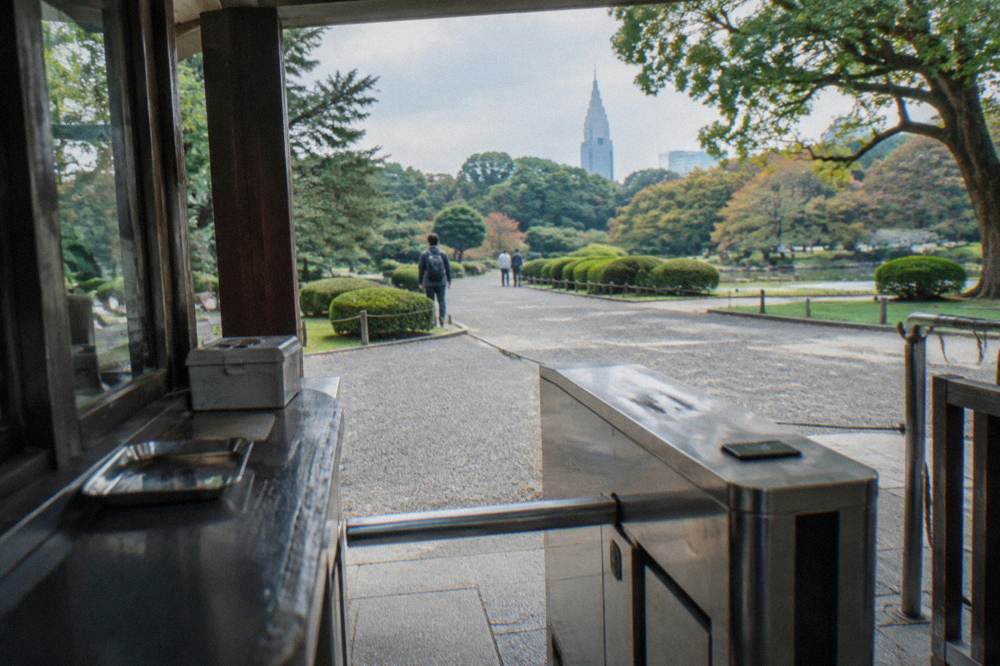
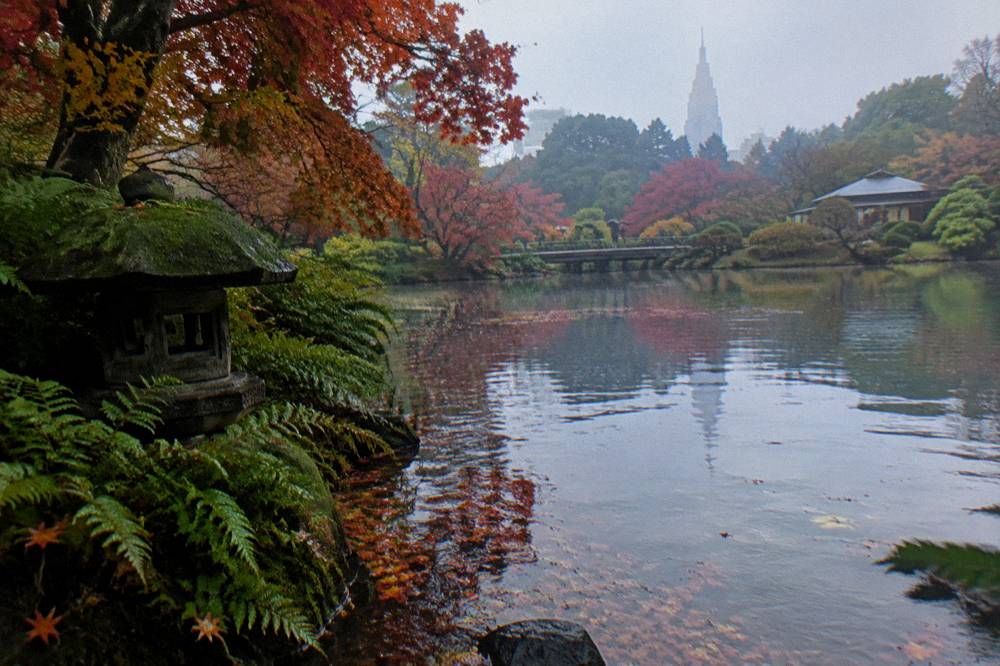
That last sentence is the part that catches people out. Shinjuku Gyoen is administered under the national garden system run by the Ministry of the Environment, and the operator's own page at fng.or.jp states the fee and the closing rules plainly. It looks like a park, it sits in the middle of Shinjuku beside free public land, and its lawns resemble the free open spaces of Yoyogi or Ueno, but the gate has a ticket window and the rules are enforced.
| Place | Free Or Ticketed | What Is Free | What You Still Pay For |
|---|---|---|---|
| Shinjuku Gyoen | Paid | Not free: it is a ticketed national garden. Free only for children 15 and under. | Adult JPY 500, over 65 and students JPY 250, children free. Closed Mondays (next weekday if Monday is a holiday) and 29 December to 3 January; 1 to 15 November open 7 days. |
The price is low by attraction standards, and that is partly why the confusion persists. JPY 500 is roughly the cost of a convenience-store lunch, so plenty of travellers pay without ever registering that this was a paid attraction at all, then go home and tell friends that Shinjuku Gyoen is free. It is not. The fee buys a genuinely maintained space, and the money shows in the condition of the lawns, the glasshouse and the Japanese garden inside.
For comparison, the same regime applies to the other great gardens of Tokyo, which are run by the Tokyo Metropolitan Park Association: Hama-rikyu, Koishikawa Korakuen and Rikugien each charge JPY 300, per tokyo-park.or.jp. So there is a two-tier system in the city. Unfenced parks such as Yoyogi Park, Ueno Park and Hibiya Park cost nothing and never close a gate behind a till. Fenced gardens, national or metropolitan, charge. Shinjuku Gyoen sits in the second tier, and it sits at the top of that tier's price list.
“Jessica was our tour guide and she did a great job. Thank for showing us a gem view that is yet not so crowded, quite an interesting tour. Thank you!”
Maria, GuruWalk review of Secret Backstreets, 1h 30m
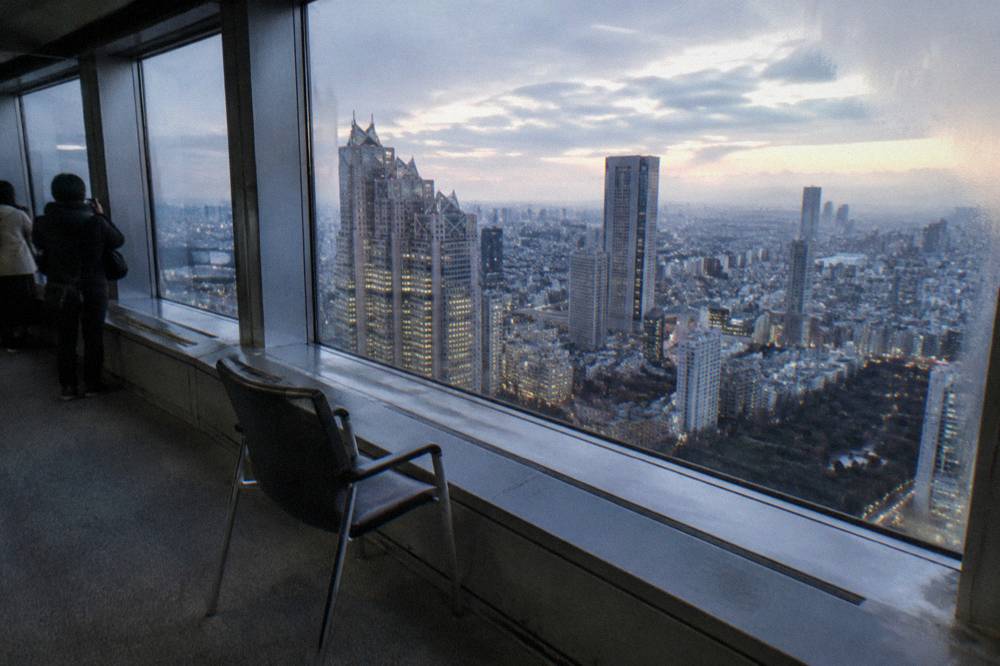
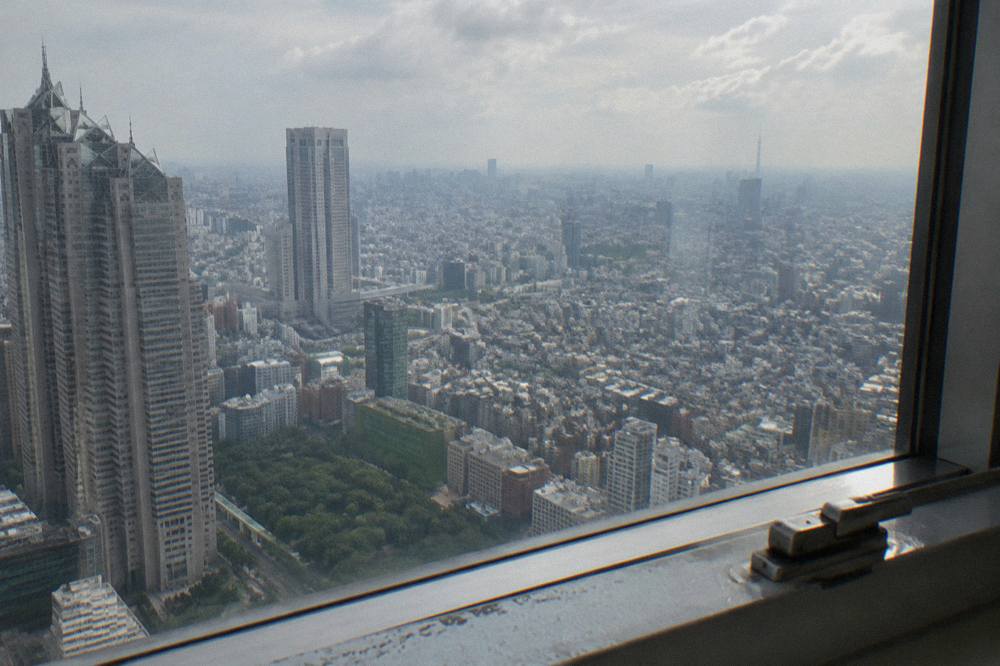
If your budget for the day is zero, the honest answer is to skip the gate and walk two minutes to the Tokyo Metropolitan Government Building, whose observatories at 202 metres are genuinely free with no reservation, per the official page at zaimu.metro.tokyo.lg.jp. The building is also the meeting point for the highest-rated free walk in the district, which we come to below.
What Does The Free Part Include?
The only free entry category is children 15 and under, who pay nothing at the Shinjuku Gyoen gate. Everyone else pays either JPY 500 or the JPY 250 reduced rate. Around the garden, however, the district carries genuinely free ground: the free observatories of the Tokyo Metropolitan Government Building and the unfenced public parks. The free part of a Shinjuku day therefore lives outside the garden walls.
Start inside the gate, because the free category deserves precision. A family with children aged 15 and under pays only for the adults, which makes the garden one of the better value paid spaces in Tokyo for families with young kids. Students pay JPY 250 with a student card, and visitors over 65 pay JPY 250 with proof of age. That is the entire fee structure, and it is the same on weekdays, weekends and holidays.
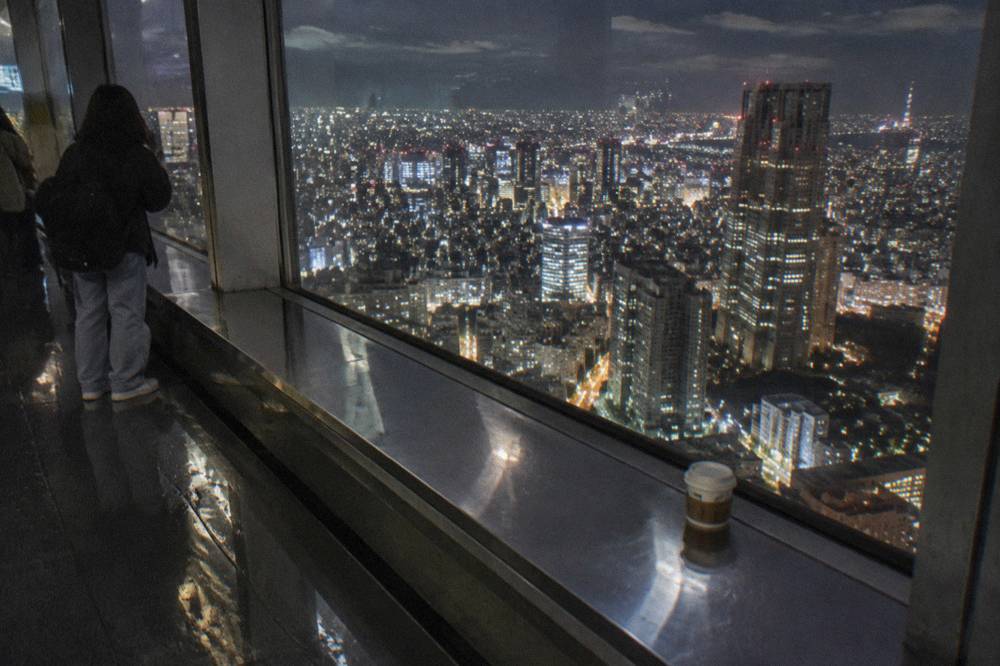
Outside the gate, the free options cluster tightly. The Tokyo Metropolitan Government observatories are the headline item: two floors at 202 metres, both free, both open with no reservation. Each has its own rotating closure, so the pair is never shut as a set. The South Observatory closes on the first and third Tuesday of the month, the North Observatory closes on the second and fourth Monday, and both close on 29 to 31 December and 2 to 3 January. North Observatory entry runs until 17:00. Check which tower is open before you go up, because a visitor who assumes both are open on a given Tuesday can be surprised.
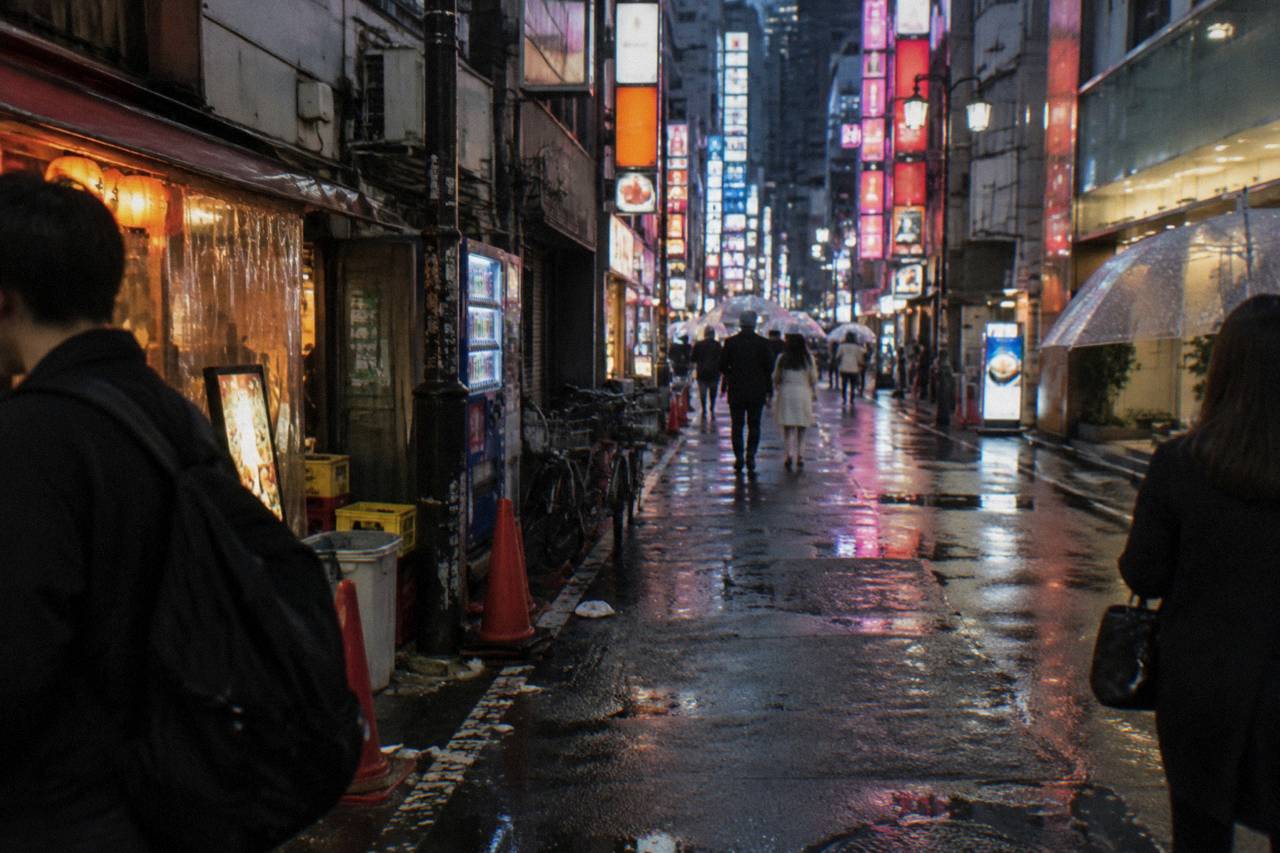
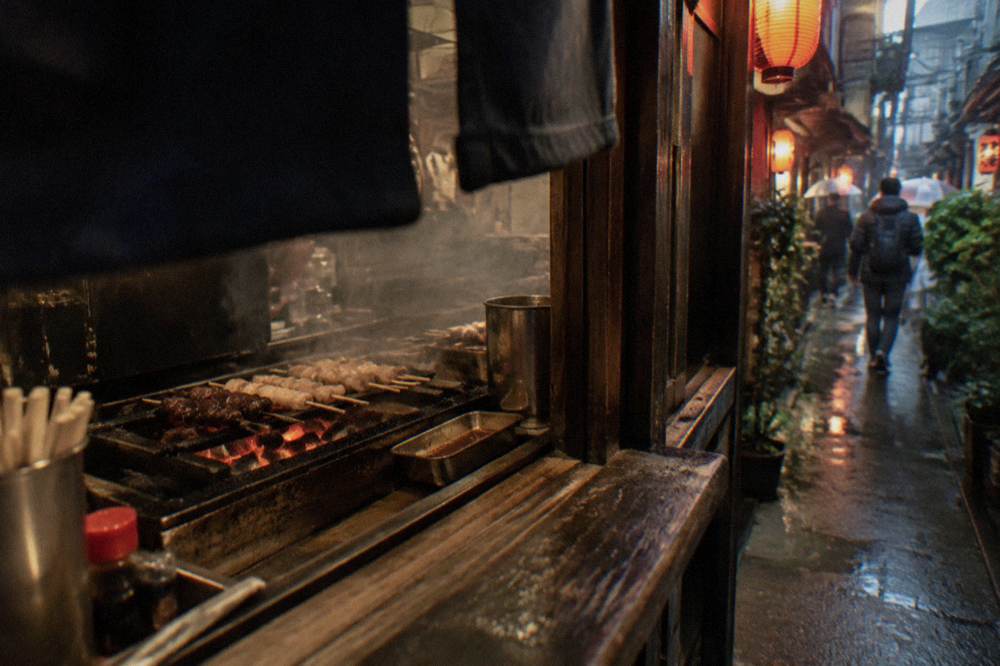
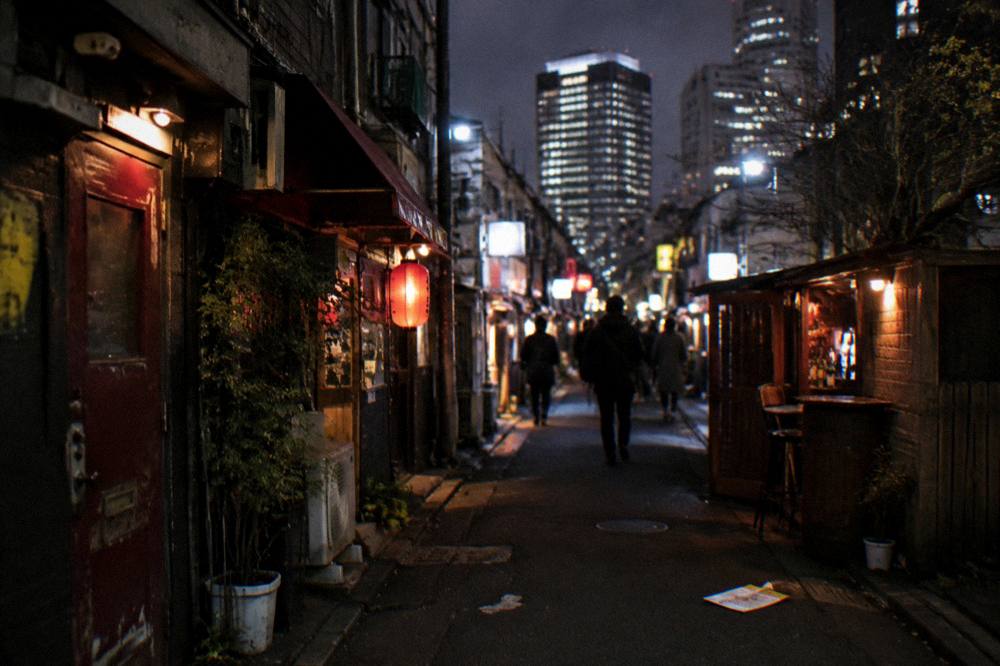
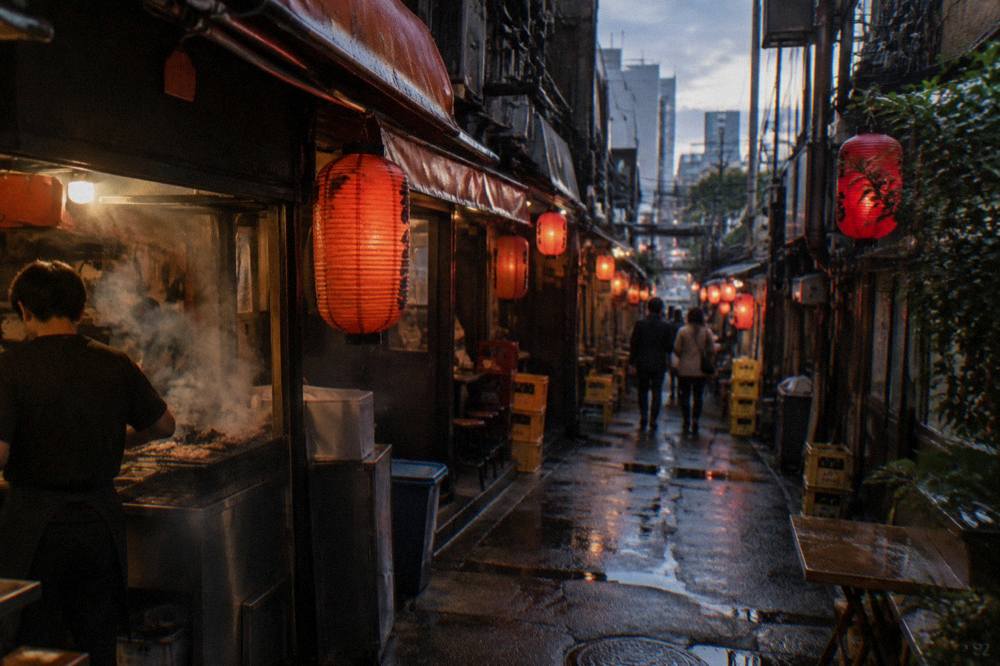
Below the towers, the street level is free by nature. Shinjuku's eastern side, including the drinking lanes of Golden Gai and Omoide Yokocho, costs nothing to walk, though many of the tiny bars in Golden Gai charge a cover or a minimum once you sit down.
If you want green space at no charge, the unfenced parks are the answer, and none of them has a gate or a till. Yoyogi Park, Hibiya Park and Ueno Park are free, and Ueno adds free museums nearby: the Currency Museum, the Fire Museum, the Water Science Museum, the Meguro Parasitological Museum and the Advertising Museum Tokyo all cost nothing to enter, each with its own closed days. Inokashira Park, further out, is free as well. This is the real free park tier of Tokyo, and it is the tier Shinjuku Gyoen is so often mistaken for.
What Do You Still Have To Pay For?
Beyond the JPY 500 adult gate fee, Shinjuku Gyoen's own extras are limited, but the district around it is full of paid layers people mistake for free. The gardens tier charges JPY 300 at Hama-rikyu, Koishikawa Korakuen and Rikugien, and Rikugien's late-autumn night viewing is separately paid. Museum decks and observation towers are all ticketed. Nothing inside this garden, however, is free for an adult.
Inside the garden itself, the ticket is the main transaction. The glasshouse and the landscape are covered by the entry fee rather than charged separately, which distinguishes Shinjuku Gyoen from shrine-and-museum complexes elsewhere in the city where the precinct is free and the inner attractions charge. Here the model is inverted: the whole site is behind one ticket. Pay once at the gate and the interior holds no further turnstiles.
Senso-ji's temple grounds are free, Meiji Jingu's forest and precinct are free while its Inner Garden charges JPY 500 and its museum charges JPY 1,000, Zojo-ji's grounds and main hall are free while its Treasures Gallery charges JPY 700 and closes Tuesdays, and the Yasukuni precinct is free while its Yushukan museum charges JPY 1,000. At each of those places you can have a complete free visit and simply skip the paid wing. Shinjuku Gyoen offers no such split. There is no free wing, no free lawn, no free path. The gate is the whole experience.
The surrounding district adds paid layers that trap the same assumption. Tokyo Tower's Main Deck starts from JPY 1,500 for adults, and the tower base and Foot Town are walkable without a ticket, so the free-versus-paid line sits between the ground and the deck. Tokyo Skytree's observation decks start from JPY 3,000 on dynamic pricing, while the Solamachi complex at its base is free to browse. Shibuya Crossing is free while Shibuya Sky above it is ticketed. teamLab Planets charges JPY 3,800. Each of these follows the free-base, paid-deck pattern, and none of them changes the fact that Shinjuku Gyoen's own pattern is paid-gate, nothing free.
| Site | Free part | Paid part |
|---|---|---|
| Shinjuku Gyoen | Children 15 and under | Adults JPY 500, students and over 65 JPY 250 |
| Hama-rikyu Gardens | None | JPY 300 |
| Koishikawa Korakuen | None | JPY 300 |
| Rikugien | None | JPY 300, night viewing 25 Nov to 6 Dec separately paid |
| Tokyo Metropolitan Government observatories | Both decks, 202 metres | None |
| Tokyo Tower | Base and Foot Town | Main Deck from JPY 1,500 |
| Meiji Jingu | Precinct and forest | Inner Garden JPY 500, museum JPY 1,000 |
One seasonal note on the gardens tier: Rikugien runs a paid night viewing from 25 November to 6 December 2026, 18:00 to 20:30, which is a separate purchase on top of the standard entry logic. If your plan is a garden-hopping day in late autumn, budget for the JPY 300 garden tickets plus the night event if you go, and remember the metropolitan gardens close from 29 December to 1 January. Shinjuku Gyoen's own closure runs 29 December to 3 January.
When Is The Free Option Available?
The free option, meaning free entry for children 15 and under, is available during every open day of the garden, including the special autumn period from 1 to 15 November when the garden opens all seven days. The observatories and free parks nearby follow their own calendars, with rotating closures at the towers and no gate at all at the parks. The garden's hard closures are Mondays outside autumn and 29 December to 3 January.
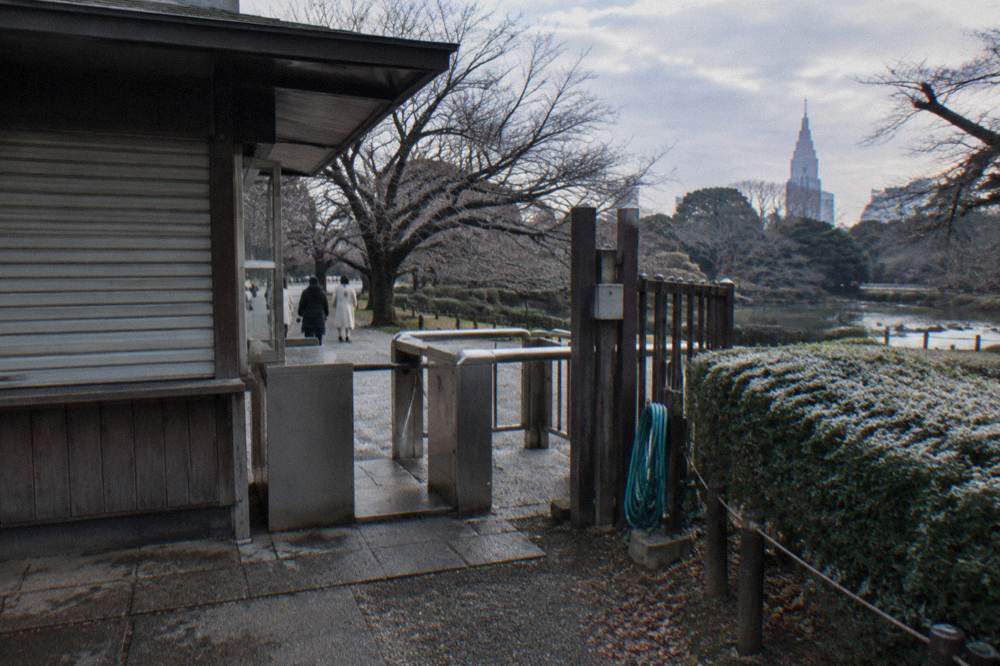
The calendar detail matters more here than at most Tokyo attractions, because the Monday closure catches weekend planners who slide their Shinjuku day to the start of a week. Outside the 1 to 15 November special autumn period, the garden is closed every Monday. During that fortnight it opens every day, which makes early November the one stretch when a Monday visit works. The operator's page states this plainly, and it also states the 29 December to 3 January closure, which removes the garden from any New Year itinerary.
The free observatories run on a more intricate but more generous calendar. Both towers are free, both take no reservation, and they alternate closures so that one deck is nearly always available: South closed the first and third Tuesday, North closed the second and fourth Monday, both closed 29 to 31 December and 2 to 3 January. The practical way to use them is to check the weekday of your visit against those two rules, then go up. North Observatory entry ends at 17:00, which sets the latest arrival for that deck.
The free parks have no calendar at all in the ticketing sense, since Ueno Park is free and open at all times, and the same unfenced logic applies to Yoyogi and Hibiya. Around them, the free museums each carry their own closed days, which is where the planning effort sits. The Sumo Museum is free but closed weekends and holidays, and during tournament weeks it opens only with a tournament ticket, which makes it a conditional free option rather than a simple one. The National Museum of Western Art's permanent collection is free for everyone on the second Sunday of each month, with 13 December 2026 next, and otherwise charges adults JPY 500.
| Place | Free Or Ticketed | What Is Free | What You Still Pay For |
|---|---|---|---|
| Golden Gai | Free on conditions | The lanes themselves are free to walk. Many tiny bars charge a cover or a minimum at the door. | Cover charges vary by bar; check the sign at each door. |
| Omoide Yokocho | Free | Smoky yakitori alley beside Shinjuku Station; free to walk. | Food and drink are paid, some counters have a seat charge. |
The Marunouchi Illumination runs 12 November to 25 December 2026 along Naka-dori and is free to view from the street, and the Tori-no-ichi festival at Otori Shrine has its second day on 19 November 2026, with entry not ticketed and the lucky rakes and food stalls paid. Neither is in Shinjuku, but both reward a free-day plan built around the garden district's closures.
| Site | Closed days | Notes |
|---|---|---|
| Shinjuku Gyoen | Mondays except 1 to 15 Nov | Also closed 29 Dec to 3 Jan |
| TMG South Observatory | 1st and 3rd Tuesday | Free, no reservation |
| TMG North Observatory | 2nd and 4th Monday | Entry until 17:00 |
| Metropolitan gardens | 29 Dec to 1 Jan | JPY 300 each |
| Sumo Museum | Weekends and holidays | Free, tournament weeks need a ticket |
| Imperial Palace East Gardens | Every Monday and Friday | Free, winter 9:00 to 16:00 |
Where Does The Free Visit Start?
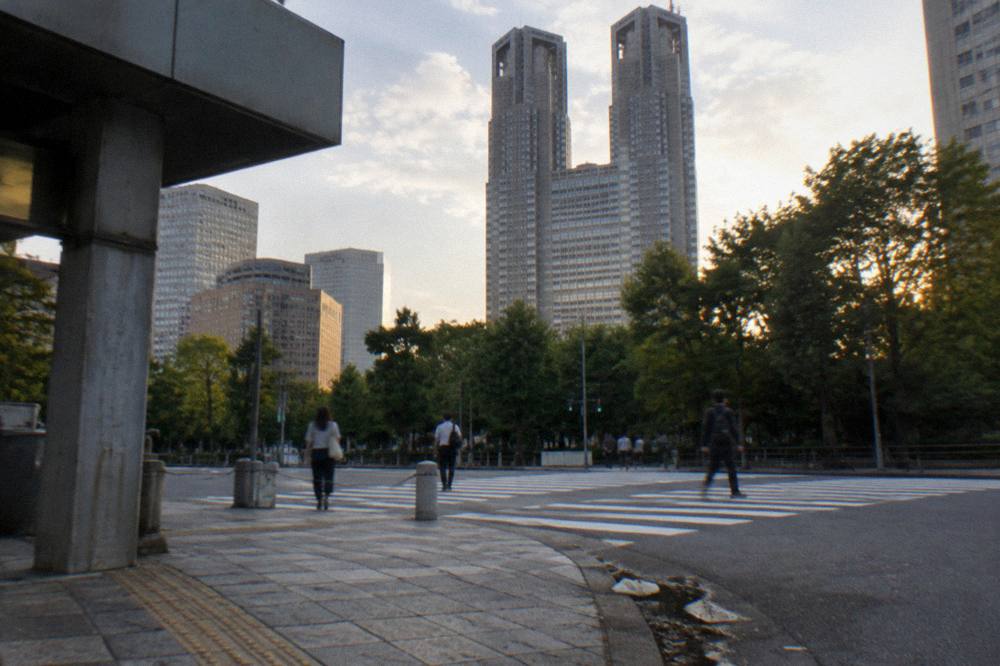
A free Shinjuku visit starts at the Tokyo Metropolitan Government Building, where the observatories are free and no reservation is taken, and where the district's flagship free walking tour also meets. The garden's own gates are ticketed, so the free itinerary begins one block away at the towers, then runs through the free streets and parks of the district rather than through any garden gate.
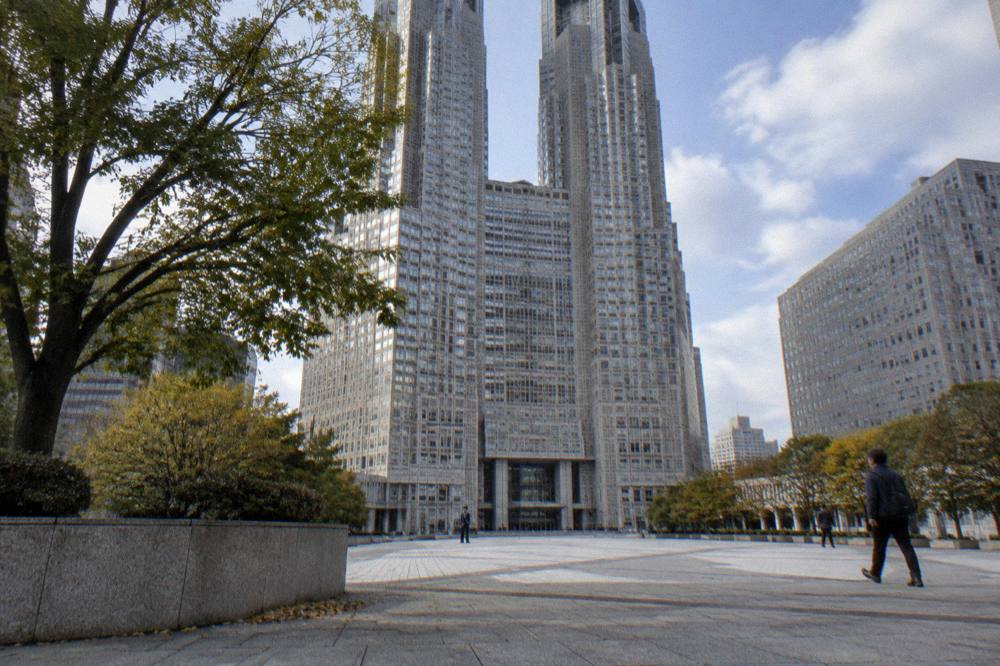
The towers are the natural anchor because two free things converge there. The observatories are the best free view in west Tokyo, and the building is the stated meeting point of the 18-Plus Night Walk, Kabukicho, the highest-rated free walk in this district: 4.89 out of 5 across 2,714 GuruWalk reviews, two hours, English and Spanish, adults only because the route deals with the red-light district's adult subject matter. That walk is free, pay what you want, reserved through GuruWalk, and the related walk for this article's topic, since an evening walk pairs naturally with a day built around the garden district's free options.
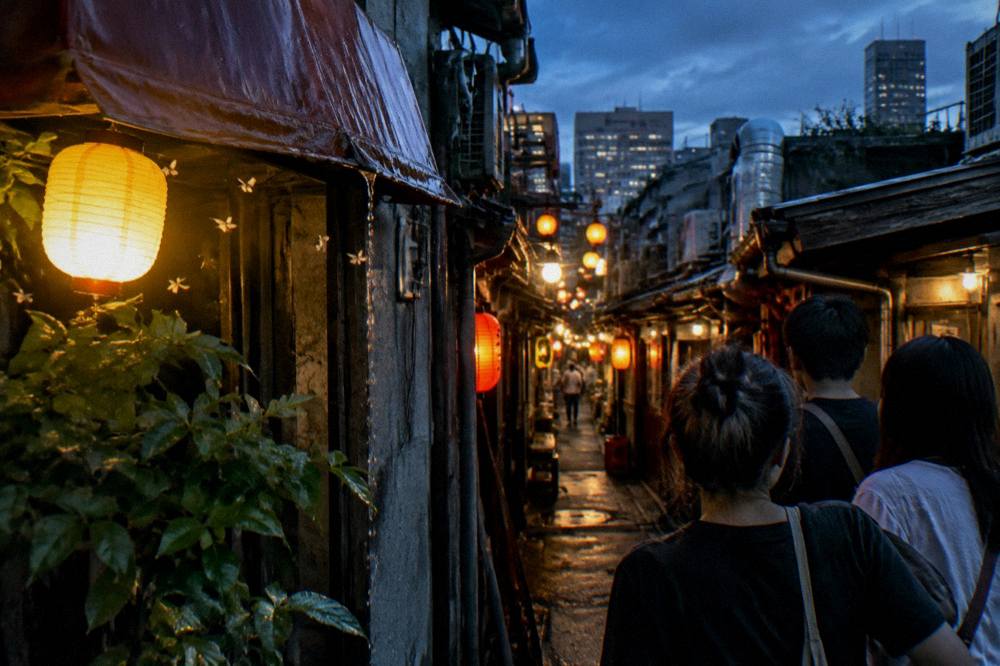
From the towers, the free ground spreads east. The Shinjuku Station east side holds the backstreets and the drinking lanes, and several free walks meet right there: the Secret Backstreets walk meets at Shinjuku Station, East Exit and runs 1 hour 30 minutes, rated 4.73 out of 5 across 612 GuruWalk reviews in English. Others meet at McDonalds, Seibu Shinjuku, at the Shinjuku Tourist Information Center, and at McDonald's, Kabukicho, depending on the walk. Each is free, pay what you want, and reserved on its own GuruWalk page. The exact meeting point of a walk is the one location fact that is fixed, so plan around the point, not around a promised route.
For the green part of a free day, leave Shinjuku entirely. Yoyogi Park is the nearest unfenced free park of scale, Hibiya Park sits closer to the imperial grounds, and Ueno Park in the north of the city is free and open at all times with free museums around it. The Imperial Palace East Gardens are another free green option with real garden character, free and closed every Monday and Friday, open 9:00 to 16:00 in winter with entry until 15:30, and closed 28 December to 3 January. That garden delivers a walled, landscaped, historic space at no charge, which is exactly the experience people wrongly expect at Shinjuku Gyoen's gate.
The practical shape of the day is therefore towers first, streets second, parks third. Go up the open observatory while the light is good, walk the east-side streets with or without a free guide, and end in a free park or head to a free museum if the weather turns. The paid garden slots in only if you choose to pay, and the free visit never needs it.
Which Free Walking Tours Cover This?
The free walks that cover Shinjuku meet at points across the district and run on GuruWalk, each free and pay what you want. The flagship is the 18-Plus Night Walk, Kabukicho at 4.89 out of 5 across 2,714 reviews, and the Secret Backstreets walk at 4.73 out of 5 across 612 reviews is the compact English option. No walk is tied to the garden itself, since the garden is a paid site.
The Shinjuku family of walks is the deepest in the city's roster, and every one of them is free, pay what you want. The 18-Plus Night Walk, Kabukicho, run by Japan Navigators, is the most-reviewed walk anywhere on this site's roster: 4.89 out of 5 across 2,714 GuruWalk reviews, two hours, English and Spanish, meeting at the Tokyo Metropolitan Government Building. It is for adults only, plainly, because Kabukicho is a red-light district and the walk treats it as such. If your day has been built around the free observatory in the same building, this is the natural evening extension, and you can see the Kabukicho night walk page for its own details.
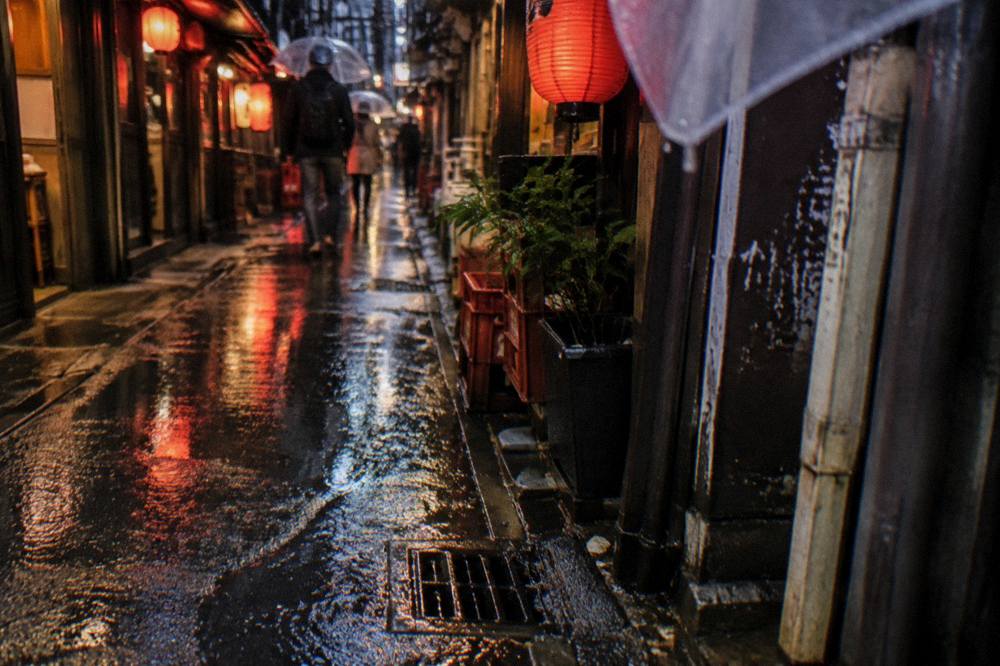
The Secret Backstreets walk, from Local Guide Stars, is the shorter English option: 1 hour 30 minutes, 4.73 out of 5 across 612 GuruWalk reviews, meeting at Shinjuku Station, East Exit. It is a good fit for a traveler who wants the east side explained without committing an entire evening. Beyond those, the district's walk family includes the Dark Side Night Walk at 4.83 out of 5 across 352 GuruWalk reviews, meeting at McDonalds, Seibu Shinjuku, and further options running in Spanish and in smaller groups, including one limited to five people. Every reservation happens on the walk's own GuruWalk page, and the pay-what-you-want model is the entire price structure: no money figure belongs to any of them.
Outside Shinjuku, the free walk network reaches every part of this article's alternatives, and the question of how much to pay at the end of one is answered in what to pay for a free walking tour. Shibuya and Harajuku carry heavily reviewed walks: the Bilingual Shibuya And Harajuku walk at 4.88 out of 5 across 1,470 GuruWalk reviews meets at the Hachiko Statue, Shibuya Station, and the Pop Culture Walk at 4.78 out of 5 across 1,339 reviews meets at the same statue. Asakusa's walks meet at the Kaminarimon Gate and the Asakusa Culture Tourist Information Center, and Ueno's at the park itself. One walk runs on freetour.com rather than GuruWalk, the Shimokitazawa Offbeat tour at 9.6 out of 10 across 26 freetour.com reviews, and it is the only one on that platform, so do not expect any other walk to be listed there.
None of these walks enters Shinjuku Gyoen, because no free walk has a reason to take a group through a JPY 500 gate. The walks cover the streets, the night districts and the free parks, and the garden remains a separate, paid decision. Pair a walk with the free observatory and a free park, and the paid garden becomes optional rather than central to the day. The full district-by-district breakdown is in the free walking tours guide, which lists every walk this site carries a page for.
Mistakes That Trip People Up At Shinjuku Gyoen
The recurring mistakes are assuming the garden is a free public park, planning a visit for a Monday outside the autumn fortnight, mixing up the garden's calendar with the observatories' rotating closures, and expecting the free-base, paid-deck pattern that applies elsewhere in Tokyo. Each mistake comes from a real rule, and each is avoidable with the numbers above. Here is the full list.
The first mistake is calling it free at all. The garden charges JPY 500 for adults, JPY 250 for students and over 65, and nothing only for 15 and under. This site, Free Things To Do In Tokyo, exists partly because this exact assumption is so common: the garden looks like Yoyogi Park, sits near free public ground, and gets described in passing as a park, and the ticket window surprises anyone who arrives with no cash expectation. The correction is simple, the garden is a ticketed national garden, and the honest free alternatives are the unfenced parks.
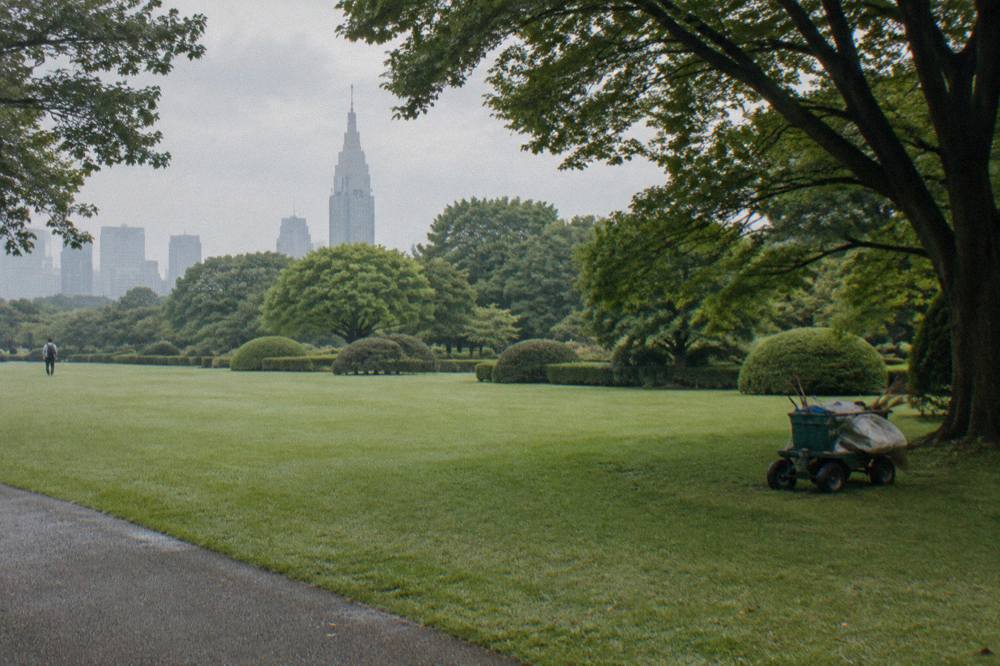
The second mistake is the Monday. Outside the special autumn period from 1 to 15 November, the garden is closed every Monday, and it is fully closed 29 December to 3 January. The Imperial Palace East Gardens compound this pattern nearby, since they close every Monday and Friday, so a Monday plan in central Tokyo loses both gardens at once. The observatories, by contrast, close on rotating weekdays, South on the first and third Tuesday, North on the second and fourth Monday, and never as a pair.
The third mistake is pattern-matching from other Tokyo sites. Visitors extend that logic and assume Shinjuku Gyoen must have a free lawn or a free path. It has neither. Every square metre is behind the ticket, and there is no free wing to retreat to.
The fourth mistake is confusing the two Shinjuku towers with the two paid towers of Tokyo. The Tokyo Metropolitan Government observatories are free with no reservation. Tokyo Tower's Main Deck starts from JPY 1,500 and Tokyo Skytree's decks from JPY 3,000, both dynamically priced, and neither base price should be quoted as a flat figure. Free viewing in this city means the government observatories; everything with a deck above a shopping complex is ticketed.
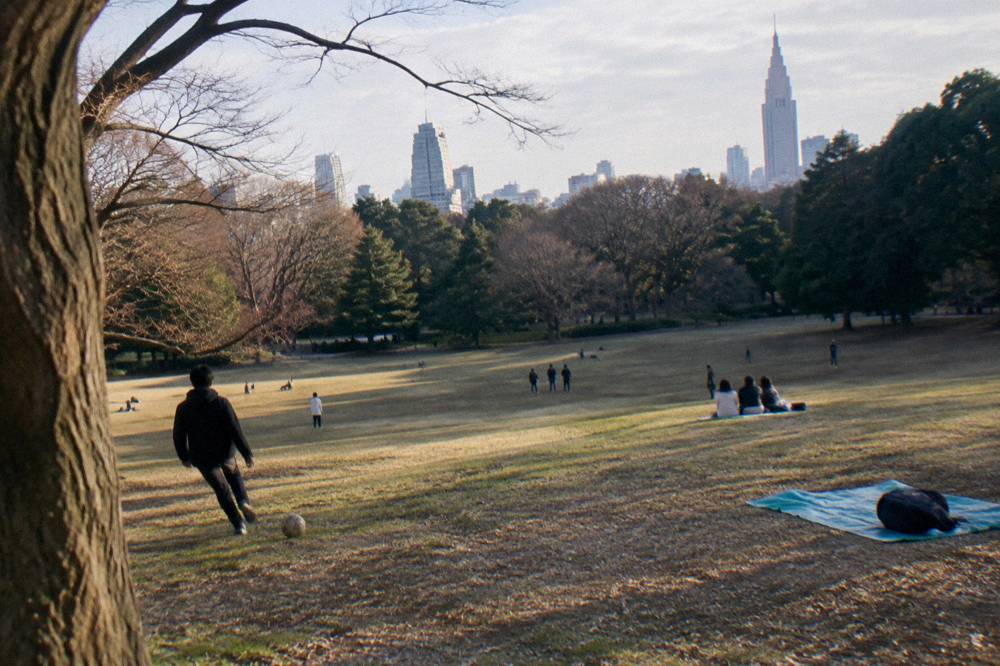
The fifth mistake is planning a December food-street visit without reading the room. The Tsukiji Outer Market's official page asks sightseers and group tours to stay away in December during the New Year shopping rush, and asks all visitors not to eat while walking. A December itinerary that combines the garden, the observatory and Tsukiji should respect both requests. None of these mistakes requires deep research to avoid, only the fee table, the two calendars and the closures listed above.
Common Questions On This Topic
Is Shinjuku Gyoen Free To Enter?
No. Adults pay JPY 500, students and visitors over 65 pay JPY 250 with proof, and children 15 and under enter free. It is a ticketed national garden, closed Mondays outside the 1 to 15 November special autumn period and fully closed 29 December to 3 January.
How Much Does It Cost To Enter Shinjuku Gyoen?
JPY 500 for an adult, JPY 250 for a student or a visitor over 65, and nothing for children 15 and under. That is the whole fee structure, the same on every open day. The nearby Tokyo Metropolitan Government observatories, by contrast, are free with no reservation.
Is Shinjuku Gyoen Closed On Mondays?
Yes, outside the special autumn period. From 1 to 15 November the garden opens every day of the week, but for the rest of the year Monday is a closing day. The garden also closes entirely from 29 December to 3 January each year.
Are Children Free At Shinjuku Gyoen?
Children 15 and under enter at no charge, making the garden one of the better-value paid sites in Tokyo for families. Students pay JPY 250 with a student card, and adults pay the full JPY 500.
What Can I Do Near Shinjuku Gyoen For Free?
The Tokyo Metropolitan Government observatories at 202 metres are free with no reservation, rotating their closures so the towers never shut as a pair. The unfenced parks, including Yoyogi Park and Hibiya Park, cost nothing, and the free walking tours of Shinjuku's streets are pay what you want.
Do Any Free Walking Tours Go Into Shinjuku Gyoen?
No. Free walks cover the Shinjuku streets, meeting at points such as the Tokyo Metropolitan Government Building, Shinjuku Station East Exit and Seibu Shinjuku, but none takes a group through a ticketed gate. The walks are free, pay what you want, and reserved on GuruWalk.