Senso-ji itself costs nothing to enter, and most of what surrounds it, Nakamise Street, Kappabashi Kitchen Town and Sumida Park, is free to walk too. This guide separates the free side from the paid parts, lists the closing days that catch people out, and names the free, pay what you want walks that meet in the district.
In Short
Yes, Senso-ji is free to enter, and so are the Nakamise approach street, Kappabashi Kitchen Town and Sumida Park nearby. Paid parts inside the district are mostly food, souvenirs and special extras. Free, pay what you want walking tours in Asakusa run about 2 hours each, and every one is reserved on GuruWalk.
Senso-ji's main hall and its gates charge nothing, and the whole approach that leads to them is a public street. That single fact makes Asakusa one of the most generous districts in Tokyo for a visitor on a budget, but the free side has edges: food streets where everything edible is bought, museums elsewhere in the city that charge, and a handful of closing days that catch people out every week. This guide walks the boundary line, fact by fact.
Part of the Free Things To Do In Tokyo guides series, this page covers the temple, the streets around it and the free, pay what you want walks that meet in the neighbourhood.
Quick Facts
Question
Answer
Is Senso-ji itself free?
Yes, the temple grounds and main hall are free
Is Nakamise Street free?
Yes, it is a public street; food and souvenirs are paid
Is Kappabashi free?
Yes, the street is free; shops and knives are paid
Is Sumida Park free?
Yes, it is an open public park
Nearest free walk platform
GuruWalk, several Asakusa walks meet in the district
Typical free walk length
2 hours
Languages on the free walks
English on some walks, Spanish on others
Is Senso-Ji And Asakusa Free To Visit?
Yes, Senso-ji and the core of Asakusa cost nothing to visit. The temple grounds, the gates and the main hall are free, Nakamise Street is a public approach street anyone can walk, and the surrounding district of small streets, riverbank park and shrine approach lanes is open public space. What you pay for inside Asakusa is food, souvenirs and shopping, not entry.
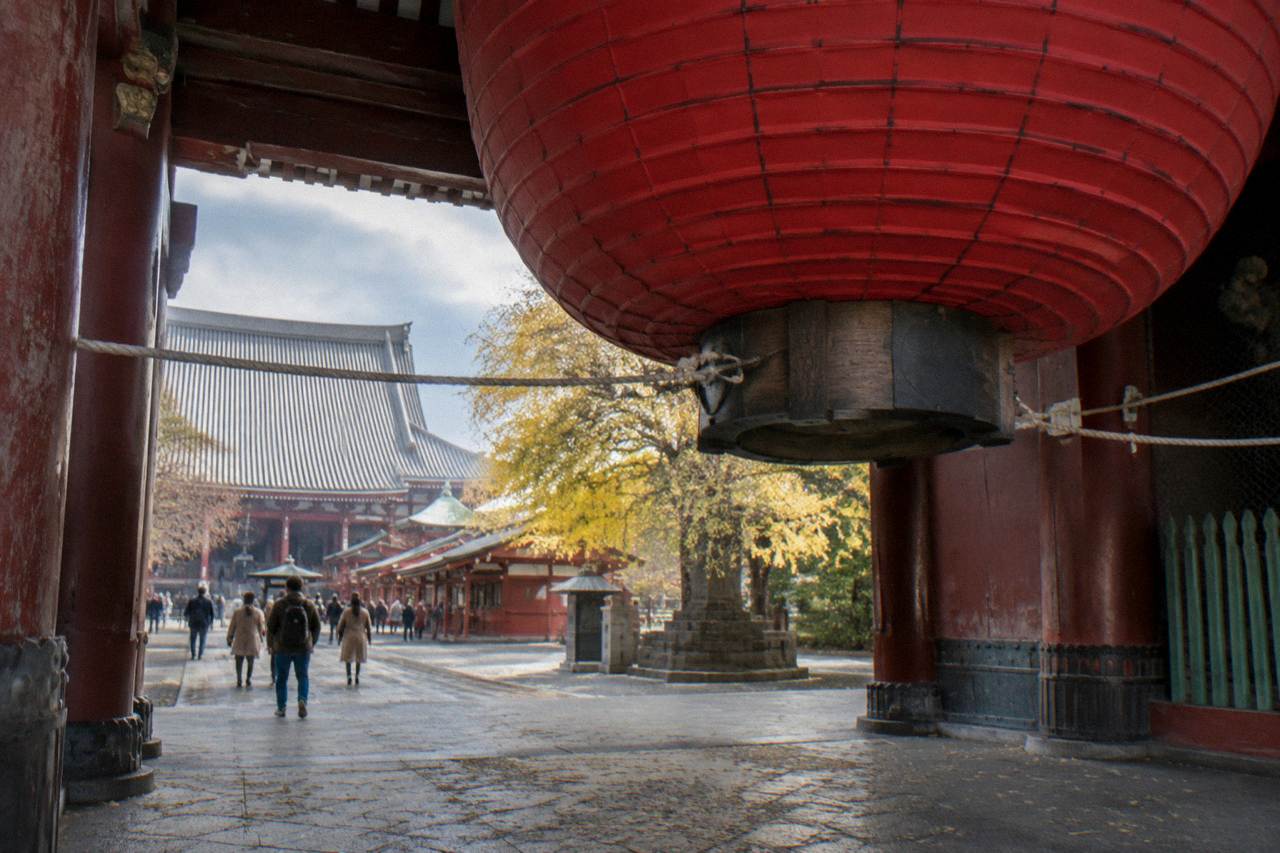
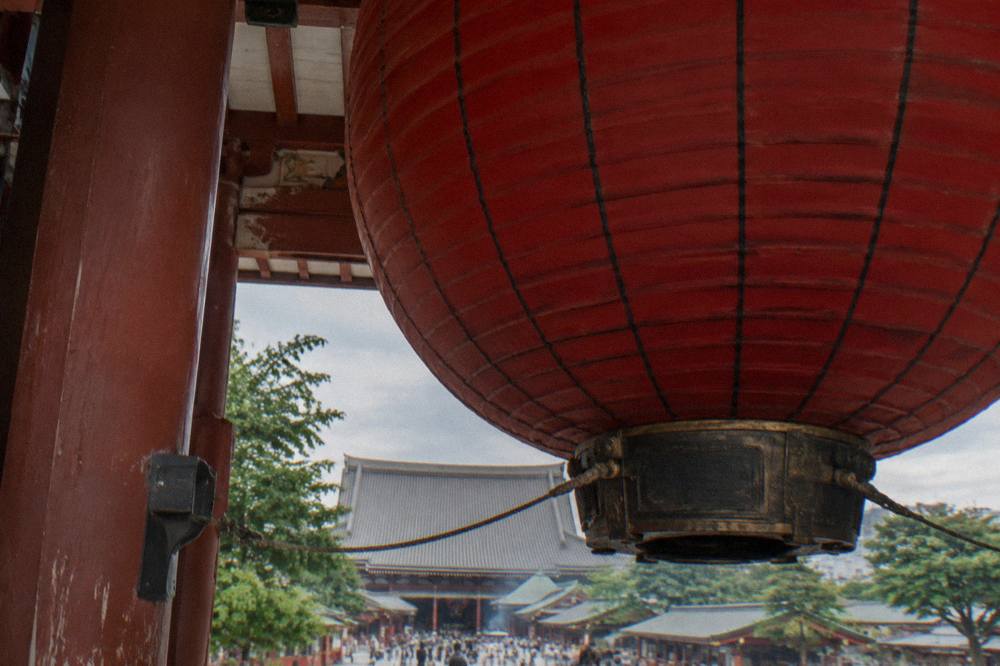
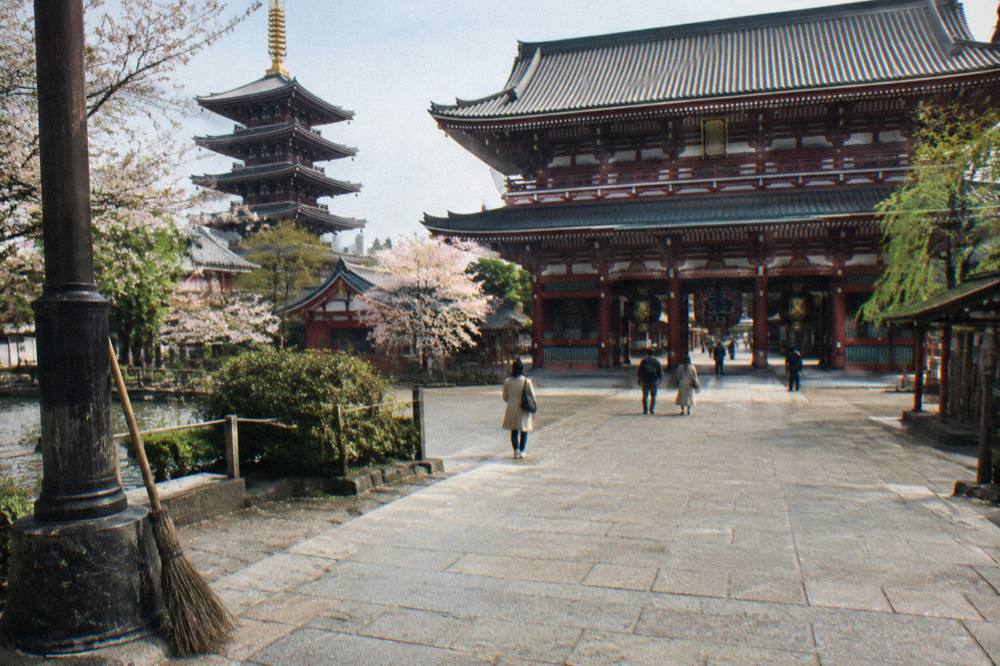
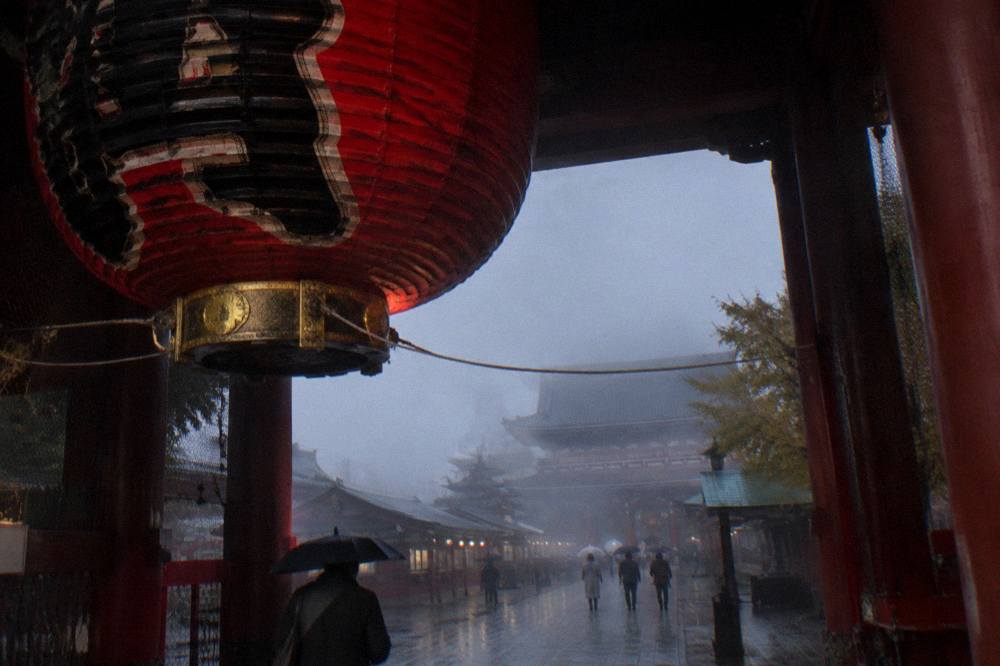
The temple's own position is unambiguous: the grounds and main hall are free, and the operator's official page at senso-ji.jp states no entry charge. Kaminarimon Gate with its great lantern, the approach that follows it and the main hall at the end form one continuous walkable stretch that never passes a ticket gate. Visitors sometimes assume a temple this central must charge, the way an observation deck or a museum does, and it simply does not.
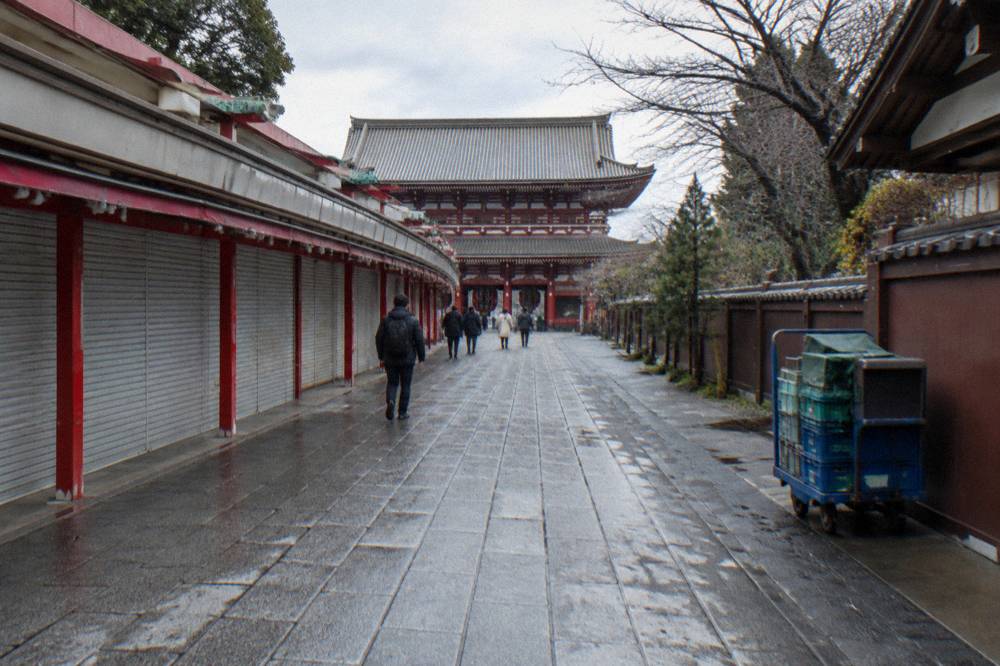
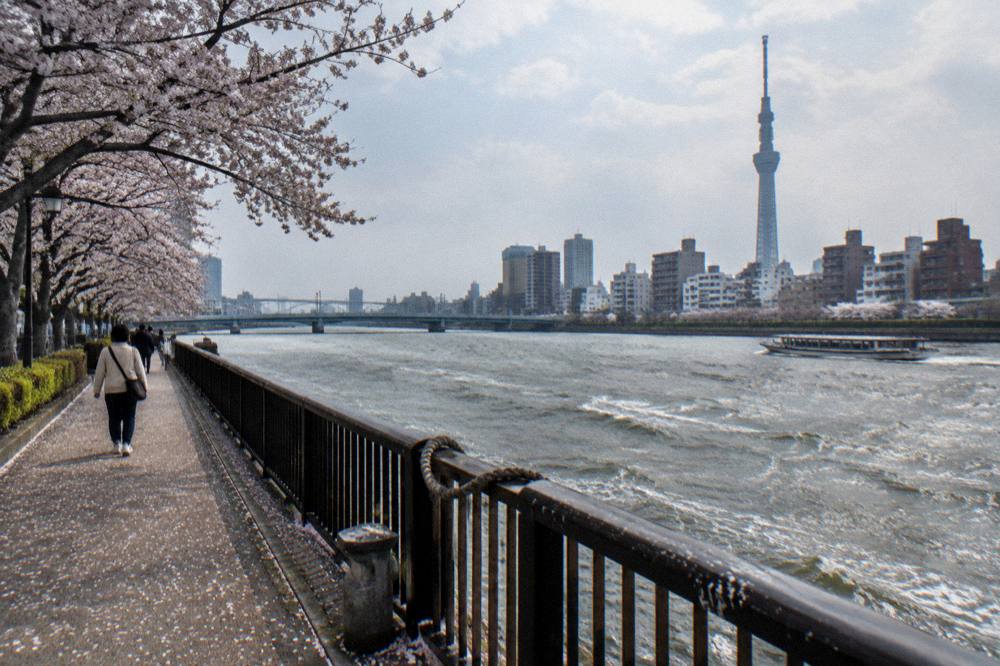
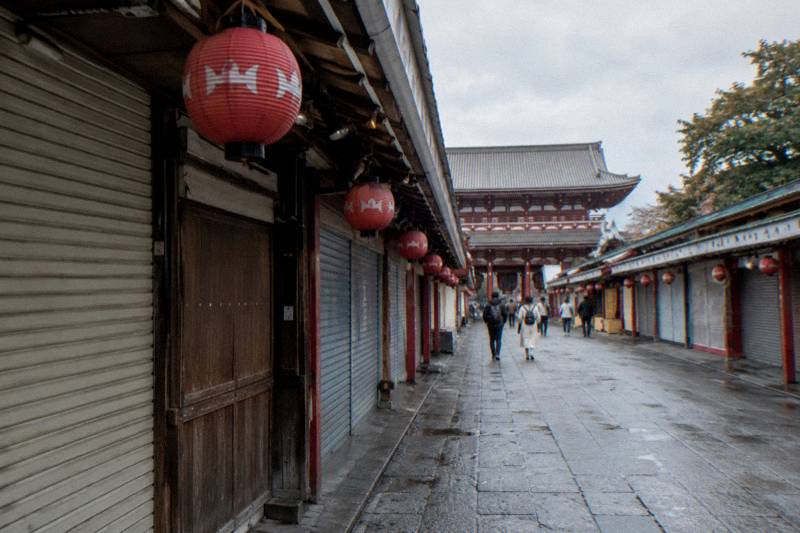
The district around the temple follows the same pattern. Nakamise Street, the lined approach of snack and craft stalls leading to the temple, is a public street: walking it is free, and only what you buy costs money. Beyond it, the lanes of Asakusa are ordinary city streets with small shops, and the riverbank at Sumida Park is an open public park with no fence and no fee.
Place
Free Or Ticketed
What Is Free
What You Still Pay For
Senso-ji
Free
No admission is charged for the temple grounds, the main hall or the gates; senso-ji.jp lists no fee. The temple's own garden is closed to the public.
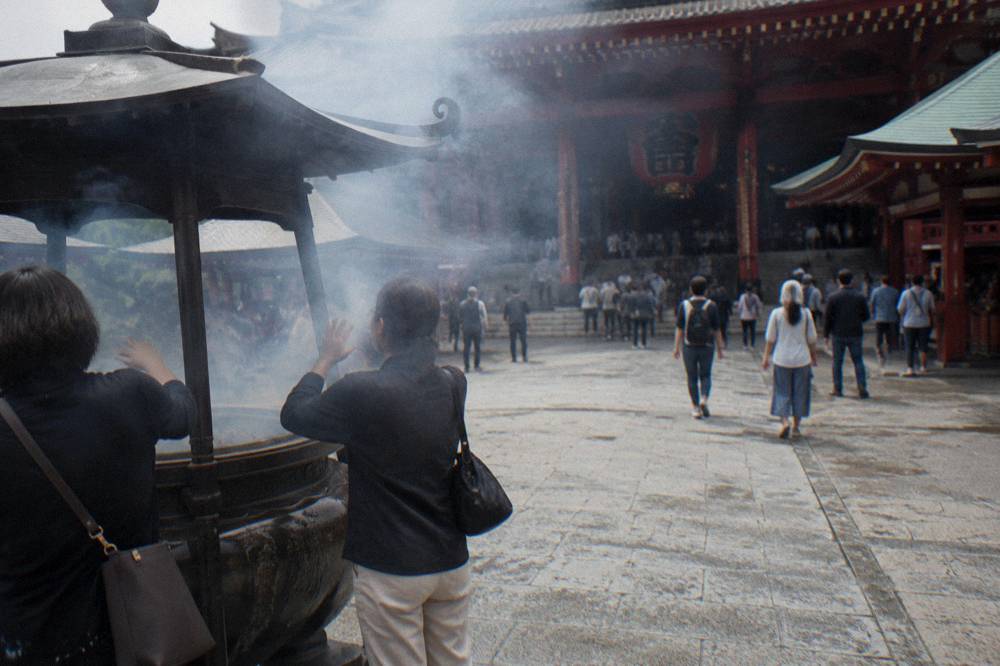
Nothing to enter. Incense, fortunes and Nakamise shopping are separate. The Denbo-in garden opens only on special dates and is a separate paid thing.
There is one boundary to hold onto, and it repeats all over Tokyo: a free precinct does not make everything inside it free. A museum on a hill charges even when the hill is free, and a temple street charges nothing even when every stall on it sells something. Asakusa is almost entirely the free-precinct kind of district, with the paid part being purchases rather than tickets, and that is why it anchors so many budget itineraries.
The free side also extends to being shown around. The Asakusa Classic English Walk, run by Localized Walking Tours on GuruWalk, is free, pay what you want, rated 4.91 out of 5 across 671 GuruWalk reviews, meets at the Asakusa Culture Tourist Information Center and runs 2 hours in English. You can reserve a place on its GuruWalk page. Nobody connected to this site operates it; it is an independent local guide's listing, and GuruWalk is where the reservation is made.
Other English walks meet in the same district. The Asakusa Old Town, English walk by Tokyo Genki Tours is rated 4.78 out of 5 across 767 GuruWalk reviews and meets at Kaminarimon Gate, and the Oldest Temple Walk, English by Local Guide Stars is rated 4.78 out of 5 across 248 GuruWalk reviews and meets at the Kaminarimon Police Box. All of them are free, pay what you want, and reserved on GuruWalk.
What Is Free Around Senso-Ji And Asakusa?
The free list in Asakusa covers the Senso-ji grounds and main hall, Kaminarimon Gate, the Nakamise approach street, the Kappabashi Kitchen Town shopping street, Sumida Park on the riverbank, and the ordinary city lanes between them. All are open public spaces with no entry charge, and all can be walked in one afternoon on foot.
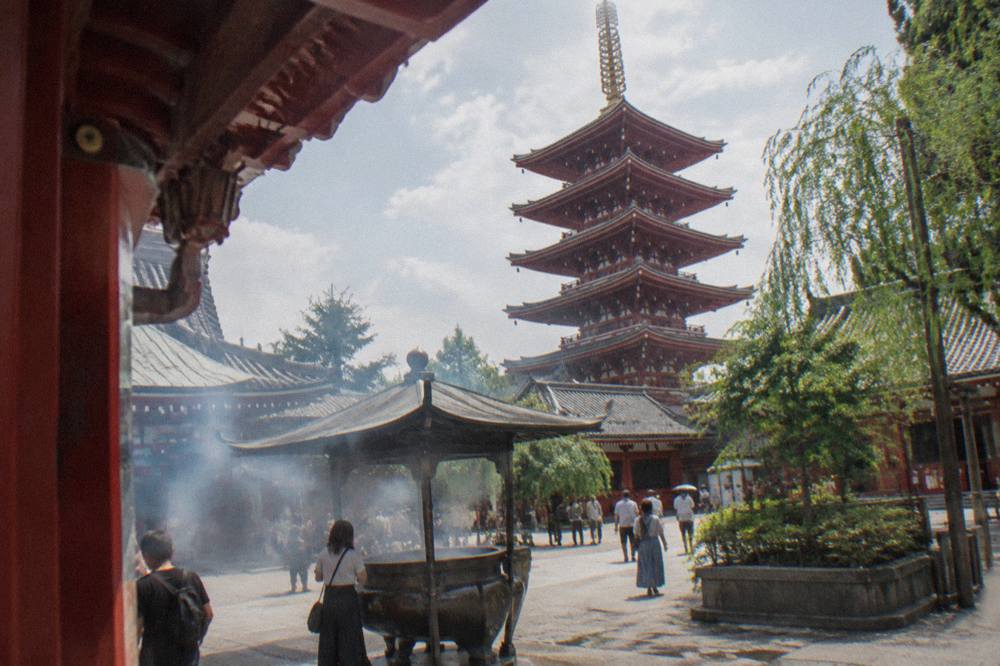
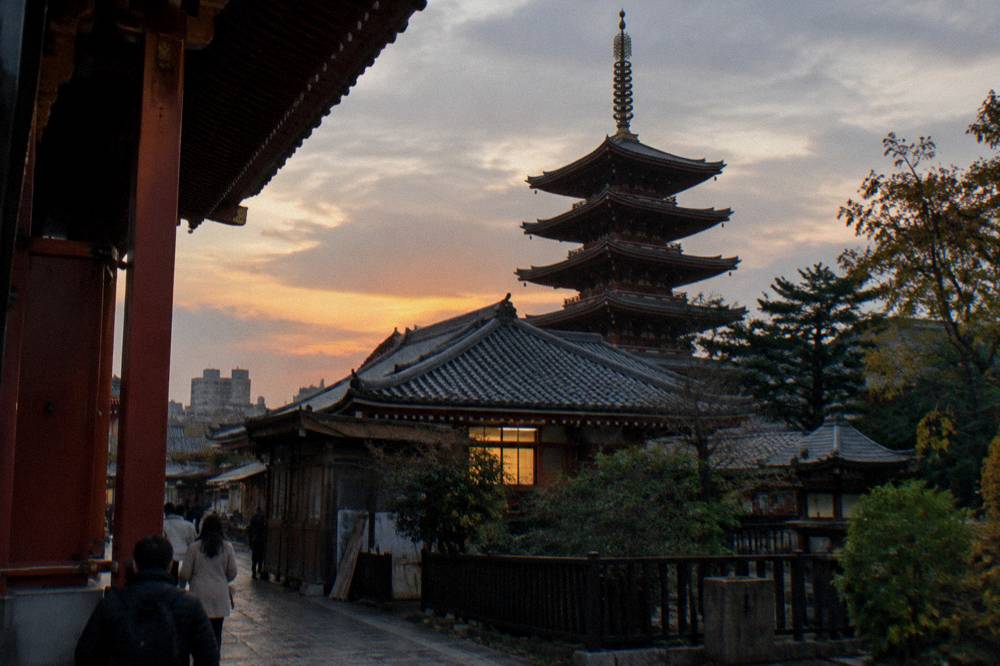
Start with the temple itself. The grounds and the main hall are the district's anchor, and both are free. The gates at either end of the approach are public structures, and the pagoda stands within the same open precinct.
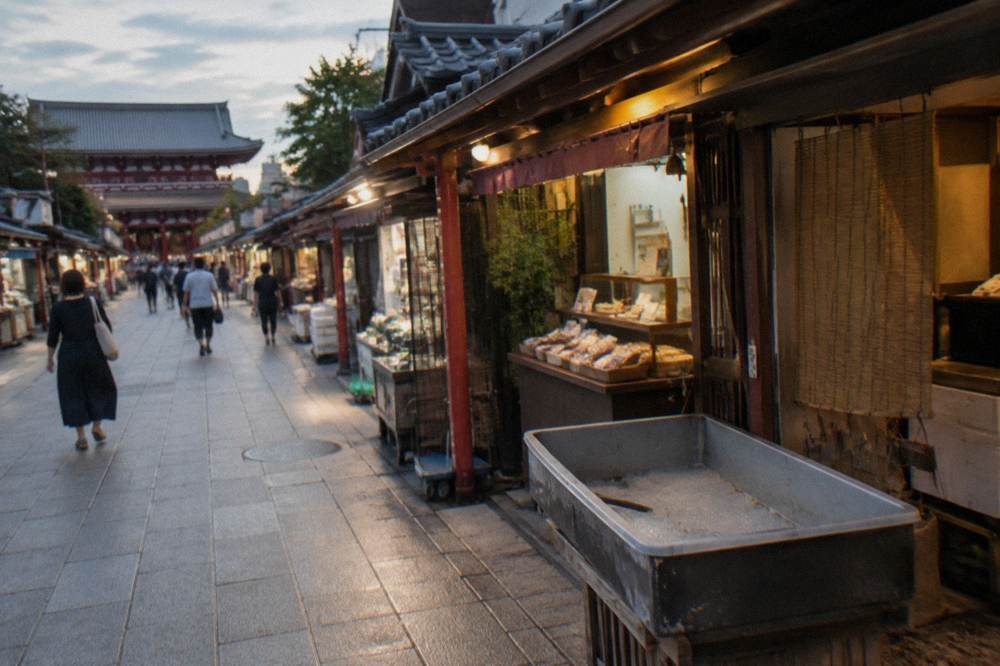
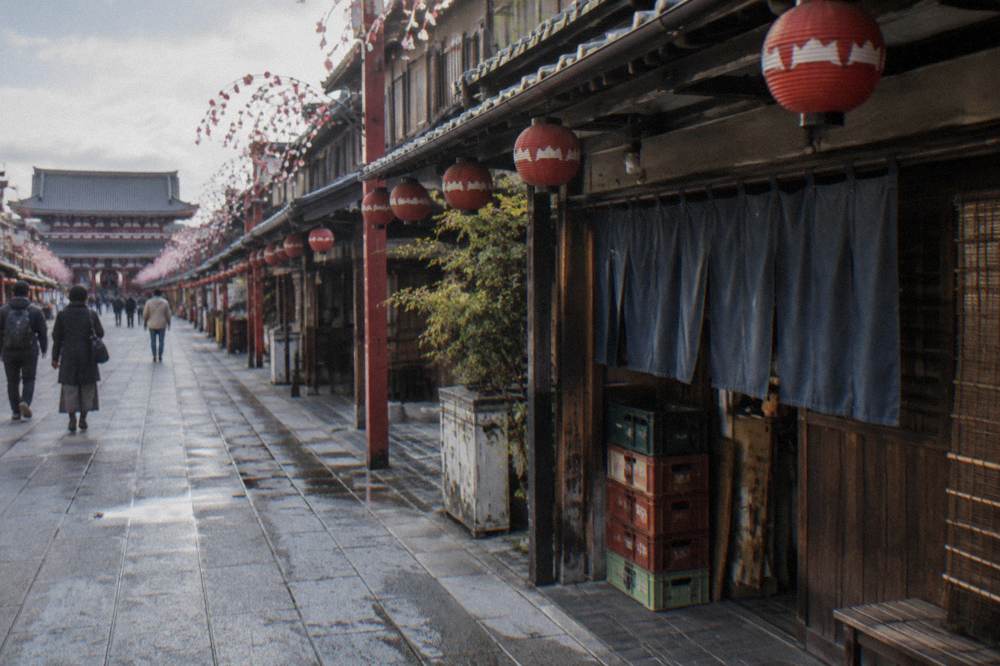
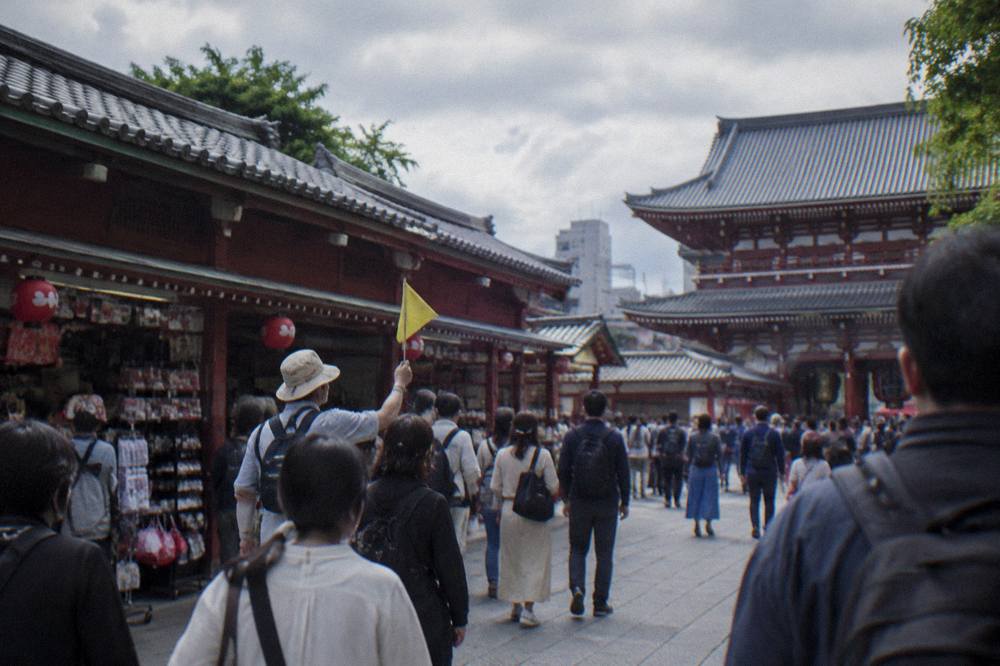
Nakamise Street is the second free piece. It is the approach street of stalls running toward the temple, and it is a public street in its own right. Walking it, photographing it and pausing at whichever stall catches your eye costs nothing. Everything on the shelves is for sale, and the snacks are paid, but the street itself is as free as any pavement in the city.
Kappabashi Kitchen Town, a few lanes north of the temple, is the third. It is the street of kitchenware shops, fake-food display models and knife sellers, and the street is free to walk. It is a working retail street rather than an attraction with a fence, so browsing is unrestricted and the only money spent is on goods. Sumida Park lines the riverbank: an open public park, free to enter, with no published closing times beyond what an unfenced riverside park implies.
The free walks that meet here are part of the same free surface. Beyond the Asakusa Classic English Walk covered above, the district has a bilingual option, Asakusa Tradition, Bilingual by Japan Navigators, rated 4.72 out of 5 across 375 GuruWalk reviews, meeting at the Tokyo Cruise Asakusa Office, running 2 hours in English and Spanish. There are also Spanish-language walks: Hikari's Asakusa Spanish Walk, rated 4.77 out of 5 across 357 GuruWalk reviews, meeting in Asakusa, and Nami's Asakusa Spanish Walk, rated 4.67 out of 5 across 181 GuruWalk reviews, meeting at Kaminarimon Gate. These runs in Spanish, plainly, and all are free, pay what you want on GuruWalk.
The table below draws the free line in one place.
Place in Asakusa
Free or paid
The condition
Senso-ji grounds and main hall
Free
No condition, open precinct
Kaminarimon Gate and approach
Free
Public gate and street
Nakamise Street
Free to walk
Food and souvenirs are paid
Kappabashi Kitchen Town
Free to walk
Shops and knives are paid
Sumida Park
Free
Open public park
Free walking tours in the district
Free, pay what you want
Reserved on GuruWalk
That pattern, free to walk with paid purchases inside, is the whole shape of Asakusa. There is no trap here of the Shinjuku Gyoen kind, where a park that looks free charges JPY 500, and no observation-deck gate on the riverbank. The district's honest costs sit on the food and shopping side, which is the easier boundary to plan around.
What Costs Money At Senso-Ji And Asakusa?
Almost nothing at Senso-ji itself costs money: no entry fee, no gate charge, no paid garden. The paid parts of Asakusa are food and drink along Nakamise Street and the surrounding lanes, souvenirs, kitchenware and knives at Kappabashi, and any river cruise or transit you add. A free, pay what you want walk costs no fixed fee.
Food is the main paid category. The stalls on Nakamise and the small restaurants in the lanes sell snacks and meals, and those are ordinary purchases. The same applies at Kappabashi, where a knife or a ceramic bowl is a retail buy, and at any café or bar in the district. None of it is compulsory: the streets are free, and the temple is free.
Souvenirs follow the same rule. The shops on the approach sell crafts, snacks and gifts, and the price is whatever the shop charges. There is no entry ticket bundled with shopping, and no stall charges to look. This is worth saying plainly because some visitors arrive expecting a temple precinct to have some kind of combined ticket, and Asakusa has none.
“Victoria is the best tour guide that could ever exist! She is so nice so knowledgeable and makes the tour so enjoyable with her smile and it clearly shows that she loves doing. Honestly it exceeded my expectations by light years. Recommend recommend recommend.”
Transport is the other honest cost. Getting to Asakusa, and any river cruise from the district's cruise office, is paid at ordinary fares and rates. A cruise is optional: the riverbank at Sumida Park is free to walk, and the district itself is compact enough that the free surface is walkable end to end.
The free walks deserve their own line in this section because their pricing model confuses people. Every walk in the district is free, pay what you want: that is the price, and no money figure belongs against any of them. The Tsukiji Street Food walk elsewhere in the city is the one to watch, its guiding is pay what you want while food is bought separately, but in Asakusa the walks have no attached purchases. Reservations are made on GuruWalk, where each guide keeps a page.
One cost trap worth naming is the general Tokyo one, and it applies if you combine districts: a museum near a free park charges even though the park does not. If your Asakusa day extends to Ueno, Ueno Park is free and open at all times while the Tokyo National Museum inside it charges adults JPY 1,000, with under 18 and over 70 free with proof of age. The same split exists all over the city, and the Ueno Park guide covers it in full.
If the paid list in Asakusa feels thin, that is because it is. The district's economy runs on purchases, not tickets, and the free surface around them is unusually wide: temple, gates, approach street, kitchen street and riverbank, all open.
When Is The Best Time To Visit Senso-Ji And Asakusa?
Senso-ji's grounds are free and unfenced, so there is no opening window to plan around. The practical timing is about the shops and stalls, which keep their own hours, and about light: the approach and lanterns read differently at dusk. For guided walks, each departure's time appears only on the walk's GuruWalk page, and every Asakusa walk runs about 2 hours, which shapes the day more than the hour.
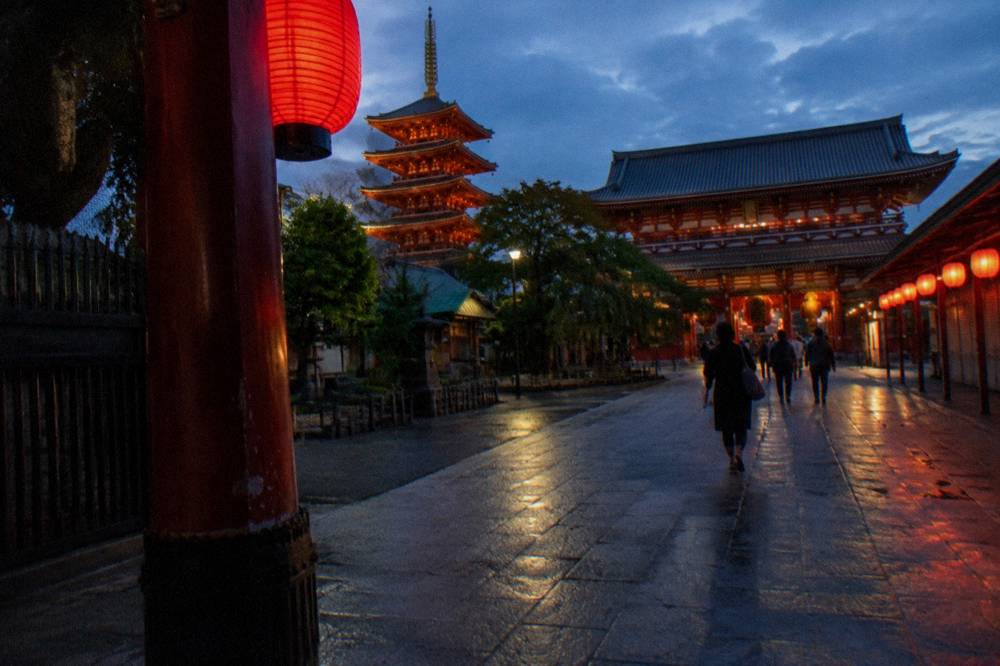
For Asakusa, timing is about pace rather than gates. Early hours bring a quieter approach to Senso-ji, while dusk changes the scene entirely, when the lanterns along the approach glow against the fading light and the temple reads differently than it does at midday. The shops and stalls around the grounds keep their own hours, so some may be shut early or late even though the precinct itself stays open.
The Tori-no-ichi festival at Otori Shrine holds its second day on 19 November 2026: entry is not ticketed, and the lucky rakes and food are paid. It sits outside Asakusa but inside the same old-Tokyo world. In December, the Marunouchi Illumination runs 12 November to 25 December 2026 along Naka-dori, free to view from the street, if your route crosses central Tokyo. The wider set of guides lives on Free Things To Do In Tokyo.
For the walks, timing is set by each departure, and the only source for a departure time is the walk's own page on GuruWalk. Every Asakusa walk on this site's roster runs about 2 hours, which shapes the day more than the hour: an afternoon walk leaves the morning for Kappabashi and the riverbank, and a morning walk leaves the evening lanterns for afterwards. No walk's route beyond its meeting point is published here, so the meeting point and neighbourhood are what you plan around.
The closing-day trap to avoid is not at Senso-ji but in whatever you pair it with. If your day includes the East Gardens, Mondays and Fridays are out. If it includes a metropolitan garden, the 29 December to 1 January closure applies.
How Do You Combine Senso-Ji And Asakusa With Other Free Sights?
Asakusa combines naturally with the free riverbank at Sumida Park on foot, and with Kappabashi Kitchen Town in the same district. Further out, the free options that pair well are the TMG observatories, the Imperial Palace outer garden and East Gardens, Shibuya Crossing, and the food streets of Tsukiji, each reached by ordinary transit and each with its own closing rules.
Inside the district, the combination is trivial: temple, Nakamise, Kappabashi and Sumida Park form a walkable set with no tickets between them. That is a full free day on its own. The interesting choices begin when you extend outward.
East along the river, the pair to know is Skytree: the Solamachi complex and the tower base are walkable without a ticket, while the observation decks are ticketed from JPY 3,000 adult with dynamic pricing. The Tokyo Skytree and Sumida guide covers that split in detail. South of the riverbank, the Tsukiji Outer Market lanes are free to walk, with food and shopping paid, and the official market site asks visitors not to eat while walking and, in December, asks sightseers and group tours to stay away during the New Year shopping rush, per tsukiji.or.jp. Any December mention carries that request.
In central Tokyo, two free anchors pair well with an Asakusa morning. The Tokyo Metropolitan Government observatories at 202 metres are both free with no reservation: the South Observatory is closed the 1st and 3rd Tuesday of the month, the North Observatory the 2nd and 4th Monday, both are closed 29 to 31 December and 2 to 3 January, and North entry runs to 17:00. The Imperial Palace outer garden is free, and the East Gardens are free but closed Mondays and Fridays, as covered above. The palace is also where several of this site's featured walks meet, including the Palace Storytelling Walk by 5 STORY, rated 4.85 out of 5 across 901 GuruWalk reviews.
Across the city, the free Shibuya Crossing pairs with Meiji Jingu's free precinct and forest, while the Inner Garden there is JPY 500 and the Meiji Jingu Museum is JPY 1,000, a split the Meiji Jingu guide explains. The point of the combination game is that each free thing carries its own conditions, so the itinerary works when the closing days are checked per stop rather than assumed.
Free sight
Distance role in the day
Condition to check
Sumida Park
Same district, on foot
Open public park
Kappabashi Kitchen Town
Same district, on foot
Shops paid, street free
Skytree base and Solamachi
Across the river
Decks ticketed from JPY 3,000 adult
Tsukiji Outer Market lanes
Short transit south
Food paid; December sightseeing request
TMG observatories
Central Tokyo
Rotating closed weekdays, both shut 29 to 31 Dec
Imperial Palace East Gardens
Central Tokyo
Closed Mondays and Fridays, free
Which Free Walking Tours Meet Near Senso-Ji And Asakusa?
Several free, pay what you want walks meet in Asakusa, all on GuruWalk, most running 2 hours: the Asakusa Classic English Walk at the Asakusa Culture Tourist Information Center, Asakusa Old Town, English at Kaminarimon Gate, the Oldest Temple Walk, English at the Kaminarimon Police Box, plus bilingual and Spanish options. Each is reserved on its own GuruWalk page.
The English-language choices are the widest. The Asakusa Classic English Walk by Localized Walking Tours, rated 4.91 out of 5 across 671 GuruWalk reviews, meets at the Asakusa Culture Tourist Information Center. Asakusa Old Town, English by Tokyo Genki Tours, rated 4.78 out of 5 across 767 GuruWalk reviews, meets at Kaminarimon Gate. The Oldest Temple Walk, English by Local Guide Stars, rated 4.78 out of 5 across 248 GuruWalk reviews, meets at the Kaminarimon Police Box. All three run 2 hours, and all three are free, pay what you want.
The bilingual and Spanish options extend the list. Asakusa Tradition, Bilingual by Japan Navigators meets at the Tokyo Cruise Asakusa Office and runs in English and Spanish, rated 4.72 out of 5 across 375 GuruWalk reviews. Hikari's Asakusa Spanish Walk and Nami's Asakusa Spanish Walk both run in Spanish, not English. Meeting points are written exactly as each listing gives them, and no walk's route beyond its meeting point is described because none is published.
Neighbouring districts add their own meeting points if you want a guided day elsewhere. In old Tokyo, the Ueno Park Deep Dive, Bilingual walk by Japan Navigators, rated 5 out of 5 across 29 GuruWalk reviews, meets at JR Ueno Station, and the Yanaka Ginza Before The Neon walk meets in Yanaka. In food streets, the Tsukiji Street Food walk by Local Guide Stars, rated 4.88 out of 5 across 583 GuruWalk reviews, meets at Tsukiji Hongan-ji, Stairs, and it is the one walk where food is bought separately from the pay what you want guiding. In pop culture, Maids Vs Samurai by TokyoXplorers, rated 4.83 out of 5 across 1,155 GuruWalk reviews, meets at Ueno Park.
For the full picture of every walk on this site, including all the Asakusa listings and the 46 walks shipped across the city, the free walking tours overview lists them with meeting points, languages and ratings. Asakusa is simply the district where the choice is densest.
Every walk mentioned here is an independent local guide's own listing, and the reservation, the departure details and the guide's page all live on GuruWalk.
Mistakes That Trip People Up At Senso-Ji And Asakusa
Senso-ji is a free, open temple with no ticket to buy, so beware anyone selling one. Remember Nakamise and Kappabashi are free streets with paid goods, especially food. Asakusa walks are pay-what-you-want with no tip figure, booked on GuruWalk. Check closures for paired stops like the East Gardens, TMG observatories, and metropolitan gardens, rethink December at Tsukiji, and always confirm each walk's language on its listing.
The first mistake is budgeting for a temple ticket. Some visitors hold back at the gate expecting a fee, or buy a resold "ticket" for a free place. There is nothing to buy at Senso-ji's precinct: it is a free, open temple. The same instinct produces the reseller trap seen at the Imperial Palace, where a third-party site sells tickets to a free place; nothing of that kind is needed here.
The second mistake is treating the whole district as free in a way that erases purchases. Nakamise and Kappabashi are free streets with paid goods, and the honest phrasing is exactly that. A day plan that forgets this arrives with no budget for the one category that genuinely costs: food.
The third mistake is assuming the walks have a price or a tipping figure. Every Asakusa walk is free, pay what you want, and that phrase is the price. Every walk is free, pay what you want: no price is shown against any walk and no tip amount is suggested. The reservation is made on GuruWalk and that is where any slot question is answered.
The fourth mistake is pairing Asakusa with a closed stop. The East Gardens shut Mondays and Fridays; the TMG observatories each shut on a rotating weekday; the metropolitan gardens shut 29 December to 1 January. A day that assumes "Tokyo is open" runs into these. The fifth is December at Tsukiji: the market's official site asks sightseers and group tours to stay away during the New Year shopping rush, so a December food-street pairing needs rethinking. The sixth is language: booking a Spanish walk and expecting English. Two Asakusa walks run in Spanish, and each listing's language is stated on its GuruWalk page.
Common Questions About Senso-Ji And Asakusa
Is Senso-ji Temple Free To Enter?
Yes. The temple grounds, the gates and the main hall are free, with no ticket and no entry charge. The approach streets are public and free to walk too. Money in Asakusa goes on food, souvenirs and shopping, not on entry to the temple or its precinct.
Is Asakusa Free To Walk Around?
Yes. The district's core surfaces, the temple precinct, Nakamise Street, Kappabashi Kitchen Town and Sumida Park, are all free and walkable. Purchases inside shops and stalls are paid at ordinary prices, and any transit or river cruise is a separate fare.
Do The Free Walking Tours In Asakusa Really Cost Nothing?
Yes, every Asakusa walk is free, pay what you want, and that is the price. Each is an independent guide's listing reserved on GuruWalk, most run 2 hours, and no fixed fee or suggested tip is published against them. The Asakusa Classic English Walk is rated 4.91 out of 5 across 671 GuruWalk reviews.
Which Free Walk Meets Closest To Senso-ji?
The Asakusa Classic English Walk meets at the Asakusa Culture Tourist Information Center nearby. All run 2 hours in English.
Are There Spanish-Language Free Walks In Asakusa?
Yes. Hikari's Asakusa Spanish Walk, rated 4.77 out of 5 across 357 GuruWalk reviews, and Nami's Asakusa Spanish Walk, rated 4.67 out of 5 across 181 GuruWalk reviews, both run in Spanish on GuruWalk. Asakusa Tradition, Bilingual runs in English and Spanish. All are free, pay what you want.
What Nearby Sights Are Free Besides The Temple?
Sumida Park on the riverbank is free, Kappabashi Kitchen Town is a free street of shops, and across the river the Skytree base and Solamachi complex are walkable without a ticket while the decks are ticketed. Central Tokyo's TMG observatories are free with rotating closed weekdays, and the Imperial Palace East Gardens are free but closed Mondays and Fridays.
Want A Guide Through Asakusa For Free?
The Asakusa Classic English Walk is free, pay what you want, reserved on GuruWalk and rated 4.91 out of 5 across 671 GuruWalk reviews. It meets at the Asakusa Culture Tourist Information Center and runs 2 hours in English.