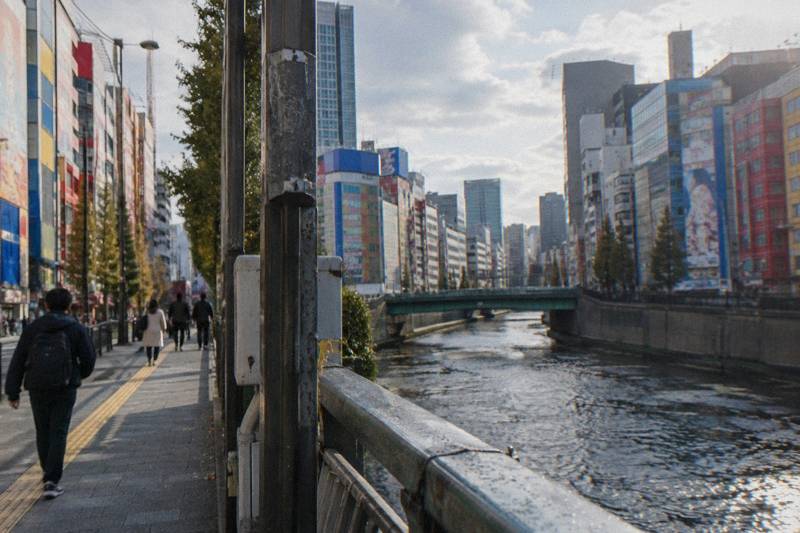
Akihabara On Foot: What Is Free
Akihabara itself is an ordinary city district with no gates and no entry fees, and most of what people come to see, the streets, the signage and the shop fronts, is free to walk. The money goes on what you buy and play, not on being there.
In Short
Akihabara is free to walk, no ticket, no gate and no entry fee anywhere in the district. Kanda Myojin's open precinct nearby is free too. You pay only for goods, arcade play, cafe visits and collectables, plus any rail fare you spend reaching the area. Pay-what-you-want walking tours cover Akihabara and Ueno, reserved on GuruWalk.
Part of the Free Things To Do In Tokyo guides series, this one covers the district around Akihabara station and the free streets that surround it.
Quick Facts
| Question | Answer |
|---|---|
| Is Akihabara free to enter? | Yes, it is an open city district with no gate or fee |
| Is Kanda Myojin free? | Yes, the open precinct is free, with no fee statement either way |
| Is Nakano Broadway free to enter? | Yes, the lanes are walkable at no cost, goods are paid |
| Is Ameyoko free? | Yes, the street is free, food and shopping are paid |
| What costs money here? | Goods, arcade play, maid cafe visits and collectables |
| Nearest free walk platform | GuruWalk (Akihabara and Ueno category) |
| Free museum nearby | Sumo Museum, free but closed weekends and holidays |
Is Akihabara On Foot Free To Visit?
Yes, Akihabara is completely free to visit on foot. It is an ordinary Tokyo district of public streets, so there is no gate, no ticket office and no entry fee anywhere. You pay for what you buy and play inside the shops, never for walking the district itself, and the surrounding streets and shrine precincts are equally free to wander.
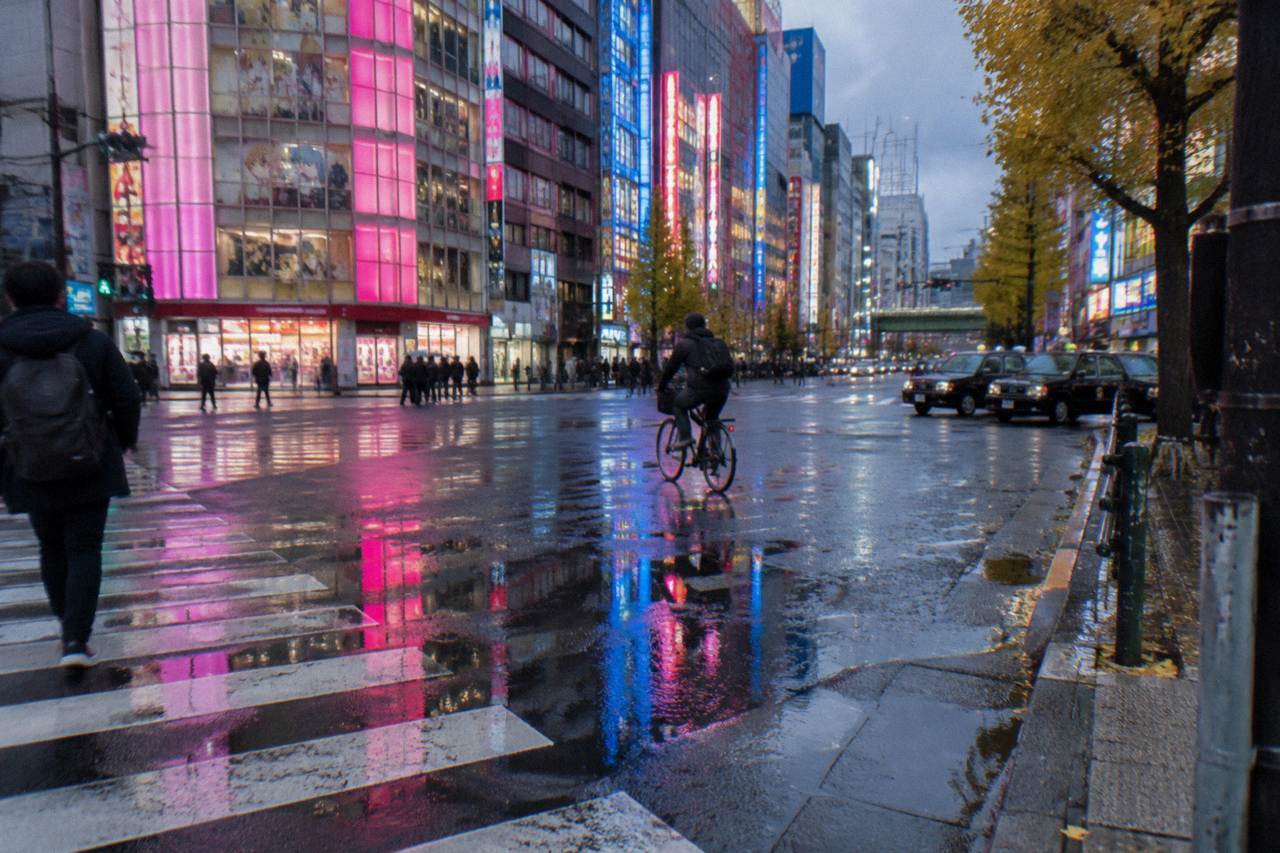
That answer surprises people who arrive expecting something like a theme park. There is no perimeter. Akihabara is a grid of public roads with shops on them, and the things that draw photographers, the signage, the building exteriors and the street-level displays, are all visible from the pavement without spending a yen. The only unavoidable costs are transport to the district and whatever you choose to buy.
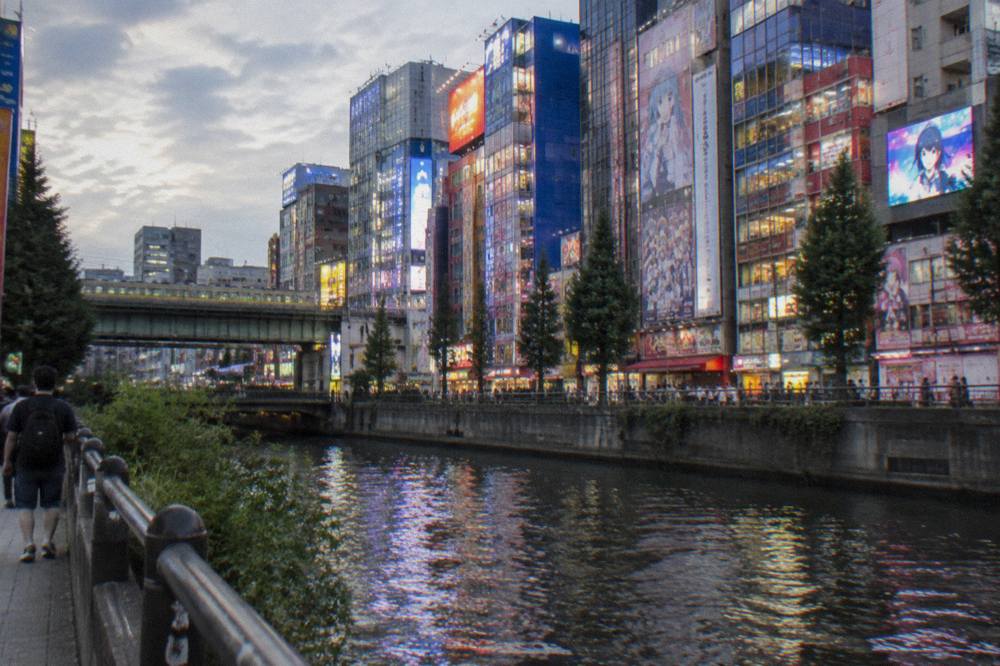
The district's record sits in the open-public-space category: unfenced streets with no operator and no fee page. That means two things for a visitor. First, nobody can charge you for being there. Second, there are no published opening hours for the district as a whole, because public roads do not have them. Individual shops keep their own hours, and those change per business.
What follows in this guide is the free side only: what genuinely costs nothing, what quietly costs money, and how the neighbourhood connects to other free sights in the same stretch of Tokyo. The surrounding area is unusually generous.
What Is Free Around Akihabara On Foot?
The free list is the streets and the shrine: Akihabara's own road grid, Kanda Myojin's open precinct, the Ameyoko market street toward Ueno, and the walkable lanes of Nakano Broadway a little further out. All four cost nothing to walk, none has a gate, and each is an unfenced public space rather than a ticketed attraction.
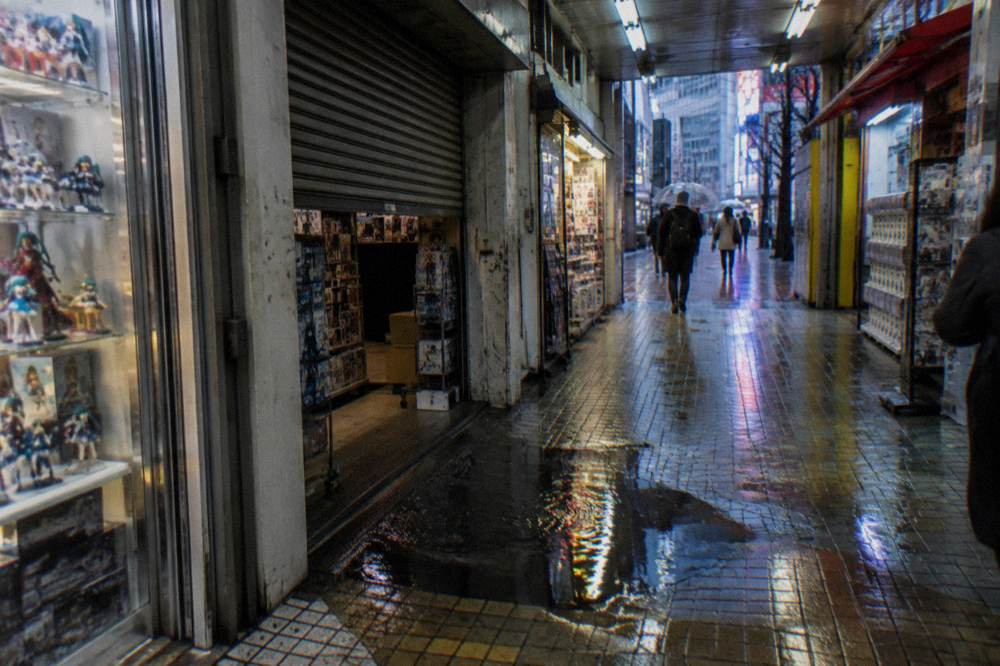
Start with the district itself. Akihabara's streets are free public roads, and the visual experience of the place, shop fronts stacked several storeys up, is something you take in from the pavement. There is no route you must follow and no official circuit. You simply walk.
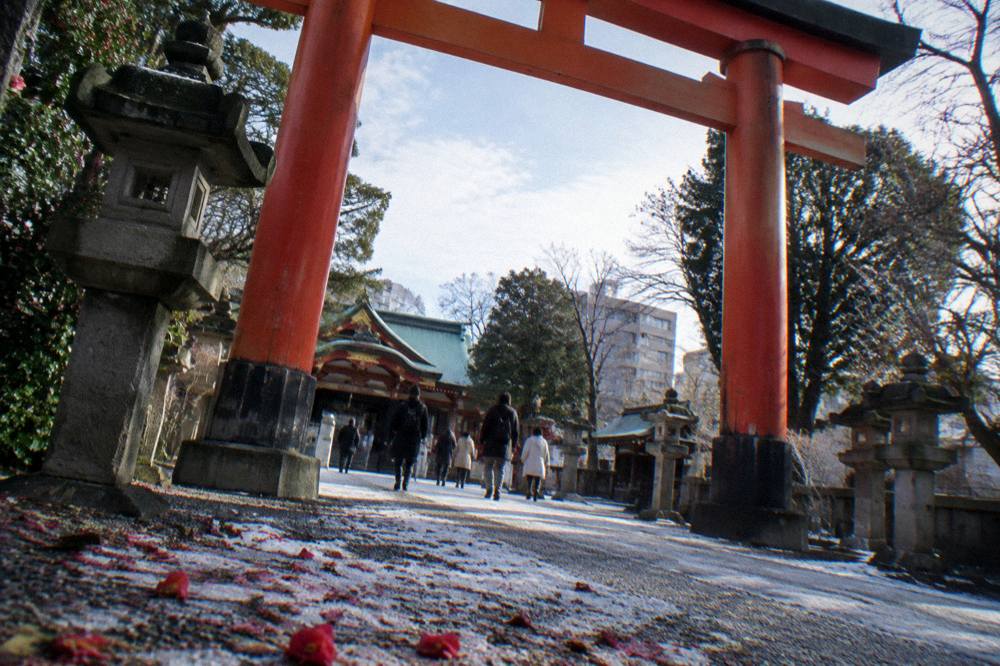
Kanda Myojin is the shrine next door, and its open precinct is free. The record carries no fee statement either way, so the honest wording is this: the precinct is treated as an open shrine ground with no charge recorded, and no ticket is sold for it. Shrines in Tokyo operate as open religious grounds rather than gated attractions, and Kanda Myojin follows that pattern. There is nothing to book and nothing to pay to stand in the grounds.
Ameyoko, the market street that runs beside the rail tracks toward Ueno, is also a free public street. The record is the same open-public-space kind as Akihabara itself. Food and shopping along it are paid, but walking it costs nothing, and it connects naturally to Ueno Park, which is free and open at all times while the Tokyo National Museum inside it charges adults JPY 1,000.
Nakano Broadway is the outlier, sitting outside the centre, and its lanes are free to walk. It is included here because it belongs to the same record family: an open commercial complex where the walking costs nothing and the collectables cost money. No fee, no gate.
| Place | Entry | Nearest free companion |
|---|---|---|
| Akihabara streets | Free, open public roads | Kanda Myojin precinct |
| Kanda Myojin precinct | Free, no fee recorded | Akihabara streets |
| Ameyoko street | Free, open public street | Ueno Park, free at all times |
| Nakano Broadway lanes | Free to walk | Akihabara streets |
| Sumo Museum | Free, closed weekends and holidays | Ueno Park hill |
One more free item belongs on this list even though it is not in Akihabara: the Tokyo Metropolitan Government observatories at 202 metres, both free with no reservation. They sit at the meeting point of the 18-Plus Night Walk in Kabukicho, which is discussed later in this guide, so the two free things combine into a single evening if you plan it that way.
What Costs Money At Akihabara On Foot?
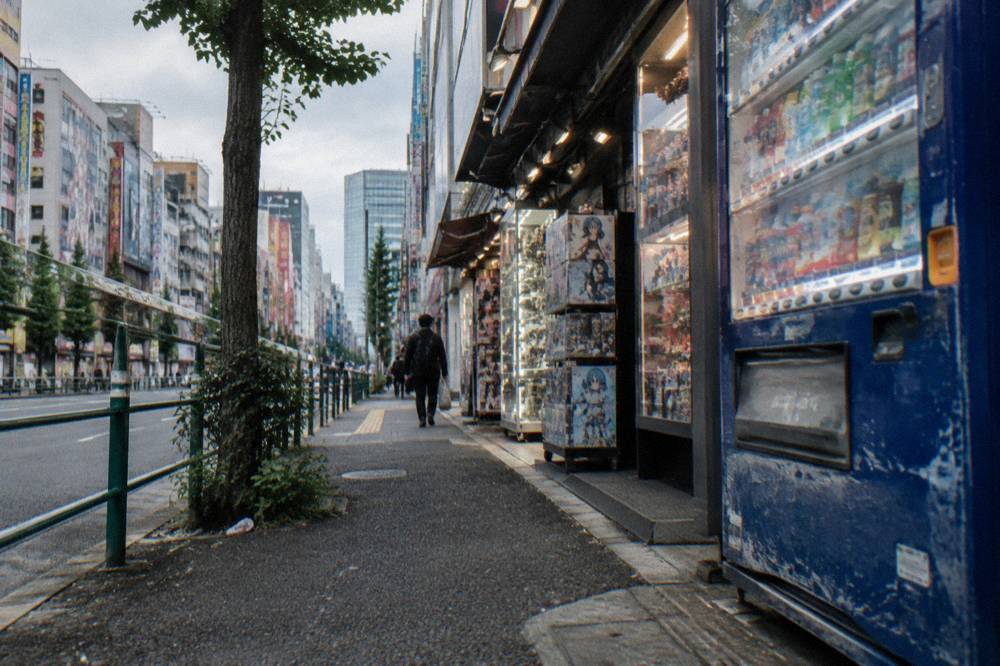
Everything you consume costs money: goods in the shops, arcade play, maid cafe visits, collectables and food. The district's free status covers the pavement, not the products, and no published price list exists for the district as a whole because every shop prices its own goods. Nearby, the big paid items are the Tokyo National Museum at JPY 1,000 for adults and teamLab Planets at JPY 3,800.
The clean way to think about it: Akihabara is free the way any shopping street is free. Walking costs nothing, playing and buying cost whatever the individual business charges. Arcade games are paid per play, cafe visits carry their own charges, and second-hand goods are priced per item. No data file gives a reliable price range for any of these, so this guide prints none; treat every price as shop-specific.
The nearby paid attractions are properly documented, and they are the ones worth budgeting for. The Tokyo National Museum in Ueno Park charges adults JPY 1,000, with under 18 and over 70 free with proof of age, and its 2026 free days, 19 May, 21 September and 3 November, are all past. The National Museum of Western Art's permanent collection is free for everyone on the 2nd Sunday of each month, next on 13 December 2026, and otherwise charges adults JPY 500.
Further out, the paid garden trio of Hama-rikyu, Koishikawa Korakuen and Rikugien charge JPY 300 each, and Shinjuku Gyoen charges adults JPY 500 and is closed Mondays outside the special autumn period. Those belong to other pages in this series, but they keep appearing in Tokyo itineraries alongside Akihabara, so it is worth knowing the numbers before you build a day.
| Item | Free part | Paid part |
|---|---|---|
| Akihabara district | All streets, exteriors, signage | Goods, arcade play, cafe visits |
| Kanda Myojin | Open precinct | Nothing recorded |
| Ueno Park | Park, open at all times | Tokyo National Museum JPY 1,000 adult |
| Zojo-ji | Grounds and main hall | Treasures Gallery JPY 700 |
| Meiji Jingu | Precinct and forest | Inner Garden JPY 500, Museum JPY 1,000 |
| teamLab Planets | Nothing | JPY 3,800 adult |
Note the pattern in that table, because it repeats across Tokyo: a free hill, precinct or street with a paid institution sitting inside or beside it. A museum never inherits its park's free status, and a tower never inherits its base's. The zojo-ji and Tokyo Tower guide walks through the clearest example of that split.
There is one walk in this site's roster where the free-pavement rule bends: the Tsukiji street-food walk on GuruWalk is pay what you want for the guiding while food is bought separately. Around Akihabara no such complication exists, the district has no guided-cost hybrid, everything free is the street and everything paid is a purchase.
When Is The Best Time To Visit Akihabara On Foot?
There is no published best time for Akihabara itself: the district is an open street grid with no operator hours, and every shop sets its own schedule, so no source states district-wide opening or closing times. Seasonally, the Marunouchi Illumination runs 12 November to 25 December 2026 and is free to view from the street, and Tori-no-ichi at Otori Shrine holds its second day on 19 November 2026.
Days and hours are not published, so check the official page of whatever you plan to visit before going. Public streets do not close. Individual businesses open and close on their own schedules, and those are checked per shop on the day you go, not from a guide page. The wider set of guides lives on Free Things To Do In Tokyo.
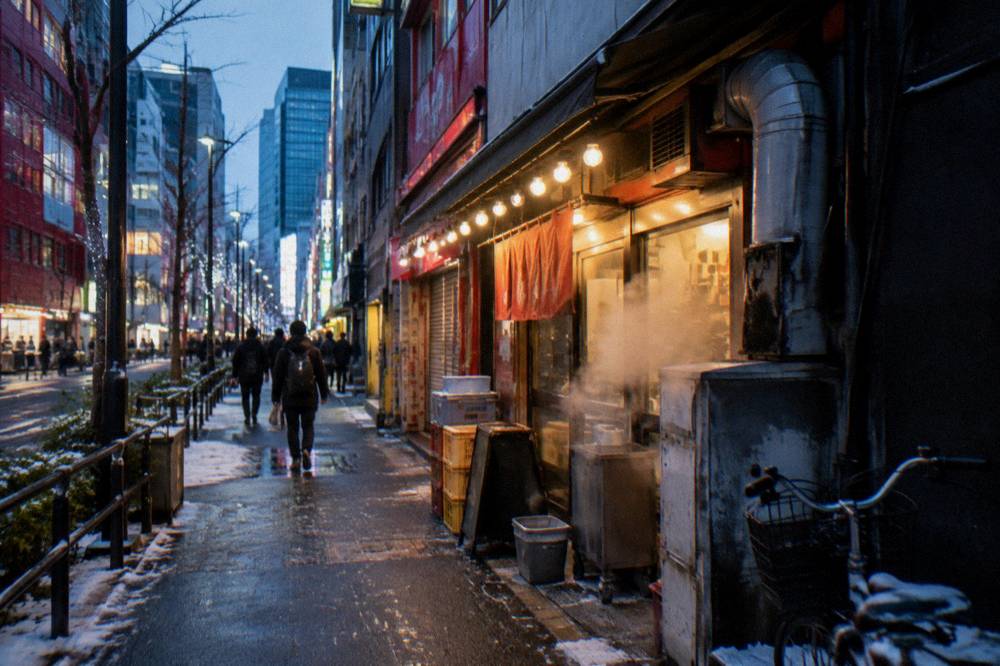
The seasonal facts are firmer. The Marunouchi Illumination runs 12 November to 25 December 2026 along Naka-dori, free to view from the street, and it pairs with an Akihabara visit if you are moving between the district and Tokyo Station. Tori-no-ichi at Otori Shrine has its second day on 19 November 2026, with entry not ticketed and lucky rakes and food paid. These are dated, published events, unlike autumn-leaf peaks, which remain forecast territory and are never written here as settled facts.
Museums in the area have firm closed days that matter more than the district's own nonexistent hours. The Sumo Museum is free but closed weekends and holidays, and during tournament weeks it opens with a tournament ticket. The National Museum of Western Art's free Sunday, the 2nd of the month, next falls on 13 December 2026. The East Gardens of the Imperial Palace, free, are closed every Monday and Friday, with winter hours of 9:00 to 16:00 and entry to 15:30.
| Sight | Free or paid | Days to watch |
|---|---|---|
| Akihabara streets | Free | No district hours exist |
| Sumo Museum | Free | Closed weekends and holidays |
| Western Art collection | JPY 500 adult | Free the 2nd Sunday, next 13 Dec 2026 |
| Imperial Palace East Gardens | Free | Closed Mondays and Fridays |
| Marunouchi Illumination | Free from street | 12 Nov to 25 Dec 2026 |
| Tori-no-ichi, Otori Shrine | Free entry | 19 Nov 2026 second day |
If you are pairing Akihabara with the free TMG observatories, note their rotating closures: the South Observatory closes the 1st and 3rd Tuesday of the month, the North closes the 2nd and 4th Monday, and both close 29 to 31 December and 2 to 3 January. Outside the shared year-end closure, at least one of the two observatories is open every day.
How Do You Combine Akihabara On Foot With Other Free Sights?
The natural free chain runs Akihabara to Kanda Myojin to Ueno Park to Ameyoko, all on foot or one rail stop apart, with every link free: the streets, the shrine precinct, the park hill and the market street. Add the Sumo Museum for a free indoor stop on a weekday, and finish at the TMG observatories if you want a free skyline view.
Build the day around what is genuinely free and physically close. Akihabara gives you the streets. Kanda Myojin gives you the shrine precinct in the same district. Ueno Park gives you a free hill that is open at all times, and Ameyoko stitches the park back toward the rail line as a free market street. None of the four has a gate or a fee.
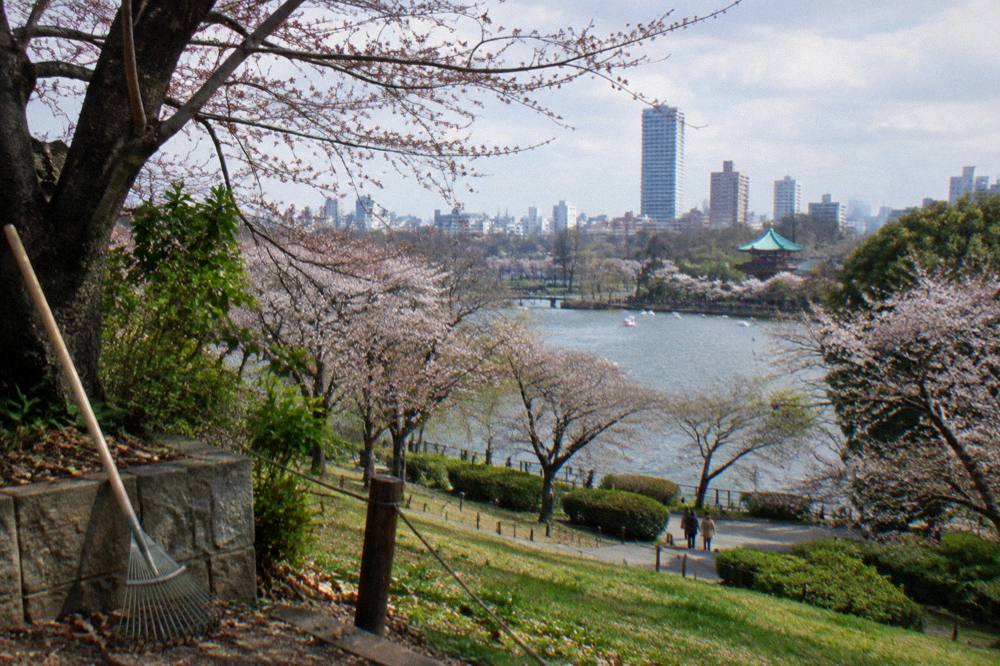
Ueno rewards the detour more than any other stop on that chain. The park itself is free and open at all times, and the Ueno Park guide breaks down what sits inside it. The Tokyo National Museum charges adults JPY 1,000, with under 18 and over 70 free with proof of age, but the hill costs nothing, and the free museums cluster in this guide's free museums roundup. The Sumo Museum, free but closed weekends and holidays, is documented on the official sumo association page at sumo.or.jp.
Going the other direction, the free imperial pair works as an afternoon: the Imperial Palace Outer Garden plaza and Kitanomaru Park are both free, and the East Gardens, also free, are closed every Monday and Friday, so plan the day of the week first. The Tokyo National Museum's own pages at tnm.jp carry its admission detail if you decide to pay for the collection.
If your evening turns toward Shinjuku, the free layer continues. The TMG observatories at 202 metres are free with no reservation, and the 18-Plus Night Walk, Kabukicho meets right there at the Tokyo Metropolitan Government Building, rated 4.89 out of 5 across 2,714 GuruWalk reviews, runs 2 hours in English and Spanish, and is free, pay what you want. It is for adults only.
That walk is one of the featured tours this site points readers toward, and it is reserved on the guide's GuruWalk page. Kabukicho, where it walks, is a district of free public lanes itself, and the same free-pavement logic that governs Akihabara governs it: walking costs nothing, what you buy costs money.
Which Free Walking Tours Meet Near Akihabara On Foot?
The walk that owns this neighbourhood is Maids Vs Samurai, Akihabara and Ueno, which meets at Ueno Park, is rated 4.83 out of 5 across 1,155 GuruWalk reviews and runs 2 hours in English and Spanish. Akihabara Deep Dive, Bilingual, run by Japan Navigators, meets at Hijiribashi Gate, Ochanomizu, runs 2 hours in English and Spanish, with 12 GuruWalk reviews so far, too few for an overall score yet. Both are free, pay what you want.
Every walk in this site's roster of 46 is free, pay what you want, reserved on its platform, and all but one run on GuruWalk. For Akihabara the choice is between Maids Vs Samurai, run by TokyoXplorers, and the Akihabara Deep Dive, run by Japan Navigators, both listed on GuruWalk.
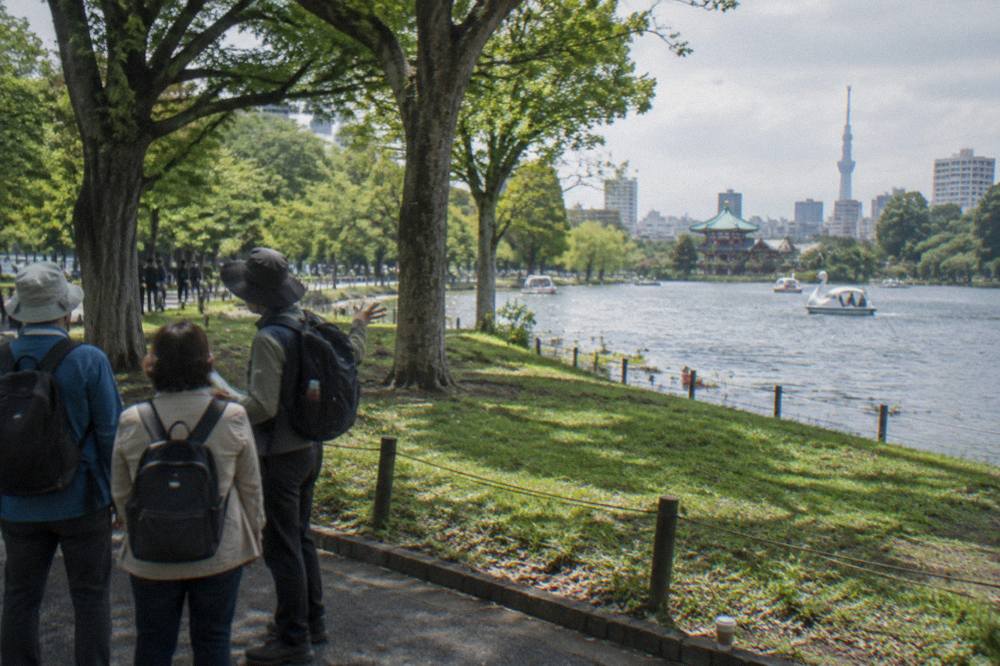
The meeting points come straight from each listing: Maids Vs Samurai at Ueno Park, the Deep Dive at Hijiribashi Gate, Ochanomizu.
The wider matched ground around Akihabara includes the Shinjuku and Shibuya families. Secret Backstreets, 1h 30m meets at Shinjuku Station, East Exit, rated 4.73 out of 5 across 612 GuruWalk reviews, 1 hour 30 minutes in English, run by Local Guide Stars. Dark Side Night Walk, from Wabisabi Trips, meets at McDonalds, Seibu Shinjuku, rated 4.83 out of 5 across 352 GuruWalk reviews, 2 hours in English. Both are free, pay what you want, both on GuruWalk.
For a Spanish-language evening in the same district, Hikari's Shinjuku Spanish Walk meets at Shinjuku Station, East Exit, rated 4.81 out of 5 across 106 GuruWalk reviews, 2 hours, and it runs in Spanish, which is worth knowing before you reserve. Kabukicho's adult side carries another adults-only walk: Red Light District, Max 5, rated 4.97 out of 5 across 106 GuruWalk reviews, 2 hours 30 minutes in English, its name capping the group at five people.
If the pop-culture side of Akihabara is what pulled you here, the Shibuya family has the deepest English-language benches. The Pop Culture Walk, 2h 15m by Scott/Inowa Japan meets at the Hachiko Statue, Shibuya Station, rated 4.78 out of 5 across 1,339 GuruWalk reviews over 2 hours 15 minutes. Shibuya Only, English from Localized Walking Tours meets at Dogenzaka, rated 4.64 out of 5 across 217 GuruWalk reviews over 2 hours. Bilingual Shibuya, Harajuku, Meiji from Hiraku Tours meets at Shibuya Station, rated 4.9 out of 5 across 937 GuruWalk reviews, English and Spanish.
| Walk | Platform | Meets at | Rating | Duration |
|---|---|---|---|---|
| Maids Vs Samurai, Akihabara and Ueno | GuruWalk | Ueno Park | 4.83 out of 5, 1,155 reviews | 2 hours |
| Akihabara Deep Dive, Bilingual | GuruWalk | Hijiribashi Gate, Ochanomizu | 12 reviews, no score yet | 2 hours |
| Pop Culture Walk, 2h 15m | GuruWalk | Hachiko Statue, Shibuya Station | 4.78 out of 5, 1,339 reviews | 2 hours 15 minutes |
| Shibuya Only, English | GuruWalk | Dogenzaka, Shibuya | 4.64 out of 5, 217 reviews | 2 hours |
| Bilingual Shibuya, Harajuku, Meiji | GuruWalk | Shibuya Station | 4.9 out of 5, 937 reviews | 2 hours |
The wider roster and how the pay-what-you-want model works in practice are laid out in the free walking tours overview, and the etiquette question of what to pay a guide has its own answer in how much to pay for a free walking tour. The one rule this site restates everywhere: the price of every walk is free, pay what you want, and no tip figure is ever suggested.
Language is the quickest filter here.
Ratings give a second filter: Red Light District, Max 5 leads at 4.97 on a slim 106 reviews, the Pop Culture Walk pairs 4.78 with the largest base at 1,339, and Shibuya Only sits lowest at 4.64 across 217. The Deep Dive has 12 GuruWalk reviews so far, too few for an overall score yet.
Durations span 1 hour 30 minutes, Secret Backstreets, to 2 hours 30 minutes, Red Light District, Max 5, with both Akihabara walks fixed at 2 hours apiece. Shinjuku Station, East Exit also does double duty, serving as the meeting point for both Secret Backstreets and Hikari's Shinjuku Spanish Walk, so one landmark unlocks two options.
| Place | Free Or Ticketed | What Is Free | What You Still Pay For |
|---|---|---|---|
| Akihabara | Free | Electronics and anime district; walking the streets is free. | Shop purchases and arcades are paid. |
Mistakes That Trip People Up At Akihabara On Foot
The recurring mistakes are treating a paid neighbour as free, expecting district hours that do not exist, and assuming the free museums keep city-wide hours. Shinjuku Gyoen is not free at JPY 500, the Sumo Museum shuts on weekends, the East Gardens close Mondays and Fridays, and Akihabara itself publishes no hours at all because it is a street grid.
The first mistake is importing Shinjuku Gyoen into a free-parks day. It is a ticketed national garden, adults JPY 500, over 65 and students JPY 250, children 15 and under free, closed Mondays outside the special autumn period of 1 to 15 November when it opens seven days, and closed 29 December to 3 January. People assume a park is a park; here, it is not free, and the Shinjuku Gyoen free alternatives guide lists what actually is.
The second is museum-day arithmetic. The Sumo Museum is free but closed weekends and holidays, and during tournament weeks it opens only with a tournament ticket, so a Saturday visit can end at a shut door. The Western Art collection is free only on the 2nd Sunday, not every Sunday, and otherwise charges JPY 500. The Tokyo National Museum's 2026 free days are all past. Each closure is published; each is easy to miss.
The third is the paid-part trap inside free precincts, the pattern this guide flagged earlier. Meiji Jingu's forest is free while the Inner Garden is JPY 500 and the Museum JPY 1,000. Zojo-ji's grounds are free while the Treasures Gallery is JPY 700 and closed Tuesdays. Ueno Park is free while the Tokyo National Museum is JPY 1,000. A museum never inherits a park's free status, and the mistake is assuming it does.
The fourth is softer: expecting someone to have published the best hours for Akihabara. The streets are public roads; each business keeps its own schedule. Plan around the dated things you can verify, the museum closed days and the seasonal events, and leave the district itself to whatever the day gives you.
Common Questions About Akihabara On Foot
Is Akihabara On Foot Free To Visit?
Yes. Akihabara is an open district of public streets with no gate, ticket or entry fee. You pay only for goods, arcade play and cafe visits inside the shops, plus your own transport. Kanda Myojin's precinct nearby is also free, with no fee recorded against it.
What Is Free Around Akihabara On Foot?
The district's streets, Kanda Myojin's open precinct, the Ameyoko market street toward Ueno, Ueno Park's free hill and the walkable lanes of Nakano Broadway. The Sumo Museum is free on weekdays, and the TMG observatories at 202 metres are free with no reservation.
What Costs Money At Akihabara On Foot?
Everything you consume: shop goods, arcade play, maid cafe visits, collectables and food. Nearby paid sights include the Tokyo National Museum at JPY 1,000 per adult, teamLab Planets at JPY 3,800 and the metropolitan gardens at JPY 300 each. No district-wide price list exists.
When Is The Best Time To Visit Akihabara On Foot?
No published hours exist for the district, because it is a street grid with no operator. Plan around firm closures instead: the Sumo Museum shuts weekends and holidays, the East Gardens close Mondays and Fridays, and the free Western Art Sunday is the 2nd of each month, next 13 December 2026.
Which Free Walking Tours Meet Near Akihabara On Foot?
Maids Vs Samurai, Akihabara and Ueno meets at Ueno Park, rated 4.83 out of 5 across 1,155 GuruWalk reviews, 2 hours in English and Spanish. Akihabara Deep Dive, Bilingual meets at Hijiribashi Gate, Ochanomizu, 2 hours, English and Spanish, with 12 GuruWalk reviews so far, too few for an overall score yet. Both are free, pay what you want.
Do The Free Walks Around Akihabara Ever Charge A Fee?
No. Every walk on this site, all of them, is free, pay what you want, reserved on GuruWalk, apart from the single Shimokitazawa walk listed on freetour.com. No money figure appears against any walk, and no tip amount is ever suggested.