Harajuku, Takeshita Street And Yoyogi Park: A Free Walk
Harajuku is one of the few Tokyo districts where the main sights cost nothing: the shrine forest, the fashion street, the avenue and the park are all free to walk.
In Short
Yes, the walk itself is free. Takeshita Street, Omotesando, Yoyogi Park and the Meiji Jingu shrine precinct and forest cost nothing to enter. The paid parts sit inside that free frame: the Meiji Jingu Inner Garden at JPY 500, the Meiji Jingu Museum at JPY 1,000, and anything you buy in the shops and cafés. Meiji Jingu opens at sunrise and closes at sunset, 16:10 in November and 16:00 in December.
Yes, the shrine precinct and forest are free, sunrise to sunset
What costs money inside the free frame?
Inner Garden JPY 500, Meiji Jingu Museum JPY 1,000, all shopping and food
Meiji Jingu hours
November 6:10 to 16:10, December 6:40 to 16:00
Free guided walks nearby
Free, pay what you want walks on GuruWalk meeting in Shibuya and at Harajuku Station
Is Harajuku, Takeshita Street And Yoyogi Park Free To Visit?
Yes, the whole walking frame is free. Takeshita Street and Omotesando are open public streets with no gate and no fee, Yoyogi Park is a metropolitan park that charges nothing to enter, and the Meiji Jingu shrine precinct and its forest are free from sunrise to sunset. The paid parts sit inside that frame: the Inner Garden at JPY 500, the museum at JPY 1,000, and every crepe, vintage jacket and coffee along the way.
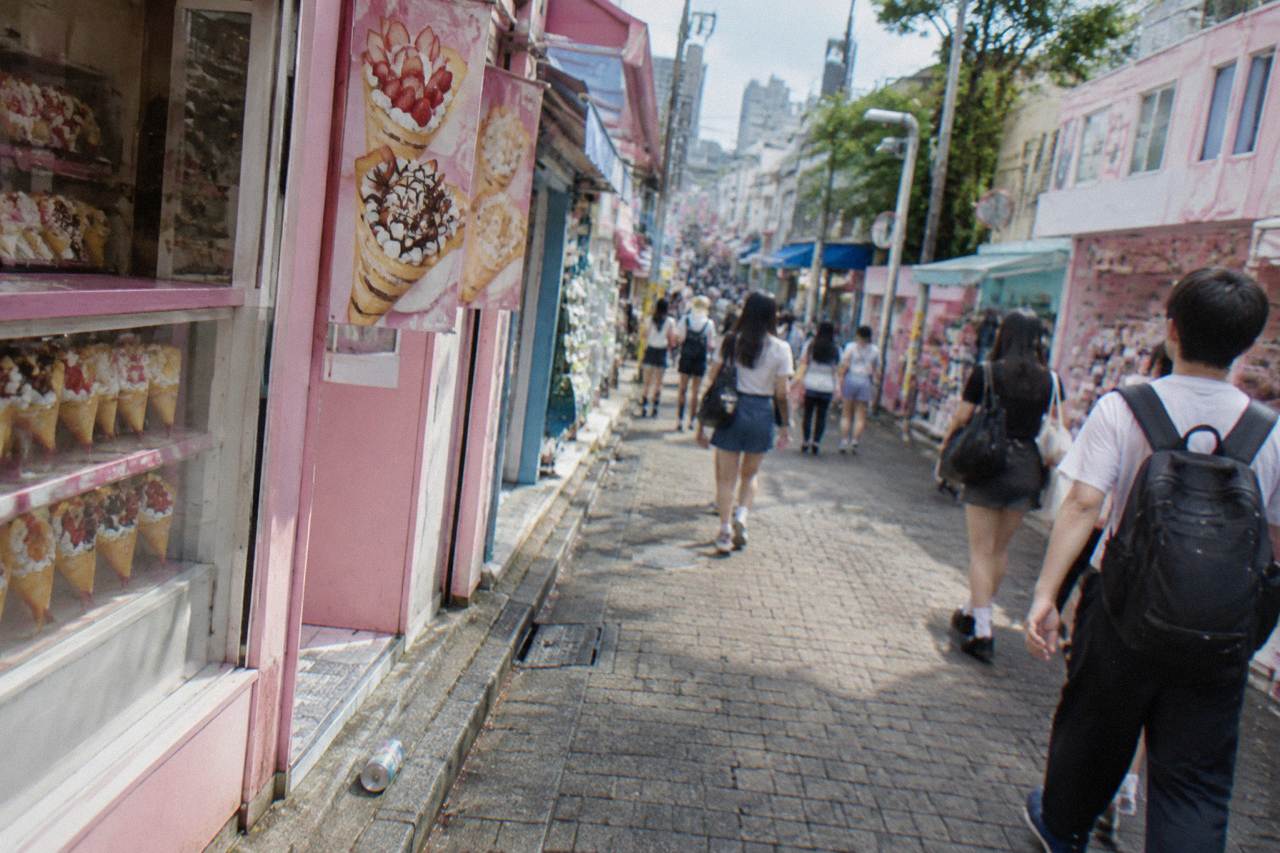
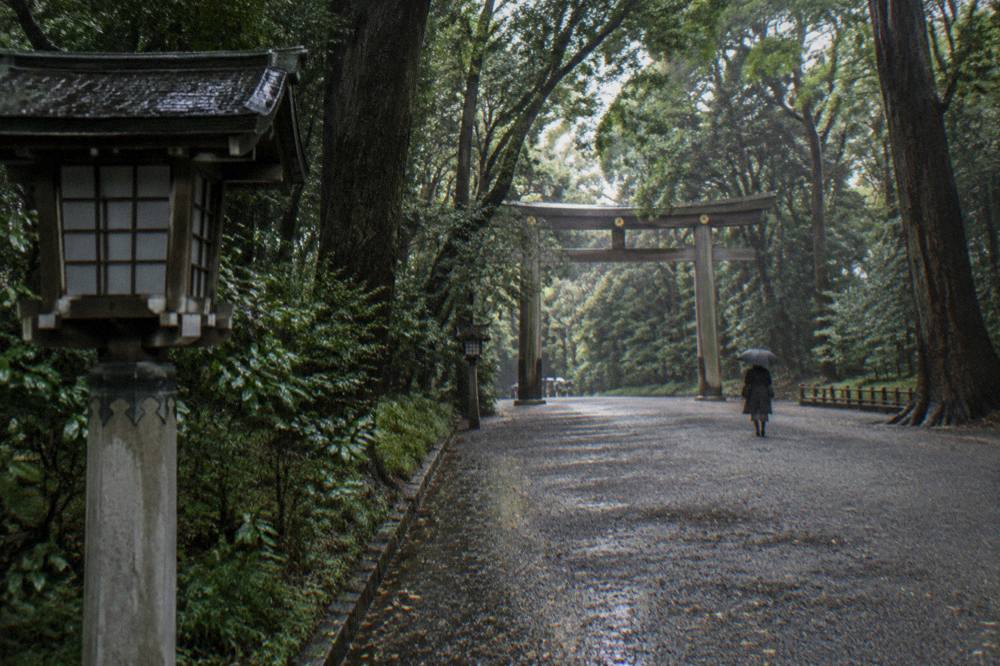
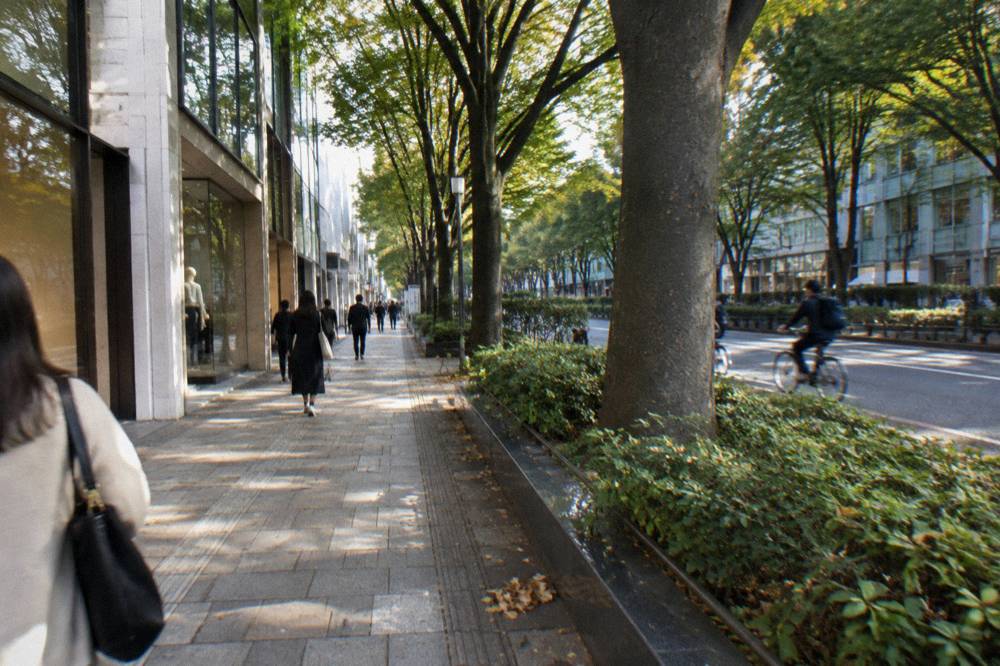
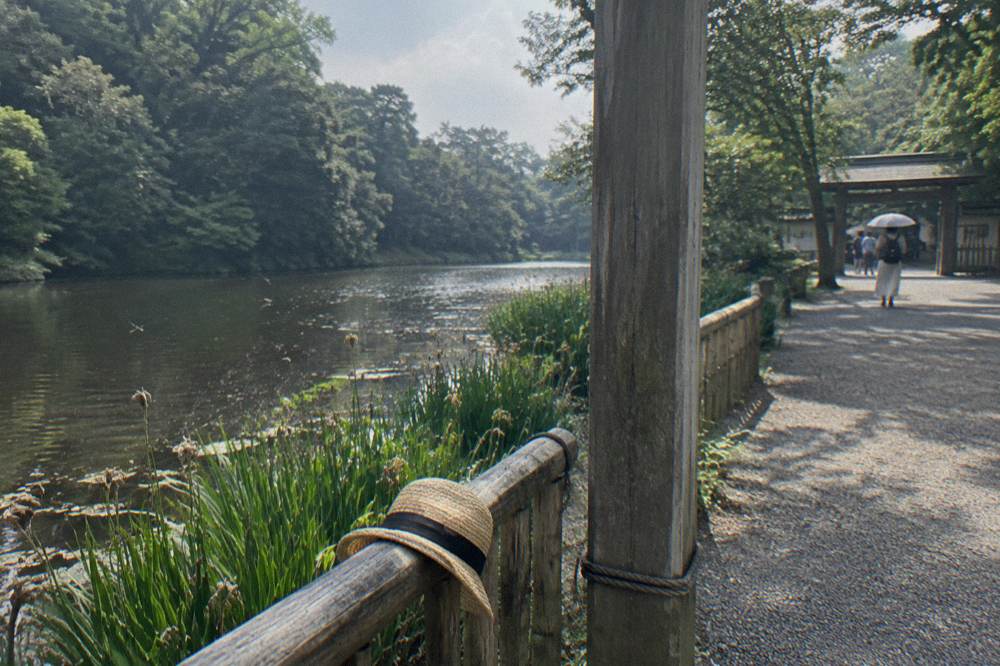
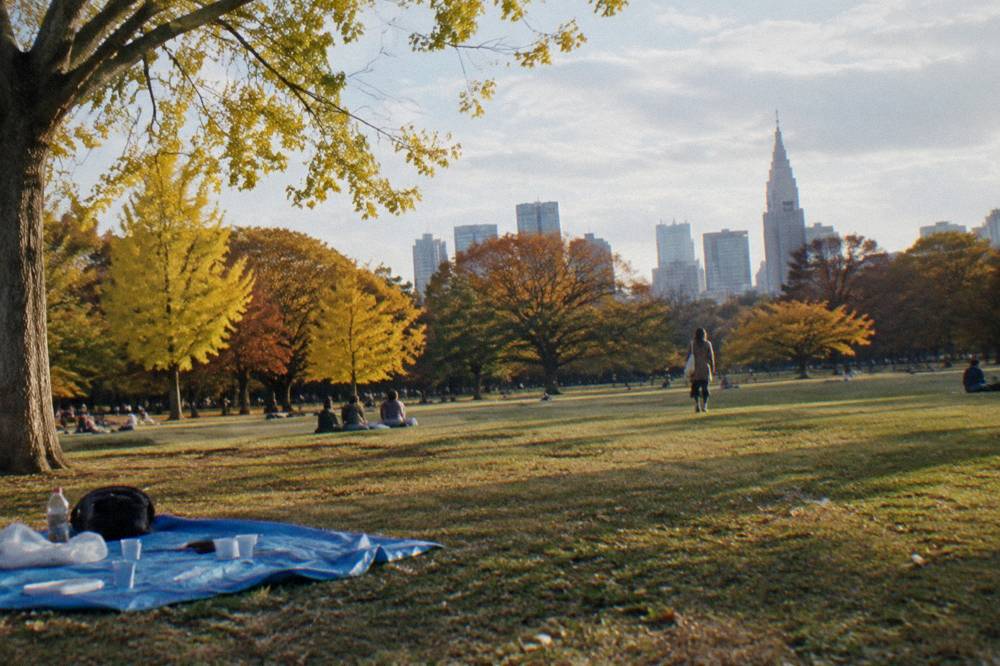
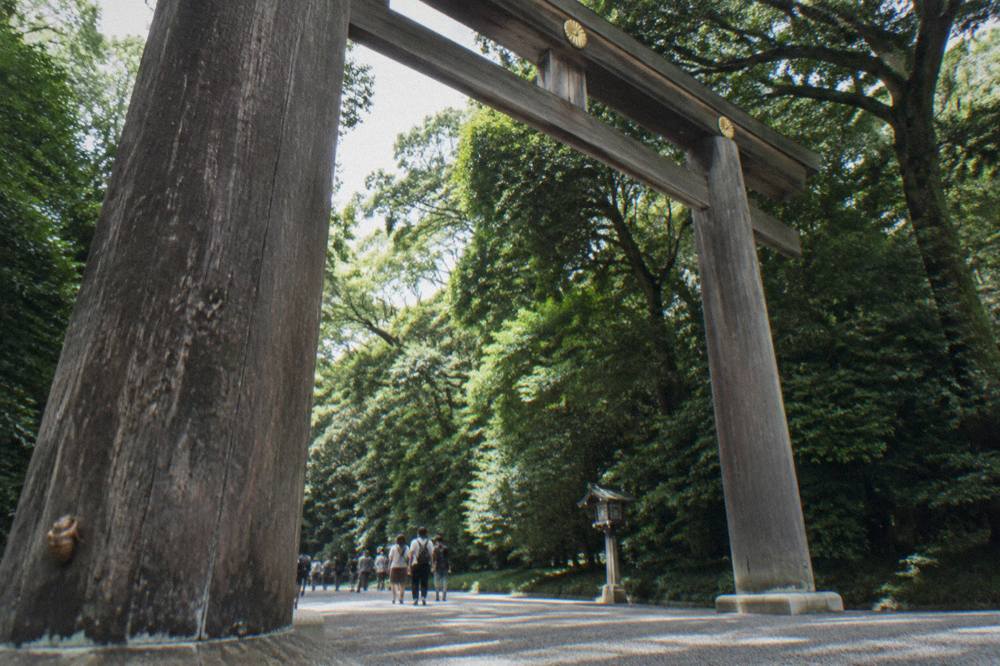
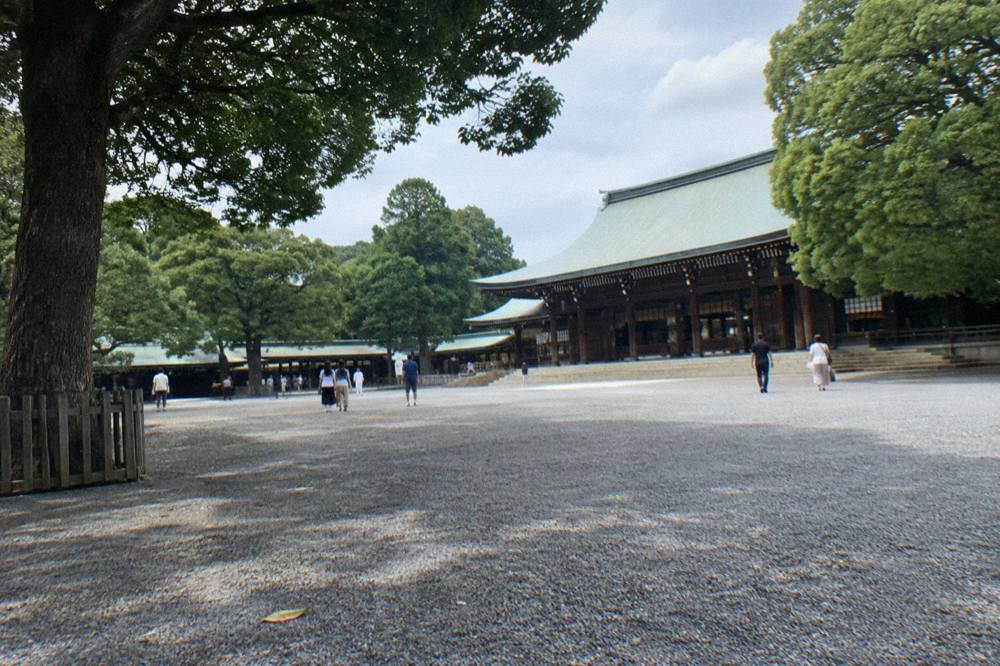
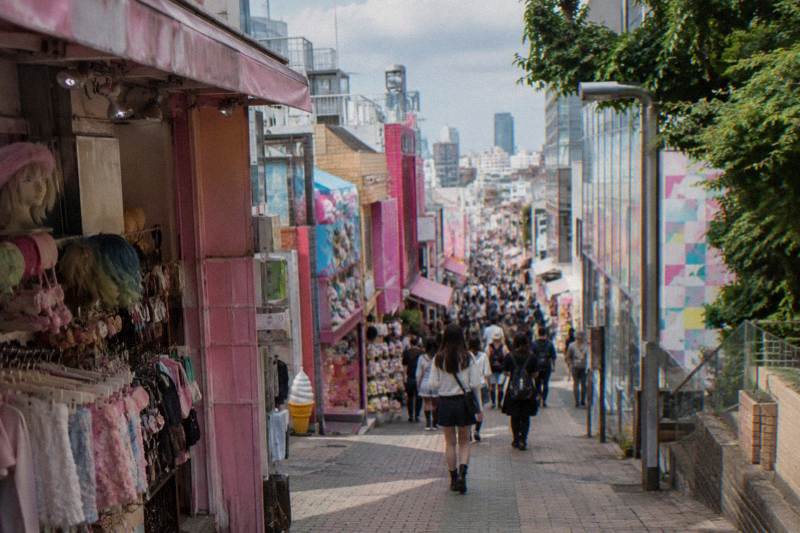
The narrow fashion street, the broad avenue with its shopfront architecture, the open lawns of the park and the gravel approach through the forest to the shrine gate together form a walk you can do end to end without spending a yen. The precinct is not a small courtesy either: the Meiji Jingu forest is a planted woodland surrounding the shrine itself, and walking its approach paths is the main experience, not a warm-up for something behind a ticket desk.
The shrine's own schedule sets the rhythm for the whole district. Meiji Jingu opens at sunrise and closes at sunset, and the official shrine page publishes the monthly times: in November the precinct is open 6:10 to 16:10, and in December 6:40 to 16:00 (meijijingu.or.jp). The park and the streets have no such clock, they are public ground, but the shrine is the anchor at the north end of the walk and its closing time is the one that ends your day. Plan around it rather than around shop hours.
One distinction does the heavy lifting in this guide, and it comes straight from the shrine's own pricing structure. The shrine precinct and forest are one thing, free, open, no ticket. The Inner Garden inside the precinct is a second thing at JPY 500. The Meiji Jingu Museum is a third at JPY 1,000. These are separate records with separate prices, and a museum never inherits a shrine's free status. The same logic applies district-wide, and once you hold it, every "is it free?" question in Harajuku answers itself: the ground and the street are free, the institutions and the shopping are not.
What Is Free Around Harajuku, Takeshita Street And Yoyogi Park?
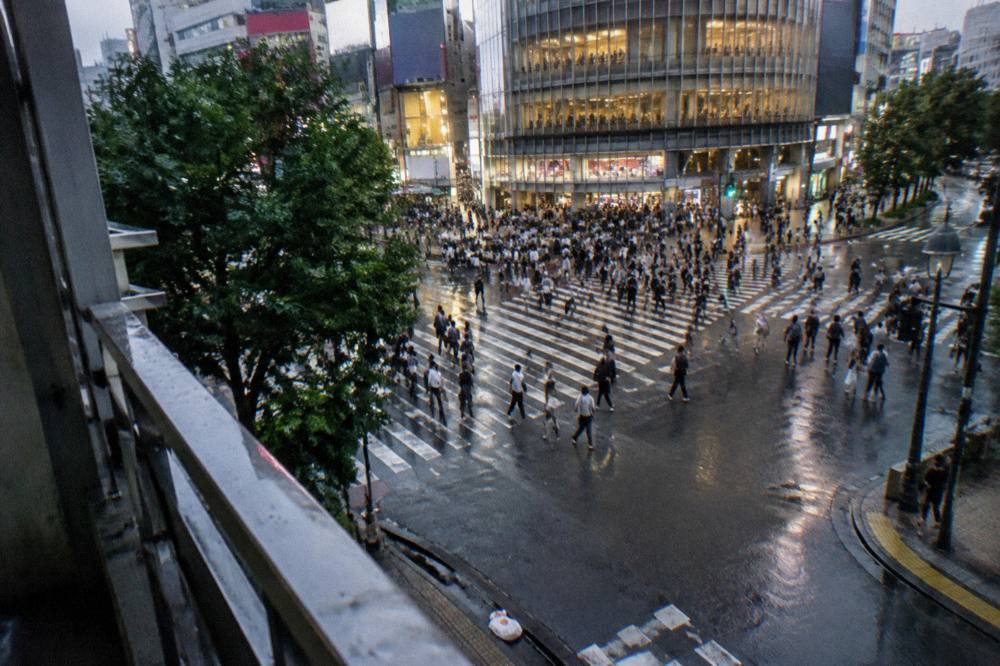
The free list covers all four anchors: Takeshita Street as an open public street, Omotesando as an open avenue, Yoyogi Park as a free metropolitan park, and the Meiji Jingu precinct and forest from sunrise to sunset. Beyond the anchors, Shibuya Crossing at the free end of the same rail corridor is a public street crossing. None of these needs a ticket, a reservation or a booking.
Place
Free Or Ticketed
What Is Free
What You Still Pay For
Yoyogi Park
Free
Entry free, open at all times, with the paid facilities flagged separately.
Some facilities are paid. The roads outside jam on weekends.
Takeshita Street is an open public space: a narrow pedestrian shopping street, free to walk its whole length, with the shops inside it priced individually. Omotesando is the same category, a broad avenue, free to walk, with architecture you take in from the public pavement. Yoyogi Park is a metropolitan park run under the Tokyo Metropolitan Park Association, and its parks carry free entry, in contrast to its gardens, which charge. Meiji Jingu is the free precinct described above. That is the entire skeleton of a Harajuku day, and it costs nothing.
Free sight
What it is
Entry
Takeshita Street
Open public shopping street
Free, no gate
Omotesando
Open public avenue
Free, no gate
Yoyogi Park
Metropolitan park
Free entry
Meiji Jingu precinct and forest
Shrine grounds, sunrise to sunset
Free
Shibuya Crossing
Public street crossing
Free
Yoyogi open lawns
Park ground inside Yoyogi Park
Free
The park is worth a paragraph of its own because it is the most flexible part of the day. Yoyogi Park sits beside the shrine forest and, under the park association's regime, parks are free while gardens charge (tokyo-park.or.jp). It works as the pause between the fashion street and the shrine, or as the resting point at the end of the walk. The distinction matters elsewhere in Tokyo too: the association's gardens, Hama-rikyu, Koishikawa Korakuen and Rikugien, each charge JPY 300, and readers sometimes transfer that expectation onto Yoyogi. It does not apply.
If you want the same ground explained rather than just walked, a free, pay what you want walk covers the Shibuya and Harajuku side of this corridor: the Bilingual Shibuya And Harajuku walk, run by Japan Navigators on GuruWalk, rated 4.88 out of 5 across 1,470 GuruWalk reviews, meeting at the Hachiko Statue, Shibuya Station, running 2 hours in English and Spanish. Its page on this site has the details, and the Bilingual Shibuya And Harajuku walk is the natural companion to a free Harajuku day.
Place
Free Or Ticketed
What Is Free
What You Still Pay For
Takeshita Street
Free
Public pedestrian shopping street in Harajuku; walking costs nothing.
Shop purchases and crepes are paid.
Beyond the four anchors, the free frame extends along the rail corridor in both directions. East towards Shibuya, the crossing is a public street and costs nothing, and the Shibuya Crossing guide covers what surrounds it. North of the shrine forest, the ground continues towards Shinjuku, where the Tokyo Metropolitan Government observatories at 202 metres are both free with no reservation, the South closed the 1st and 3rd Tuesday of the month and the North the 2nd and 4th Monday. South and east, the old districts hold their own free streets. The point is that Harajuku is not an isolated free island, it is one link in a chain of free ground you can walk for a full day.
What Costs Money At Harajuku, Takeshita Street And Yoyogi Park?
Two named sights inside the free frame charge: the Meiji Jingu Inner Garden at JPY 500 and the Meiji Jingu Museum at JPY 1,000. Everything else that costs money in Harajuku is commerce, not entry: food, shopping, café stops and any paid activity you book. The Inner Garden and the museum are optional detours, the shrine precinct itself stays free, and you can complete the full Harajuku walk without entering either paid part.
The Inner Garden is the one people stumble into. It sits inside the shrine precinct, so the free gate does not warn you that a second gate ahead charges. The price is JPY 500, and it buys a garden, not more shrine. The Meiji Jingu Museum is likewise its own institution at JPY 1,000, with its own ticket and its own opening arrangements. Both are separate records in the shrine's pricing, and both are genuinely optional: the forest approach, the main precinct and the shrine buildings are all in the free layer. A visitor who walks in, follows the gravel path to the shrine, and walks out has seen the main sight without paying anything.
Item
Price
Notes
Meiji Jingu precinct and forest
Free
Sunrise to sunset
Meiji Jingu Inner Garden
JPY 500
Paid record, inside the precinct
Meiji Jingu Museum
JPY 1,000
Paid record, separate ticket
Takeshita Street
Free street
Shops priced individually
Omotesando
Free avenue
Shops and cafés priced individually
Yoyogi Park
Free
Metropolitan park
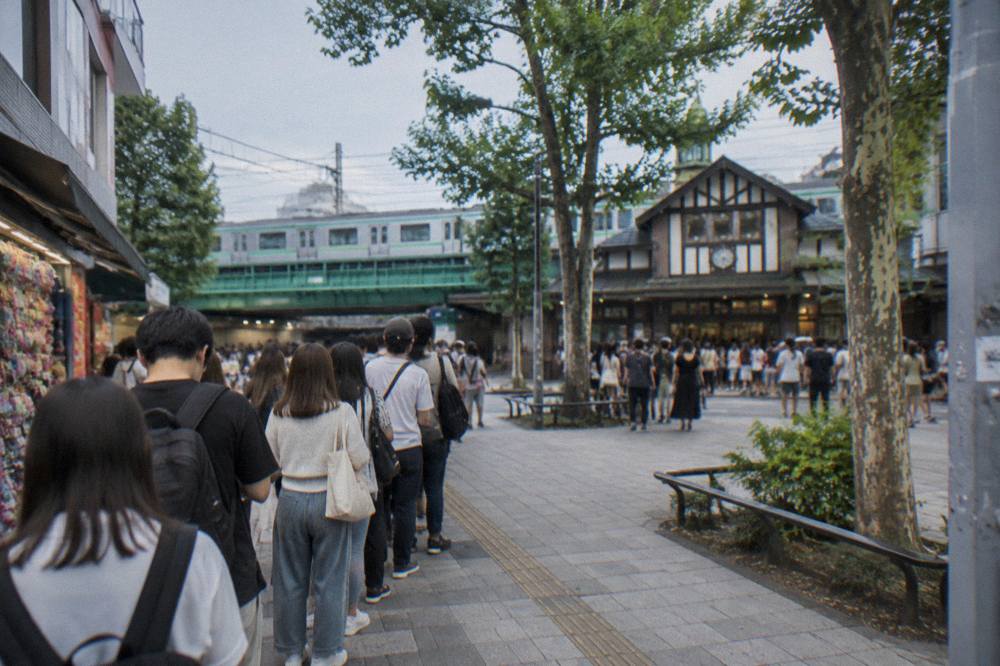
Commerce is the other half of the answer, and it deserves plain wording. Takeshita Street is free to walk but it is a shopping street: crepes, snacks, accessories and vintage clothing are all priced normally, and a stroll with stops can spend real money without anything being a scam or a ticket. Omotesando adds cafés and flagship shops to the same rule. Individual shop prices are not published here, so check each shop's own page before you go. Budget for food if you plan to eat, and treat everything behind a shopfront as ordinary retail.
A useful comparison keeps the paid parts in proportion. Within a short rail hop, other free frames carry their own paid interiors: Ueno Park is free while the Tokyo National Museum charges adults JPY 1,000, Zojo-ji's grounds and main hall are free while the Treasures Gallery is JPY 700, and the Shibuya Crossing is free while Shibuya Sky is ticketed. Harajuku's split, a free shrine and forest with a JPY 500 garden and a JPY 1,000 museum inside, is the same pattern. The Meiji Jingu guide unpacks that shrine's pricing in full.
“We really enjoyed this tour. Hiraku was an engaging and informative guide, giving us valuable insights into the areas we toured. Being half-Kiwi, half-Japanese, he was able to communicate the cultural relevance of the different sites in a way that would be difficult for a non-Japanese or non-native English speaker (or both). Highly recommend Hiraku’s tours.”
When Is The Best Time To Visit Harajuku, Takeshita Street And Yoyogi Park?
The shrine precinct inside the forest sets the timing: gates open at sunrise and close at sunset, 16:10 in November and 16:00 in December, so arrive before mid-afternoon to complete the full walk. Takeshita Street and Yoyogi Park are public ground with no published hours in this guide's records, so the shrine schedule is the only fixed clock to plan around.
The shrine clock is the planning tool. A walk that starts at the shrine end late in the day risks finding the precinct closed while the shopping streets are still busy. Reverse the order if your day starts late: streets first, forest before the shrine's closing time, park afterwards, since the park does not close on the shrine's schedule. Everything else covered here is indexed on Free Things To Do In Tokyo.
Beyond that clock, the streets are free to wander. The shrine publishes its monthly hours and the park association publishes its park and garden rules, so check those pages before you go; the streets themselves are public ground. Any finer timing than that would be colour without a source.
Place
Free Or Ticketed
What Is Free
What You Still Pay For
Meiji Jingu Museum
Paid
Ticketed museum in the shrine grounds.
JPY 1,000 adult, JPY 900 high school and younger, free under elementary age; closed Thursdays (open if Thursday is a holiday); last entry 30 minutes before close (official Japanese page).
Winter visitors should also know what the season changes elsewhere on a combined walk. The Imperial Palace East Gardens, a common pairing with a Harajuku day, are closed every Monday and Friday and run winter hours of 9:00 to 16:00 with entry to 15:30. The TMG observatories in Shinjuku rotate their closures, South on the 1st and 3rd Tuesday, North on the 2nd and 4th Monday, and both close 29 to 31 December and 2 to 3 January. None of that touches Harajuku itself, but a day that chains several free sights together lives and dies on these closing rules.
How Do You Combine Harajuku, Takeshita Street And Yoyogi Park With Other Free Sights?
The natural chain runs Shibuya Crossing to Harajuku to Yoyogi Park to Meiji Jingu, all free and all on foot, then extends by rail to the Imperial Palace East Gardens, the TMG observatories or the old streets of Asakusa and Yanaka. Every link in the core chain is free, and the extensions each carry one rule to check: the gardens close Mondays and Fridays, the observatories rotate closures, and the museum districts split free ground from paid interiors.
Place
Free Or Ticketed
What Is Free
What You Still Pay For
Meiji Jingu
Free
Shrine precinct and forest are free: 'Meiji Jingu is open every day throughout the year with free of charge' (official).
The Inner Garden (JPY 500) and the Meiji Jingu Museum (JPY 1,000 adult) charge their own admission.
The core chain needs no transport planning beyond comfortable shoes. Start at the Hachiko Statue, Shibuya Station, cross the crossing, and follow the corridor towards Harajuku: Takeshita Street or Omotesando, then the shrine forest, then the park beside it, or run it in reverse from the shrine's opening time and end in Shibuya at dusk. Every element is free and each is a separate record, so the day's only budget is food. The frame on this page is the skeleton, and the Tokyo on a budget guide collects the same logic city-wide.
If you would rather have the Shibuya end of the chain explained on the ground, the Shibuya Only walk, run by Localized Walking Tours on GuruWalk, rated 4.64 out of 5 across 217 GuruWalk reviews, meets at Dogenzaka, Shibuya, runs 2 hours in English, and pairs neatly with a self-guided Harajuku half afterwards.
The extensions each carry one rule. East Gardens: free, closed Monday and Friday, winter hours 9:00 to 16:00 with entry to 15:30 (kunaicho.go.jp). TMG observatories: free, no reservation, but check which tower is open, South closes the 1st and 3rd Tuesday, North the 2nd and 4th Monday. Ueno's hill is free and open at all times while the Tokyo National Museum inside it charges JPY 1,000, though its 2026 free days are all past. Asakusa's Senso-ji is free, and the Senso-ji and Asakusa guide covers that end of the city. Chain by rule, not by distance, and the free day holds together.
“Great understanding of Japonese culture and history. Very pleased we joined Hiraku's tour of Shibuya.”
A second chaining principle: pair a day district with a night district. Harajuku's free sights are daytime sights, tied to the shrine's sunset closing. Shinjuku's free layer, the observatories aside, is an evening layer: Golden Gai's lanes are free to walk, with many tiny bars charging a cover or minimum, and Omoide Yokocho is an open lane of food stalls. The Golden Gai and Omoide Yokocho guide lays out that split. Doing Harajuku by daylight and Shinjuku after dark uses both districts at their natural hours without buying a single ticket.
Which Free Walking Tours Meet Near Harajuku, Takeshita Street And Yoyogi Park?
Several free, pay what you want walking tours meet either inside the Harajuku, Takeshita Street, and Yoyogi Park corridor or one station away from it, and all but one of them are listed on GuruWalk. Ratings below come from each walk's own GuruWalk listing and are stated on that listing's own scale.
The Harajuku-end walks are the tightest fit. Harajuku And Meiji, English, run by Localized Walking Tours, rated 4.75 out of 5 across 191 GuruWalk reviews, meets at JR Harajuku Station, West Exit, 2 hours in English. Meiji Only, 1h 30m, run by Local Guide Stars, rated 4.87 out of 5 across 113 GuruWalk reviews, also meets at Harajuku Station and runs an hour and a half in English. A Spanish-language option, Hikari's Harajuku Spanish Walk by Hikari Tours, meets at Harajuku Station, runs 2 hours in Spanish, and has 8 GuruWalk reviews so far, too few for an overall score yet. These are the walks whose meeting point puts the shrine forest and the fashion streets directly on your path.
Walk
Platform
Rating and reviews
Duration
Language
Meets at
Bilingual Shibuya And Harajuku
GuruWalk
4.88 out of 5, 1,470 reviews
2 hours
English and Spanish
Hachiko Statue, Shibuya Station
Pop Culture Walk, 2h 15m
GuruWalk
4.78 out of 5, 1,339 reviews
2 hours 15 minutes
English
Hachiko Statue, Shibuya Station
Bilingual Shibuya, Harajuku, Meiji
GuruWalk
4.9 out of 5, 937 reviews
2 hours
English and Spanish
Shibuya Station
Harajuku And Meiji, English
GuruWalk
4.75 out of 5, 191 reviews
2 hours
English
JR Harajuku Station, West Exit
Meiji Only, 1h 30m
GuruWalk
4.87 out of 5, 113 reviews
1 hour 30 minutes
English
Harajuku Station
Secret View Spot, 1h 30m
GuruWalk
4.85 out of 5, 109 reviews
1 hour 30 minutes
English
Shibu Hachi Box, Dogenzaka
The Shibuya-end walks cover this ground as part of a bigger arc. The Bilingual Shibuya And Harajuku walk by Japan Navigators, 4.88 out of 5 across 1,470 GuruWalk reviews, is the standout by review pool. The Pop Culture Walk, 2h 15m, by Scott of Inowa Japan, 4.78 out of 5 across 1,339 GuruWalk reviews, runs 2 hours 15 minutes in English from the Hachiko Statue. Both pair the crossing end with the Harajuku end, and both are free, pay what you want on GuruWalk.
The longest-covering English option is Bilingual Shibuya, Harajuku, Meiji by Hiraku Tours, 4.9 out of 5 across 937 GuruWalk reviews, meeting at Shibuya Station, 2 hours in English and Spanish. Its own GuruWalk listing carries the current departure details.
One walk in this corridor is not on GuruWalk at all: the Shimokitazawa Offbeat walk, 1h 30m, listed on freetour.com, rated 9.6 out of 10 across 26 freetour.com reviews, meeting at Shimokitazawa Station, East Exit. Shimokitazawa sits further out than Harajuku, but it belongs to the same hidden-neighbourhood family, and the freetour.com listing is the place to reserve it. Every other walk named in this guide runs on GuruWalk, and this site operates none of them: each is an independent guide's own listing.
Mistakes That Trip People Up At Harajuku, Takeshita Street And Yoyogi Park
The common mistakes all come from merging records that must stay separate: assuming the Inner Garden is free because the precinct is, arriving at the shrine after its published sunset closing, transferring the JPY 300 garden fee onto Yoyogi Park, which is free, expecting December's 16:00 closing to match October's, and treating the whole district as one ticketed attraction. Each mistake is avoidable with one fact, and each fact is stated above.
The first mistake is the free-precinct trap. Visitors walk through the shrine's free gate, discover the Inner Garden, and either pay JPY 500 assuming it was included or feel misled that it was not. Neither reaction is needed: the shrine publishes the split, the precinct and forest free, the garden JPY 500, the museum JPY 1,000, and knowing the split turns a surprise into a choice. The same trap recurs at Zojo-ji and Yasukuni elsewhere in the city, free precincts with paid interiors, so learning the pattern once pays off across Tokyo.
The second mistake is the clock. Building the shrine into the start of the day, rather than the end, removes the risk entirely. The third mistake is the park-garden confusion: Yoyogi is a park and free, while Hama-rikyu, Koishikawa Korakuen and Rikugien are gardens at JPY 300 each. The fourth is spending the whole budget on Takeshita Street snacks and then treating the paid garden as the splurge, when the reverse ordering, free forest first, shopping after, gives the same day a different shape.
A final mistake applies to the guided layer: booking a paid tour out of the assumption that free means low quality. The walks named in this guide carry ratings from hundreds to thousands of reviews on their own platforms, stated on their own scales, and every one is free, pay what you want. Reserve on the walk's own listing, on GuruWalk or, for the Shimokitazawa walk, freetour.com, and treat payment as something decided at the end rather than budgeted in advance. The free walking tours overview covers how the model works across the city's roster of 46 walks.
Common Questions About Harajuku, Takeshita Street And Yoyogi Park
Is Harajuku, Takeshita Street And Yoyogi Park Free To Visit?
Yes. Takeshita Street and Omotesando are open public streets, Yoyogi Park is a free metropolitan park, and the Meiji Jingu precinct and forest are free from sunrise to sunset. The paid parts are the Inner Garden at JPY 500 and the Meiji Jingu Museum at JPY 1,000, plus anything you buy in the shops.
What Is Free Around Harajuku, Takeshita Street And Yoyogi Park?
Takeshita Street, Omotesando, Yoyogi Park and the Meiji Jingu precinct and forest are all free to walk. Along the same corridor, Shibuya Crossing is a free public crossing, and the free frame extends by rail to the TMG observatories in Shinjuku and the Imperial Palace East Gardens.
What Costs Money At Harajuku, Takeshita Street And Yoyogi Park?
The Inner Garden inside the Meiji Jingu precinct charges JPY 500 and the Meiji Jingu Museum charges JPY 1,000. Everything else that costs money is commerce: food, shopping and café stops along Takeshita Street and Omotesando. The full walk can be done without entering either paid sight.
When Is The Best Time To Visit Harajuku, Takeshita Street And Yoyogi Park?
Any day that reaches the shrine forest before its sunset closing works. The precinct runs 6:10 to 16:10 in November and 6:40 to 16:00 in December, published on the shrine's official page. The streets and the park are public ground with no closing clock in this guide's records.
How Do You Combine Harajuku, Takeshita Street And Yoyogi Park With Other Free Sights?
Walk the free chain from Shibuya Crossing through Harajuku and the shrine forest to Yoyogi Park, then extend by rail to the Imperial Palace East Gardens, free but closed Mondays and Fridays, or the TMG observatories, free but with rotating closure days. Every link in the core chain is free.
Which Free Walking Tours Meet Near Harajuku, Takeshita Street And Yoyogi Park?
Walks meeting at Harajuku Station include Harajuku And Meiji, English, and Meiji Only, 1h 30m, both on GuruWalk. Walks meeting in Shibuya include Bilingual Shibuya And Harajuku, the Pop Culture Walk, 2h 15m, and Bilingual Shibuya, Harajuku, Meiji. All are free, pay what you want.
Want A Guide Through Harajuku For Free?
The Bilingual Shibuya And Harajuku walk runs on GuruWalk, free and pay what you want, in English and Spanish. Reserve a spot and pay nothing unless you choose to at the end.