Where Can You See Autumn Leaves In Tokyo For Free?
Free autumn leaf spots in Tokyo: parks, avenues and shrine precincts that cost nothing, what still charges admission, and free walking tours that run through leaf season.
In Short
Tokyo's best-known free autumn colour is in its public parks and shrine precincts: Ueno Park, Yoyogi Park, Hibiya Park, Sumida Park, Inokashira Park and the free ground around Meiji Jingu all cost nothing. The famous show gardens charge: Rikugien, Koishikawa Korakuen and Hama-rikyu are JPY 300 each and Shinjuku Gyoen is JPY 500. Exact 2026 leaf-peak dates are not published by any official source, so plan around closing days, not forecasts.
This question sits inside the Meiji Jingu guide, which covers the shrine precinct and forest where much of the city's free autumn colour sits.
Quick Facts
| Question | Answer |
|---|---|
| Free leaf spots | Ueno Park, Yoyogi Park, Hibiya Park, Sumida Park, Inokashira Park, Kitanomaru Park, Meiji Jingu precinct and Gaien ginkgo avenue |
| Paid leaf gardens | Rikugien, Koishikawa Korakuen, Hama-rikyu at JPY 300 each; Shinjuku Gyoen JPY 500 |
| Free night illumination | Marunouchi Illumination on Naka-dori, 12 November to 25 December 2026 |
| Paid night viewing | Rikugien, 25 November to 6 December 2026, 18:00 to 20:30 |
| Free guided walks | Pay-what-you-want walks on GuruWalk, plus one Shimokitazawa walk on freetour.com |
| Winter closure to know | Metropolitan gardens closed 29 December to 1 January; Shinjuku Gyoen closed 29 December to 3 January |
Where Can You See Autumn Leaves In Tokyo For Free?
Tokyo shows its autumn colour free in its public parks and shrine precincts: Ueno Park, Yoyogi Park, Hibiya Park, Sumida Park, Inokashira Park, Kitanomaru Park, the Meiji Jingu precinct and the Gaien ginkgo avenue all charge nothing. No official source publishes 2026 peak-colour dates, so plan around closing days, not forecasts.
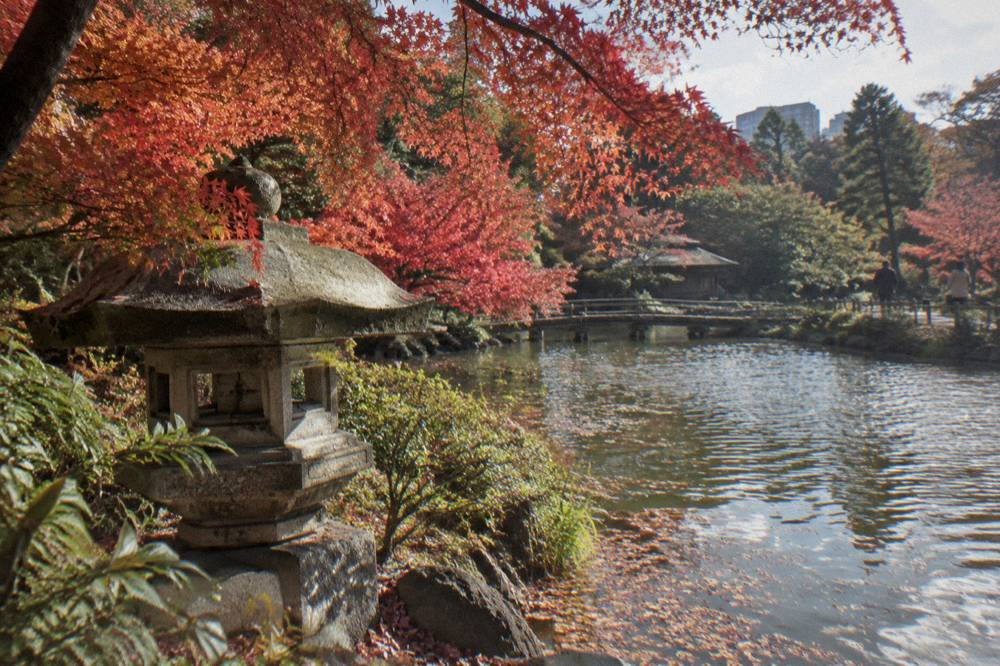
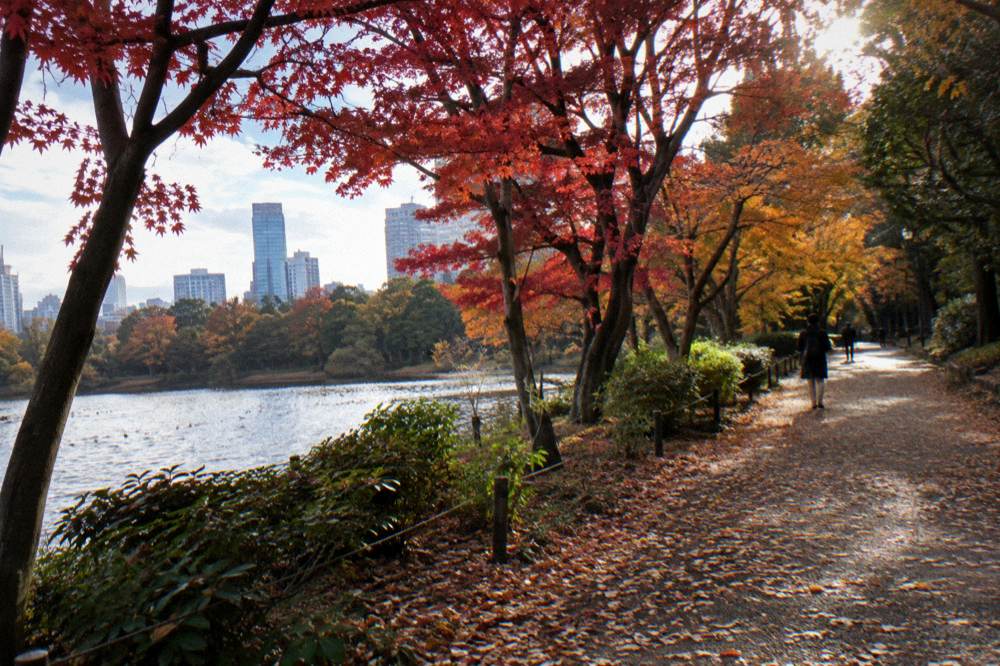
Ueno Park is free and open at all times, and its trees sit around museums that have their own separate admissions, a split covered in detail further down. Yoyogi Park and Hibiya Park are both free metropolitan parks with no gate and no ticket. Sumida Park on the east side of the city and Inokashira Park further out are free as well. Kitanomaru Park, next to the Imperial Palace grounds, is free and open around the clock, with restrictions only on state-function days.
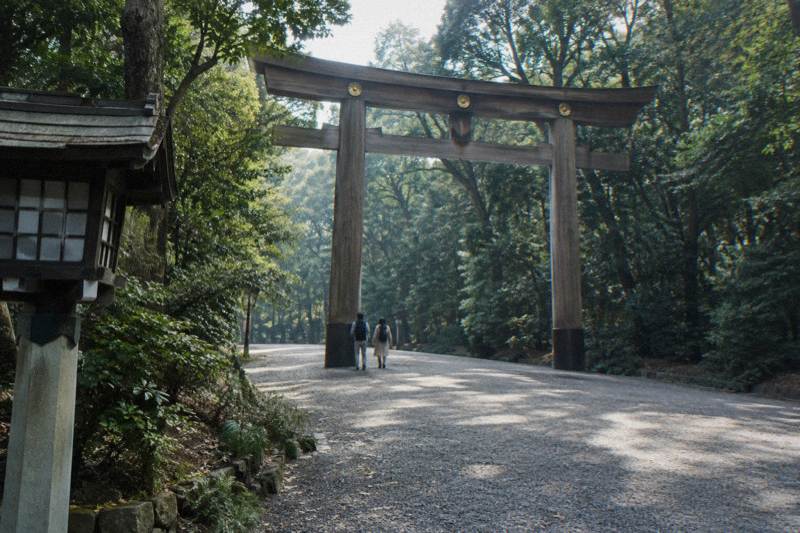
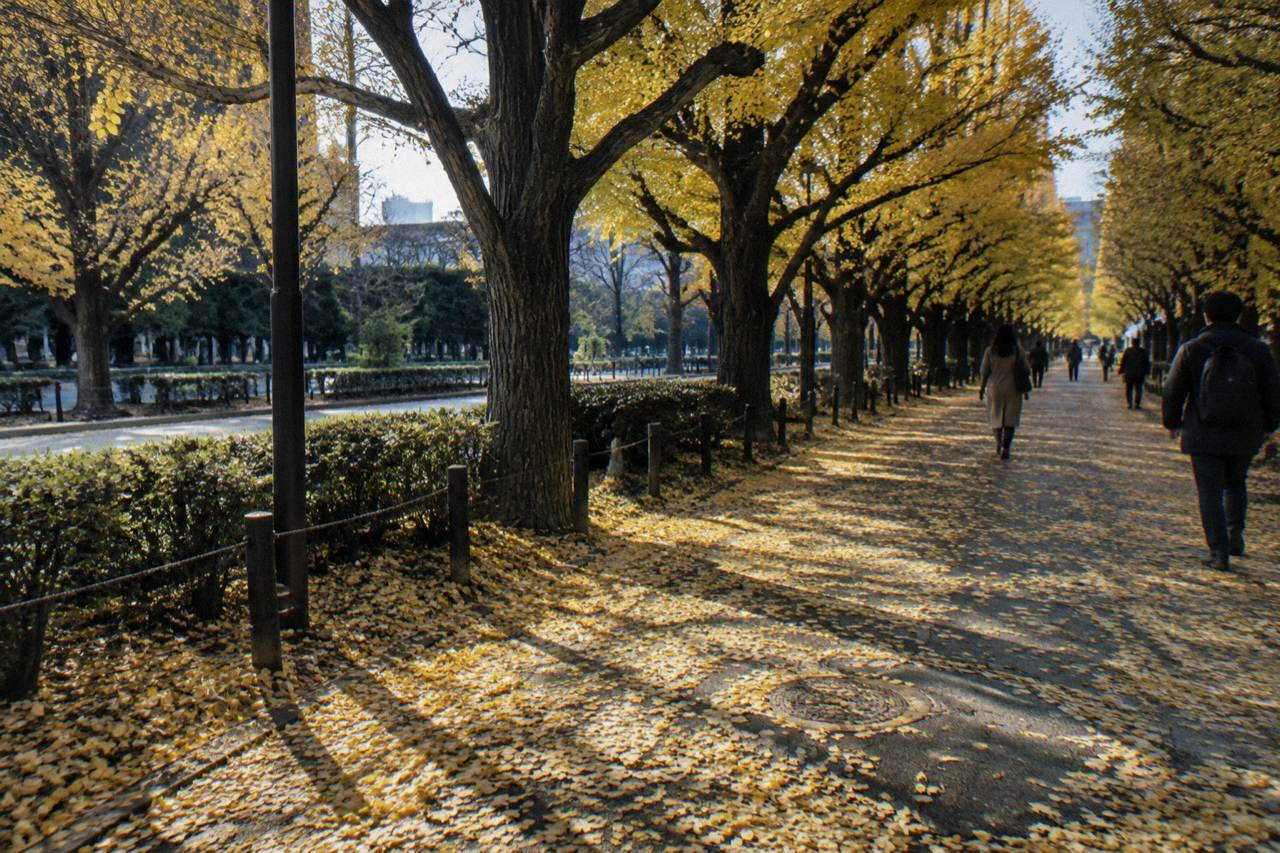
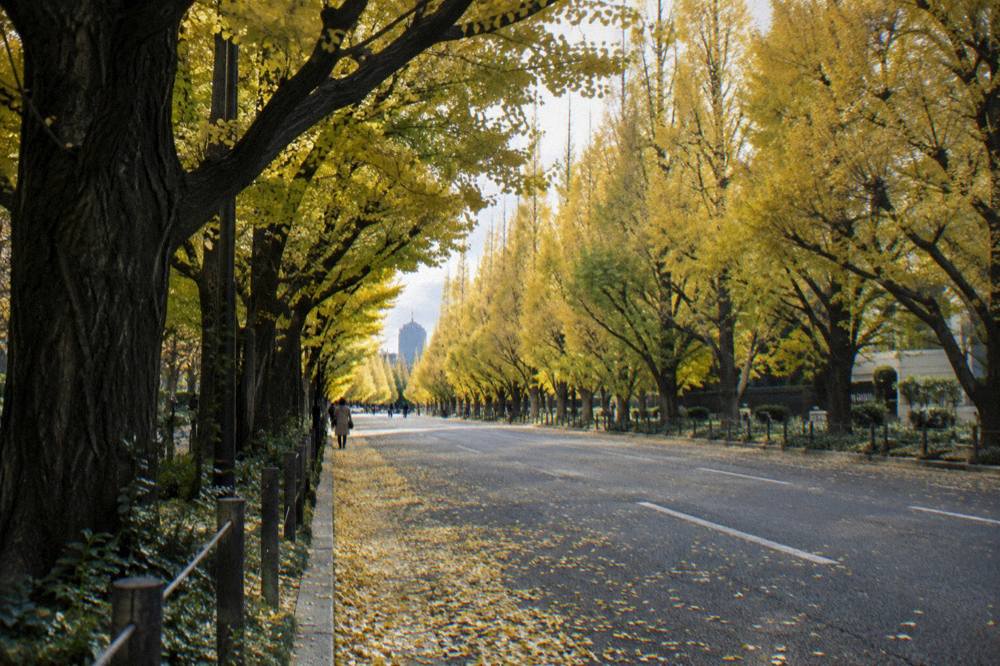
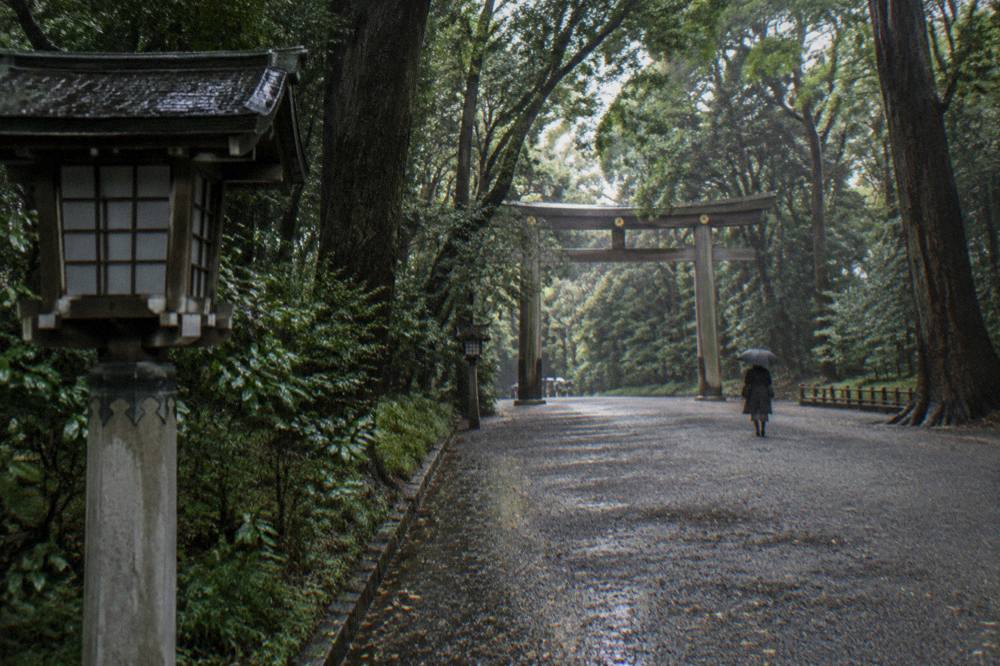
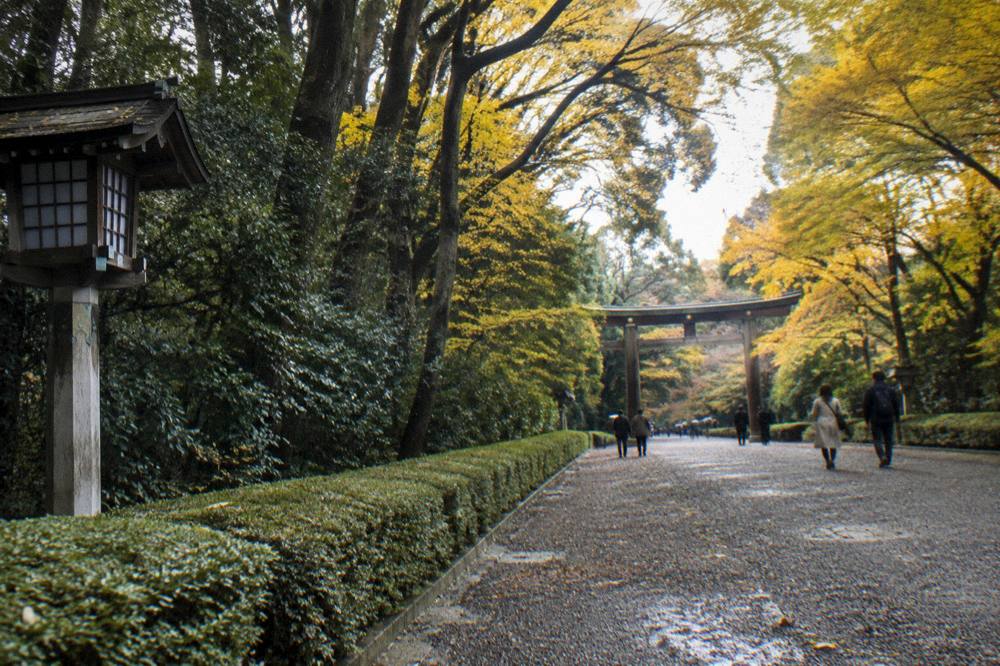
Shrine and temple precincts add the colour most photographers come for. The Meiji Jingu precinct and its forest are free, and the Meiji Jingu Gaien ginkgo avenue is a free public street: you walk it, you photograph it, nobody charges you. The ginkgo avenue and the shrine forest are the two free spots this article's numbers focus on, because they are the ones the fact records cover.
| Place | Free Or Ticketed | What Is Free | What You Still Pay For |
|---|---|---|---|
| Meiji Jingu | Free | Shrine precinct and forest are free: 'Meiji Jingu is open every day throughout the year with free of charge' (official). | The Inner Garden (JPY 500) and the Meiji Jingu Museum (JPY 1,000 adult) charge their own admission. |
What the free spots do not give you is the curated garden experience. Rikugien, Koishikawa Korakuen and Hama-rikyu are JPY 300 each, and Shinjuku Gyoen is JPY 500 for an adult. Those four are where the manicured, picture-framed autumn colour lives. If your budget is zero, the parks and precincts above carry the season honestly, and the Marunouchi Illumination along Naka-dori, running 12 November to 25 December 2026, adds a free evening light display to the free daytime colour.
A straight answer on timing: no official Tokyo source publishes a confirmed leaf-peak forecast for 2026, so no firm date for the peak colours can be given. What is confirmed and official is the calendar of the places themselves: which are open, which close on Mondays or Fridays, and which shut over the New Year period. Planning around those published facts beats planning around a guessed date, because the free spots have no ticket to lose if the colour is early or late.
There is also a free way to see the season with a guide. The city's pay-what-you-want walks, the vast majority on GuruWalk and one on freetour.com, run through neighbourhoods where the leaf colour sits: the Asakusa old town, the Shibuya and Harajuku streets around Meiji Jingu, and the Imperial Palace surroundings. Every one of the 46 walks this site covers is free to reserve, with payment entirely at your discretion afterwards. The walks are covered in full in a later section.
What Does The Free Part Include?
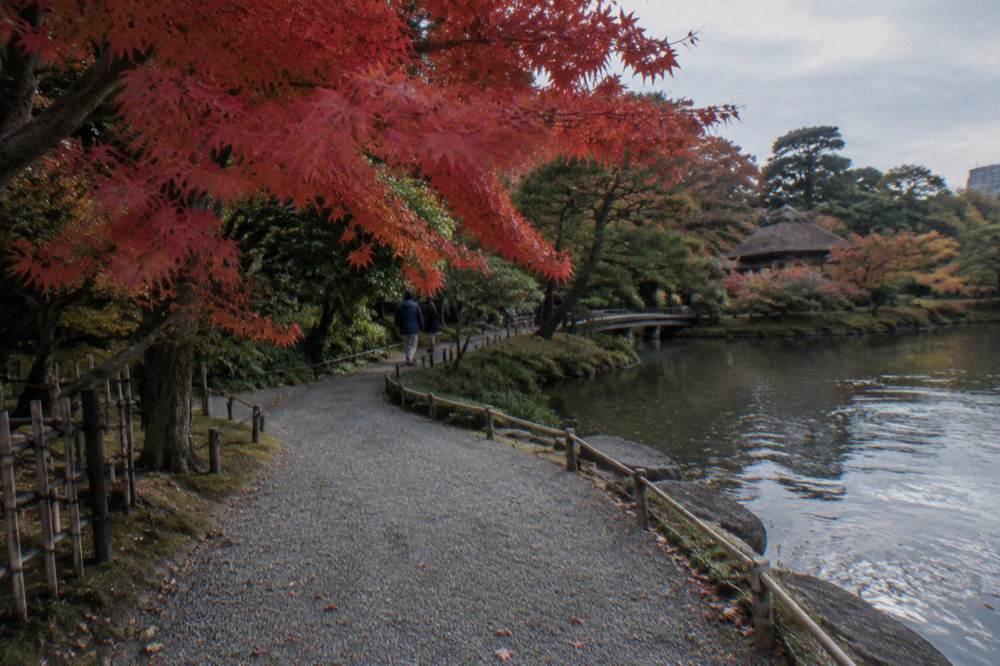
The free part includes every unfenced public park, every shrine and temple precinct with no admission gate, and every public street with autumn trees: entry, walking, photography and staying as long as the place is open all cost nothing. At the Meiji Jingu precinct that means the forest approach, and at the Gaien it means the ginkgo avenue itself. Free also includes the Imperial Palace East Gardens, closed Mondays and Fridays, and the Imperial Palace Outer Garden plaza.
Start with what "free" means in each place, because the boundaries matter. At Meiji Jingu, the shrine precinct and forest are free from first opening to last opening; the Inner Garden beside it is JPY 500 and the Meiji Jingu Museum is JPY 1,000, and neither is included in the precinct's free status. In November the precinct runs 6:10 to 16:10, and in December 6:40 to 16:00. Those hours, published on the shrine's official site, meijijingu.or.jp, are the whole of the free offer: arrive inside them and the forest is yours.
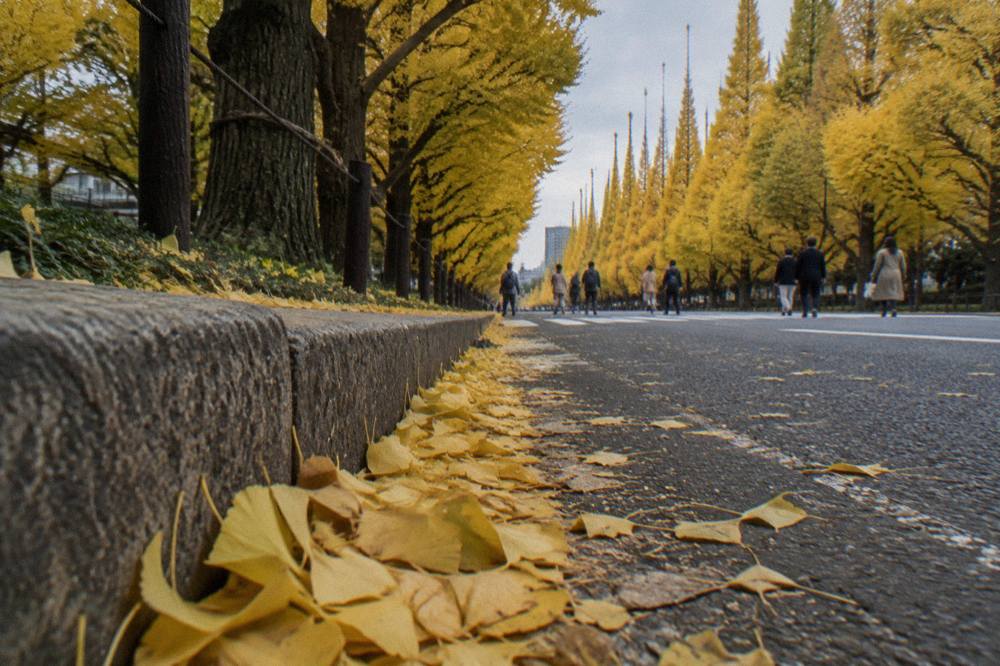
The Gaien ginkgo avenue is a different kind of free. It is a public street, recorded as open public space, with no gate, no hours of admission and no fee of any kind. The same classification covers Sumida Park, Takeshita Street, Omotesando, Yanaka Ginza, Akihabara's streets, Ameyoko and Nakamise: public thoroughfares where autumn colour, where it exists, is simply part of the streetscape. No authority collects anything, and no reservation exists to make.
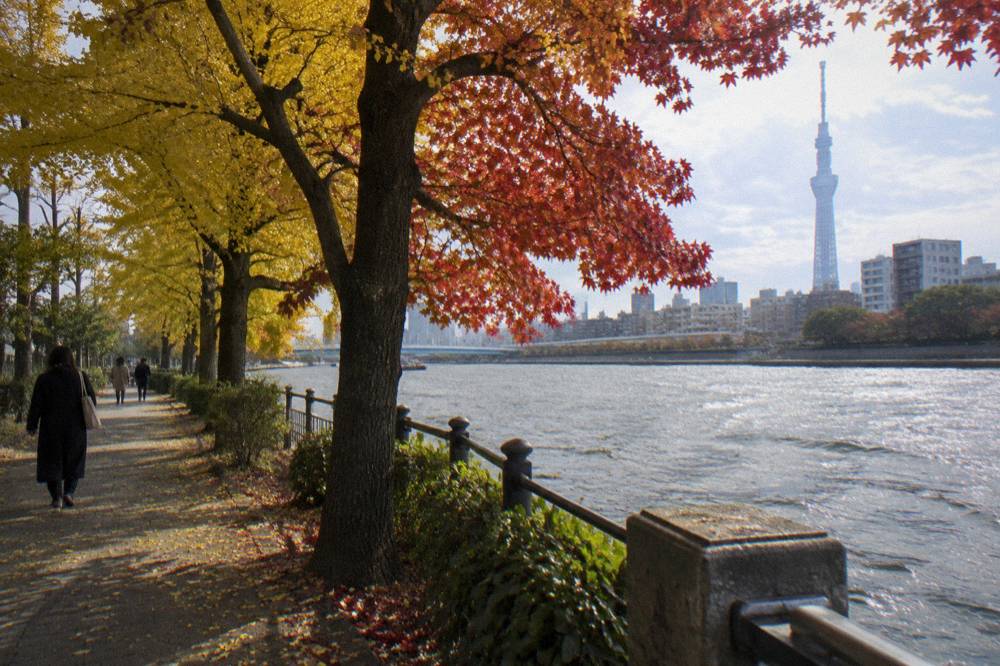
The metropolitan parks are free without conditions. Ueno Park, Yoyogi Park, Hibiya Park and Inokashira Park are all operated as free public parks by the Tokyo Metropolitan Park Association, and none of them sells a general-entry ticket. What sits inside them can charge: Ueno Park contains the Tokyo National Museum at JPY 1,000 for an adult, free for visitors under 18 and over 70 with proof of age, and the park's free status never extends to the museum inside it. The park is free and open at all times; the museum is not part of that.
Two more free entries complete the leaf-season list. The Imperial Palace East Gardens are free, with winter hours 9:00 to 16:00 and last entry at 15:30, closed every Monday and Friday and from 28 December to 3 January, all confirmed on the Imperial Household Agency's pages at sankan.kunaicho.go.jp. And the free guided option: every walk on this site's roster, including the Asakusa Classic English Walk, is free to reserve with payment at your discretion, a 2-hour English walk rated 4.91 out of 5 across 671 GuruWalk reviews, meeting at the Asakusa Culture Tourist Information Center.
| Place | Free Or Ticketed | What Is Free | What You Still Pay For |
|---|---|---|---|
| Imperial Palace East Gardens | Free | Admission is free. Open 9:00 to 16:00 from November to the end of February (entry to 15:30); 9:00 to 16:30 in October. | Nothing to pay. Season hours widen to 18:00 in summer. |
Free also extends into the evening in November and December. The Marunouchi Illumination runs 12 November to 25 December 2026 along Naka-dori, free to view from the street, per the official Marunouchi page at marunouchi.com. Paired with a free daytime park, it makes a full free leaf-season day: colour in a park or precinct in daylight, lights on a public street after dark.
What Do You Still Have To Pay For?
Inside free parks you still pay for museums, shrine inner gardens, treasure halls and every observation deck except the two free TMG observatories. Garden fees also apply: Shinjuku Gyoen charges JPY 500 for adults, while Rikugien, Koishikawa Korakuen and Hama-rikyu charge JPY 300 each. Tokyo Tower's Main Deck starts at JPY 1,500 and Skytree's decks from JPY 3,000, though Foot Town and Solamachi are walkable free.
You also pay for museums inside free parks, shrine inner gardens, treasure halls and every observation deck except the two free TMG observatories. Leaf colour inside a paid garden never inherits a park's free status.
Shinjuku Gyoen is the one people get wrong most often: it is a ticketed national garden, JPY 500 adult, closed Mondays outside the special autumn period, when it opens seven days a week from 1 to 15 November, and closed 29 December to 3 January. Its official operator page, fng.or.jp, states all of this. The three metropolitan gardens, Rikugien, Koishikawa Korakuen and Hama-rikyu, are JPY 300 each and closed 29 December to 1 January, per tokyo-park.or.jp.
| Place | Entry | Days closed |
|---|---|---|
| Shinjuku Gyoen | JPY 500 adult, JPY 250 over 65 and students, free 15 and under | Mondays, except open daily 1 to 15 November; closed 29 Dec to 3 Jan |
| Rikugien | JPY 300 | Closed 29 Dec to 1 Jan |
| Koishikawa Korakuen | JPY 300 | Closed 29 Dec to 1 Jan |
| Hama-rikyu | JPY 300 | Closed 29 Dec to 1 Jan |
| Meiji Jingu Inner Garden | JPY 500 | Not stated |
| Meiji Jingu Museum | JPY 1,000 | Not stated |
Night viewing is a separate, paid layer on top of the daytime garden ticket. Rikugien's autumn night viewing runs 25 November to 6 December 2026, 18:00 to 20:30, and it is paid. Koishikawa Korakuen runs a night special from 13 to 24 November. The fee for those nights is not published, so check the garden's official page before going. If a free evening is the goal, the Marunouchi Illumination is the confirmed free alternative in the same window.
Inside the free parks, the paid parts are museums, not leaves. Ueno Park's Tokyo National Museum charges adults JPY 1,000, with under 18 and over 70 free with proof of age; its 2026 free days, 19 May, 21 September and 3 November, are all past. The National Museum of Western Art is free for everyone on the second Sunday of each month, next on 13 December 2026, and otherwise JPY 500 for adults. The free museums that need no timing at all are the Currency Museum, the Meguro Parasitological Museum, the Fire Museum, the Water Science Museum and the Advertising Museum Tokyo.
The towers follow the same rule as the museums: the free part never covers the deck. Tokyo Tower's Main Deck is from JPY 1,500 for an adult, and Skytree's observation decks are from JPY 3,000 with dynamic pricing, but the tower base, Foot Town and the Solamachi complex at Skytree's foot are walkable without a ticket. The two Tokyo Metropolitan Government observatories at 202 metres are the exception, both free with no reservation, the South closed the 1st and 3rd Tuesday and the North the 2nd and 4th Monday, both closed 29 to 31 December and 2 to 3 January.
One seasonal payment trap: there is no reason to pay anyone for Imperial Palace access. The East Gardens are free, and the official guided palace tour is free but needs an application. Reseller sites sell tickets to the free gardens; entry itself costs nothing. The same caution applies to leaf spots: no free park or precinct on this page has a ticket, so anyone selling you one is selling nothing.
“Excellent tour covering multiple facets of Japanese history and culture. I learned a lot and recommend it.”
Christine, GuruWalk review of Palace Storytelling Walk
When Is The Free Option Available?
The free parks and streets have no season ticket and no admission calendar: they are free whenever they are open. The dated facts that matter are closing days: the Imperial Palace East Gardens close every Monday and Friday, the TMG observatories each close on a rotating weekday, Shinjuku Gyoen closes Mondays outside 1 to 15 November, and the metropolitan gardens close 29 December to 1 January. Leaf-peak dates themselves are unpublished for 2026.
Work through the calendar by place, because each free spot carries its own rules. The East Gardens, free, run winter hours 9:00 to 16:00 with entry until 15:30, and they close every Monday and every Friday, plus 28 December to 3 January and days of Imperial Court functions. A Friday visit in December finds them shut, and that fact catches a lot of itineraries. The Imperial Palace Outer Garden plaza and Kitanomaru Park have no such closures: Kitanomaru is open 24 hours, restricted only for state functions. Other pages covering the same trip are gathered on Free Things To Do In Tokyo.
The TMG observatories are free with no reservation, but the two towers alternate their days off. The South Observatory closes the 1st and 3rd Tuesday of the month; the North Observatory closes the 2nd and 4th Monday. Both close 29 to 31 December and 2 to 3 January, and North entry runs until 17:00. Outside the shared year-end closure, at least one of the two observatories is open every day. The official pages at zaimu.metro.tokyo.lg.jp carry the current schedule.
| Free spot | Hours or limits | Closed days |
|---|---|---|
| Imperial Palace East Gardens | Winter 9:00 to 16:00, entry to 15:30 | Every Monday and Friday, 28 Dec to 3 Jan |
| TMG South Observatory | Free, no reservation | 1st and 3rd Tuesday, 29 to 31 Dec, 2 to 3 Jan |
| TMG North Observatory | Free, entry to 17:00 | 2nd and 4th Monday, 29 to 31 Dec, 2 to 3 Jan |
| Meiji Jingu precinct | November 6:10 to 16:10, December 6:40 to 16:00 | None stated |
| Gaien ginkgo avenue | Public street, open public space | None, it is a street |
| Rainbow Bridge Promenade | 1 Nov to 31 Mar, 10:00 to 18:00, last entry 30 minutes before | 3rd Monday |
The November window carries the densest set of dated events, and all of them bear on a leaf-season trip. Shinjuku Gyoen opens daily from 1 to 15 November for its special autumn period, the one stretch when its Monday closure lifts. The Tori-no-ichi festival at Otori Shrine has its second 2026 day on 19 November, free to enter, with lucky rakes and food paid. The Marunouchi Illumination starts 12 November and runs to 25 December. Rikugien's paid night viewing runs 25 November to 6 December. None of these is a leaf-peak date, and none should be presented as one.
What no official source gives, and what this site therefore does not state, is a confirmed colour peak for any garden or avenue in 2026. The trees answer to weather, not to a calendar. The practical approach: pick free spots that are open on your days, check the closing-day table above, and treat colour timing as a bonus rather than a booking constraint. Free places carry no cancellation risk, which is the quiet advantage of planning a leaf trip around them.
December changes the arithmetic slightly. The Meiji Jingu precinct shortens its day to 6:40 to 16:00, the metropolitan gardens close 29 December to 1 January, Shinjuku Gyoen closes 29 December to 3 January, and the East Gardens close 28 December to 3 January. The free public parks and streets have no New Year closure at all. Late-season colour seekers in early December still have every free park, the shrine precincts, the free museums and the Marunouchi lights, and the second-Sunday free day at the National Museum of Western Art on 13 December 2026 adds a free indoor option.
Where Does The Free Visit Start?
A free leaf visit starts where the public space starts: at any park entrance, at the Meiji Jingu precinct gates inside the published hours, or at the head of the Gaien ginkgo avenue, with no ticket desk anywhere. For a guided version, the start point is the walk's stated meeting point, for example the Asakusa Culture Tourist Information Center for the Asakusa Classic English Walk, or the Hachiko Statue at Shibuya Station for the Shibuya walks.
| Place | Free Or Ticketed | What Is Free | What You Still Pay For |
|---|---|---|---|
| Imperial Palace Outer Garden And Nijubashi | Free | Open public plaza, lawns and moat paths with the Nijubashi bridge view; national garden managed by the Ministry of the Environment. | No fee for the plaza. Rest houses and parking are paid. |
| Hibiya Park | Free | Entry free, open at all times; the service centre is staffed 8:30 to 17:30 except at New Year. | Some facilities and events are paid. |
The ungated spots need no instructions. Ueno Park, Yoyogi Park, Hibiya Park, Sumida Park and Inokashira Park are public parks with no single entrance to name. The Gaien ginkgo avenue is a street: you start where the street starts. No fixed distances or walking times link these spots, so plan each leg on a map before setting out. The settled fact is the classification itself: free and open public space, and that is the whole planning fact.
The gated-but-free spots have a defined threshold. The East Gardens have gates with a posted closing schedule, the winter entry cutoff of 15:30 being the one number to remember. The TMG observatories have a lobby and a lift line, but no ticket and no reservation. Meiji Jingu's precinct opens at the published hour, 6:10 in November and 6:40 in December, and closes at 16:10 and 16:00 respectively; the free forest walk sits inside those bounds.
The guided free option starts at a named meeting point, and those are stated exactly as each listing gives them. The walks that touch leaf neighbourhoods meet at, among other points, the Kaminarimon Gate and the Asakusa Culture Tourist Information Center in Asakusa, the Hachiko Statue at Shibuya Station, Shibuya Station itself, Harajuku Station, the Imperial Palace at Kokyogaien, and Tokyo Station's Marunouchi South Exit. Every one of those is a free, public, findable landmark. No walk on the roster has a published route beyond its meeting point and neighbourhood, so the meeting point is the plan.
Meeting points double as practical anchors for a free day. Start at the Hachiko Statue, walk the free Shibuya Crossing beside it, and you are already in the part of the city whose parks and precincts carry the season. Start at the Asakusa Culture Tourist Information Center and the free Senso-ji precinct is the immediate setting. The meeting points are chosen by the guides for exactly this reason, and a reader building a zero-cost itinerary can borrow them whether or not they join the walk.
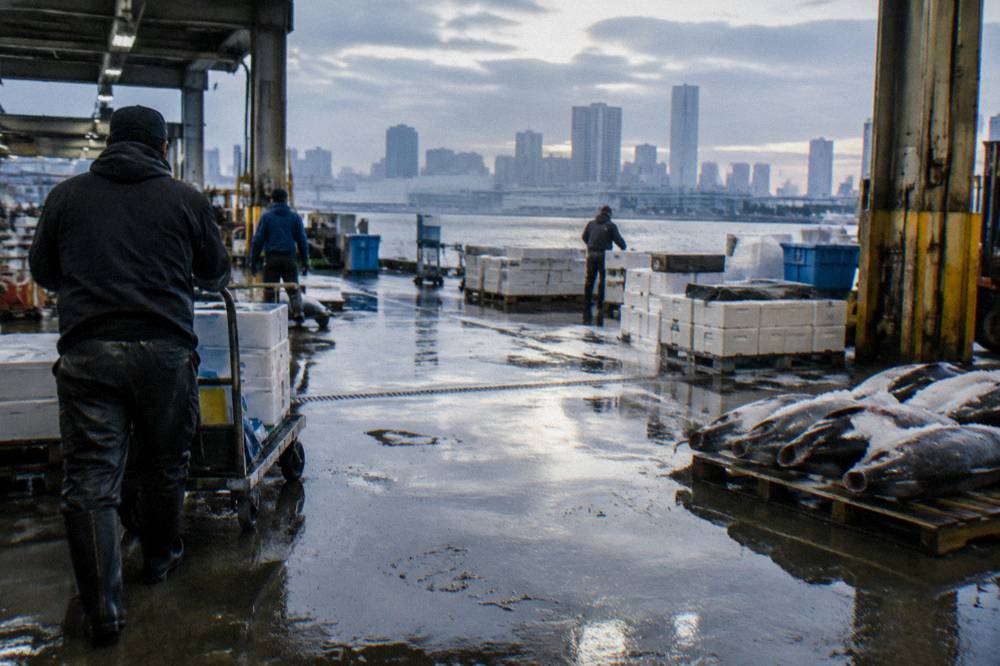
One December-specific starting note, because the fact is official: the Tsukiji Outer Market's own English home page asks sightseers and group tours to stay away during December's New Year shopping rush, and asks visitors not to eat while walking at any time. If your free leaf day in December had a Tsukiji street segment in mind, the market's own request is the deciding fact. The lanes are free to walk; the request to postpone is the market's, stated on its official site.
Which Free Walking Tours Cover This?
Free, pay-what-you-want walks cover the neighbourhoods where the free autumn colour sits: Asakusa's old town, the Shibuya, Harajuku and Meiji Jingu streets, the Imperial Palace surroundings, and Ueno. Every walk on this site's roster of 46 is free to reserve, the overwhelming majority listed on GuruWalk and one, the Shimokitazawa Offbeat walk, on freetour.com. None has a published route beyond its meeting point and neighbourhood, so match by district, not by stop list.
In Asakusa the choice is between English-language walks led by different operators. The Asakusa Classic English Walk by Localized Walking Tours runs 2 hours in English, meets at the Asakusa Culture Tourist Information Center, and is rated 4.91 out of 5 across 671 GuruWalk reviews. The Asakusa Old Town walk by Tokyo Genki Tours, "Asakusa Old Town, English", also runs 2 hours in English and meets at the Kaminarimon Gate, rated 4.78 out of 5 across 767 GuruWalk reviews. Both sit in the same free Senso-ji precinct, where entry costs nothing at any time of year. Several further Asakusa walks run in Spanish only.
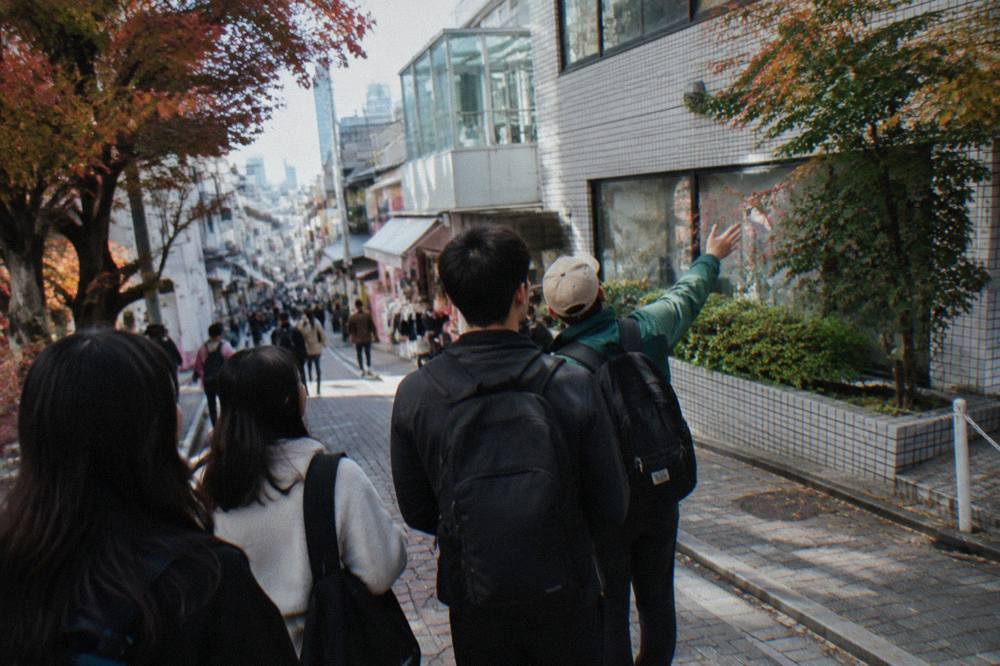
The Shibuya and Harajuku side has the deepest English-language bench, and it is the side that pairs with Meiji Jingu's free forest. The Bilingual Shibuya And Harajuku walk by Japan Navigators meets at the Hachiko Statue, Shibuya Station, runs 2 hours in English and Spanish, and is rated 4.88 out of 5 across 1,470 GuruWalk reviews, the largest review pool of any walk on the roster after the Kabukicho night walk. The Pop Culture Walk, 2h 15m by Scott of Inowa Japan meets at the same statue, runs in English, and is rated 4.78 out of 5 across 1,339 GuruWalk reviews. Hiraku Tours' Bilingual Shibuya, Harajuku, Meiji walk meets at Shibuya Station, 2 hours, English and Spanish, 4.9 out of 5 across 937 GuruWalk reviews.
The palace and Ueno sides complete the map. The Palace Storytelling Walk by 5 STORY meets at the Imperial Palace, Kokyogaien, 2 hours in English, rated 4.85 out of 5 across 901 GuruWalk reviews. The Shogun History Walk meets at the same point, 2 hours in English, 4.65 out of 5 across 295 GuruWalk reviews. In Ueno, the Maids Vs Samurai walk by TokyoXplorers meets at Ueno Park, 2 hours in English and Spanish, rated 4.83 out of 5 across 1,155 GuruWalk reviews, and the free park around that meeting point is open at all times.
Neither is a leaf-season pick, but both appear in the wider Shinjuku and night Tokyo coverage, and their restrictions travel with their names. The Shimokitazawa Offbeat walk, 1 hour 30 minutes in English, is the one walk listed on freetour.com, rated 9.6 out of 10 across 26 freetour.com reviews, a scale that is never converted to a five-point figure.
For the full walk-by-walk picture, including every meeting point and language, the free walking tours overview gathers the whole roster. The short version for leaf season: every walk is free, pay what you want, reserved on its platform, GuruWalk for all but one listing, and no money figure belongs anywhere near a walk's name. Payment is at your discretion afterwards, and that single fact is the entire pricing story; anything beyond it is on each walk's own page.
Mistakes That Trip People Up At Autumn Leaves In Tokyo
The recurring mistakes are treating a paid garden as free, expecting a free park's museum to be free with it, arriving at the East Gardens on a Monday or Friday, assuming a leaf-peak date exists in print, and paying a reseller for access to a free place. Shinjuku Gyoen at JPY 500 and the Tokyo National Museum at JPY 1,000 inside free Ueno Park account for most spoiled plans. Each mistake has a one-line fix.
It is a JPY 500 national garden, closed Mondays outside the 1 to 15 November daily period, closed 29 December to 3 January. The free alternatives are the metropolitan parks and shrine precincts listed above, and this site's dedicated guide to them covers the substitutes in detail. The second mistake is the mirror image: assuming Ueno Park's free entry covers the Tokyo National Museum. It does not, at JPY 1,000 for adults, and no museum inherits a park's or shrine's free status anywhere in this city.
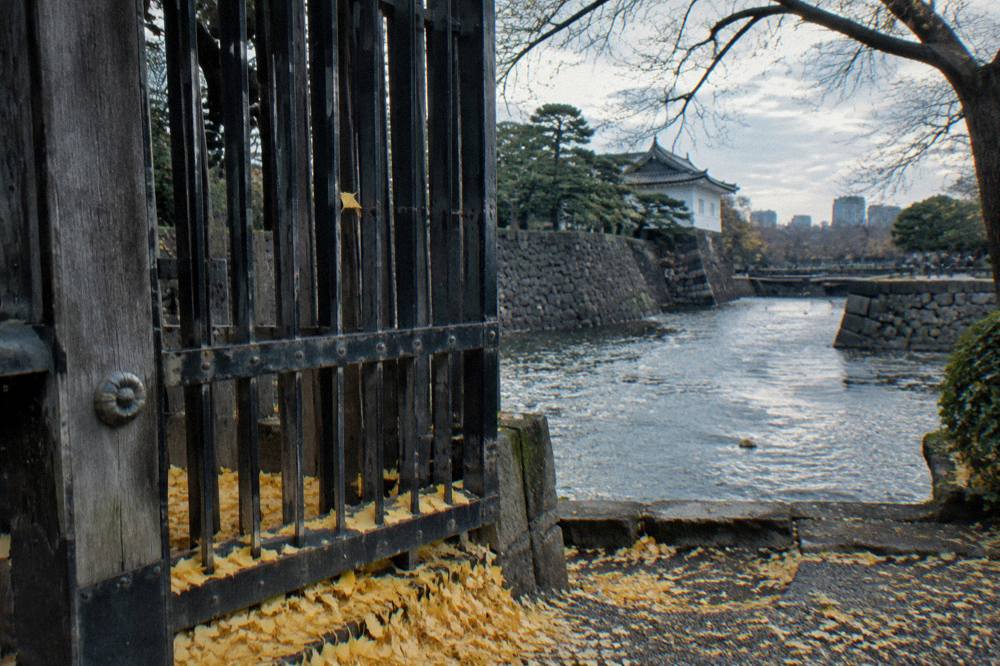
The third is the calendar mistake. The East Gardens close every Monday and every Friday, which removes two of the five weekdays from a short trip. The TMG observatories never close together but each takes a rotating weekday off. The fourth is trusting a leaf-peak forecast: no official source publishes confirmed 2026 peak dates for any garden or avenue, and any specific date you read elsewhere is a guess. The fifth is paying a ticket reseller for the Imperial Palace East Gardens or the palace tour; both are free, the tour simply needs an application, and the reseller sites are blocklisted by this site.
The last two are smaller but real. The Bunkyo Civic Center sky lounge, sometimes recommended as a free view, has been closed for renovation since 1 March 2025 with reopening planned for early December 2026, so it is not a plan until it reopens. Free does not mean lesser here, it means knowing which side of each gate you are standing on.
Common Questions On This Topic
Where Can You See Autumn Leaves In Tokyo For Free?
In the free public parks, Ueno, Yoyogi, Hibiya, Sumida, Inokashira and Kitanomaru, in the free Meiji Jingu precinct and on the free Gaien ginkgo avenue, and in free shrine precincts such as Senso-ji.
Is Shinjuku Gyoen Free For Autumn Leaves?
No. Shinjuku Gyoen charges JPY 500 per adult, JPY 250 for visitors over 65 and students, and is free only for children 15 and under. It is closed Mondays except during the special autumn period from 1 to 15 November, when it opens daily, and it closes 29 December to 3 January.
Are The Imperial Palace East Gardens Free In Autumn?
Yes, the East Gardens are free, with winter hours 9:00 to 16:00 and last entry at 15:30. They close every Monday and every Friday, and from 28 December to 3 January. The official guided palace tour is also free but requires an advance application, and walk-ins are not accepted.
When Do Tokyo Autumn Leaves Peak?
No official source publishes confirmed peak-colour dates for 2026, so treat any specific dates as estimates rather than fixed timings. What is confirmed is each place's own calendar: closing days, winter hours and the dated season events, such as Rikugien's paid night viewing from 25 November to 6 December 2026 and the free Marunouchi Illumination from 12 November to 25 December.
Do The Free Walking Tours Cost Anything?
No. All 46 walks on this site's roster are free, pay what you want, reserved in advance on their platform, GuruWalk for every listing except the Shimokitazawa Offbeat walk, which is listed on freetour.com. You pay nothing up front, and any payment afterwards is at your discretion. No money figure applies to any walk.
Is Ueno Park Free Even With The Museums Inside It?
The park is free and open at all times. The museums inside it are separate paid entries: the Tokyo National Museum charges adults JPY 1,000, free for visitors under 18 and over 70 with proof of age, and the National Museum of Western Art charges JPY 500 except on free second Sundays, the next being 13 December 2026.