Is The Tokyo Metropolitan Government Building Observation Deck Free?
Yes, both Tokyo Metropolitan Government Building observatories are free, with no reservation. Here is what the free visit includes, what still costs money, and when each deck is closed.
In Short
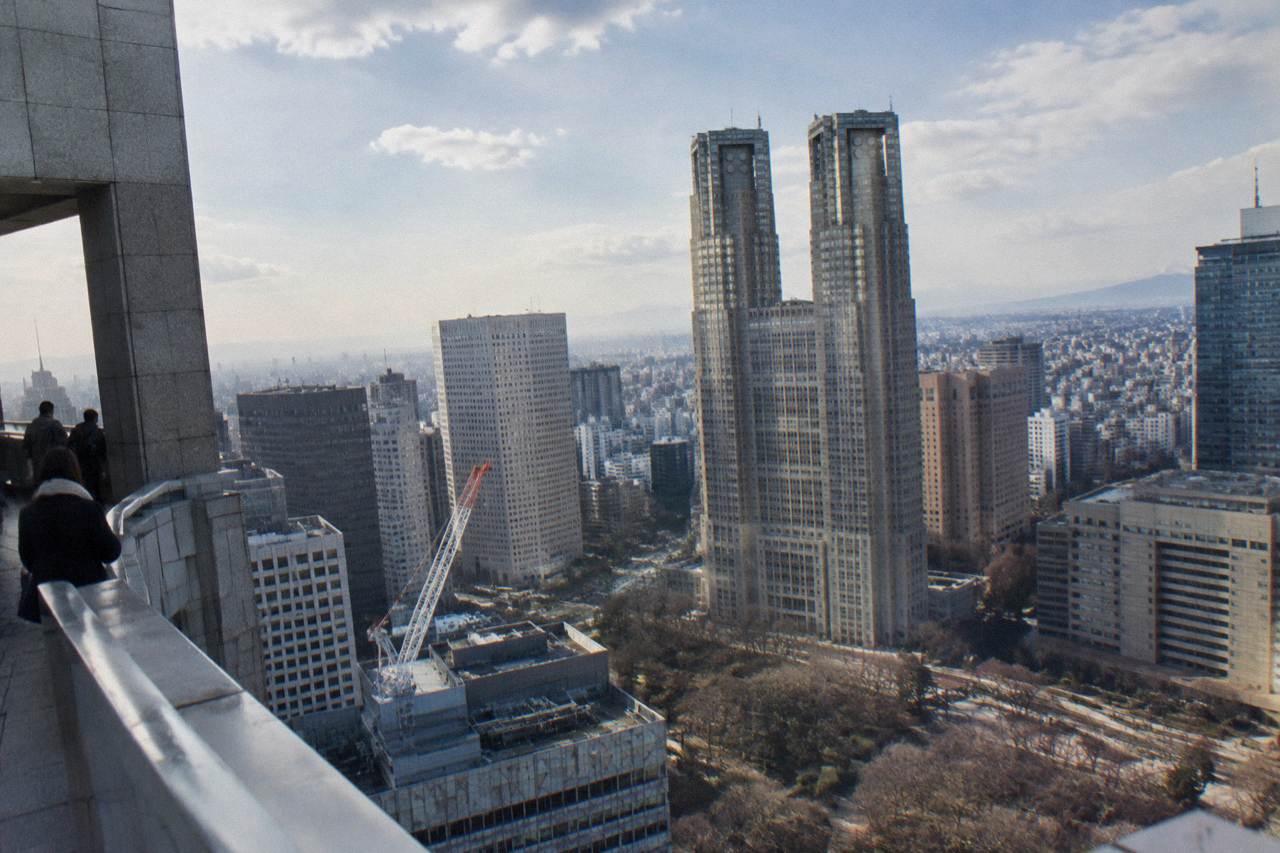
Yes. Both observatories in the Tokyo Metropolitan Government Building are free, at 202 metres, with no reservation taken and no ticket issued. The South Observatory closes the 1st and 3rd Tuesday of the month, the North Observatory the 2nd and 4th Monday, and both close 29 to 31 December and 2 to 3 January. Last entry is 17:00 at the North deck and 21:30 at the South, so the South is the evening option.
This question sits inside the Tokyo free observation decks guide, which covers every free viewpoint in the city.
Quick Facts
| Question | Answer |
|---|---|
| Are both observatories free? | Yes, both, free with no reservation |
| Height | 202 metres |
| South Observatory closed | 1st and 3rd Tuesday of the month |
| North Observatory closed | 2nd and 4th Monday of the month |
| Both closed | 29 to 31 December and 2 to 3 January |
| North deck last entry | 17:00 |
| South deck last entry | 21:30 |
| Operator | Tokyo Metropolitan Government |
Is The Tokyo Metropolitan Government Building Observation Deck Free?
Yes, the observation decks in the Tokyo Metropolitan Government Building are free, both of them, at 202 metres, with no reservation and no ticket of any kind. The Tokyo Metropolitan Government, which runs the building, states this on its own official page. The only costs inside are optional: food, drinks and souvenirs at deck level.
That answer surprises people who have priced the ticketed decks first. Tokyo Tower's Main Deck starts from JPY 1,500 for an adult, Tokyo Skytree's observation tickets start from JPY 3,000 with dynamic pricing, and Shibuya Sky is ticketed as well. The Tokyo Metropolitan Government Building charges nothing for the same basic experience: a sealed indoor floor at 202 metres with floor-to-ceiling glass on the Shinjuku side of the city. The official page for the observatories, on the Tokyo Metropolitan Government's own domain at zaimu.metro.tokyo.lg.jp, is the source for every opening detail on this page.
There are two decks, not one, and they sit in the building's twin towers. This matters because they close on different days. A visitor who arrives on a third Tuesday expecting a closed building is making the commonest planning mistake here: only the South deck shuts that day, and the North deck is normally running. The reverse applies on a second or fourth Monday. The building does not close as a pair, and writing it off on those days wastes a free view.
| Place | Free Or Ticketed | What Is Free | What You Still Pay For |
|---|---|---|---|
| Tokyo Metropolitan Government Building Observatories | Free | Free observatories at 202 metres, no reservation. South Observatory 9:30 to 21:30 entry; North Observatory 9:30 to 17:00 entry. | Nothing to pay. Shops and cafe inside are separate. Tripods are not allowed. |
The word "free" here needs one guard: it covers the observatories, not everything in the building. The towers also house offices, an assembly hall and tourist information counters, and the decks themselves have paid cafés and shops. Nothing in the free regime extends to those. The rest of this page separates the two halves carefully, because mixing them is how the mistake gets made on other sites that call the whole building free.
If you want the view without spending anything at all, this is the most straightforward free viewpoint in central Tokyo to plan around. You arrive, you go up, you look. For the wider picture of every free deck in the city, including how this one compares with the alternatives, the guide to free observation decks in Tokyo covers them all.
What Does The Free Part Include?
The free part includes entry to either observatory, the full 202-metre viewing floor, the window space on all open sides, and the freedom to stay as long as the deck's opening hours allow. There is no separate paid tier inside the observatory, no upsell at the top and no minimum spend. What the free entry does not include is food, drinks and shopping, which are sold commercially on the deck.
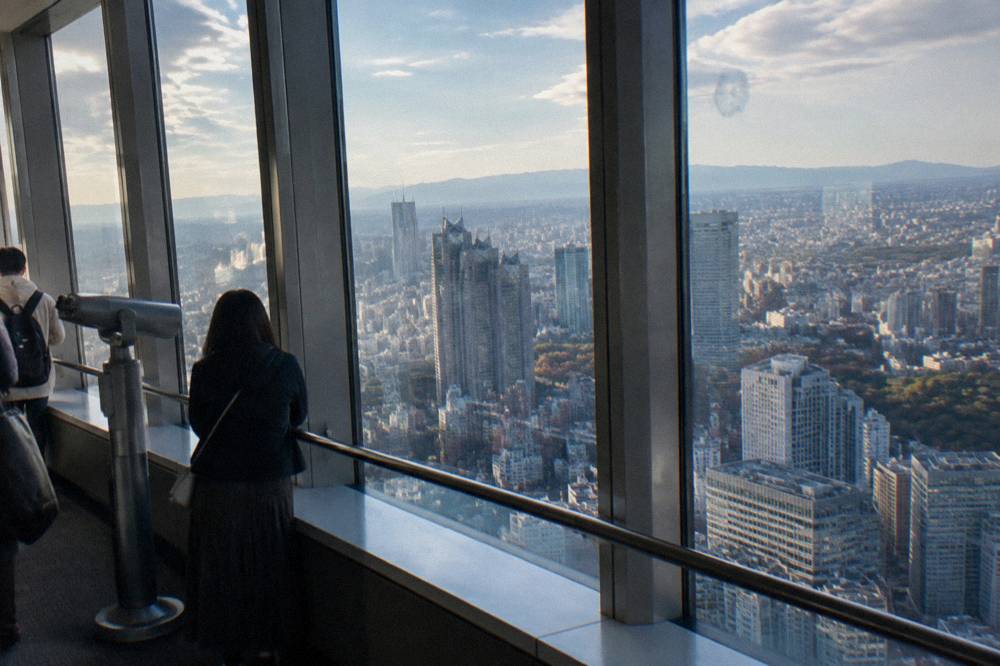
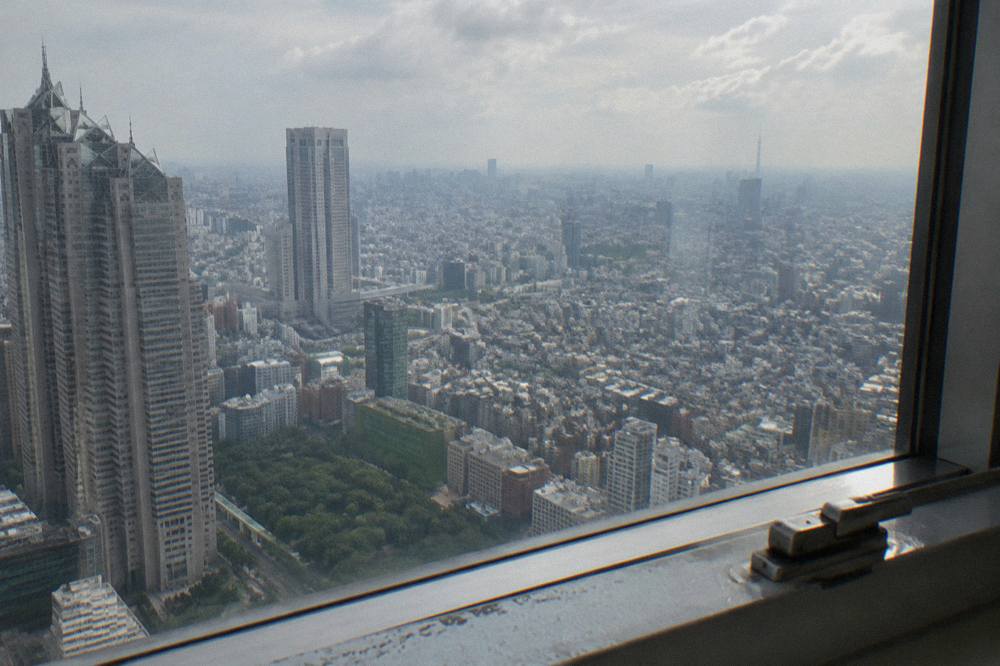
Both decks are indoor spaces, which is worth knowing before you plan a winter visit: the glass is sealed, and the view does not depend on the weather being kind to an open rooftop. From 202 metres the sightline takes in the Shinjuku high-rise cluster directly, and on clear conditions the skyline opens much further out. The building sits in Nishi-Shinjuku, and the towers' design puts the decks above the surrounding office blocks rather than among them.
The free regime is unusually clean compared with the paid towers. At Tokyo Tower, the base area and Foot Town are walkable without a ticket while the Main Deck starts from JPY 1,500. At Tokyo Skytree, the Solamachi shopping complex and the tower base are free to walk while the decks start from JPY 3,000. The Tokyo Metropolitan Government Building has no such split inside its observatory: the viewing floor itself is the free thing, in full, with nothing withheld behind a second pay point.
| Viewpoint | Free part | Paid part |
|---|---|---|
| TMG observatories | Whole viewing floor, both decks | Cafés and shops on the deck |
| Tokyo Tower | Base and Foot Town | Main Deck from JPY 1,500 adult |
| Tokyo Skytree | Tower base and Solamachi | Decks from JPY 3,000 adult |
| Shibuya Crossing | The crossing itself | Shibuya Sky, ticketed |
One more inclusion deserves a line: the tourist information function. The building carries visitor information counters, and asking a question there costs nothing either. Between the free deck, the free information and the free building access, a visit here can genuinely run at zero yen end to end, provided you resist the café. That combination is rare enough in Tokyo's viewpoint list to be worth planning a day around, and it is why the question of cost, which sounds trivial, actually has a clean yes attached to it.
What Do You Still Have To Pay For?
You pay for food, drinks and souvenirs on the observatory floors, and for anything in the building's commercial spaces beyond the decks. No ticket, no entry fee and no reservation charge exists for the observatories themselves. If a site tries to sell you admission to these decks, it is selling something that is free.
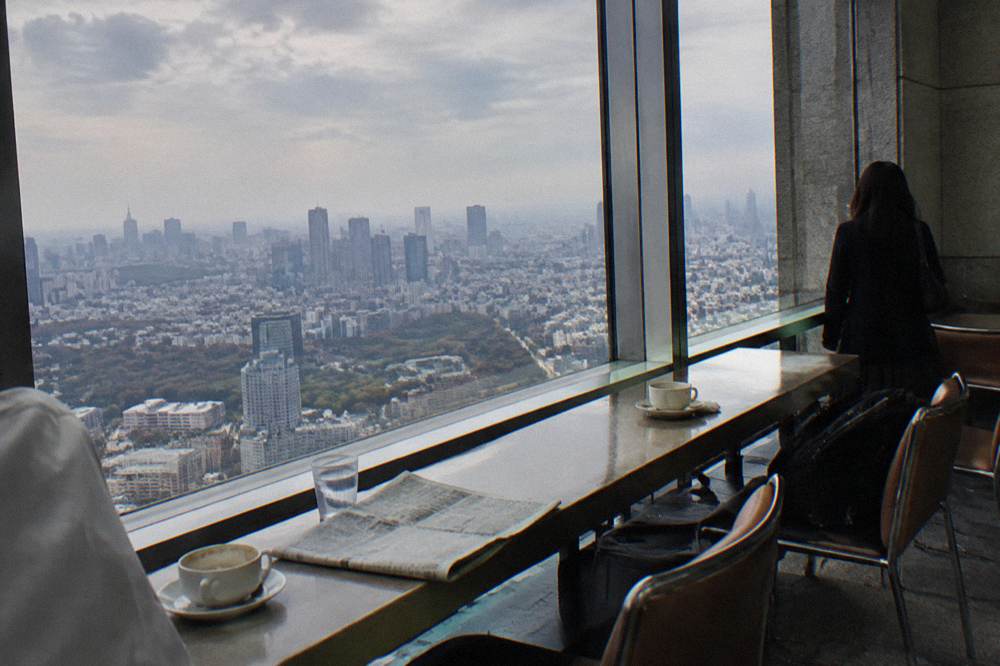
The deck cafés are ordinary commercial concessions. Buying a coffee is optional, bringing nothing and simply standing at the glass is entirely normal, and there is no posted minimum or expectation of purchase. The same applies to the souvenir counters, which sell the usual Tokyo-branded goods at ordinary gift-shop prices. None of it is bundled with entry, because entry does not exist as a product.
The sharper warning concerns resellers. This city has a pattern of third-party sites selling "tickets" to free attractions, and the Imperial Palace has an entire blocklisted domain doing exactly that for its free gardens. If you ever see a paid admission product for the Tokyo Metropolitan Government observatories, treat it the same way: the Tokyo Metropolitan Government's own page issues no ticket and takes no booking, so nothing legitimate stands between you and the elevator.
“Jessica was our tour guide and she did a great job. Thank for showing us a gem view that is yet not so crowded, quite an interesting tour. Thank you!”
Maria, GuruWalk review of Secret Backstreets, 1h 30m
Beyond the building, the surrounding spend is a matter of choice. Shinjuku's nearby paid attraction is Shinjuku Gyoen, which charges adults JPY 500 and closes Mondays outside its special autumn period. Rikugien, at JPY 300, is a separate trip in Bunkyo. Golden Gai's lanes are free to walk while many of its tiny bars charge a cover or a minimum. None of that touches the observatory bill, but a day built around the free view can quietly accumulate paid stops unless each one is chosen deliberately.
For anyone pairing the deck with a guided walk, the walking options on this site are all free, pay what you want, reserved on GuruWalk or freetour.com. That includes the featured Asakusa Classic English Walk, rated 4.91 out of 5 across 671 GuruWalk reviews, a two-hour English walk meeting at the Asakusa Culture Tourist Information Center. No money figure attaches to any of these walks; free, pay what you want is the price.
When Is The Free Option Available?
Each deck closes on its own rotating weekday: the South Observatory closes the 1st and 3rd Tuesday of the month, the North Observatory the 2nd and 4th Monday, and both close on 29 to 31 December and 2 to 3 January. Both decks are free with no reservation. Entry to the South deck stops at 21:30, making it the evening option; the North deck takes its last entries at 17:00 and is daytime only.
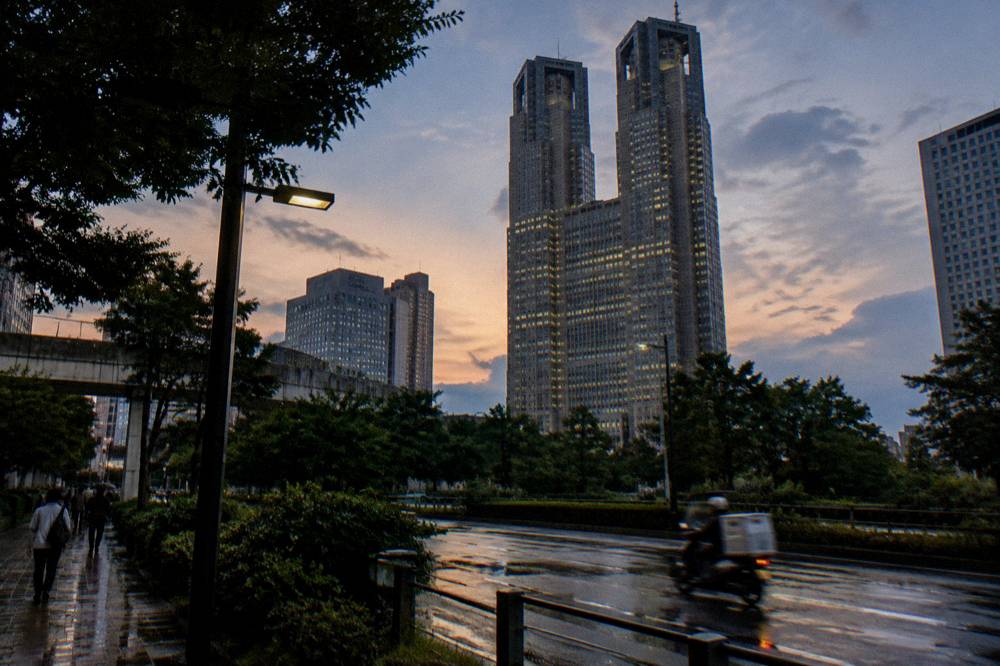
The two closure patterns are the whole trick to planning a visit. Count the Tuesdays in your travel month: the first and third shut the South deck, the second and fourth leave it open. Then count the Mondays: the second and fourth shut the North deck. On most days of most months, both decks run, and on a closure day for one, the other is normally the fallback. The only dates that take both decks out together are the year-end closures, 29 to 31 December and 2 to 3 January.
The two decks keep different hours. North Observatory entry runs to 17:00, so that side is a daytime stop only; South Observatory entry runs to 21:30, which makes it the one for after dark. Both are free with no reservation. Arrive past the North cut-off and the elevator is done for the day, however bright the evening looks. Plan the North deck for the afternoon, save the South deck for the evening, or let the night go to something that runs late, such as the free neon of Shibuya Crossing or the lanes of Golden Gai.
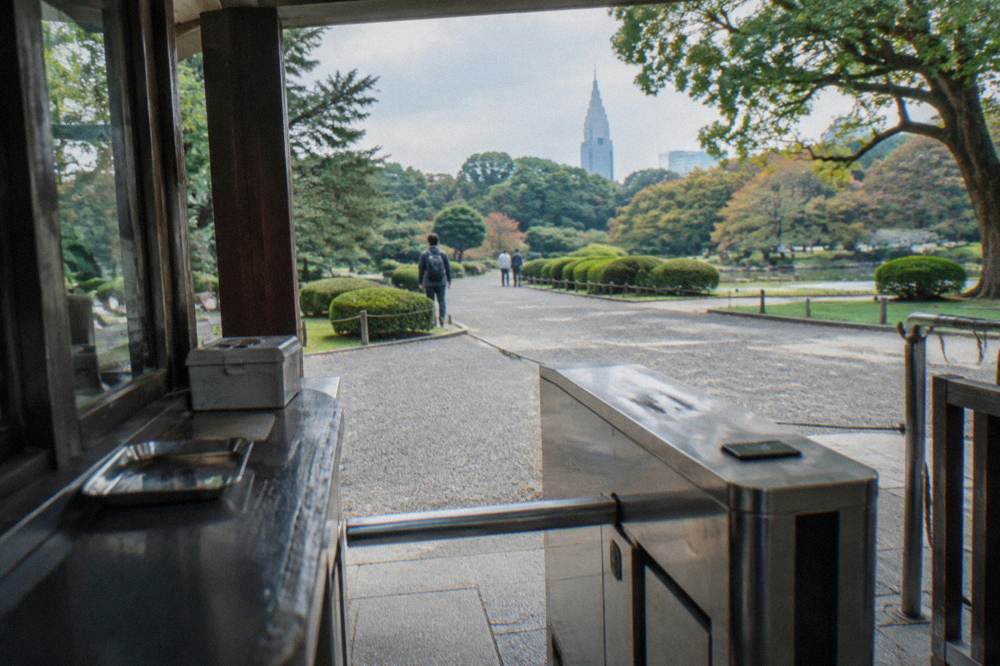
Seasonal context for a November or December visit: the building's Shinjuku setting lines up with a set of dated free events elsewhere in the city. The Marunouchi Illumination runs 12 November to 25 December 2026 along Naka-dori, free to view from the street, and the Tori-no-ichi festival at Otori Shrine holds its second 2026 day on 19 November, with entry not ticketed. Rikugien's night viewing from 25 November to 6 December 2026 is paid. A free-deck afternoon slots naturally ahead of any of these, since none of them needs a booking either.
| Deck | Closed | Notes |
|---|---|---|
| South Observatory | 1st and 3rd Tuesday monthly | Free, no reservation |
| North Observatory | 2nd and 4th Monday monthly | Last entry 17:00 |
| Both decks | 29 to 31 Dec, 2 to 3 Jan | Year-end closure |
The takeaway is that "when" reduces to checking two weekdays against your dates and avoiding the year-end window. Nothing else gates access. There is no capacity booking, no timed slot and no seasonal surcharge, because there is no charge to surcharge.
Where Does The Free Visit Start?
The free visit starts inside the Tokyo Metropolitan Government Building in Nishi-Shinjuku, entering as a member of the public and heading to the observatory access point for the deck that is open that day. The building is a working government office, so the entry process is building security, not ticketing. No meeting point, voucher or confirmation exists because nothing has been booked.
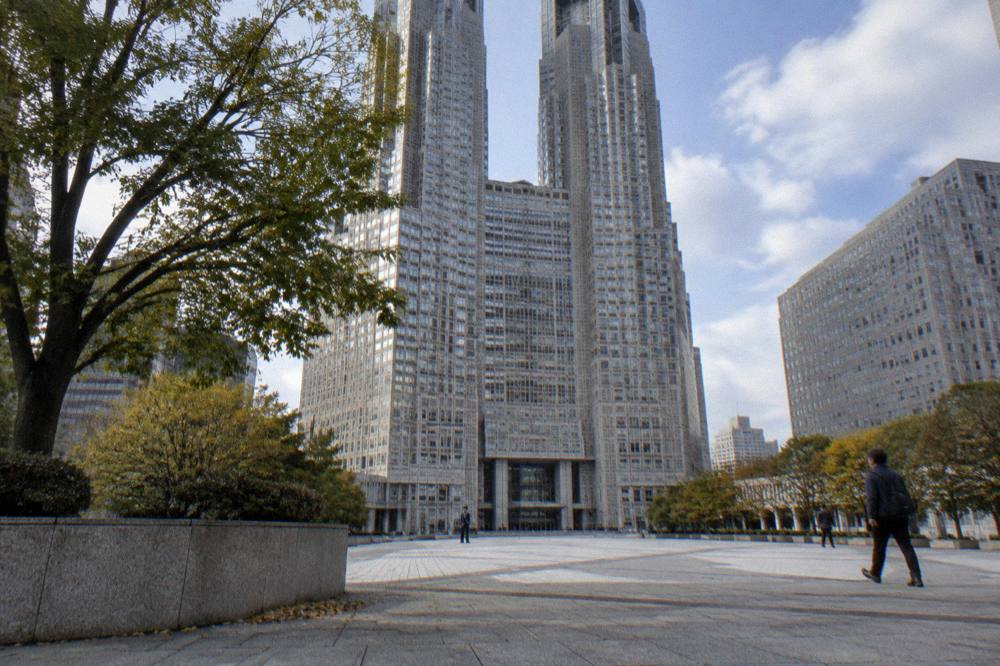
The address-level reality is simple: the complex sits in Nishi-Shinjuku, and the towers are the tallest things in the immediate government quarter. The official page names the access arrangements for each deck, and it is the right thing to check before setting out, since the page also carries the current closure calendar.
Contrast this with how the paid decks handle arrivals. Tokyo Tower and Tokyo Skytree run ticketed decks with dynamic or tiered pricing, and Shibuya Sky is ticketed too, a question covered in full in is Shibuya Sky free?. The government building has none of that apparatus, because a free deck with no reservation has nothing to process. The trade is that you cannot guarantee yourself a slot, you simply turn up within opening hours.
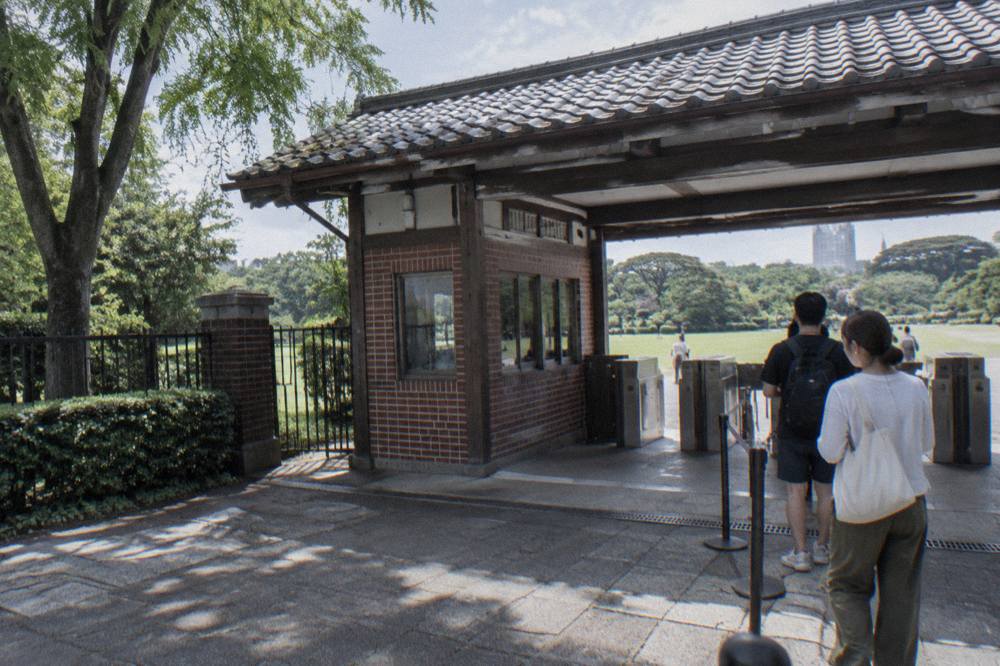
The same logic applies to the free walking tours on this site, which is why they pair well with the deck. Every walk on Free Things To Do In Tokyo is free, pay what you want, reserved on its platform, and each has a stated meeting point you travel to independently. The 18-Plus Night Walk, Kabukicho, a walk for adults, meets at the Tokyo Metropolitan Government Building itself, rated 4.89 out of 5 across 2,714 GuruWalk reviews, which makes it the one guided option that starts at this exact address, before moving off into the Shinjuku night.
Practically, the deck visit is a self-guided stop, and the walks are guided stops, and the two kinds of free sit happily in one day. Do the deck under your own steam in the afternoon, meet a walk at its stated point in the evening, and the day's fixed cost stays at zero.
Which Free Walking Tours Cover This?
Several free walking tours cover this, and free here means tip-based, so you pay your guide whatever you think the experience deserved at the end. These walks are led by local guides who bring history and stories to the neighbourhoods around the building. The adults-only Kabukicho night walk starts at the building plaza itself. Confirm each walk's meeting point and schedule on its GuruWalk page before arriving.
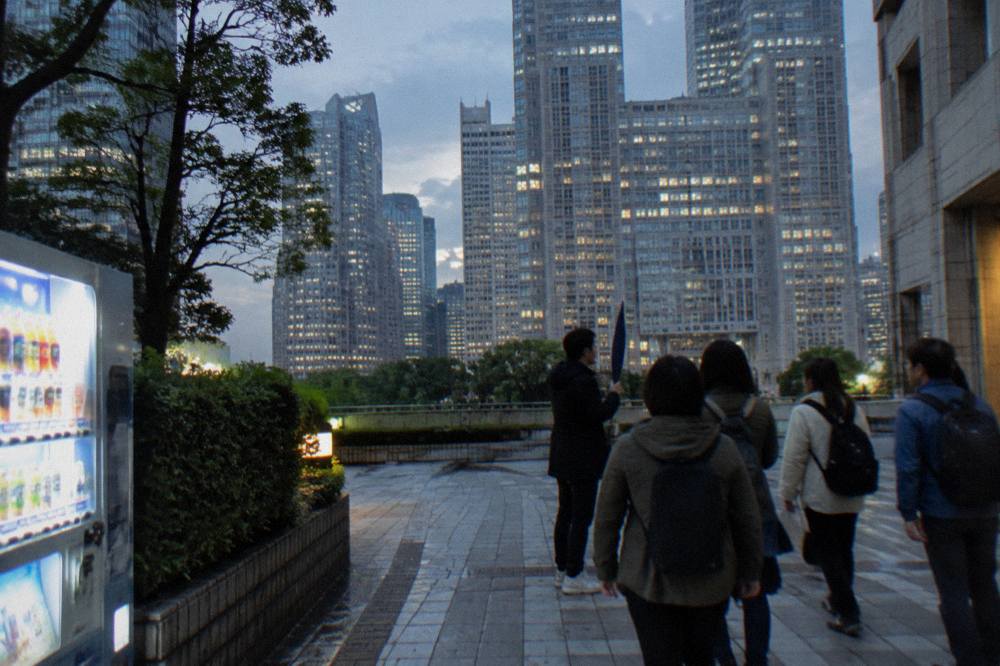
Start with the one that shares the address. The 18-Plus Night Walk, Kabukicho, run by Japan Navigators on GuruWalk, is for adults and meets at the Tokyo Metropolitan Government Building, then runs two hours in English and Spanish, rated 4.89 out of 5 across 2,714 GuruWalk reviews, the largest review pool on this site's roster of 46 walks.
The rest of the matched ground spreads across four districts. In Shinjuku, the Secret Backstreets walk, 1 hour 30 minutes, meets at Shinjuku Station, East Exit, rated 4.73 out of 5 across 612 GuruWalk reviews, and the Dark Side Night Walk meets at McDonalds, Seibu Shinjuku, rated 4.83 out of 5 across 352 GuruWalk reviews. In Shibuya and Harajuku, the Bilingual Shibuya And Harajuku walk meets at the Hachiko Statue, Shibuya Station, rated 4.88 out of 5 across 1,470 GuruWalk reviews. In the Imperial Palace district, the Palace Storytelling Walk meets at Imperial Palace, Kokyogaien, rated 4.85 out of 5 across 901 GuruWalk reviews.
| Walk | Platform | Meets at | Rating |
|---|---|---|---|
| 18-Plus Night Walk, Kabukicho | GuruWalk | Tokyo Metropolitan Government Building | 4.89 out of 5, 2,714 reviews |
| Secret Backstreets, 1h 30m | GuruWalk | Shinjuku Station, East Exit | 4.73 out of 5, 612 reviews |
| Bilingual Shibuya And Harajuku | GuruWalk | Hachiko Statue, Shibuya Station | 4.88 out of 5, 1,470 reviews |
| Palace Storytelling Walk | GuruWalk | Imperial Palace, Kokyogaien | 4.85 out of 5, 901 reviews |
| Asakusa Classic English Walk | GuruWalk | Asakusa Culture Tourist Information Center | 4.91 out of 5, 671 reviews |
The Asakusa side of the roster earns its place in this article as the featured pairing. The Asakusa Classic English Walk, by Localized Walking Tours on GuruWalk, runs two hours in English, meets at the Asakusa Culture Tourist Information Center, and carries 4.91 out of 5 across 671 GuruWalk reviews. It pairs naturally with a deck visit because Asakusa's Senso-ji precinct is itself free to enter, so the whole day, viewpoint included, can run without a ticket anywhere.
A second Asakusa option deepens the same idea. The Asakusa Old Town, English walk, by Tokyo Genki Tours on GuruWalk, also runs two hours in English and meets at Kaminarimon Gate, rated 4.78 out of 5 across 767 GuruWalk reviews. Between the two, the choice comes down to guide and meeting point, since both cover the same neighbourhood in the same language at the same duration and the same price, which is to say free, pay what you want.
Mistakes That Trip People Up At The TMG Observatories
The four mistakes are assuming both decks close together, arriving after the 17:00 North deck last entry, treating the free decks as proof that other towers are free, and buying admission from a reseller for a deck that charges nothing. Each one is avoidable with a single fact: the official page on the Tokyo Metropolitan Government's own domain carries the closure calendar, and it issues no ticket.
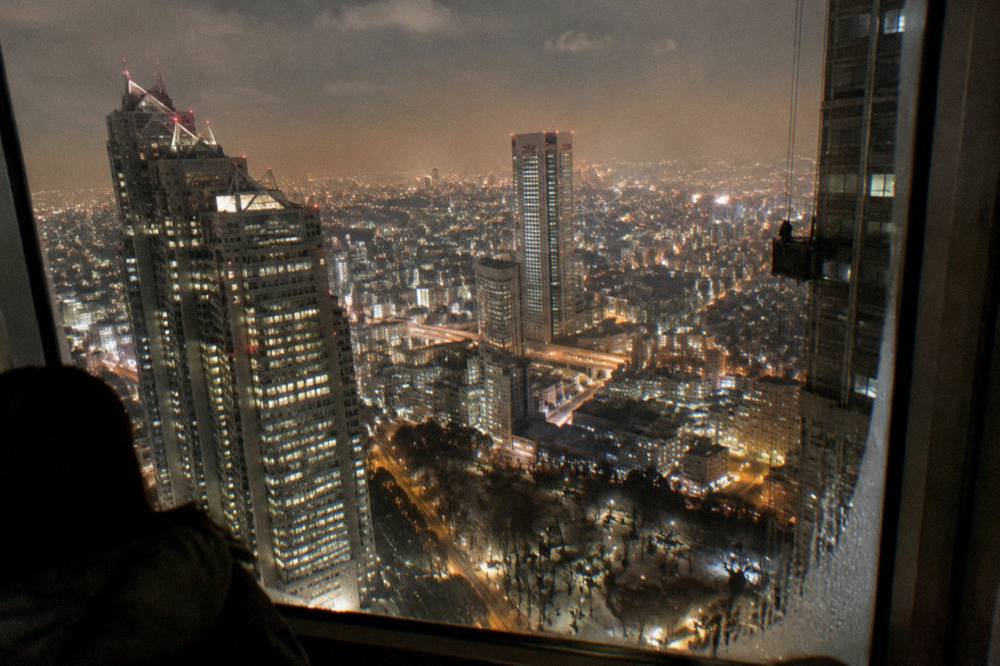
The paired-closure mistake is the commonest. Visitors read "closed Tuesday" somewhere and write off the building on a second Tuesday, when only the South deck shuts that day and the North deck is running. The official pattern is specific: South closes the 1st and 3rd Tuesday, North the 2nd and 4th Monday. Neither closure takes out the building, and on a day when one deck is shut, the correct move is the other deck, not a paid tower.
The second mistake is timing. Entry to the North deck stops at 17:00, so an after-dinner plan does not work there. The South deck is the evening option, taking entries until 21:30 on the days it is open. The third mistake is contagion by association: because this deck is free, people assume Shibuya Sky or the Skytree decks must be too. They are not. Shibuya Sky is ticketed, and Skytree's decks start from JPY 3,000, even though its base and the Solamachi complex are free to walk, a split covered fully in is Tokyo Skytree free?.
The fourth mistake is the reseller trap. If a booking page offers paid TMG observatory admission, it is selling a free thing, the same pattern that produced a blocklisted fake ticket site for the free Imperial Palace East Gardens. The genuine source is the Tokyo Metropolitan Government's own page at zaimu.metro.tokyo.lg.jp, and it takes no money and no booking. A day built on the real facts, both decks free, closures known in advance, last entry respected, costs exactly nothing at the viewpoint and leaves the budget for the parts of Tokyo that do charge.
Common Questions On This Topic
Is The Tokyo Metropolitan Government Building Observation Deck Free?
Yes. Both observatories at 202 metres are free, with no reservation taken and no ticket issued. The South deck closes the 1st and 3rd Tuesday of the month, the North deck the 2nd and 4th Monday, and both close 29 to 31 December and 2 to 3 January. Only the cafés and shops on the deck cost money.
Do You Need A Reservation For The TMG Observatory?
No. No reservation system exists for either deck, and entry is not ticketed. You arrive within opening hours and go up. Entry to the North deck stops at 17:00 and to the South deck at 21:30, so an evening visit means the South side.
Which Deck Should You Visit If One Is Closed?
Visit the other one. The decks close on different rotating weekdays: South on the 1st and 3rd Tuesday, North on the 2nd and 4th Monday. Only the year-end dates, 29 to 31 December and 2 to 3 January, close both together, so on almost any day at least one free deck is open.
Is The TMG Deck Better Than Tokyo Tower Or Skytree?
Different, and free. Both TMG decks sit at 202 metres indoors at no charge. Tokyo Tower's Main Deck starts from JPY 1,500 adult and Skytree's decks from JPY 3,000, though both towers' bases are walkable free. The paid decks are taller, but the free view here is the city's best zero-cost one.
Can You Visit The TMG Observatory At Night?
Yes, at the South Observatory. Its last entry is 21:30, and it closes on the 1st and 3rd Tuesday of the month. The North Observatory stops entry at 17:00 and closes on the 2nd and 4th Monday, so plan that deck for daytime or late afternoon. Both are free with no reservation. For evening atmosphere, the free alternatives include Shibuya Crossing and the Golden Gai lanes, where walking is free though many bars charge covers.
Are There Free Walking Tours That Start Near The TMG Building?
Yes. The 18-Plus Night Walk, Kabukicho, a walk for adults, meets at the Tokyo Metropolitan Government Building itself on GuruWalk, rated 4.89 out of 5 across 2,714 GuruWalk reviews. Other Shinjuku walks meet at Shinjuku Station, East Exit and Seibu Shinjuku. All are free, pay what you want.