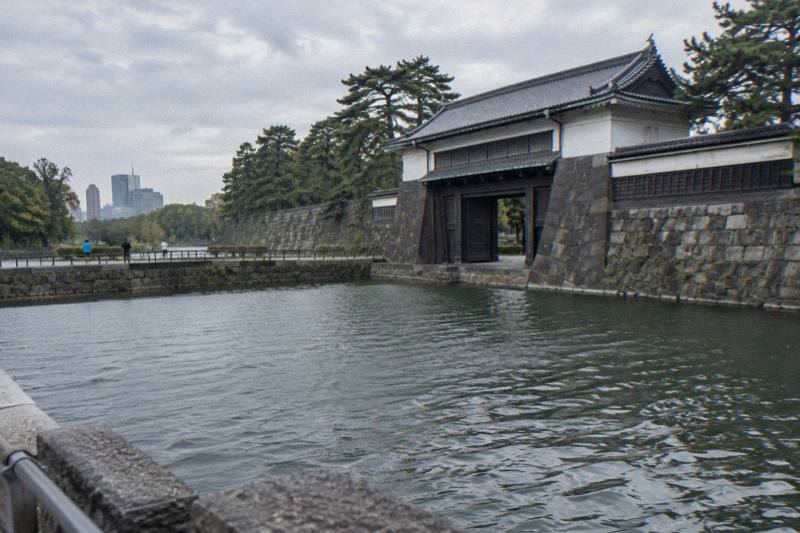
Is Yasukuni Shrine Free To Visit?
Yes, the Yasukuni Shrine precinct is free to enter and open daily. Here is exactly what is free, what costs money, and how the hours work.
In Short
Yes, the Yasukuni Shrine precinct is free to visit, with no ticket and no reservation. It is open from 6:00 to 17:00 in November, December, January and February. The paid part is separate: the Yushukan museum on the shrine grounds charges JPY 1,000 for adults. You can walk the entire precinct, torii, main hall and grounds, without paying anything.
This question sits inside the Free Vs Paid Tokyo Sights guide.
Quick Facts
| Question | Answer |
|---|---|
| Is the shrine precinct free? | Yes, free to enter, no ticket |
| Is there a paid part? | Yes, the Yushukan museum, JPY 1,000 adult |
| Opening hours | 6:00 to 17:00 in November through February |
| Closed days for the precinct | None stated on the official page |
| Do you need a reservation? | No reservation for the precinct |
| Is there a free guided walk here? | No walk on this site's roster meets at Yasukuni |
Is Yasukuni Shrine Free To Visit?
Yes, Yasukuni Shrine is free to visit. The shrine precinct, the torii, the approach, the main hall and the surrounding grounds carry no entry charge, no ticket desk and no reservation requirement. The one paid component inside the same grounds is the Yushukan museum, which charges adults JPY 1,000. Free and paid sit side by side here, and knowing which is which is the whole practical question.
Yasukuni is a Shinto shrine in central Tokyo, and like the other major shrines covered on this site it follows the standard pattern: the precinct itself is the free part. The official shrine page states the grounds and main hall are open to visitors, and the hours are published plainly: 6:00 to 17:00 for the months of November, December, January and February. There is no gate, no ticket machine and no staffed checkpoint between the street and the main hall. You walk in the way you would walk into Meiji Jingu or Senso-ji, and the comparison is useful. This site's reporting on Meiji Jingu's own page and Senso-ji's official site shows the same free-precinct structure at both, though each pairs it with different paid extras.
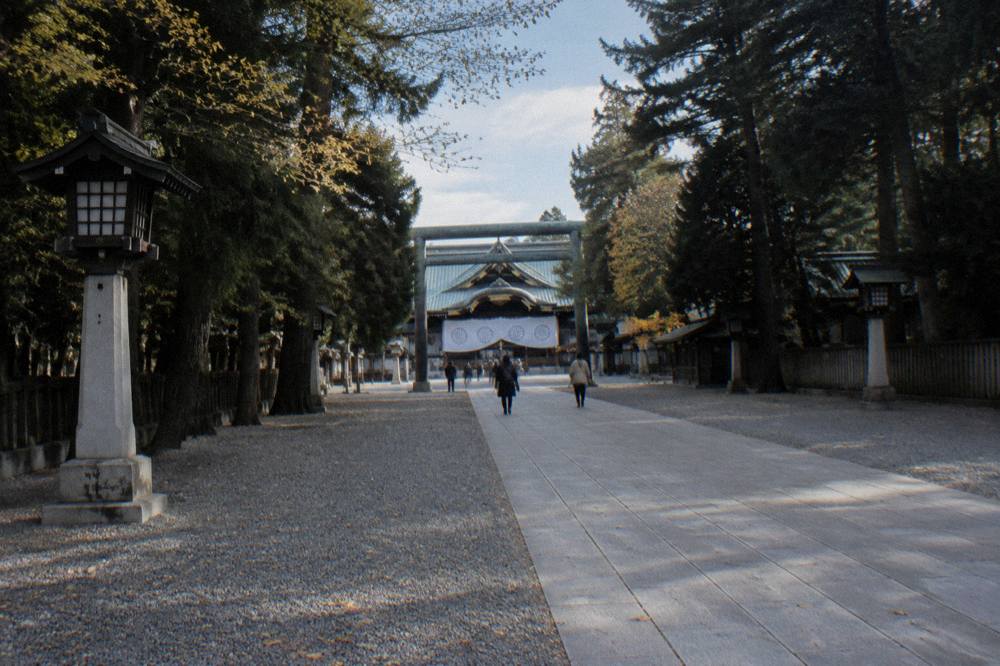
The distinction that matters is between the shrine and the museum. The shrine is a place of worship; the Yushukan is a museum building standing on the shrine grounds. The precinct's free status never transfers to the museum, and the museum's ticket never buys anything extra in the precinct. Budget accordingly: a visit that stays outdoors costs nothing, and a visit that adds the museum costs JPY 1,000 per adult.
It is also worth saying what this shrine is, briefly, because people arrive with different expectations. Yasukuni is a memorial shrine, and it is a place whose history and politics are discussed widely. Nothing about that discussion changes the practical answer to this question. The precinct is free, the hours are published, and the museum on the grounds has a ticket. The rest of this page sticks to those mechanics, in the same reporting voice this site uses for every attraction it covers.
One more framing note. This page is part of Free Things To Do In Tokyo, a site built around one question per page: is this thing free, and if only part of it is free, which part. If you want the broader picture of what costs nothing across the city, the parent guide carries it.
What Does The Free Part Include?
The free part is the entire outdoor shrine precinct: the torii gates along the approach, the stone-paved walk in, the main hall where worship takes place, the grounds with their trees and monuments, and the open plaza areas. All of it is walkable without a ticket, from opening at 6:00 to closing at 17:00 in the winter months. Photography from the public areas carries no charge, and there is no timed entry.
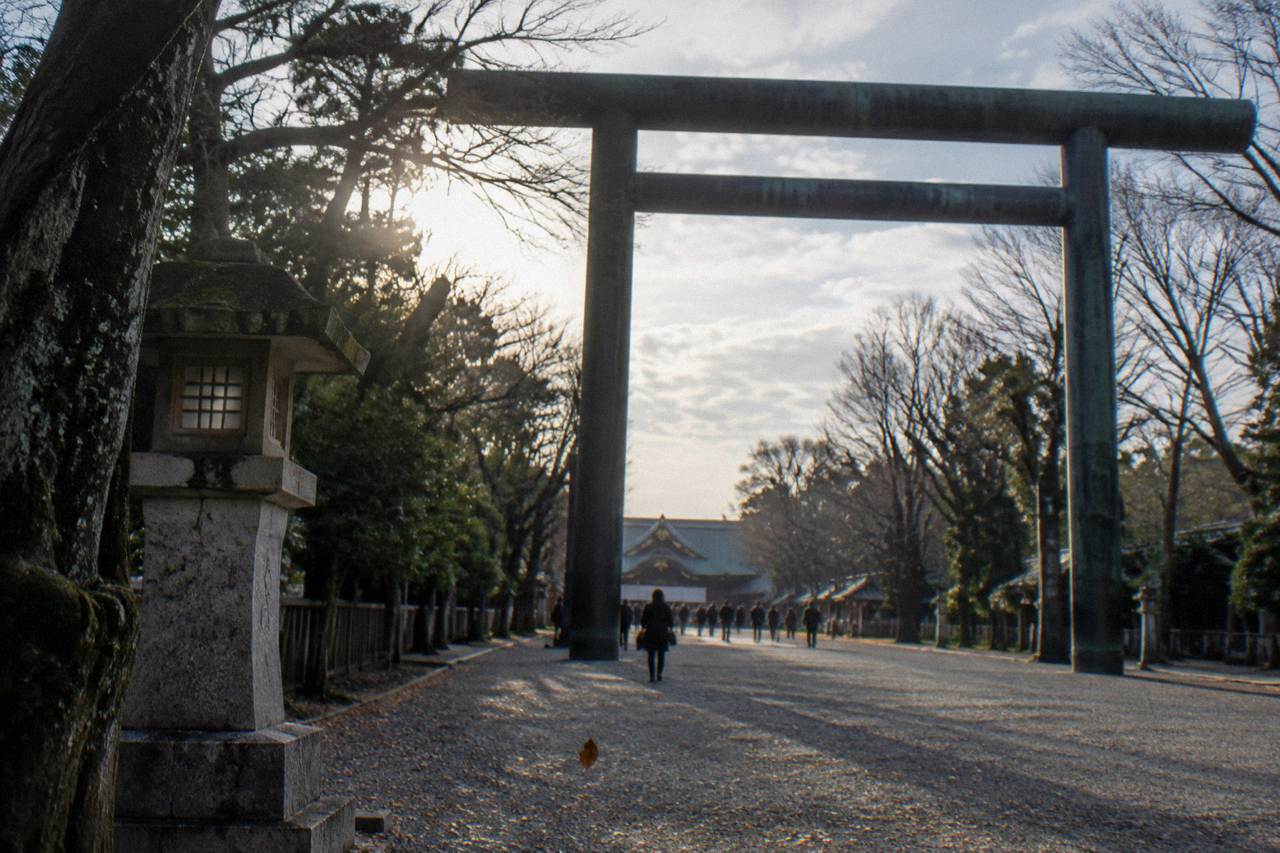
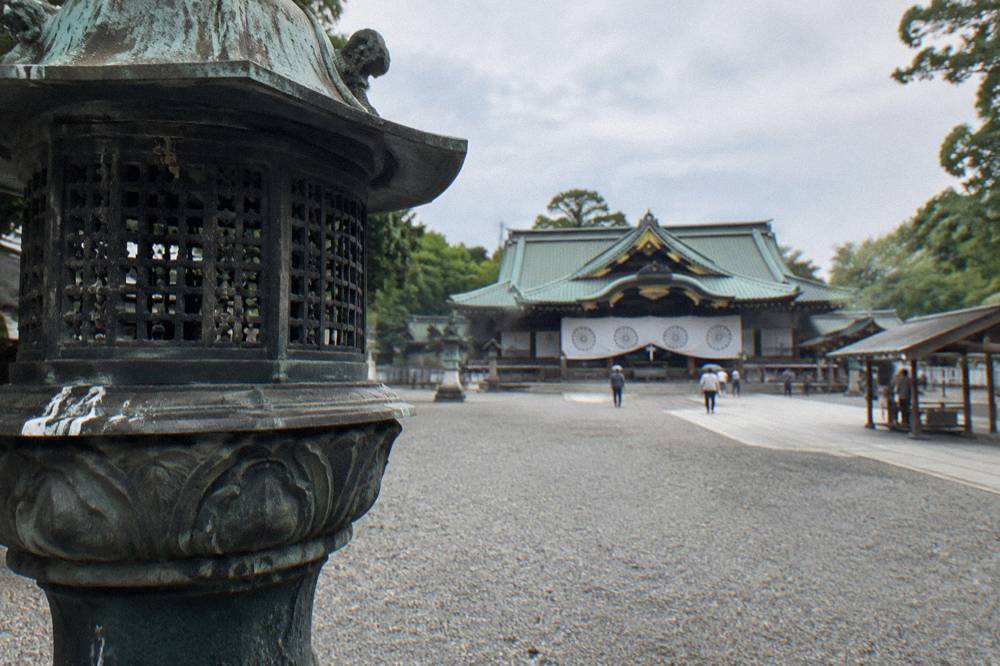
Walk the sequence as it comes. The approach begins under the first great torii, the largest of its kind on the approach, and the path runs straight toward the main hall. Along it sit the stone monuments and the bronze lanterns that line a shrine of this scale. The main hall itself faces an open courtyard; visitors stand in the courtyard, and the hall's inner space is the shrine's own working area, exactly as at other Shinto shrines. None of this is ticketed. The precinct is, in the plainest sense, a public worship ground.
What the free visit gives you is time and quiet. At 6:00 the grounds open, and the published winter hours run to 17:00, so a free visit can be long or short as you like. There is no last-entry rule stated for the precinct on the official page, unlike the Imperial Palace East Gardens, where winter entry stops at 15:30. The comparison is worth holding in mind: free does not mean unregulated, but at Yasukuni the only stated regulation on the precinct is the closing hour.
| Part of the visit | Free or paid | Notes |
|---|---|---|
| Torii gates and approach | Free | Open during precinct hours |
| Main hall courtyard | Free | Worship space, open to visitors |
| Shrine grounds and monuments | Free | Whole outdoor area |
| Yushukan museum | Paid | JPY 1,000 adult |
| Precinct entry reservation | Not needed | No booking system |
The shrine's role as a memorial means the grounds themselves, the approach and the architecture are the sight. A visitor who spends an hour in the precinct and skips the museum has still had the complete free visit. This is the same split this site reports at Zojo-ji, where the grounds and main hall are free and only the Treasures Gallery at JPY 700 is paid, and at Meiji Jingu, where the forest precinct is free while the Inner Garden at JPY 500 and the museum at JPY 1,000 are separate tickets.
What Do You Still Have To Pay For?
The one paid attraction inside Yasukuni Shrine is the Yushukan, the museum on the shrine grounds, at JPY 1,000 for adults. Nothing else in the precinct charges. If you also want omamori charms, ema plaques or offerings, those are shrine-goods purchases you make at the shrine office, not entry fees, and what you pay is simply the cost of the item you take with you.
The Yushukan is a large museum building within the precinct, and it is the reason some visitors' budgets move. At JPY 1,000 per adult it costs the same as the Tokyo National Museum's adult ticket and the same as the Meiji Jingu Museum. The official Yasukuni page publishes the fee and the museum's own hours, which follow the precinct day. If the museum is your reason for coming, plan on the JPY 1,000; if it is not, you can ignore the building entirely and lose nothing from the free visit.
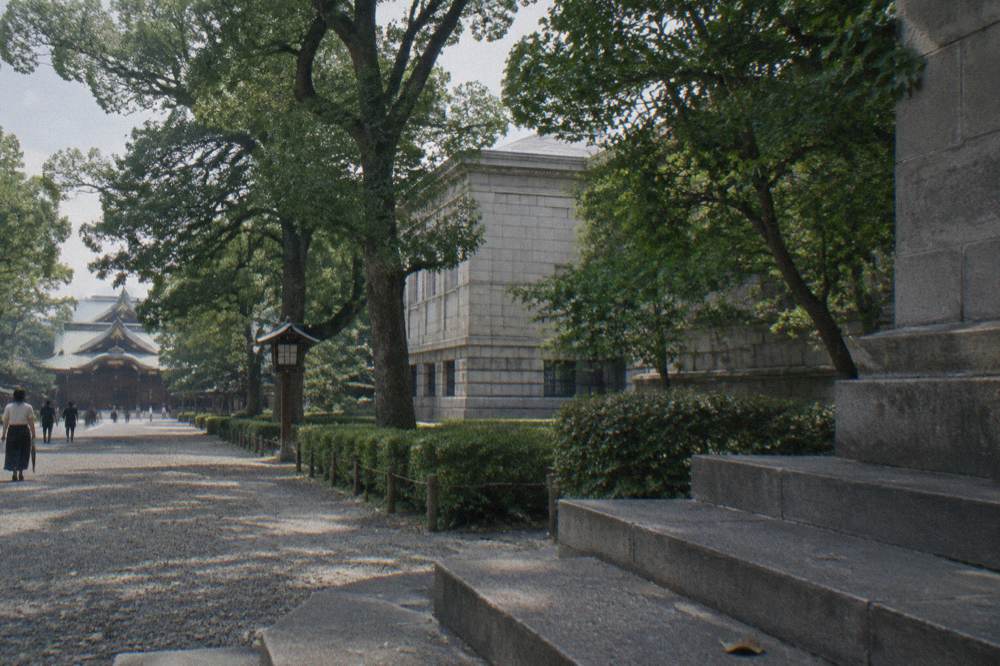
Around the museum question sits the broader free-versus-paid map of central Tokyo, and it helps to see Yasukuni's position in it. The pattern across this city is that shrines give their precincts free and charge for the museum or garden attached, while parks give the hill free and charge for the institution inside. Ueno Park is free while the Tokyo National Museum charges JPY 1,000. Zojo-ji's grounds are free while its Treasures Gallery is JPY 700. Yasukuni fits the pattern exactly.
| Site in central Tokyo | Free part | Paid part |
|---|---|---|
| Yasukuni Shrine | Precinct, main hall, grounds | Yushukan JPY 1,000 |
| Meiji Jingu | Shrine precinct and forest | Inner Garden JPY 500, museum JPY 1,000 |
| Zojo-ji | Grounds and main hall | Treasures Gallery JPY 700 |
| Ueno Park | The park, open at all times | Tokyo National Museum JPY 1,000 |
| Imperial Palace East Gardens | The gardens | None, but closed Mondays and Fridays |
Do not let anyone sell you the free part. The only ticketed thing at Yasukuni is the museum, bought on site, and any third-party website offering timed entry to the shrine precinct itself is selling something that costs nothing. This site's blocklist exists precisely because reseller pages do this around Tokyo's free sights; the Imperial Palace has the same problem, with resellers selling tickets to a free place. Buy nothing in advance for the precinct.
When Is The Free Option Available?
The Yasukuni Shrine precinct is open daily from 6:00 to 17:00 in November, December, January and February, according to the official shrine page. No closed weekdays are stated for the precinct. The Yushukan museum keeps its own hours within the same day, and if you want the museum, check its section of the official page before setting out.
The winter schedule is the one published for the current months, and it is generous: eleven hours a day, every day. Compare that with the free sights nearby that close on weekdays. The Imperial Palace East Gardens are closed every Monday and Friday. The TMG observatories each rotate a closure, South on the first and third Tuesday, North on the second and fourth Monday. Yasukuni's precinct, as published, has no such weekday closure, which makes it one of the more reliable free stops in central Tokyo on a Monday or Friday when the gardens shut.
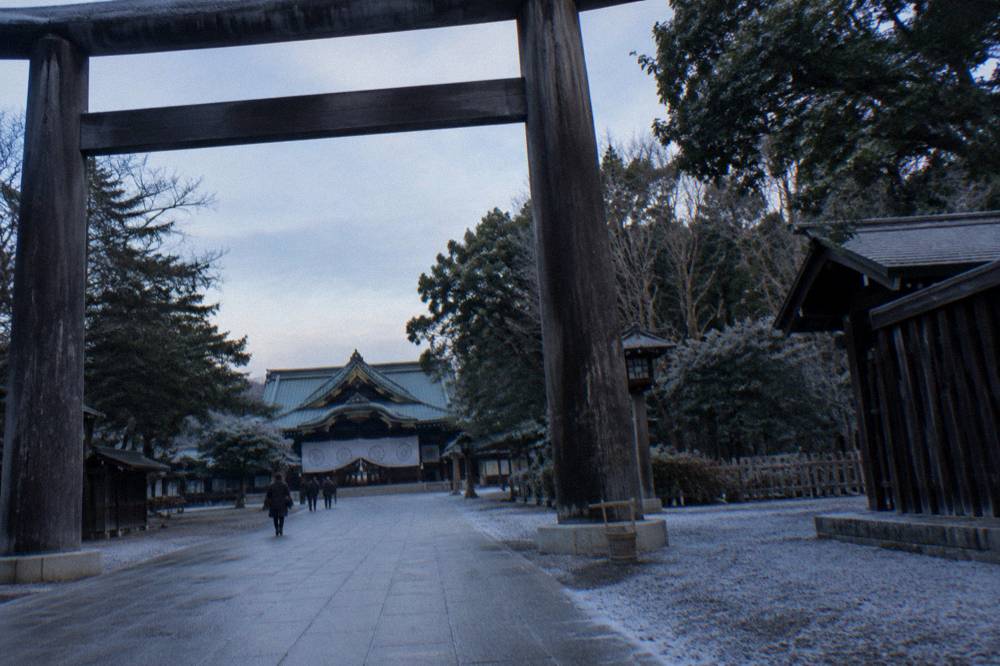
Seasonality changes the hours but not the freedom of entry. The official page publishes a summer schedule with different opening and closing times from the 6:00 to 17:00 winter hours quoted here; the mechanism stays the same, no ticket, no booking, walk in during open hours. If you are visiting outside the November to February window, read the current line on the shrine's own page rather than carrying these hours forward.
The New Year period deserves a specific note because shrine visiting peaks then. The precinct hours above are the published standard; this site's seasonal sweep did not resolve any special New Year schedule for Yasukuni, so the honest instruction is to read the shrine's page if your visit falls in the first days of January. What can be said without qualification is that no ticket regime appears at any time of year.
| Place | Free Or Ticketed | What Is Free | What You Still Pay For |
|---|---|---|---|
| Imperial Palace East Gardens | Free | Admission is free. Open 9:00 to 16:00 from November to the end of February (entry to 15:30); 9:00 to 16:30 in October. | Nothing to pay. Season hours widen to 18:00 in summer. |
| Marunouchi Illumination | Free | Street lights along Marunouchi Naka-dori from 12 November to 25 December 2026 (marunouchi.com). | Viewing from the street has no ticket on the page read; food and shop events are paid. |
Where Does The Free Visit Start?
The free visit starts at the first torii on the shrine's public approach, and there is no gate, checkpoint or ticket desk between the street and the main hall. The precinct opens onto its surrounding streets in central Tokyo, and entry is from opening time, 6:00 in the winter months. No reservation, registration or fee applies at any point on the walk in.
The approach is the visit. You enter under the torii, walk the paved line toward the main hall, and everything on the way, the monuments, the lanterns, the trees, is part of the free ground. There is no separate entrance zone to find and no staffed point where anything is checked. This differs from sights like the National Diet building, where the tour is free but admission requires a reservation made at least 24 hours ahead, or the Imperial Palace guided tour, which is free but needs an application. Yasukuni asks for none of that.
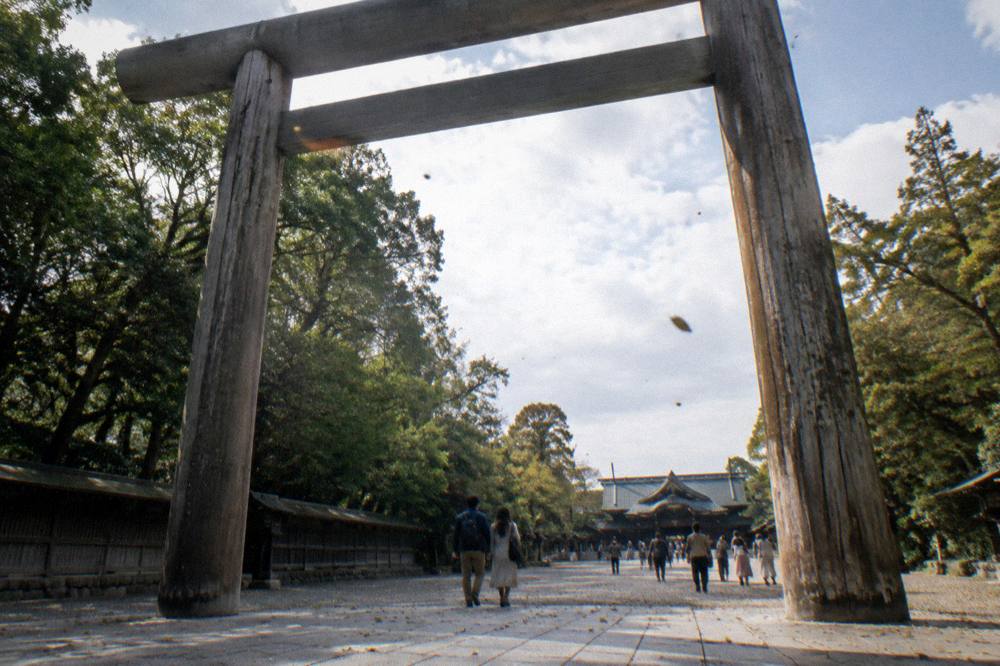
Practically, plan the visit the way you would plan any central Tokyo stop. The shrine sits in the same central band of the city as the Imperial Palace, Tokyo Station and the Marunouchi district, and the free sights there stack well: the Imperial Palace Outer Garden and the Kokyo Gaien plaza are free, Kitanomaru Park is free and open 24 hours, and Hibiya Park is free. A free day in this part of the city needs no budget at all if the museums are skipped.
For depth on the free-sight landscape, the Tokyo On A Budget guide assembles the no-spend itinerary pieces, and the free observation decks guide covers the TMG observatories' rotating closures mentioned above, both free at 202 metres.
Which Free Walking Tours Cover This?
No free walking tour on this site's roster meets at Yasukuni Shrine. The roster of 46 free, pay what you want walks runs on GuruWalk, with one on freetour.com, and the central-Tokyo walks among them meet at the Imperial Palace, Tokyo Station and Marunouchi, not at the shrine. Each walk is listed with its guide, meeting point and neighbourhood; to see where it goes, read the walk's own page on GuruWalk or freetour.com.
| Place | Free Or Ticketed | What Is Free | What You Still Pay For |
|---|---|---|---|
| Yasukuni Shrine | Free on conditions | Shrine precinct open daily 6:00 to 18:00 (6:00 to 17:00 in January, February, November and December), no admission charge. The Yushukan museum is ticketed. | Yushukan museum JPY 1,000 adult, JPY 500 university, JPY 300 high and junior high school, elementary and younger free; 9:00 to 16:30. |
What can be said precisely is which central-Tokyo walks exist and where they start. The Imperial Palace category on the roster includes the Palace Storytelling Walk by 5 STORY, rated 4.85 out of 5 across 901 GuruWalk reviews, meeting at Imperial Palace, Kokyogaien; the Shogun History Walk by Local Guide Stars, 4.65 out of 5 across 295 reviews, at the same meeting point; and the Palace Walk Ending At Tsukiji by Japan Navigators, 4.84 out of 5 across 587 reviews, from Sakuradamon Gate. Each is free, pay what you want, reserved on GuruWalk.
| Walk | Guide | Meets at | Rating on GuruWalk |
|---|---|---|---|
| Palace Storytelling Walk | 5 STORY | Imperial Palace, Kokyogaien | 4.85 out of 5, 901 reviews |
| Palace Walk Ending At Tsukiji | Japan Navigators | Sakuradamon Gate, Imperial Palace | 4.84 out of 5, 587 reviews |
| Shogun History Walk | Local Guide Stars | Imperial Palace, Kokyogaien | 4.65 out of 5, 295 reviews |
| Ginza Luxury And Hidden Alleys | TokyoXplorers | Marunouchi Station Square | 4.75 out of 5, 20 reviews |
The Palace Storytelling Walk is the one to single out if a guided central-Tokyo walk is the goal. Two hours in English, free and pay what you want, from the Imperial Palace meeting point at Kokyogaien, with the largest review pool of any palace walk on GuruWalk. Reserve it on the guide's GuruWalk page.
If a guided walk is what you want around a shrine instead, the roster's strongest shrine-district option is Asakusa. The Asakusa Classic English Walk by Localized Walking Tours is a free, pay what you want GuruWalk listing, rated 4.91 out of 5 across 671 GuruWalk reviews, two hours in English, meeting at the Asakusa Culture Tourist Information Center. It is this article's featured walk, and it pairs naturally with the free Senso-ji precinct, which carries no entry charge at all. A second Asakusa option on the same platform is the Asakusa Old Town walk by Tokyo Genki Tours, 4.78 out of 5 across 767 GuruWalk reviews, two hours in English, meeting at Kaminarimon Gate.
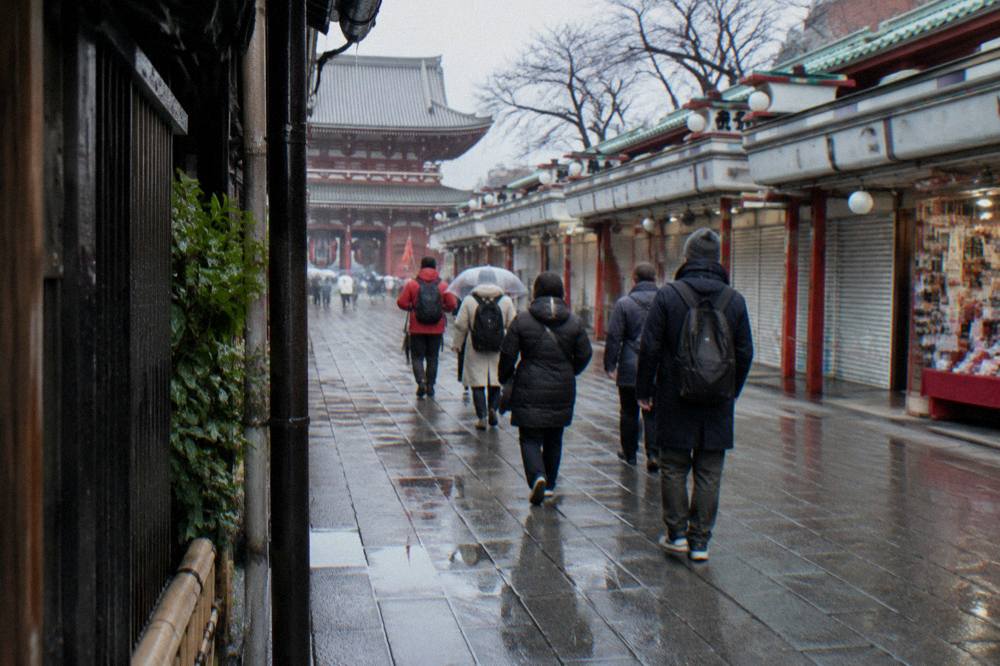
Every walk named on this page is free, pay what you want, and reserved on its own page on GuruWalk. This site neither operates the walks nor is affiliated with GuruWalk; it reports them. For the full picture of how these listings work and what paying-what-you-want means in practice, the free walking tours guide is the parent page, and the blog piece on how much to pay for a free walking tour answers the money question directly.
Mistakes That Trip People Up At Yasukuni Shrine
The mistakes are predictable and avoidable: paying a reseller for the free precinct, assuming the museum is included because the grounds are free, carrying the wrong hours into a different season, and planning a Monday or Friday free-sight day around places that close those days while forgetting that this precinct does not. Each mistake comes from merging the free part with the paid part.
The first mistake is buying an entry product for the shrine. The precinct has no ticket, so anything sold as Yasukuni entry is a markup on nothing. The second is the reverse: assuming the JPY 1,000 museum is covered by the free visit. It is not, and the free-precinct status never transfers inward to a building on the grounds. The same discipline this site applies at Meiji Jingu, where the free forest never covers the JPY 500 Inner Garden, applies here.
The third mistake is seasonal: the 6:00 to 17:00 hours published for November through February are winter hours, and the shrine's own page carries the summer schedule with different times. Read the current line before a visit outside winter. Build the day around the closed days, not around the shrine.
The last mistake is expecting a tour to meet you here. No walk in this site's roster starts at Yasukuni. If a guided element matters to your day, reserve one of the palace or Asakusa walks listed above on GuruWalk and visit the shrine under your own feet, free, during the published hours.
Common Questions On This Topic
Is Yasukuni Shrine Free To Visit?
Yes. The shrine precinct, including the torii approach, main hall courtyard and grounds, is free to enter with no ticket or reservation. The Yushukan museum on the grounds is the one paid part, at JPY 1,000 for adults. Winter hours are 6:00 to 17:00 daily in November through February.
How Much Does The Yushukan Museum Cost?
The Yushukan charges JPY 1,000 for adults, published on the official Yasukuni page. It is the only ticketed component inside the shrine grounds. The precinct itself never charges, so skipping the museum costs you nothing and removes the only fee on the site.
What Are Yasukuni Shrine's Opening Hours?
The official page publishes 6:00 to 17:00 for November, December, January and February. Summer months run on a different schedule stated on the same page. No closed weekdays are stated for the precinct, so the free visit is available every day of the week.
Is The Yasukuni Precinct Open On Mondays And Fridays?
Yes, as published. The precinct states no weekday closures, which distinguishes it from nearby free sights: the Imperial Palace East Gardens close every Monday and Friday, and the TMG observatories each close on a rotating weekday. On those days the shrine is the reliable free stop.
Can You Visit Yasukuni Shrine Without A Reservation?
Yes, the precinct needs no reservation, registration or advance booking at any time. This differs from the free National Diet building tour, which requires a reservation at least 24 hours ahead, and the free Imperial Palace guided tour, which needs an application. At Yasukuni you simply walk in.
Are There Free Walking Tours That Meet At Yasukuni Shrine?
No walk on this site's roster of 46 free, pay what you want tours meets at Yasukuni. The central-Tokyo walks on GuruWalk meet at the Imperial Palace, Tokyo Station and Marunouchi. The strongest shrine-district walks, in Asakusa, meet at the Asakusa Culture Tourist Information Center and Kaminarimon Gate.