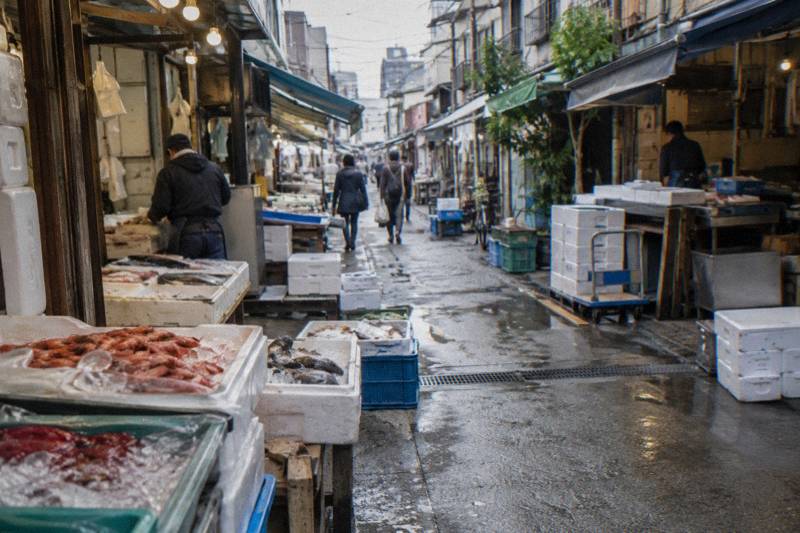
Can Tourists Watch The Toyosu Tuna Auction For Free?
The Toyosu tuna auction viewing is free, but it closes on market holidays and some viewing spots are allocated by lottery. Here is exactly what is free, what is not, and how it fits a Tokyo morning.
In Short
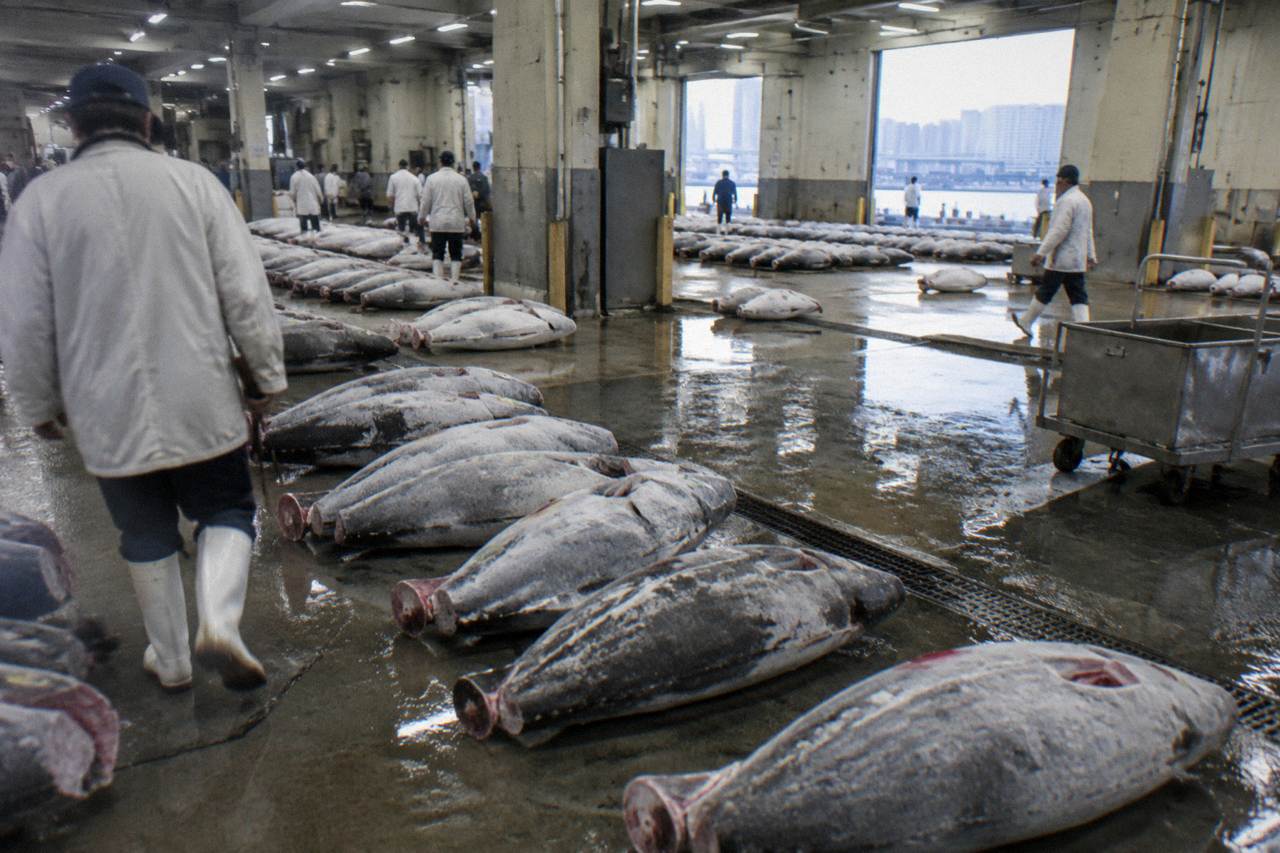
Yes, tourists can watch the Toyosu tuna auction for free. The viewing costs nothing. Two conditions shape every visit: the viewing is closed on market holidays, so the market calendar decides which days work, and some viewing spots are allocated by lottery rather than simply opened to whoever arrives. Food and anything bought inside the market is separate and paid.
This question sits inside the Toyosu Tuna Auction Viewing guide, which covers the market in full. This post answers the one question most searchers ask: does it cost anything, and what strings are attached.
Quick Facts
| Question | Answer |
|---|---|
| Is the auction viewing free? | Yes, viewing is free |
| Any conditions? | Closed on market holidays; some viewing spots allocated by lottery |
| Is food included? | No, food and purchases inside the market are paid |
| Nearest paid attraction to know about | teamLab Planets at JPY 3,800 adult, ticketed |
| Free walking tours at the market? | No walk on this site's roster has a route at Toyosu; the market walks meet at Tsukiji |
| December note | The official Tsukiji Outer Market page asks sightseers to stay away during the New Year shopping rush |
Can Tourists Watch The Toyosu Tuna Auction For Free?
Yes. Tourists can watch the Toyosu tuna auction for free, and no ticket is sold for the viewing itself. Two conditions apply every time: the viewing is closed on market holidays, and some viewing spots are allocated by lottery rather than opened to everyone who shows up. Everything you buy inside the market, above all food, is paid and separate from the free viewing.
The free status is the easy half of this answer. The viewing at Toyosu costs nothing, and there is no admission desk taking money for standing at the observation area. The Toyosu auction viewing has no such trap attached to the viewing itself.
The conditions are the half worth reading carefully. First, the market keeps its own holiday calendar, and the viewing is closed on those days. A visitor who picks a date without checking that calendar risks arriving at a shut observation deck. Second, some viewing spots are allocated by lottery. That word deserves emphasis: not all spots, and not none. Part of the viewing capacity is drawn by lottery, which changes how a morning has to be planned compared with a simple walk-up attraction.
“George was really a great guide! He had lots of information and answered all of our questions. All the places we went to the food was great!”
Patrick P, GuruWalk review of Tsukiji Street Food, 1h 30m
What this means in practice is that the auction belongs early in a Tokyo day, and the rest of the day needs a plan that does not depend on it. A sensible free morning in this part of the city can pair the auction viewing with free sights that have no lottery and no calendar risk: the Asakusa temple precinct, the Ueno parkland, or the free observatories of the Tokyo Metropolitan Government buildings, which need no reservation at all.
If the whole point of your trip is old Tokyo rather than the market itself, three free, pay what you want walks are a strong way to spend the same morning hours.
What Does The Free Part Include?
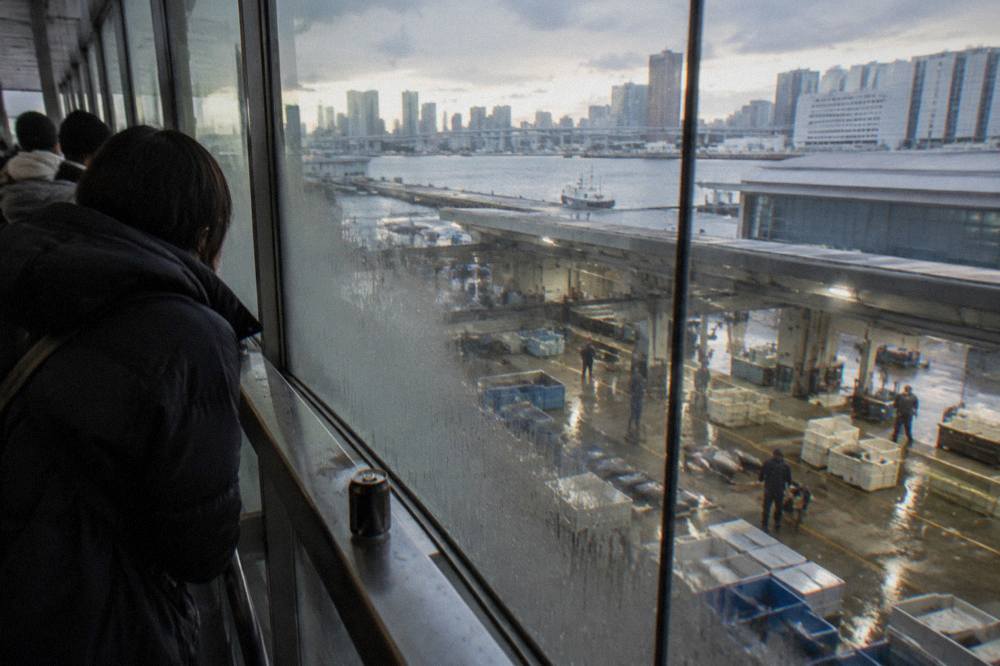
The free part is the viewing of the auction itself, from the market's designated observation areas. It includes standing at the viewing area and watching the tuna auction take place on the market floor below. It does not include food, shopping, tastings, or any guided commentary: nothing at Toyosu is organised by this site, and no walk on the roster has a route inside the market.
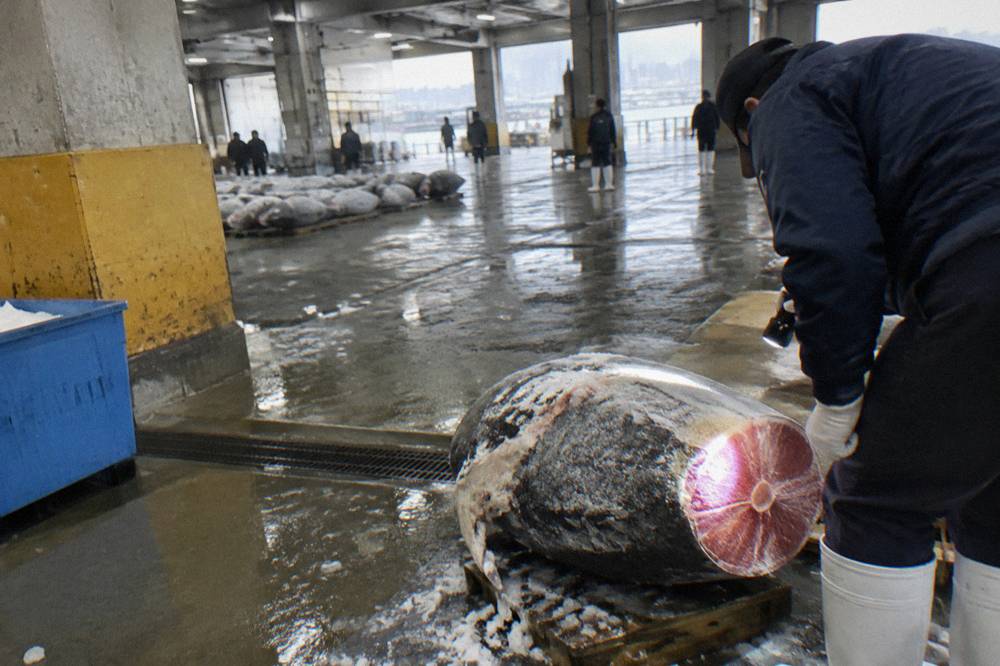
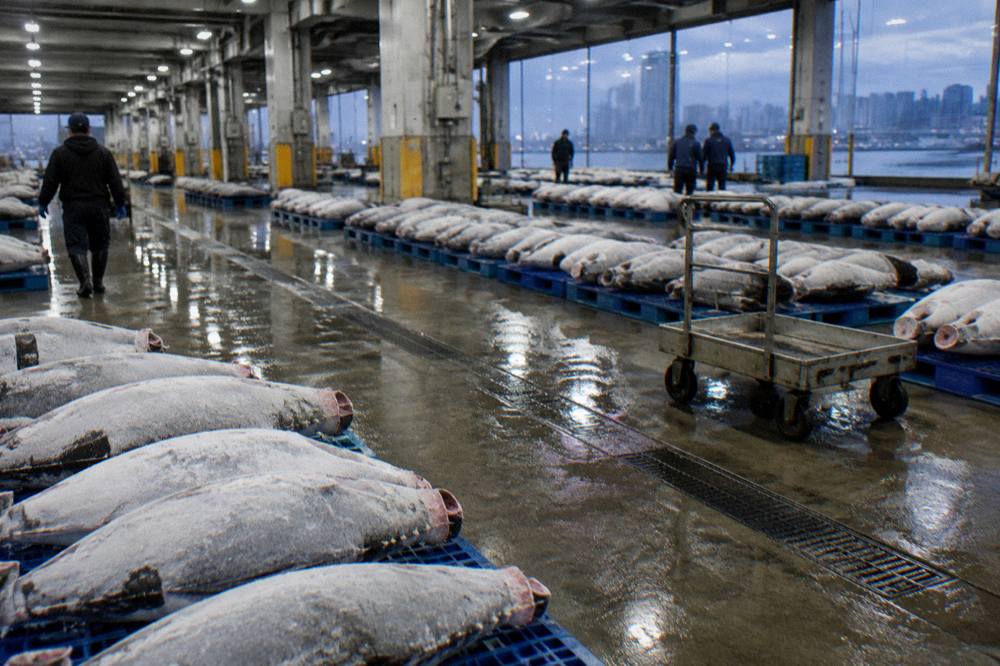
Start with what the word "viewing" covers. Toyosu is a working wholesale market, and the auction is a commercial event: buyers bidding on tuna that will be sold to restaurants and traders the same day. The free access is built around letting visitors watch that commercial event without getting in its way, from observation areas set aside for the purpose. The design separates the two worlds, and the free part sits firmly on the visitor side of the glass.
This is a different animal from a tourist attraction with a show. There is no commentary track, no printed programme, and nobody employed to explain the bidding. Watching the auction for free means watching a real wholesale trade happen at its own pace. Anyone who wants the trade explained has to bring that context themselves, and this is where a morning at the market rewards a little reading beforehand.
It helps to see how the free viewing compares with other free experiences nearby, because the same bay area holds several sights whose free parts are generous and whose paid parts are easy to stumble into.
| Sight in the bay area | Free part | Paid part |
|---|---|---|
| Toyosu tuna auction viewing | The viewing itself | Food and purchases inside the market |
| Rainbow Bridge Promenade | The walkway, 10:00 to 18:00 from November to March, closed the 3rd Monday | None stated |
| Shibuya Crossing | The crossing | Shibuya Sky, ticketed, price not published here |
| teamLab Planets | Nothing | JPY 3,800 adult, dynamic pricing |
The pattern repeats across Tokyo, and learning to read it early saves money all trip. A precinct is free while its museum charges, as at Zojo-ji where the grounds and main hall cost nothing but the Treasures Gallery is JPY 700. A park is free while the deck above it sells tickets. The Toyosu viewing is one of the cleanest cases in the city: the free part is the whole spectacle, and the paid parts are the things you choose to buy.
One more boundary matters. The free viewing is not a tour. No guide from any walk on this site's roster leads a route inside Toyosu, and the market is not a stop anyone can promise. The closest thing to guided market colour on the roster is at the old Tsukiji Outer Market, where the free walks meet and the guiding is pay what you want while the food is bought separately. That distinction, auction viewing at Toyosu versus street-food walking at Tsukiji, comes back later in this article.
What Do You Still Have To Pay For?
You pay for food, drink, and anything you buy inside the market, and for transport to get there. The viewing itself never takes money. If a morning at Toyosu stretches into the rest of the day, the paid items are the usual Tokyo ones: meals, garden tickets such as the JPY 300 metropolitan gardens, and deck tickets like Tokyo Tower's Main Deck from JPY 1,500 adult.
The honest budget for a Toyosu morning is therefore mostly a food budget. The market and its surroundings sell meals, snacks, and kitchen goods, and none of that is bundled with the free viewing. Anyone treating the auction as a free spectacle and then eating breakfast nearby is spending money on the breakfast, not the spectacle. That is a fair trade, but it should be named as one.
Around the bay, the paid temptations are specific. teamLab Planets is the big one at JPY 3,800 adult with dynamic pricing, and it sits close enough to the market area that many itineraries pair them. The decks are the other family: Tokyo Skytree observation tickets run from JPY 3,000 adult, and Tokyo Tower's Main Deck from JPY 1,500, both with dynamic pricing, while the tower base, Foot Town and the Solamachi complex under Skytree are walkable without a ticket. A visitor who watches a free auction in the morning can spend a startling amount by mid-afternoon without ever noticing a decision being made.
| Item | Free or paid | Figure |
|---|---|---|
| Auction viewing | Free | No charge |
| Breakfast or snacks at the market | Paid | Market prices, varies |
| teamLab Planets | Paid | JPY 3,800 adult, dynamic |
| Metropolitan gardens (Hama-rikyu, Rikugien, Koishikawa Korakuen) | Paid | JPY 300 each |
| Tokyo Tower Main Deck | Paid | From JPY 1,500 adult |
| Rainbow Bridge Promenade | Free | No charge |
The metropolitan gardens deserve a line of their own because they are cheap rather than free, and that trips people up in the opposite direction. Hama-rikyu, Rikugien and Koishikawa Korakuen each charge JPY 300, are closed 29 December to 1 January, and are sometimes assumed to be public parks. They are not, and treating them as free is the mirror image of assuming the Toyosu viewing costs something. Both errors come from the same habit: guessing at the price regime instead of checking it.
The free walks in this city carry their own answer to the money question, and it is a simple one. Every walk on this site's roster is free, pay what you want: that is the price, with no booking fee and no fixed charge, reserved on the walk's own page. A morning built around the auction and finished with a walk in old Tokyo can therefore run at almost no fixed cost beyond food and trains.
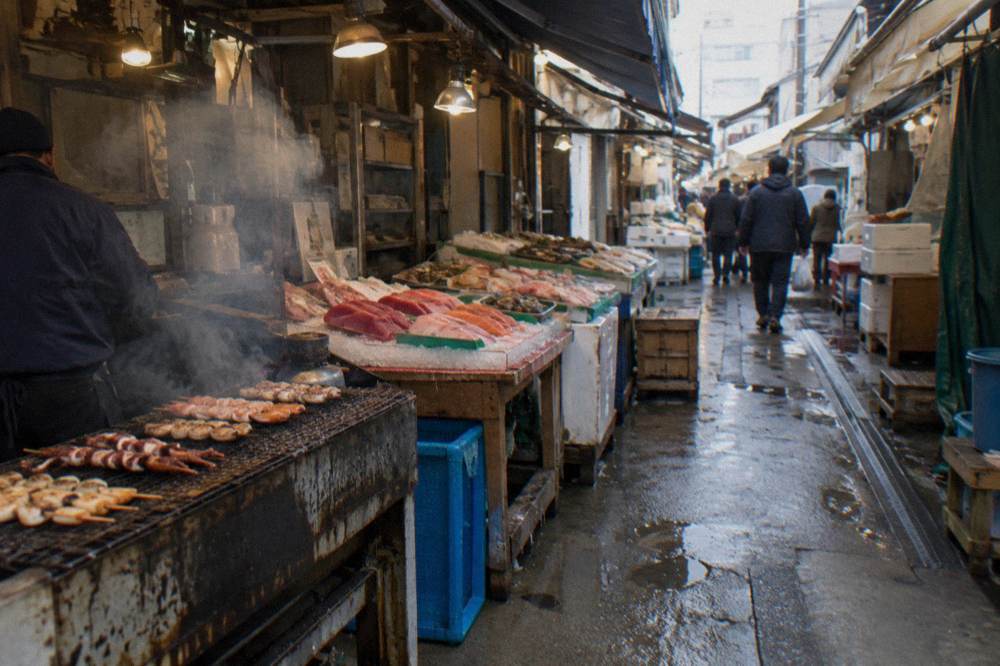
When Is The Free Option Available?
The viewing is available on the market's working days and closed on market holidays; the market calendar, not a tourist schedule, decides. The lottery element means part of the viewing capacity is drawn in advance, so a date is only fully planable once the calendar has been checked. December adds a separate note for the old Tsukiji market, not Toyosu itself.
Market holidays are the whole game here. Toyosu is a wholesale market that runs to a trading calendar, and the free viewing exists only when the market is trading. No day of the week can be recommended in this article, because the closures are set by the market's own calendar rather than a fixed weekly pattern, and that calendar is the thing to check before committing a morning. Anyone who has planned around the Imperial Palace East Gardens will recognise the shape of the problem: those gardens are free but closed every Monday and Friday, plus 28 December to 3 January, and winter hours run 9:00 to 16:00 with entry to 15:30, as the Imperial Household Agency's page states. Calendars, not assumptions.
“Kenny was the absolute best. Kindly helped us late when we were running late and gave us a highly entertaining and informative experience. Thank you Kenny!”
Heide, GuruWalk review of Tsukiji Street Food, 1h 30m
The lottery is the second timing fact. Because some viewing spots are allocated by lottery, a traveller cannot simply treat the viewing as guaranteed on arrival. The rest of the day should hold at least one plan that needs no lottery and no calendar, and Tokyo is generous with those: Ueno Park is free and open at all times, Yoyogi Park and Hibiya Park are free, and the two Tokyo Metropolitan Government observatories at 202 metres are free with no reservation, each closed on its own rotating weekday (South on the 1st and 3rd Tuesday, North on the 2nd and 4th Monday) and both closed 29 to 31 December and 2 to 3 January.
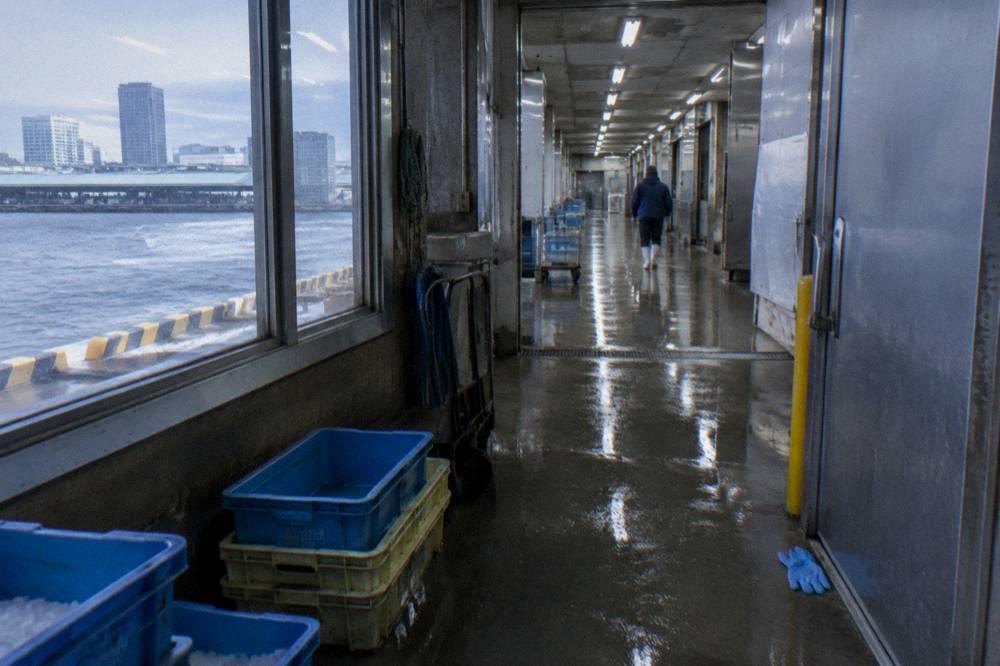
Winter visitors should also weigh the season itself. A dawn-hours visit to a wholesale market is a cold proposition in December or January, and the paid warm-ups nearby, teamLab Planets above all, sell out their appeal quickly at JPY 3,800. The free alternatives for warming up are mostly indoor and mostly inland: the Currency Museum, the Fire Museum, the Water Science Museum and the Meguro Parasitological Museum all cost nothing to enter, each with its own closed days.
| Place | Free Or Ticketed | What Is Free | What You Still Pay For |
|---|---|---|---|
| teamLab Planets | Paid | Ticketed immersive art museum. | JPY 3,800 adult, JPY 2,800 junior and senior high school, JPY 1,500 ages 4 to 12, 3 and younger free; dynamic pricing (official page). |
The last timing trap is the New Year period, when half of Tokyo's free infrastructure closes at once. The East Gardens shut 28 December to 3 January, the metropolitan gardens close 29 December to 1 January, both TMG observatories close 29 to 31 December and 2 to 3 January, and the market keeps its own holiday calendar on top. A late-December itinerary built on free sights needs more care than the same itinerary in October.
Where Does The Free Visit Start?
The free visit starts right at the entrance, so no ticket or payment is needed to begin. You simply arrive, walk in, and start exploring from the very first step, because the free portion of the experience begins the moment you enter rather than at some separate point further inside the site.
There is a limit to what honest directions can say here. The viewing is free, it closes on market holidays, and some viewing spots are allocated by lottery; platforms, exits and walking times are not published. No official page spells out the route from the station to the deck, so stick to the confirmed details: free viewing, market-holiday closures, and the lottery for some spots. The market's own materials are the place for arrival details, and the Toyosu Tuna Auction Viewing guide holds the fuller treatment of the place.
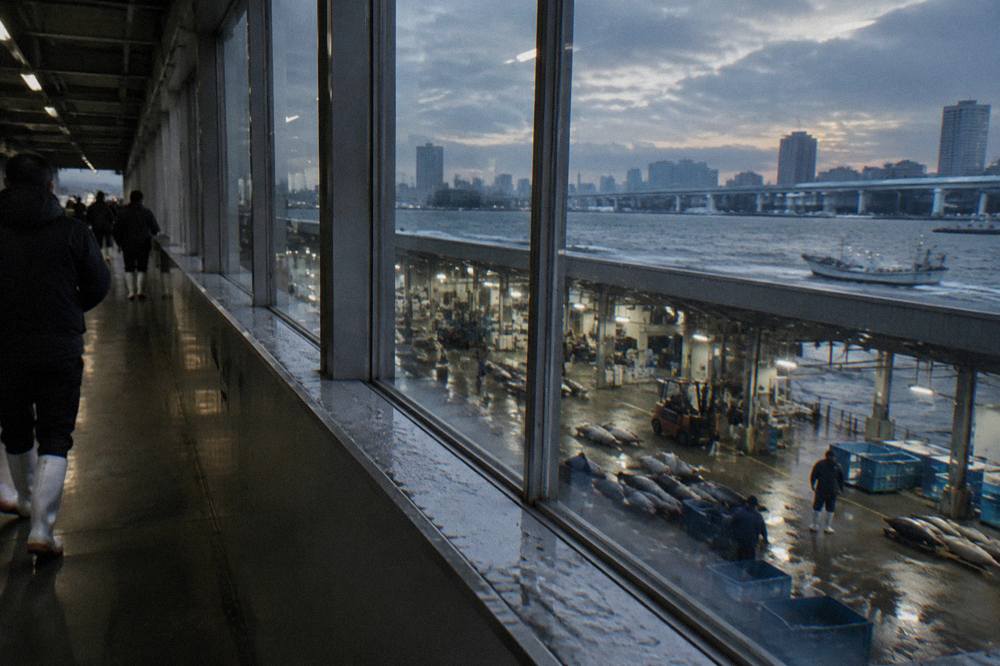
Each walk begins at a set meeting point, and knowing where yours starts helps anchor the rest of a free day. The Tsukiji Street Food walk, listed on GuruWalk by Local Guide Stars and rated 4.88 out of 5 across 583 GuruWalk reviews, meets at Tsukiji Hongan-ji, Stairs, and runs 1 hour 30 minutes in English. The Asakusa Classic English Walk, listed on GuruWalk by Localized Walking Tours, meets at the Asakusa Culture Tourist Information Center. The Asakusa Old Town, English walk, listed on GuruWalk by Tokyo Genki Tours, meets at Kaminarimon Gate.
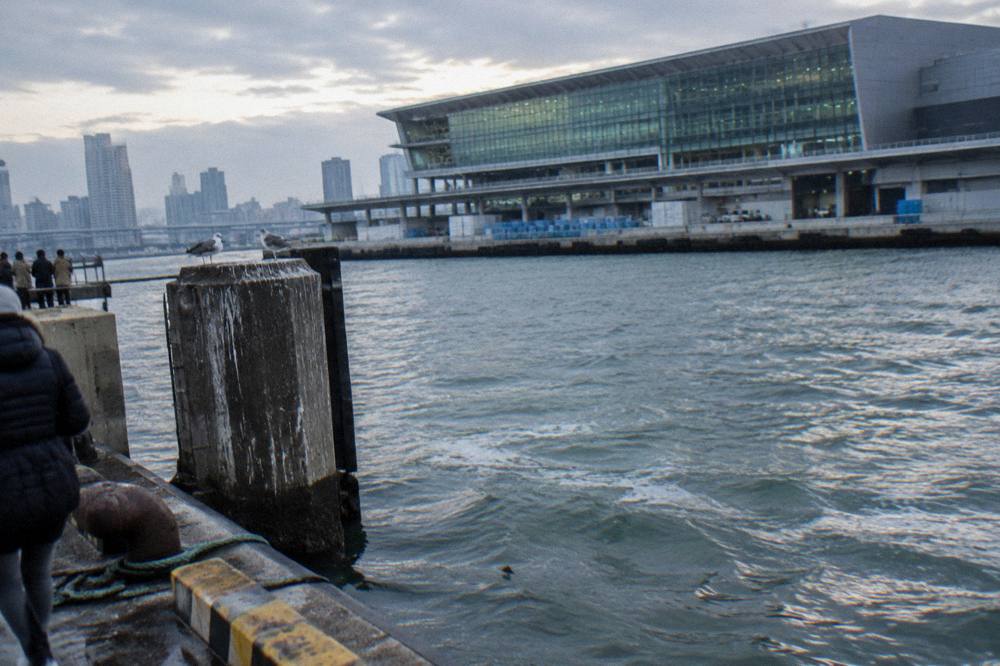
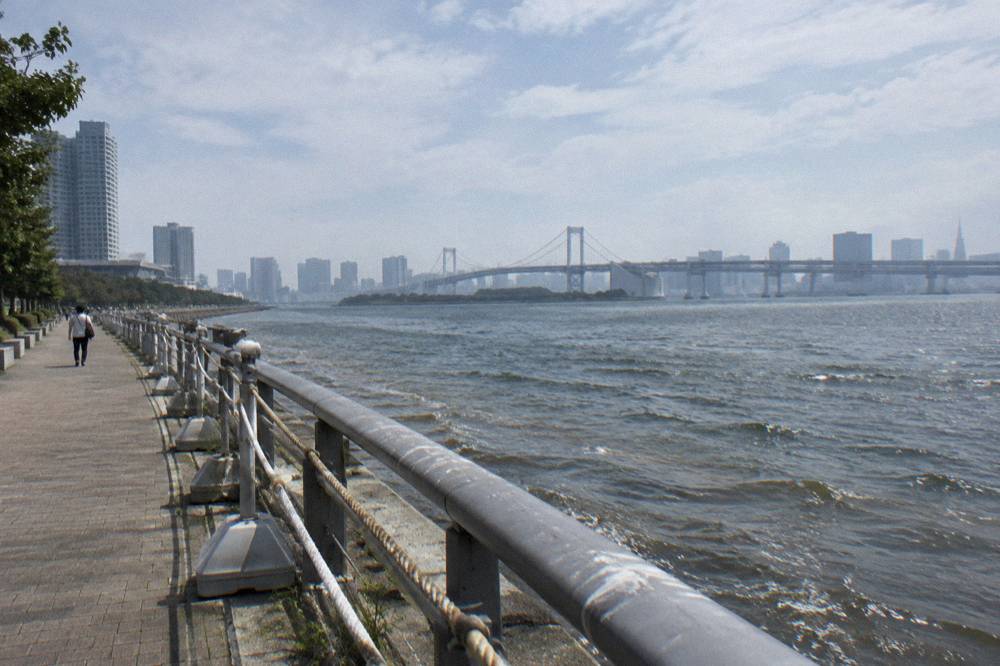
The bay setting itself is worth a sentence. Toyosu sits on reclaimed land among the sights listed earlier in the table: the Rainbow Bridge Promenade on one side, the teamLab halls on the other, the tower decks inland. A free morning can be assembled entirely from this geography, auction viewing first, promenade second, observatories or a walk third, without a single fixed ticket. The one caution is repetition of the calendar point: each free piece in that chain carries its own closed days, and the days do not match. A day when the promenade is closed the 3rd Monday is not automatically a day the market rests.
For travellers who prefer their mornings guided, the honest summary is this: no walk covers Toyosu, walks do cover the old market and old Tokyo, and the two make a natural pair on a single free day. The next section names the walks that work.
Which Free Walking Tours Cover This?
No free walking walk on this site's roster covers Toyosu itself, and no route at the market is claimed anywhere. The walks that pair with a market morning are the GuruWalk listings that meet at Tsukiji and in Asakusa: the Tsukiji Street Food walk for the old market, and the Asakusa walks for the old town, each free, pay what you want, with food at Tsukiji bought separately.
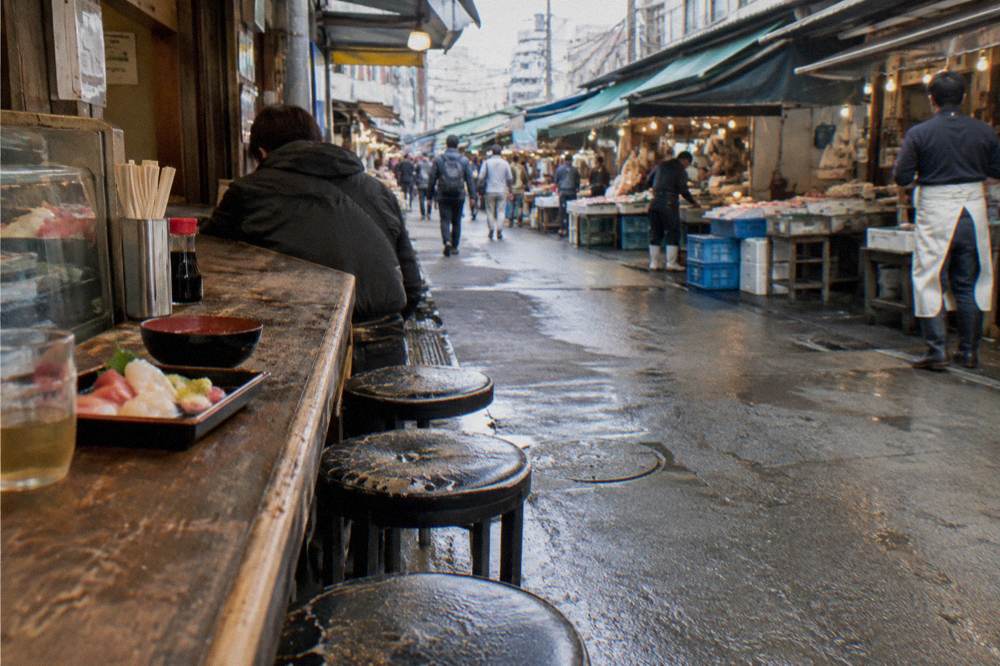
Start with the Tsukiji pairing, because it is the closest thing to a market walk on the roster. The Tsukiji Street Food walk by Local Guide Stars is free, pay what you want for the guiding while food is bought separately, and that split must travel in the same sentence: it is not a fully free food tour. It meets at Tsukiji Hongan-ji, Stairs, lasts 1 hour 30 minutes, runs in English, and carries 4.88 out of 5 across 583 GuruWalk reviews. A Spanish-language option exists too, the Tsukiji to Hamarikyu walk by Ignacio, 3 hours, rated 4.93 out of 5 across 449 GuruWalk reviews, meeting at Tsukiji; it runs in Spanish. The old market lanes themselves are free to walk, though the official site asks visitors not to eat while walking, and in December it asks sightseers and group tours to stay away during the New Year shopping rush, a request the Tsukiji Outer Market site states on its English page.
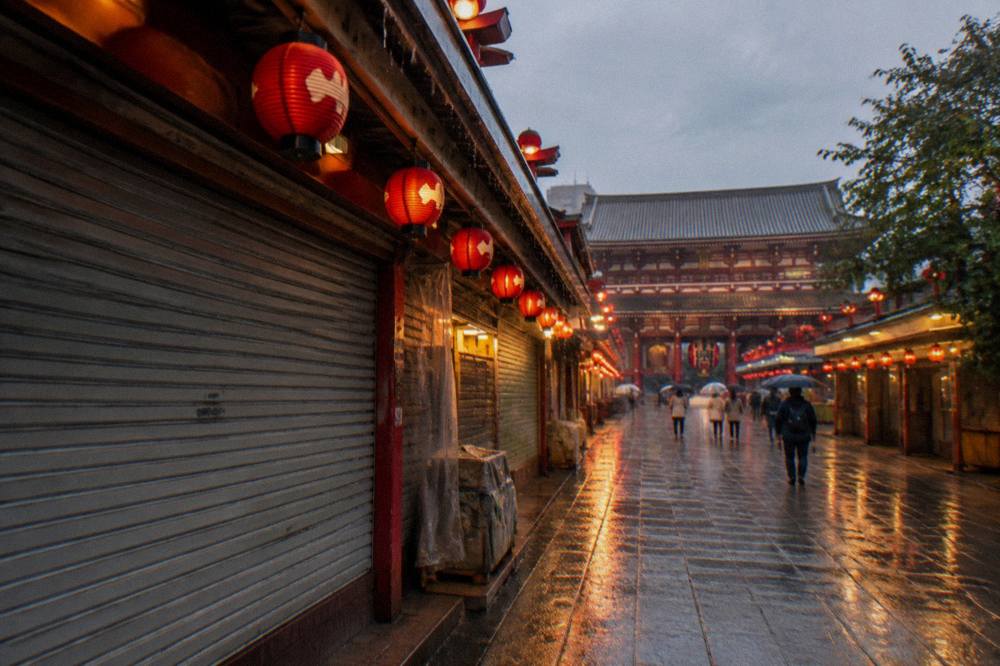
Then there is Asakusa, the old town a short hop from the bay, where the roster runs deepest. The Asakusa Classic English Walk by Localized Walking Tours is free, pay what you want, rated 4.91 out of 5 across 671 GuruWalk reviews, meeting at the Asakusa Culture Tourist Information Center and running 2 hours in English. It is the walk this article flags as its featured pairing, and its own page on GuruWalk carries the booking; the site you are reading neither operates it nor is affiliated with GuruWalk.
A second Asakusa option is the Asakusa Old Town, English walk by Tokyo Genki Tours, free and pay what you want, rated 4.78 out of 5 across 767 GuruWalk reviews, meeting at Kaminarimon Gate and running 2 hours in English. Both Asakusa walks stand on their own facts: neighbourhood, language, duration, meeting point.
For readers whose question is really "what does a free walk cost", the fuller answer lives in the free walking tour payment explainer, and the mechanics are one sentence long: every walk is free, pay what you want, reserved on its platform, and anything beyond that is on the walk's own page. Asakusa itself is covered in depth by the Senso-ji and Asakusa guide, which separates the free temple precinct from anything paid around it.
A pairing note for market days: the Asakusa walks and the Tsukiji walk can share a day with the auction viewing, and each walk keeps its own schedule, so start times come from the walk's GuruWalk page. Check the walk's page, check the market calendar, and let the two calendars meet.
Mistakes That Trip People Up At The Toyosu Tuna Auction
The four recurring mistakes are treating the lottery as first-come access, ignoring the market-holiday calendar, assuming food is part of the free viewing, and confusing Toyosu with Tsukiji, two different markets with different rules and a different December request. Each mistake turns a free morning into a wasted one, and each is avoidable with a single check before the day begins.
The first mistake is the lottery. Some viewing spots are allocated by lottery, and a plan that assumes walk-up access to every spot is a plan with a hole in it. The free sights that need no lottery, the parks and the TMG observatories, make sturdy fallbacks, and the observatories' own closure pattern is published by the Tokyo Metropolitan Government.
The second mistake is the calendar. Market holidays close the viewing, and no weekday is safe to recommend. The parallel error elsewhere in the city, arriving at the East Gardens on a Monday or Friday, catches thousands of visitors a year, and the gardens' winter hours, 9:00 to 16:00 with entry to 15:30, are on the Imperial Household Agency page. Treat the market calendar with the same respect.
The third mistake is money. The viewing is free; the breakfast is not, and neither is the teamLab hall down the road at JPY 3,800. The reverse mistake also happens: visitors budget for an entry fee that does not exist and skip the market on cost grounds. The viewing takes no money at all, and the only spend inside is what you choose to buy.
| Mistake | What actually happens | The single check |
|---|---|---|
| Assuming walk-up access to all spots | Some viewing spots are allocated by lottery | Read the lottery rules before the day |
| Picking a date blind | The viewing closes on market holidays | Check the market calendar |
| Budgeting for a ticket | The viewing itself is free | Plan food money instead |
| Mixing up Toyosu and Tsukiji | Different markets, different rules, different December request | Know which one the plan means |
The fourth mistake is the confusion between the two markets. Toyosu is the wholesale market with the free auction viewing; Tsukiji is the old outer market with free lanes, paid food, the no-eating-while-walking request, and the December plea to sightseers. Walks meet at Tsukiji, not Toyosu. A plan that blends the two will arrive at the wrong place for the wrong thing, and no amount of free access fixes that.
For the wider pattern, Free Things To Do In Tokyo keeps the full picture: what is genuinely free, what is conditionally free, and where the paid part hides inside a free-seeming sight.
Common Questions On This Topic
Can Tourists Watch The Toyosu Tuna Auction For Free?
Yes. The viewing at Toyosu is free, with no ticket sold for it. The conditions are that the viewing closes on market holidays and some viewing spots are allocated by lottery. Food and purchases inside the market are separate and paid.
Do You Need To Book Anything For The Auction Viewing?
No booking fee exists for the viewing itself because it is free. The lottery element is the only advance element, since some viewing spots are allocated that way. The market calendar decides which days the viewing is open at all.
Is Food Included With The Free Viewing?
No. The free part is the viewing alone. Meals, snacks and anything bought inside the market are paid at market prices, and at the old Tsukiji lanes the official site also asks visitors not to eat while walking.
Is The Toyosu Viewing Open Every Day?
No. The viewing is closed on market holidays, and the market's own calendar sets those days. There is no fixed weekly pattern this article can honestly state, so the calendar is the thing to check before choosing a date.
Are There Free Walking Tours At The Market?
No walk on this site's roster has a route at Toyosu. The market walks meet at Tsukiji, such as the Tsukiji Street Food walk, free and pay what you want with food bought separately, rated 4.88 out of 5 across 583 GuruWalk reviews.
What Else Is Free Near The Market?
The Rainbow Bridge Promenade is free, running 10:00 to 18:00 from November to March and closed the 3rd Monday. The TMG observatories at 202 metres are free with no reservation, each closed on its own rotating weekday. Ueno Park and Yoyogi Park are free.