Odaiba And Rainbow Bridge Promenade: Free Bay Views, Paid teamLab
Odaiba's bayfront is free to walk, the Rainbow Bridge Promenade is free with winter hours, and teamLab Planets is a paid ticket at JPY 3,800. Here is the full free-versus-paid split.
In Short
Yes, the Odaiba waterfront and the Rainbow Bridge Promenade are free. The promenade runs 10:00 to 18:00 from 1 November to 31 March, with last entry 30 minutes before closing, and closes the 3rd Monday of the month. teamLab Planets is a separate paid attraction at JPY 3,800 adult, and teamLab Borderless is JPY 3,400, both dynamically priced.
Odaiba is the artificial island where Tokyo faces its own bay, and the price split there is unusually clean. The waterfront itself, the promenades and the bridge walkway cost nothing. Two of the city's headline digital-art attractions sit on the same ground and charge for entry. Getting the split right is the difference between a free bay afternoon and an accidental pair of full-price art tickets.
Part of the Free Things To Do In Tokyo guides, and this page owns the Odaiba question outright: what is free, what is paid, when the walkway is open, and how a bay day connects to the rest of a free-walk itinerary.
Quick Facts
| Question | Answer |
|---|---|
| Is the Rainbow Bridge Promenade free? | Yes, free to walk |
| Winter hours (1 Nov to 31 Mar) | 10:00 to 18:00, last entry 30 minutes before |
| Promenade closed days | 3rd Monday of the month |
| teamLab Planets | JPY 3,800 adult, dynamic pricing |
| teamLab Borderless | JPY 3,400 adult, dynamic pricing |
| Odaiba Unicorn Gundam statue | Status unresolved, not published here |
| Free walking tours meeting on Odaiba | None; the 46 shipped walks meet elsewhere |
Is Odaiba And Rainbow Bridge Promenade Free To Visit?
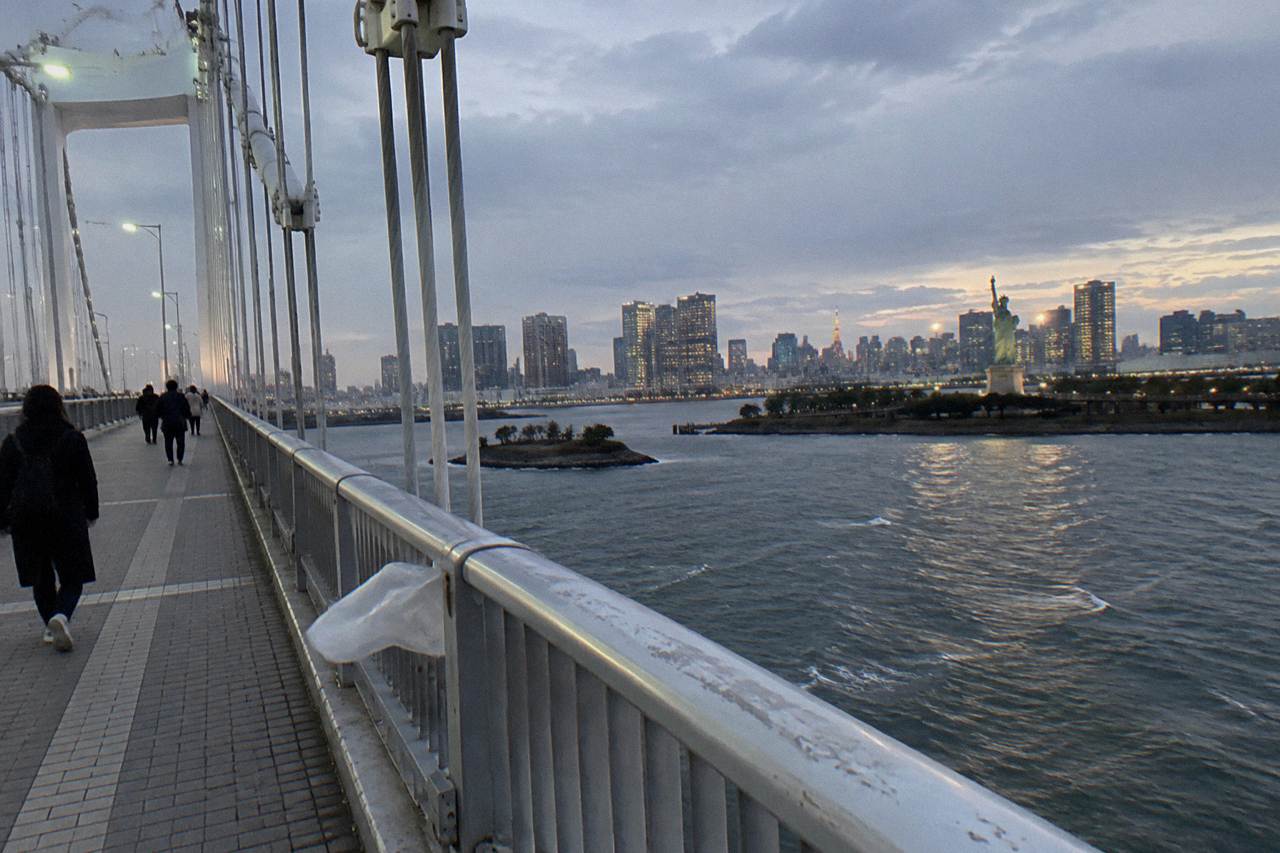
Yes, Odaiba is free to visit at street level and the Rainbow Bridge Promenade is free to walk. The promenade is a public walkway on the bridge, run by the Tokyo metropolitan port authority, and no reservation or ticket exists for it. Its winter season, 1 November to 31 March, runs 10:00 to 18:00 with last entry 30 minutes before closing, and it closes the 3rd Monday of every month.
The word "free" needs one qualifier even here. The promenade is free, but it is also conditionally open: it has seasons, closing days and last-entry times, which a genuinely ungated street like Shibuya Crossing does not. From November through March the walkway opens at 10:00 and stops admitting walkers at 17:30, closing at 18:00. Skip a 3rd Monday and you will find the gate shut. The port authority's own page at kouwan.metro.tokyo.lg.jp carries the current schedule, and it is the only page worth trusting on the matter, because the bridge appears on many aggregator sites that quietly omit the Monday closure.
| Place | Free Or Ticketed | What Is Free | What You Still Pay For |
|---|---|---|---|
| Rainbow Bridge Promenade | Free on conditions | A free pedestrian walkway across Rainbow Bridge. | Nothing to pay. The Odaiba-side teamLab and shopping options are separate. |
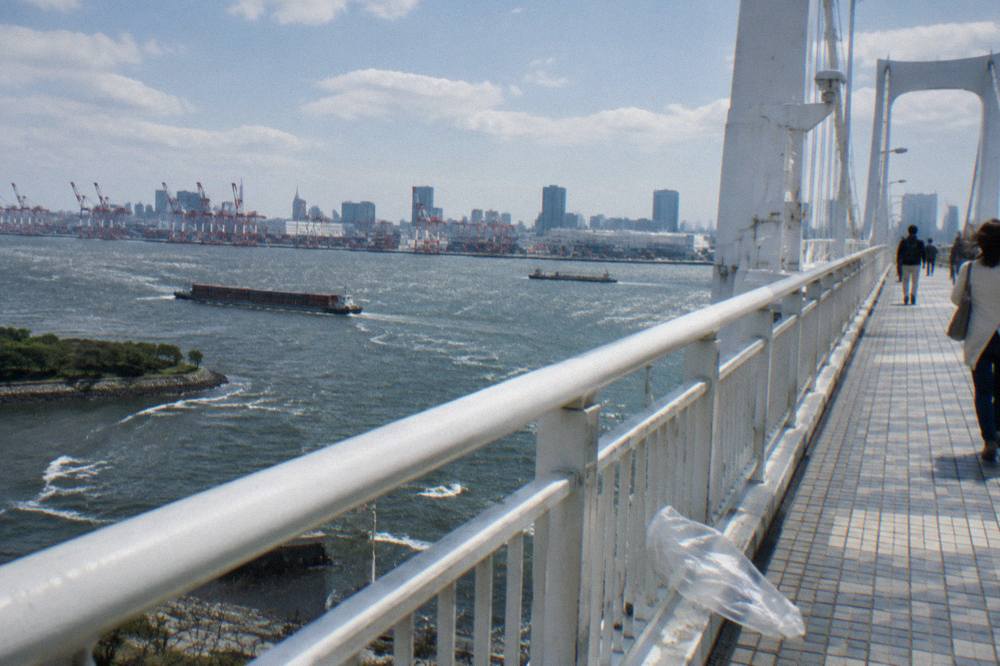
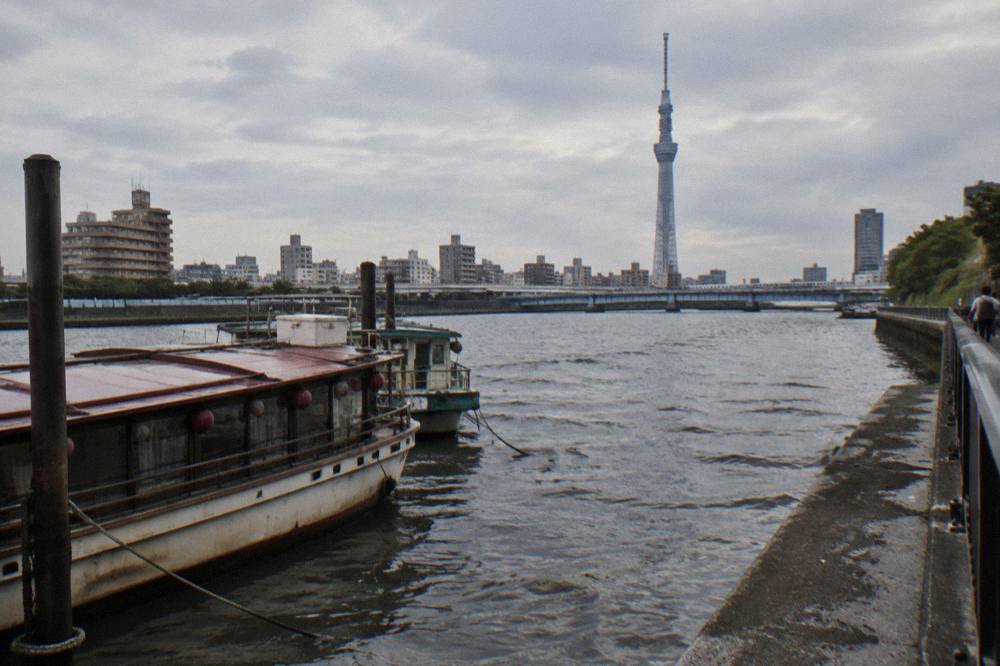
Everything else at ground level follows the ordinary rules of a public waterfront. The deck around the island, the beach-side promenades and the views back toward the bridge are open public space with no operator, no gate and no fee record, which is exactly how this site treats them. The bridge itself is the star: walking it gives you the bay, the container terminals and the Tokyo skyline from above water level, and the price of that view is zero.
What the promenade is not, is a way to reach the paid attractions for free. teamLab Planets and teamLab Borderless sit on the Odaiba side and the Toyosu side of the bay respectively, and each checks its own ticket at its own door. A free walk over the bridge and a JPY 3,800 art ticket are two separate decisions, and the rest of this page keeps them separate the same way the attractions' own box offices do.
There is a planning lesson buried in that separation. Tokyo rewards visitors who stop thinking of districts as uniformly priced and start thinking of individual doors. A district can hold a free bridge, a free deck, a paid museum and a second paid museum within sight of each other, and the only honest answer to "is Odaiba free?" is the split one: the ground and the bridge are, two specific doors are not. Every guide on this site answers cost questions that way, because the honest answer is also the useful one.
What Is Free Around Odaiba And Rainbow Bridge Promenade?
The free side of Odaiba is the walk itself: the Rainbow Bridge Promenade, the island's open waterfront decks, and the street-level views of the bridge from the Odaiba shoreline. All are open public space with no ticket. The one free thing this site can confirm near the bay beyond the walking is the Toyosu tuna auction viewing, which is free but partly allocated by lottery and closed on market holidays.
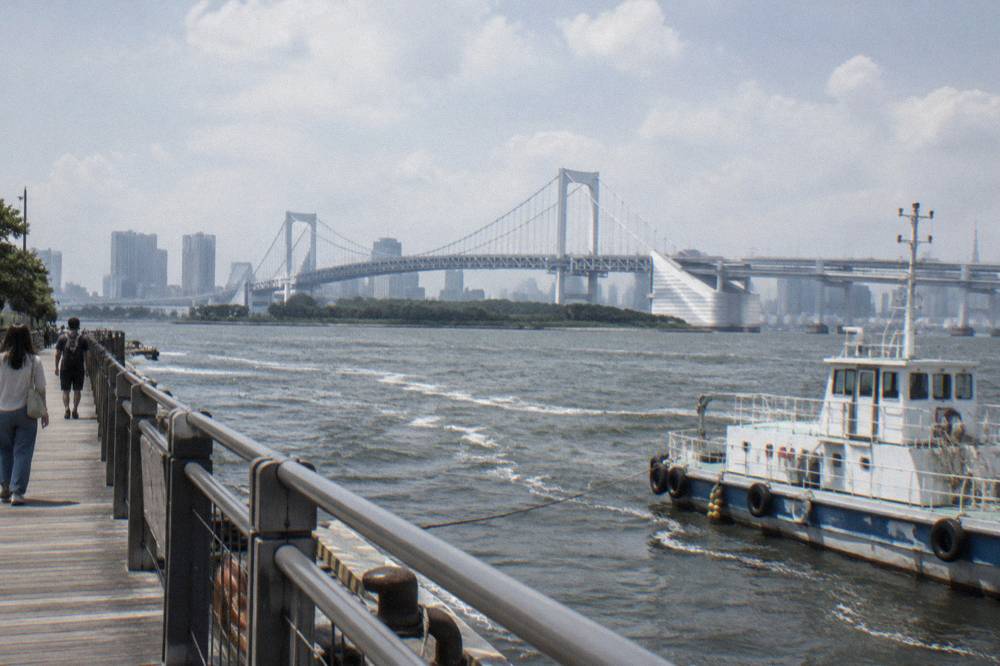
Start with the bridge, because it is the best free structure in the district. The promenade is the pedestrian deck of the Rainbow Bridge, reached from the Odaiba side, and the winter schedule described above applies. From the walkway you look down on the bay traffic and back at the island. The official port page is the source for hours: the port authority's Rainbow Promenade page.
The island's own ground is simpler still. Odaiba's waterfront is unfenced public space: free to walk, with no gate, ticket or fee. The same applies to the views. The Odaiba Unicorn Gundam's current status is not published, so check DiverCity's official page before going; any page that promises the statue standing, moving or removed is guessing.
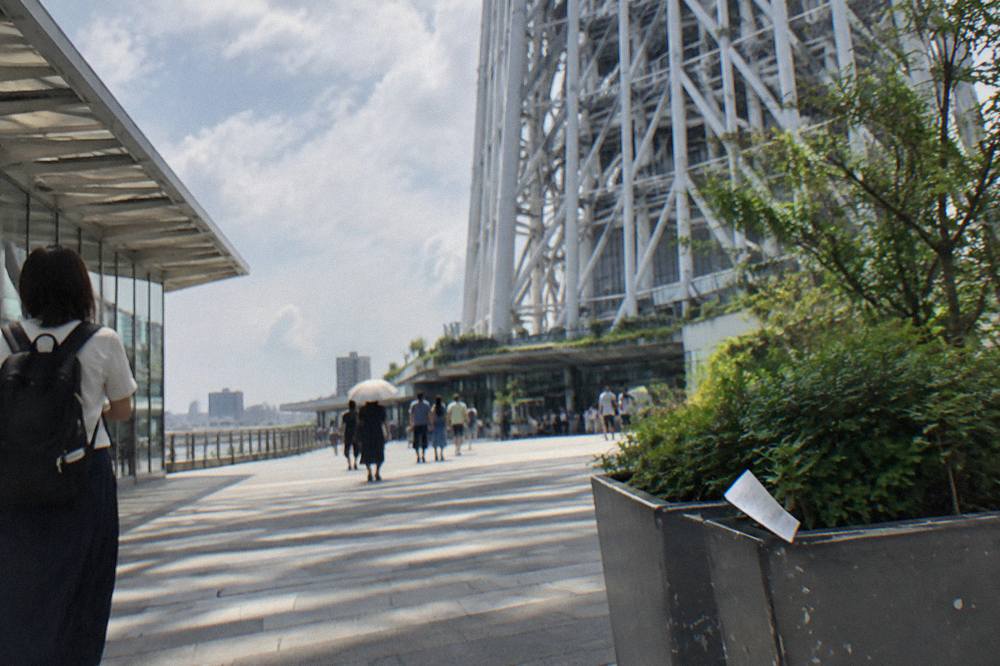
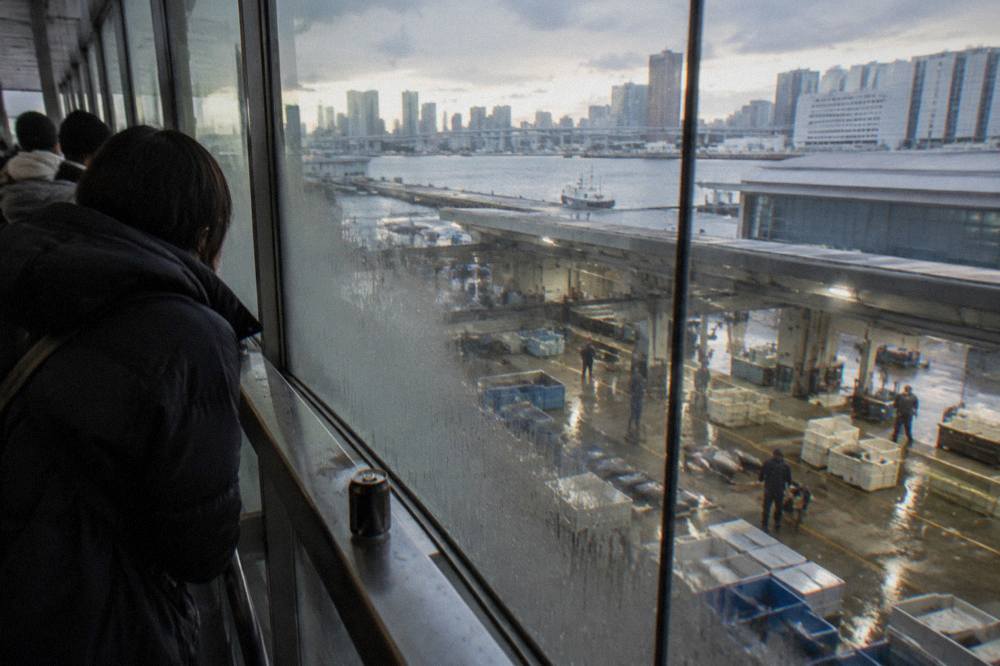
One genuinely free spectacle sits across the water at Toyosu: the tuna auction viewing. It is free, it closes on market holidays, and some viewing spots are allocated by lottery, so the free fact and the uncertainty travel together. The full detail lives in the Toyosu tuna auction viewing guide.
A note on combination logic. The bridge promenade, the waterfront deck and a Toyosu morning slot can fill a whole day at zero cost, and none of the three needs a booking. That is unusual in a district whose headline names are ticketed, and it is the reason Odaiba earns its place on a free itinerary at all.
It is worth pausing on what "free without a booking" means in a city that increasingly runs on reservations. The National Diet building tour is free but requires a reservation made at least 24 hours ahead, and walk-ins are not accepted. The Ghibli Museum is advance-reservation only and ticketed. Against that backdrop, a walkway you can simply walk onto, with no account, no slot and no deposit, is the exception rather than the rule, and it behaves that way because it is infrastructure rather than an attraction: a bridge with a public footpath, maintained as part of the port, not a ticketed experience that happens to be free.
That infrastructure character also explains the hours. A commercial attraction stretches its hours toward demand. A public walkway keeps the hours its operator publishes for safety and maintenance reasons, which is why the 3rd Monday closure exists and why it will not bend for your itinerary. Planning around a public structure means reading its official page, not assuming attraction logic.
What Costs Money At Odaiba And Rainbow Bridge Promenade?
The paid side of Odaiba is dominated by the two teamLab spaces: teamLab Planets at JPY 3,800 adult and teamLab Borderless at JPY 3,400 adult, both dynamically priced, meaning the figure moves with date and demand. Neither is included in, or connected to, the free bridge promenade. Shopping and food on the island are ordinary paid commerce.
teamLab Planets is the bigger number and the barefoot, water-walking one, on the Toyosu side. teamLab Borderless is the Odaiba-native digital museum. Both use dynamic pricing, so JPY 3,800 and JPY 3,400 are entry points, not fixed tariffs, and the operator's own site at teamlab.art is where the live figure for your date sits. The price you pay depends on the date, so treat each as a "from" figure. A visitor who assumes the price printed in a magazine last spring will hold in December is the visitor who budgets wrong.
| Place | Free Or Ticketed | What Is Free | What You Still Pay For |
|---|---|---|---|
| teamLab Planets | Paid | Ticketed immersive art museum. | JPY 3,800 adult, JPY 2,800 junior and senior high school, JPY 1,500 ages 4 to 12, 3 and younger free; dynamic pricing (official page). |
The distinction that matters more than the price is the boundary. The bridge promenade is free and the museums are paid, and no combination ticket, no bundle and no free window connects them. This is the same pattern as Tokyo's other free-hill, paid-tower pairs: Ueno Park free with the Tokyo National Museum at JPY 1,000 inside it, Zojo-ji's grounds free with its Treasures Gallery at JPY 700, Shibuya Crossing free with Shibuya Sky ticketed above it. Odaiba just runs the pattern in reverse, a free bridge over paid museums.
Dynamic pricing deserves a plain explanation, because the phrase gets used loosely. It means the operator prices by date and time slot the way airlines price seats, and the number you see when you book for a Tuesday in February can differ from the number for a Saturday in a holiday week. The only figures this site can honestly print are the starting ones: JPY 3,800 for Planets, JPY 3,400 for Borderless. Everything beyond that belongs to the operator's live calendar, and sending a reader anywhere else for a "fixed" price would be printing a fiction.
The two spaces are also not interchangeable, and choosing between them is a real decision. Planets is the one built around water and bare feet on the Toyosu side, which puts it within reach of a morning at the auction viewing. Borderless sits on the Odaiba side, the same ground as the free waterfront deck. If your itinerary already leans bay-heavy, Borderless shares an island with the free layer; if your morning belongs to Toyosu, Planets is the one next door.
| Attraction | Status | Price | Condition |
|---|---|---|---|
| Rainbow Bridge Promenade | Free | JPY 0 | 10:00 to 18:00 Nov to Mar, closed 3rd Monday |
| Odaiba waterfront deck | Free | JPY 0 | Open public space |
| Toyosu tuna auction viewing | Free | JPY 0 | Market holidays; partial lottery |
| teamLab Planets | Paid | From JPY 3,800 adult | Dynamic pricing |
| teamLab Borderless | Paid | From JPY 3,400 adult | Dynamic pricing |
| Unicorn Gundam statue | Unresolved | Not stated | No confirmed status |
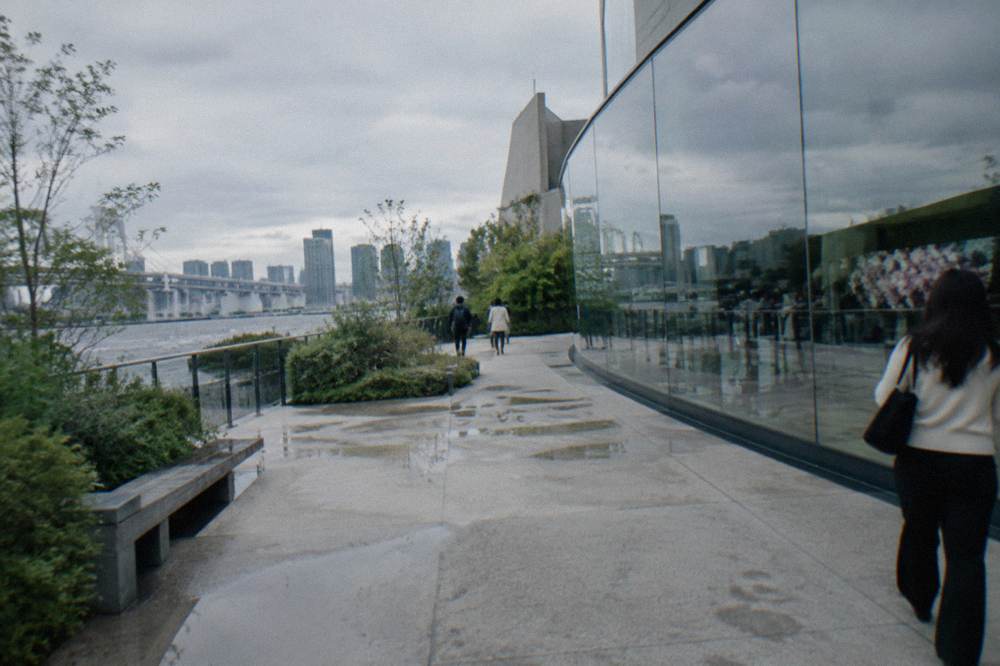

When Is The Best Time To Visit Odaiba And Rainbow Bridge Promenade?
The promenade's own schedule decides this more than the weather does. From 1 November to 31 March it opens 10:00 to 18:00 with last entry at 17:30, and it closes on the 3rd Monday of each month, so any visit plan starts by ruling those Mondays out. The free Toyosu auction viewing runs on market mornings, which pairs naturally with an afternoon bridge walk.
Work the day around the two clocks. The auction viewing is a morning thing and closes on market holidays, with some spots drawn by lottery, so treat it as the tentative half of the day. The promenade is the fixed half: from November it admits walkers from 10:00, and the last entry at 17:30 means a winter sunset walk needs to start before that gate, not at it. Check the port authority page the week you travel, because a public walkway's calendar is the one calendar in Tokyo that can shift under you. Everything else covered here is indexed on Free Things To Do In Tokyo.
Day of the week is the other lever. The 3rd Monday closure is easy to forget because the bridge looks permanently open from the shore. The schedule is what matters for planning, and it is enough to go on.
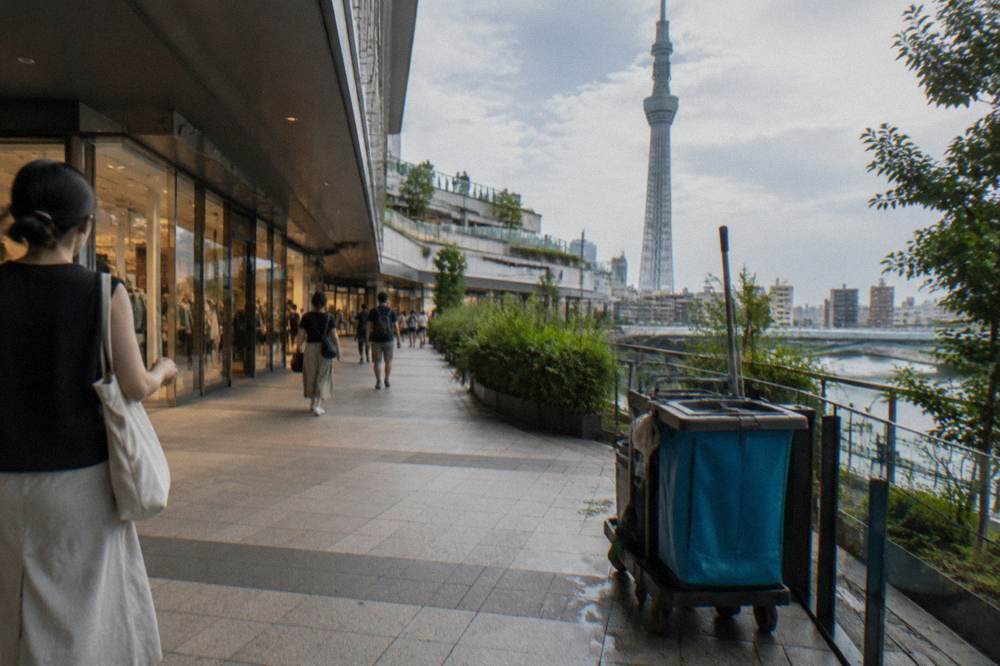
Seasonally, the November-to-March window is the one with published hours, which happens to cover the winter illumination season across the city. The Marunouchi Illumination along Naka-dori runs 12 November to 25 December 2026 and is free to view from the street, a paid-free split that rhymes with Odaiba's own. If a bay evening is on the plan, the promenade's 18:00 winter close is the constraint to respect.
The calendar around New Year tightens further, and it is worth knowing before you lock dates. The metropolitan gardens, Hama-rikyu, Koishikawa Korakuen and Rikugien at JPY 300 each, close 29 December to 1 January. The TMG observatories close 29 to 31 December and 2 to 3 January. The Imperial Palace East Gardens close 28 December to 3 January. A visitor building a "free Tokyo over New Year" plan around the bay should check each scheduled sight against that week, because the closures cluster.
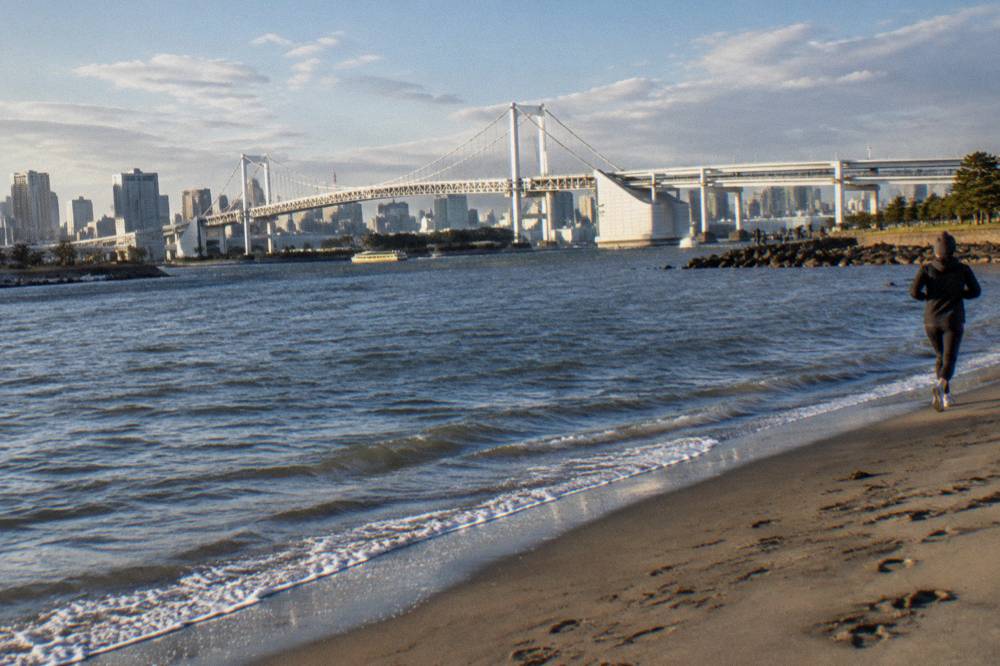
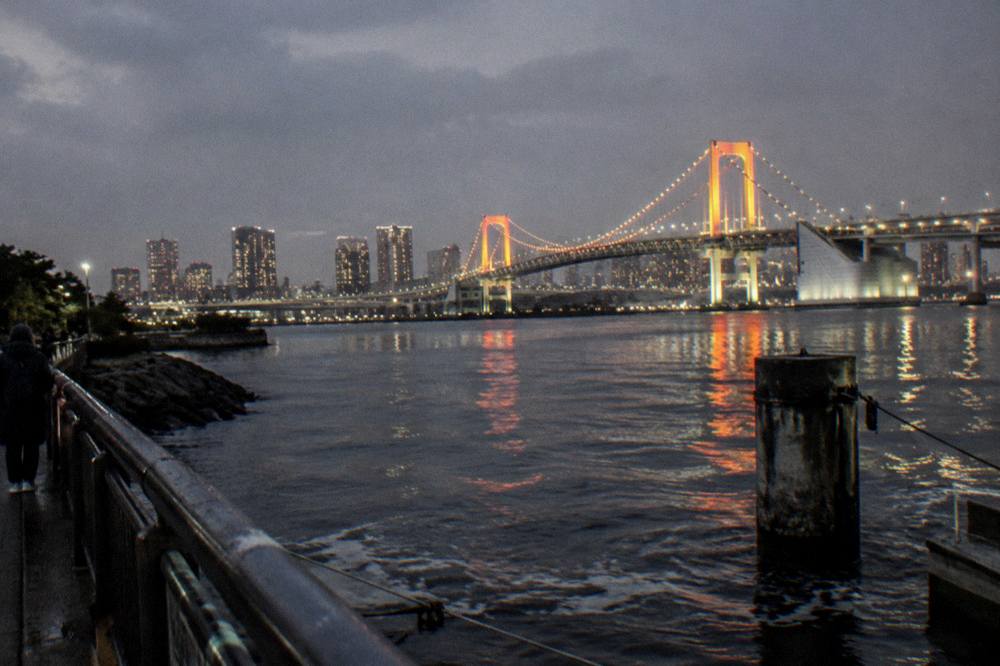
For a bay-specific angle, the bridge's evening illumination is part of why people want a night walk in the first place, and in winter the walkway simply is not open for one. The workaround costs nothing: view the lit bridge from the free Odaiba shoreline after dark, when the promenade above is closed but the spectacle is fully visible from below. Tokyo Tower is doing something similar in the same season, showing a 65th-anniversary retrospective light-up from sunset to 22:00 on 10 November 2026, viewable from the free ground around the tower while the decks stay ticketed.
| Scheduled free sight | Winter hours | Closed days |
|---|---|---|
| Rainbow Bridge Promenade | 10:00 to 18:00, entry to 17:30 | 3rd Monday |
| TMG observatories (South) | Free, no reservation | 1st and 3rd Tuesday; 29 to 31 Dec, 2 to 3 Jan |
| TMG observatories (North) | Free, entry to 17:00 | 2nd and 4th Monday; 29 to 31 Dec, 2 to 3 Jan |
| Imperial Palace East Gardens | 9:00 to 16:00, entry to 15:30 | Every Monday and Friday; 28 Dec to 3 Jan |
| Toyosu tuna auction viewing | Market mornings | Market holidays; partial lottery |
How Do You Combine Odaiba And Rainbow Bridge Promenade With Other Free Sights?
The natural combination is bay-side free with city-side free: a morning at the Toyosu auction viewing, the bridge promenade in the afternoon, then any of the free city sights in the evening. On this site's own roster of 46 free, pay what you want walks, none meet on Odaiba itself, so a bay day pairs best with a walk on another day, not the same afternoon.
Think of Tokyo's free layer as two kinds of place. There are the ungated streets and decks, Shibuya Crossing, Takeshita Street, Nakamise, Ameyoko, the Odaiba waterfront among them, free at any hour. Then there are the scheduled free things, the promenade, the Toyosu viewing, the free observatories, the East Gardens, each with closing days. A good itinerary puts one scheduled thing at its open hour and fills the rest with the ungated layer, which never closes on you.
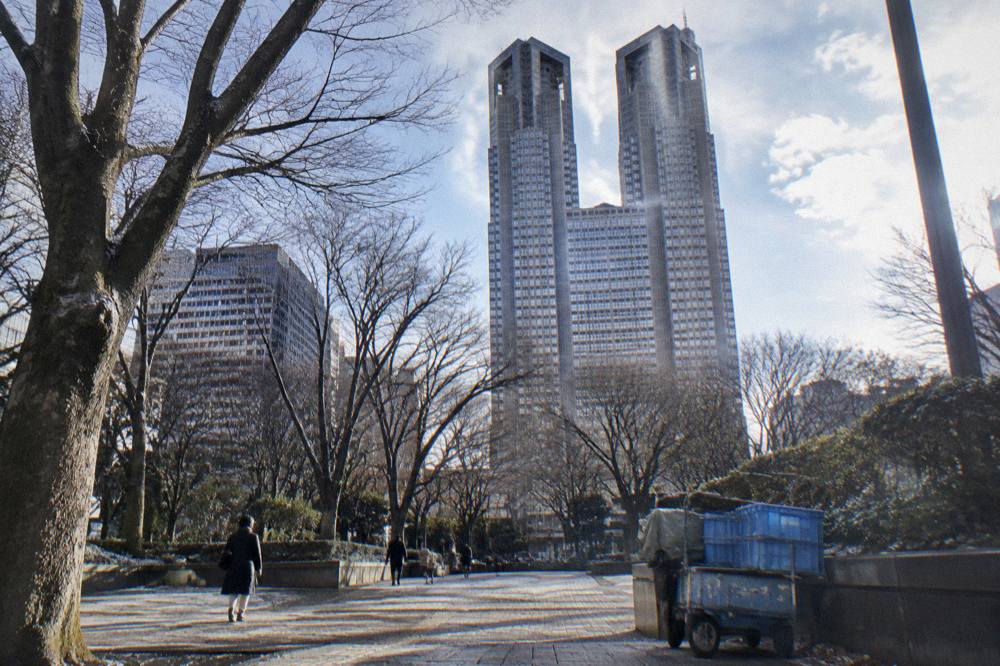
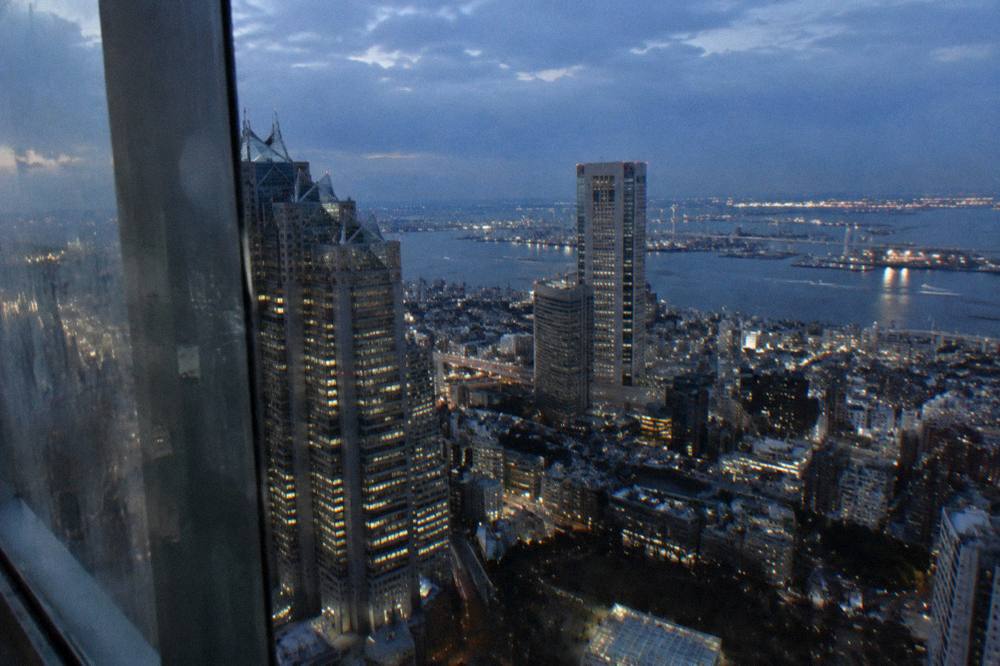
Odaiba's best pairing on the scheduled side is the Tokyo Metropolitan Government observatories, both free at 202 metres with no reservation, the South closed the 1st and 3rd Tuesday and the North closed the 2nd and 4th Monday. That rotating closure pattern is worth writing next to the promenade's own 3rd Monday, because between the two, Mondays and Tuesdays both need a check before you commit. The full breakdown is in the free observation decks guide.
The paid-layer traps travel too. Shibuya Sky above the free crossing is ticketed with an unresolved price, the Ghibli Museum is advance-reservation only, and the decks of Tokyo Tower and Tokyo Skytree start at JPY 1,500 and JPY 3,000 while their bases and the Solamachi complex are walkable free. The Tokyo on a budget guide assembles those splits across the whole city.
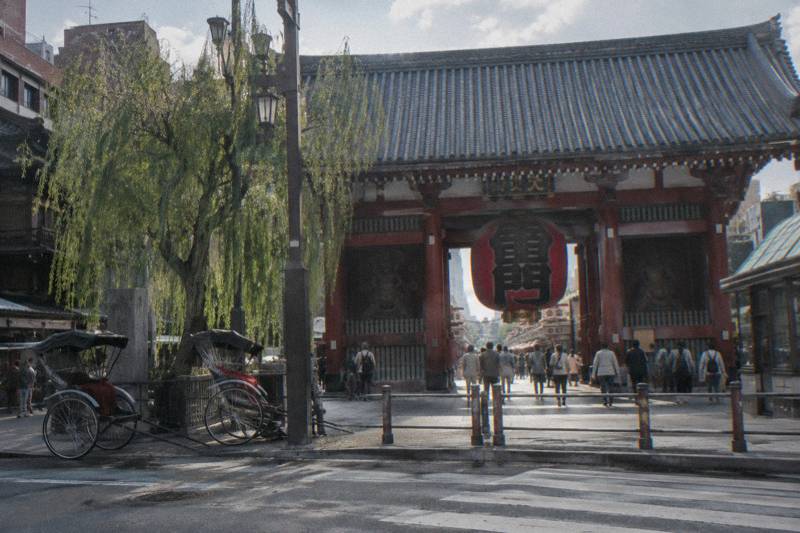
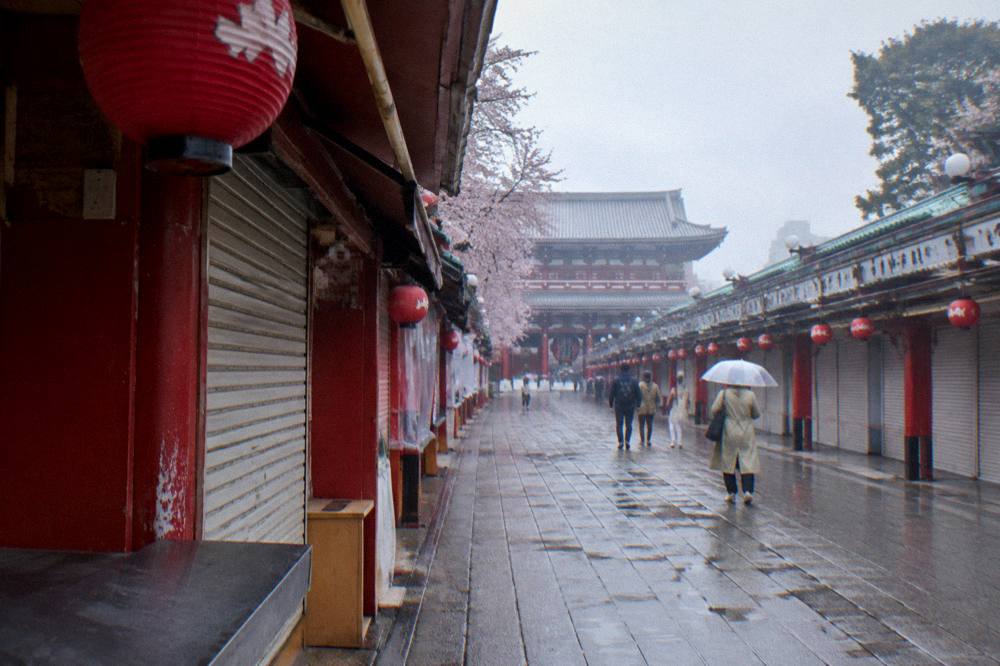
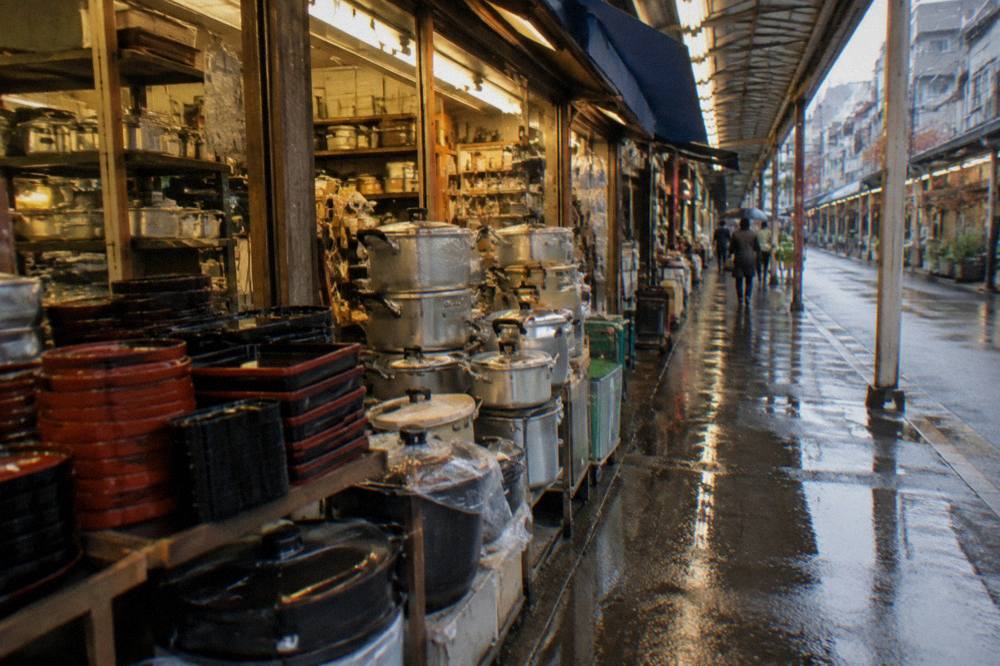
The ungated layer is where the money never moves at all. Nakamise, the approach street to Senso-ji, costs nothing to walk, as does Takeshita Street in Harajuku, the Omotesando avenue, the Yanaka Ginza shopping street and the Kappabashi kitchen-town blocks. None of these has an operator, a gate or a fee, and none can surprise you with a closing day, because there is nothing to close. On a week when the scheduled sights keep shutting on you, the ungated layer is the guarantee.
There is also a museum layer worth slotting into a bay week. The Currency Museum, the Meguro Parasitological Museum, the Fire Museum, the Water Science Museum and the Advertising Museum Tokyo are all free to enter, each with its own closed days, and the Sumo Museum is free but closed weekends and holidays. The National Museum of Western Art opens its permanent collection free to everyone on the 2nd Sunday of the month, next on 13 December 2026, otherwise JPY 500. The full list, with the closed days, is in the free museums guide.
Which Free Walking Tours Meet Near Odaiba And Rainbow Bridge Promenade?
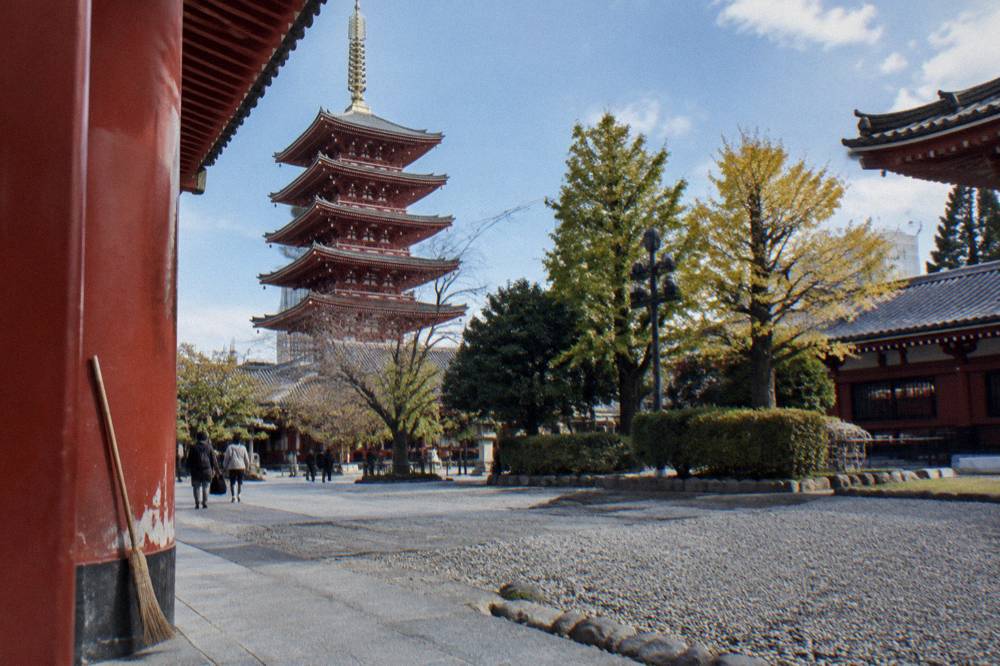
No free walking tour on this site's roster meets on Odaiba. The 46 shipped walks are all free, pay what you want, and all of them meet elsewhere in the city, mostly in Asakusa, Shibuya, Shinjuku and around the Imperial Palace. The closest fit for a bay day is an Asakusa walk, since old Tokyo and the bay sit on the same side of the story.
Every walk in this section runs on GuruWalk, each an independent local guide's own listing, and this site neither operates nor is affiliated with GuruWalk. Each is free, pay what you want, reserved on its platform.
The Asakusa Classic English Walk by Localized Walking Tours runs 2 hours in English, meets at the Asakusa Culture Tourist Information Center, and carries 4.91 out of 5 across 671 GuruWalk reviews. It is the most-reviewed English-language Asakusa walk in this group and a strong pick for the day before or after a bay afternoon.
The Asakusa Old Town, English walk by Tokyo Genki Tours also runs 2 hours in English, meeting at Kaminarimon Gate, rated 4.78 out of 5 across 767 GuruWalk reviews.
The Oldest Temple Walk, English by Local Guide Stars runs 2 hours in English from the Kaminarimon Police Box, rated 4.78 out of 5 across 248 GuruWalk reviews. A shorter review pool than its neighbours, printed with its count for exactly that reason.
| Walk | Guide or operator | Meets at | Language | Rating |
|---|---|---|---|---|
| Asakusa Classic English Walk | Localized Walking Tours | Asakusa Culture Tourist Information Center | English | 4.91 out of 5, 671 reviews |
| Asakusa Old Town, English | Tokyo Genki Tours | Kaminarimon Gate | English | 4.78 out of 5, 767 reviews |
| Oldest Temple Walk, English | Local Guide Stars | Kaminarimon Police Box | English | 4.78 out of 5, 248 reviews |
One more roster fact worth knowing: not every walk runs in English. Some Asakusa and Ueno walks run in Spanish only, and a Shibuya walk runs in Polish. The wider field is in the free walking tours in Tokyo guide, including the etiquette question of what to pay on a pay-what-you-want walk, which this site answers without suggesting a figure.
The bay and old Tokyo also connect through the fish trade itself. Tsukiji Outer Market's lanes are free to walk, food and shopping are paid, and the market's official site asks visitors not to eat while walking. In December it goes further and asks sightseers and group tours to stay away during the New Year shopping rush, so any December plan that strings the bay, Toyosu and Tsukiji together should carry that request. The rules and the split are laid out in the Tsukiji Outer Market guide.
Mistakes That Trip People Up At Odaiba And Rainbow Bridge Promenade
The three mistakes that cost money or a whole visit are: assuming the bridge promenade is always open, budgeting teamLab at a stale fixed price, and treating Odaiba's free deck as proof that everything on the island is free. Each one is avoidable with a single fact, and all three facts are on the official pages linked from this guide.
The first mistake is the Monday. The promenade closes the 3rd Monday of every month, and the winter schedule's 17:30 last entry quietly ends many planned sunset walks. This is the Odaiba version of the East Gardens trap, where the Imperial Palace East Gardens close every Monday and Friday and catch visitors who assumed a public garden keeps public-street hours. Scheduled free places have calendars; respect the calendar.
The second mistake is the price anchor. teamLab uses dynamic pricing on both Tokyo spaces, so a figure read anywhere other than the operator's own site can be wrong on the day. Printing "from JPY 3,800" and "from JPY 3,400" is not hedging, it is how dynamic pricing has to be described. Booking-platform screenshots and magazine roundups go stale; the operator page does not.
The third mistake is the inheritance error, assuming a paid thing inherits its free neighbour. The free waterfront does not soften the teamLab ticket. The reverse error exists too: the bridge promenade is free, so visitors assume the whole island is, then meet a JPY 3,800 door. The same split appears at Shibuya, where Shibuya Crossing is free to cross while the Shibuya Sky deck above it is ticketed, with tickets sold separately. Free ground and paid verticals are Tokyo's most consistent pattern, and Odaiba is its cleanest example.
A fourth, quieter mistake is planning a New Year bay week without checking the cluster of closures. The metropolitan gardens close 29 December to 1 January, the TMG observatories close 29 to 31 December and 2 to 3 January, and the East Gardens close 28 December to 3 January. None of those closures touches the promenade's own schedule, but a multi-day free itinerary that ignores them loses half its stops. And a fifth: trusting reseller sites for places that are free or official, the reason this site links only the port authority, the teamLab operator and other official hosts, and never the reseller domains that sell "tickets" to public spaces.
Common Questions About Odaiba And Rainbow Bridge Promenade
Is The Rainbow Bridge Promenade Free?
Yes, the promenade is free to walk with no reservation. From 1 November to 31 March it runs 10:00 to 18:00 with last entry 30 minutes before closing, and it closes the 3rd Monday of each month. The port authority's official page carries the current schedule.
How Much Does teamLab Planets Cost?
teamLab Planets is priced from JPY 3,800 per adult with dynamic pricing, so the exact figure for your date appears on the operator's own site. It is a separate paid attraction with no connection to the free bridge promenade.
Can You Walk Across Rainbow Bridge At Night?
Not in winter. The promenade closes at 18:00 from 1 November to 31 March, with last entry at 17:30, so a winter night crossing is not possible. Night views of the illuminated bridge from the Odaiba shore remain free.
Is Odaiba Itself Free To Visit?
Yes, the island's waterfront decks and streets are open public space with no gate or fee. The paid parts are specific doors: teamLab Borderless from JPY 3,400, teamLab Planets from JPY 3,800, plus ordinary shopping and food.
Are There Free Walking Tours On Odaiba?
No. The 46 free, pay what you want walks on this site all meet elsewhere, in districts such as Asakusa, Shibuya, Shinjuku and around the Imperial Palace. Asakusa walks pair well with a bay day on the same trip.
What Is The Best Month To Walk The Promenade?
Any month works, but only the 1 November to 31 March schedule is published on the official page, with 10:00 to 18:00 hours. Avoid the 3rd Monday of the month, when the walkway is closed, and start before the 17:30 last entry in winter.