Is Tokyo Tower Free To Visit?
Tokyo Tower's base, plaza and Foot Town are free to walk; the observation decks are ticketed from JPY 1,500. Here is exactly what costs money and what does not.
In Short
Partly. The tower base, the plaza between the legs and the Foot Town shopping complex are free to walk into, and the exterior can be seen from the surrounding Shibakoen streets at no cost. The observation decks are not free: the Main Deck is ticketed from JPY 1,500 per adult, with dynamic pricing above that for the Top Deck Tour. The neighboring Zojo-ji temple grounds and main hall are free, though its Treasures Gallery charges JPY 700 and closes Tuesdays.
This question sits inside the Zojo-ji And Tokyo Tower guide, which covers the whole neighborhood around the tower.
Quick Facts
| Question | Answer |
|---|---|
| Is the tower base free? | Yes, the base, plaza and Foot Town are free to enter |
| Is the Main Deck free? | No, tickets from JPY 1,500 per adult |
| Is the Top Deck Tour free? | No, priced above the Main Deck, dynamic pricing |
| Is Zojo-ji free? | Grounds and main hall free; Treasures Gallery JPY 700, closed Tuesdays |
| Free walks meeting here | GuruWalk walks meet at Tokyo Tower, Shibakoen |
| Free view nearby | Zojo-ji grounds, with the tower directly overhead |
Is Tokyo Tower Free To Visit?
Partly. Walking beneath Tokyo Tower's legs, through its base, and around the Foot Town complex costs nothing, with no ticket gates guarding those areas, but the observation decks above require paid entry: Main Deck access starts at JPY 1,500 per adult, and the Top Deck Tour is priced higher on the same dynamic scale. In short, seeing and entering the lower tower is free; going up is not.
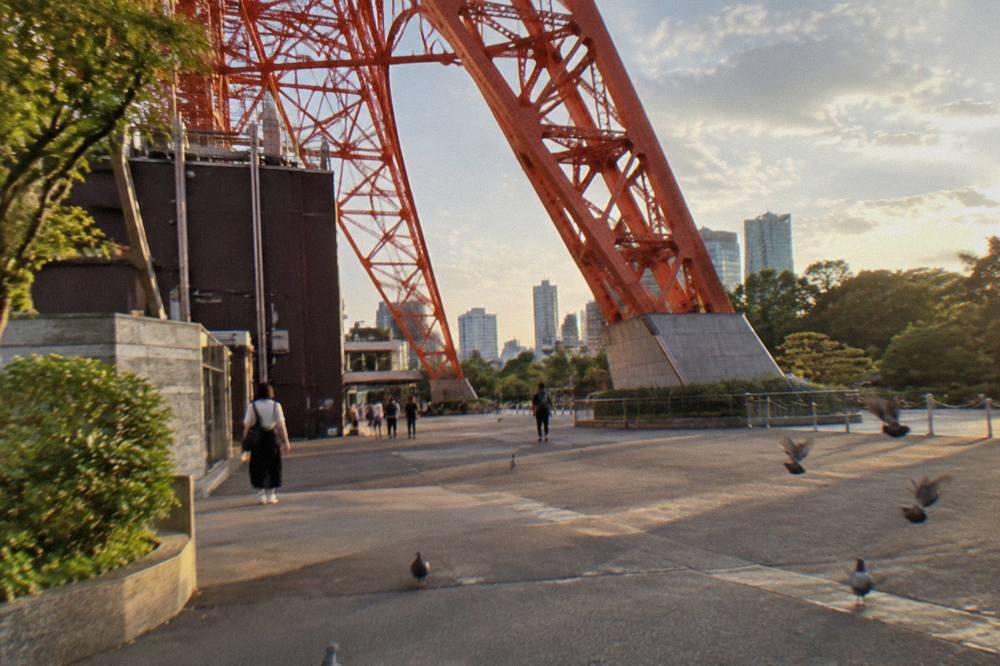
The tower rises out of Shibakoen, a district whose streets, temple grounds and park spaces can be walked without spending anything. The operator's own site, tokyotower.co.jp, publishes the deck pricing, and every figure there is written as a "from" price: the Main Deck starts at JPY 1,500 for an adult, and the amounts move with date and demand because pricing is dynamic. There is no single flat figure to quote, and any page that prints one exact yen amount for a deck ticket is either out of date or guessing.
The plaza between the four legs is public space. Foot Town, the multi-floor complex built into the tower's base, contains shops and restaurants and is walkable without a ticket, in the same way the Solamachi complex at the Tokyo Skytree base is walkable while that tower's decks are ticketed. If you want to go deeper on the taller one, the companion piece is Tokyo Skytree free breaks down its own free base versus paid decks split.
| Place | Free Or Ticketed | What Is Free | What You Still Pay For |
|---|---|---|---|
| Tokyo Tower | Free on conditions | Walking up to the tower and through its Foot Town shopping floors is not ticketed; the observation decks are ticketed. | Main Deck (150 m) from JPY 1,500 adult on the official web ticket site; Top Deck Tour from JPY 3,300 web price. |
There is also a seasonal layer to the free experience. The tower's official page showed a 65th-anniversary retrospective light-up for 10 November 2026, running from sunset to 22:00, and light-ups like this are viewed from the street at no cost. The tower's illumination is, and always has been, a free spectacle: it costs nothing to stand in Shibakoen and watch the structure lit against the night sky. Nobody sells a ticket to look at Tokyo Tower from outside.
The paid layer is strictly vertical. Everything from the deck elevators upward requires a ticket bought at the operator's counter or in advance. The decks are the product; the base is the shopfront. A visit that includes the view costs money. A visit that includes everything at ground level, plus the surrounding neighborhood, costs nothing at all.
What Does The Free Part Include?
The free part includes the entire ground layer: the open plaza beneath the tower, the base structure, the Foot Town complex with its shops and restaurants, and the surrounding Shibakoen streets. Zojo-ji temple's grounds and main hall sit within the same walkable area and are free as well. Nothing in this list requires a ticket, a reservation or a timed entry, and all of it can be done at any hour the streets themselves are open.
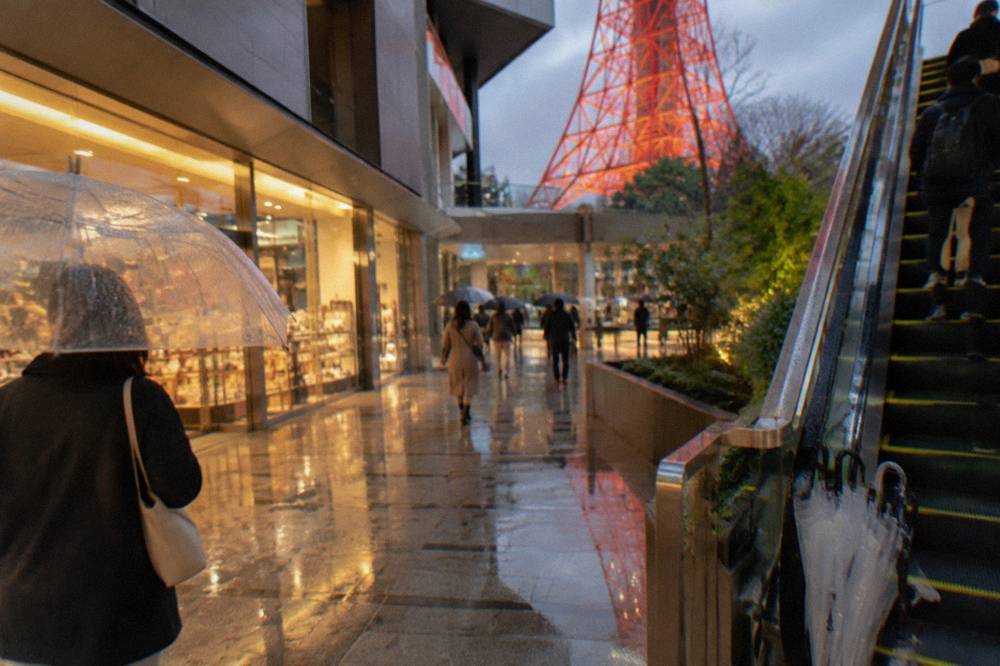
It is a real complex, not a corridor: multiple floors of retail and food built directly into the tower's pedestal, open to anyone who walks in. You can spend an hour there without buying anything, though the shops exist precisely to make that difficult. The complex also serves as the access route to the ticketed decks, so free visitors and paying visitors share the same ground floor before splitting at the elevators.
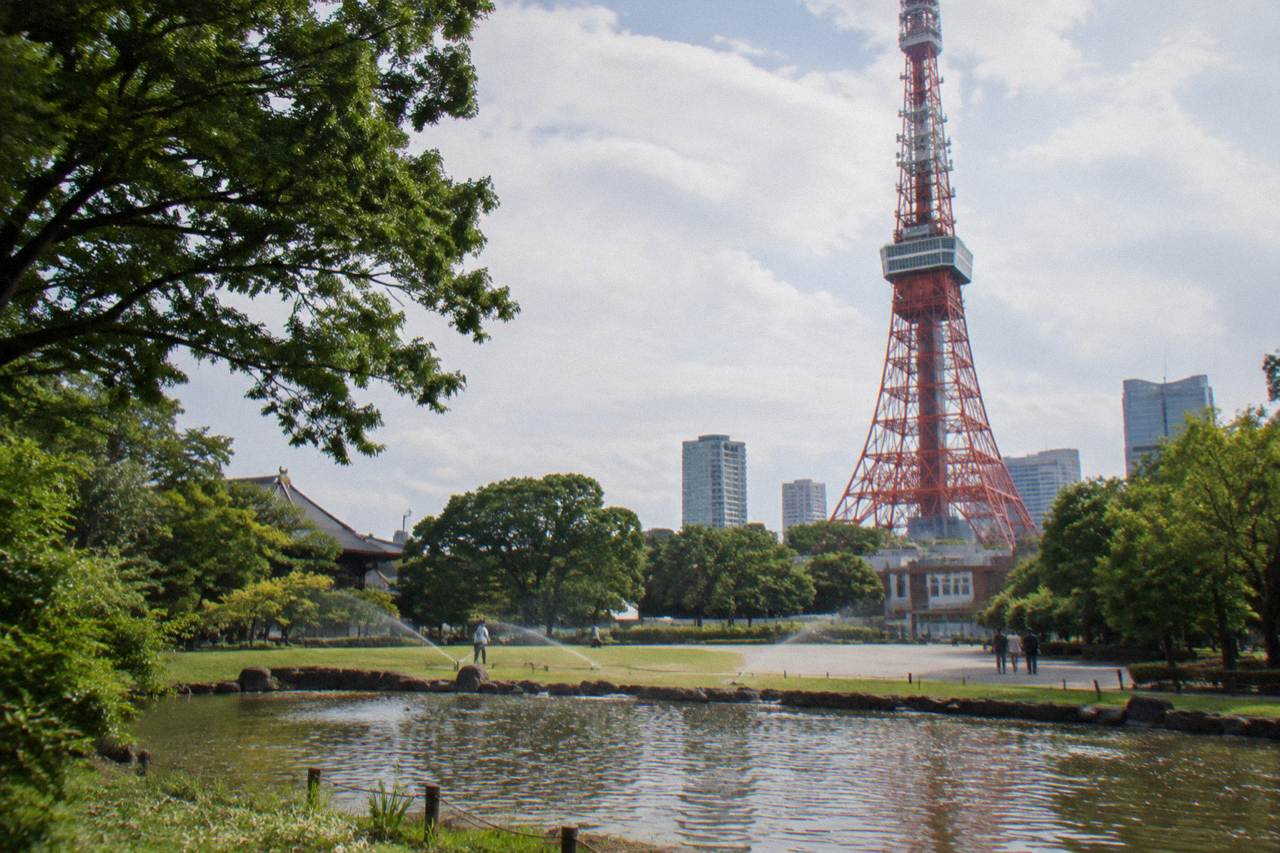
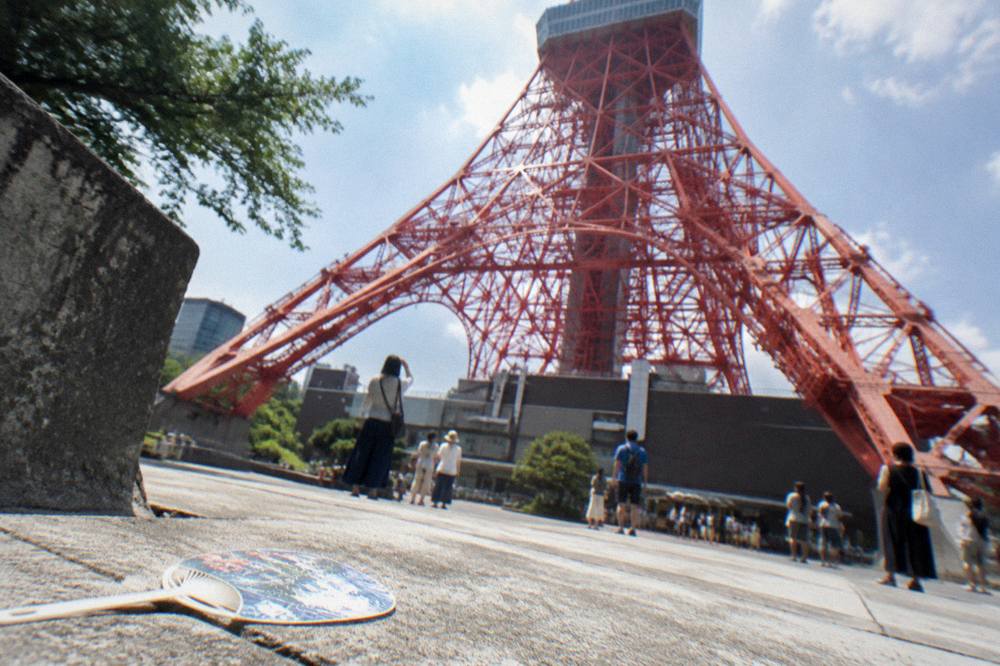
Outside, the plaza and the legs define the free experience. Standing directly beneath an international orange and white lattice structure that defines the Tokyo skyline is the free attraction, and it is a good one. The surrounding streets of Shibakoen connect the tower to Zojo-ji, whose official site zojoji.or.jp describes the temple's grounds and main hall as freely open. The temple and the tower share frames in a thousand photographs for a reason: the grounds sit close enough that the tower rises directly behind the temple's main hall, and walking from one to the other is the natural free route through the district.
| Free element | What you get | Any condition? |
|---|---|---|
| Tower plaza and legs | Walk beneath the structure | None |
| Foot Town | Shops, restaurants, walkable floors | Purchases are extra |
| Zojo-ji grounds and main hall | Temple precinct and hall | None |
| Shibakoen streets | District walk, tower views | None |
| Tower light-ups | Evening illumination from outside | Seasonal schedules vary |
Note the one line in that table with a condition attached. The light-up on the official page for 10 November 2026 was a dated anniversary event, sunset to 22:00, not a permanent guarantee. Tokyo Tower does light regularly, but specific illumination schedules are published by the operator per event, so the reliable free claim is the structure's evening appearance from the street, not any particular color scheme or anniversary program.
The free layer also includes the neighborhood's role as a walking destination in its own right. This site's broader coverage of free things to do in Tokyo places Tokyo Tower among the conditional landmarks, ones where the free and paid parts sit side by side and the boundary is physical rather than administrative. You will know when you cross it, because the ticket counters are visible and the elevators are behind them. Until that moment, everything is open.
What Do You Still Have To Pay For?
The paid part is the decks. The Main Deck at 150 metres is ticketed from JPY 1,500 per adult, and the Top Deck Tour, which adds the higher level, costs more on a dynamic pricing scale. Zojo-ji's Treasures Gallery inside the free grounds charges JPY 700 and closes on Tuesdays. Children's deck pricing is reduced, and all deck prices move with date and demand, so no exact total can be honestly printed here.
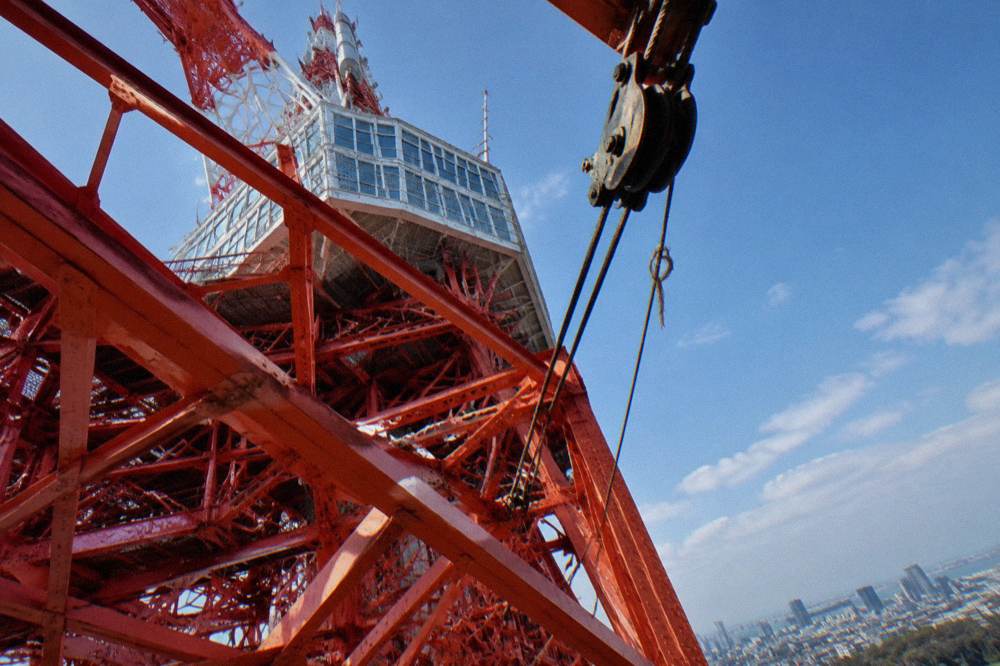
The "from" wording is not hedging, it is the operator's own pricing model. Tokyo Tower's deck tickets are dynamically priced, meaning the figure printed at tokyotower.co.jp is a floor, not a price. The Main Deck starts at JPY 1,500 for an adult and rises from there depending on when you go. The Top Deck Tour is a separate, higher product on the same model. This is identical in spirit to the Skytree's observation decks, which start from JPY 3,000 per adult on their own dynamic scale, and quite different from the free public observatories elsewhere in the city, a comparison the free observation decks guide works through in detail.
The Treasures Gallery at Zojo-ji is the smaller trap in the district. The temple's grounds and main hall are free, and a visitor could reasonably assume the whole precinct is. It is not: the gallery charges JPY 700, a JPY 1,000 combination ticket pairs the Treasures Gallery with the Tokugawa Shogunate Graveyard, and the gallery closes on Tuesdays. This is the same free-hill, paid-museum pattern that recurs across Tokyo, at Ueno Park with the Tokyo National Museum at JPY 1,000, at Meiji Jingu with the Inner Garden at JPY 500 and the museum at JPY 1,000, and at Yasukuni with the Yushukan at JPY 1,000. A precinct's free status never extends to the museum inside it.
| Paid item | Price | Notes |
|---|---|---|
| Tokyo Tower Main Deck | From JPY 1,500 adult | Dynamic pricing |
| Tokyo Tower Top Deck Tour | Priced above Main Deck | Dynamic pricing, same model |
| Zojo-ji Treasures Gallery | JPY 700 | Closed Tuesdays; combo JPY 1,000 |
| Zojo-ji combo ticket | JPY 1,000 | Treasures Gallery plus the Tokugawa Shogunate Graveyard |
Food and shopping are the remaining paid items, though they are optional in the ordinary way shops are optional. Foot Town's restaurants and retail charge normal commercial prices, and nothing about entering the complex obliges a purchase. The honest framing is that a Tokyo Tower visit can be entirely free at ground level, partly paid if you add the gallery or the deck, and the choice point is always visible and always yours.
When Is The Free Option Available?
The free ground layer has no opening hours of its own: the plaza and the surrounding streets are public space, walkable at any hour. The deck ticket counters and Zojo-ji's buildings keep their own schedules, and Zojo-ji's Treasures Gallery closes every Tuesday.
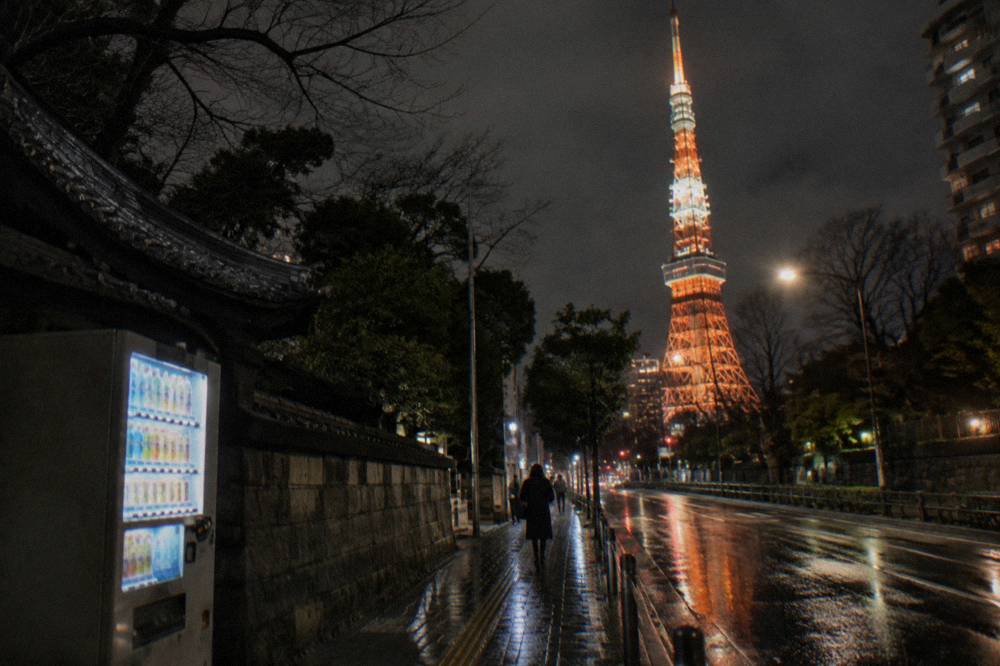
Because the plaza is unfenced public space, the free visit is effectively always available. The illuminated tower at night is the strongest version of it: the anniversary light-up on the official page ran sunset to 22:00 on 10 November 2026, and ordinary illumination makes the tower a nighttime landmark regardless. The wider set of guides lives on Free Things To Do In Tokyo.
The paid parts are the ones with calendars. Deck hours are published by the operator and shift with season and event periods. The Treasures Gallery's Tuesday closure is the fixed weekly fact worth memorizing, because a Tuesday Zojo-ji visit delivers the free grounds and main hall but a shut gallery. Across the city this pattern repeats: the Imperial Palace East Gardens close every Monday and Friday, the TMG observatories each close on rotating weekdays, the South on the 1st and 3rd Tuesday, the North on the 2nd and 4th Monday. Tokyo's free attractions are generous but schedulable, and the closing day is the single fact most often missed.
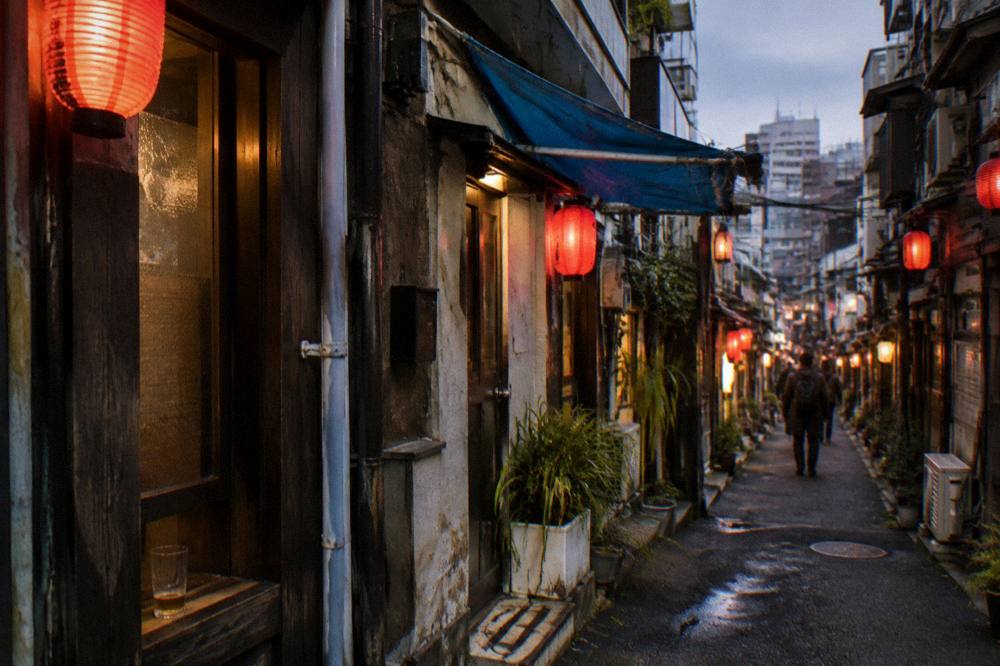
For December specifically, several nearby sites post holiday closures: the East Gardens close 28 December to 3 January, the TMG observatories close 29 to 31 December and 2 to 3 January. Tokyo Tower's own New Year schedule is published by the operator, and the light-up calendar for the winter season appears on tokyotower.co.jp as events are confirmed. If your visit falls in that window, the tower's page is the one to read before committing a day.
Where Does The Free Visit Start?
The free visit starts at street level in Shibakoen, and the natural anchor is Zojo-ji: its grounds are free, its main hall is free, and the tower rises directly behind it. From the temple the walk to the tower's plaza crosses no barrier and requires no ticket. Free GuruWalk walks in this district meet at Tokyo Tower, Shibakoen itself, so a guided version of the same free ground is also an option.
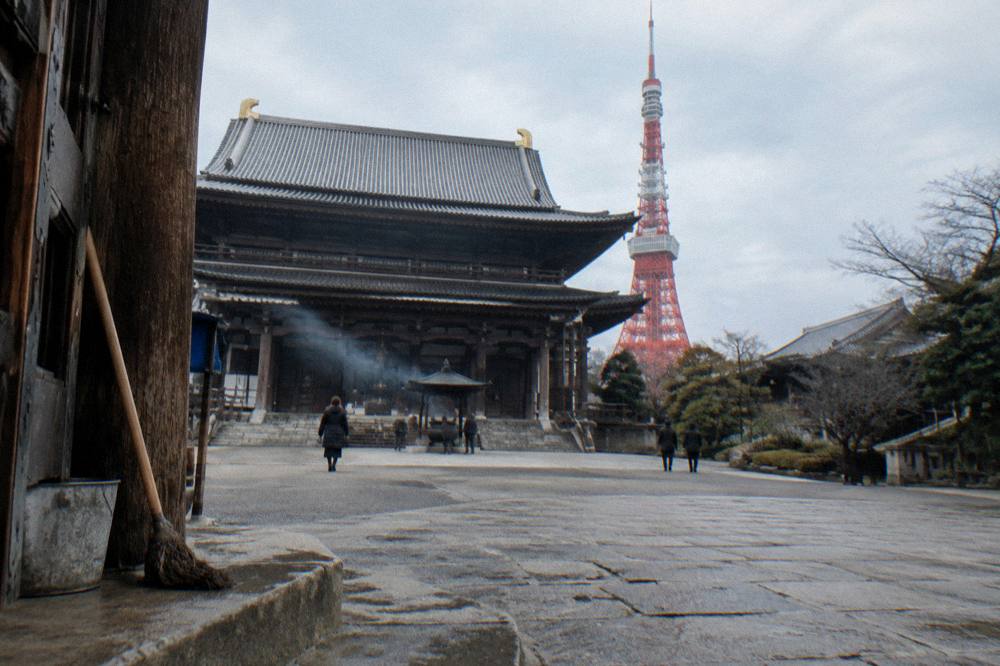
Shibakoen is the neighborhood name to know. It gives the district its park-and-temple character, and it holds both halves of this article's subject: Zojo-ji's precinct and Tokyo Tower's base. The order you walk them in is a matter of taste. Temple first gives you the free grounds and the framed tower view, then the plaza and Foot Town. Tower first reverses it. Either way, the two anchor one continuous free walk through the district, documented from the temple side in the site's Zojo-ji And Tokyo Tower guide.
The guided option belongs to this same ground. Among the free, pay what you want walks on GuruWalk, the walk called From The Ashes Of WWII meets at Tokyo Tower, Shibakoen, runs two hours in English and Spanish, and is rated 4.88 out of 5 across 239 GuruWalk reviews. It is TokyoXplorers' From the Ashes of WWII on GuruWalk, a 2-hour walk rated 4.88 out of 5 across 239 GuruWalk reviews, and its meeting point is the tower itself.
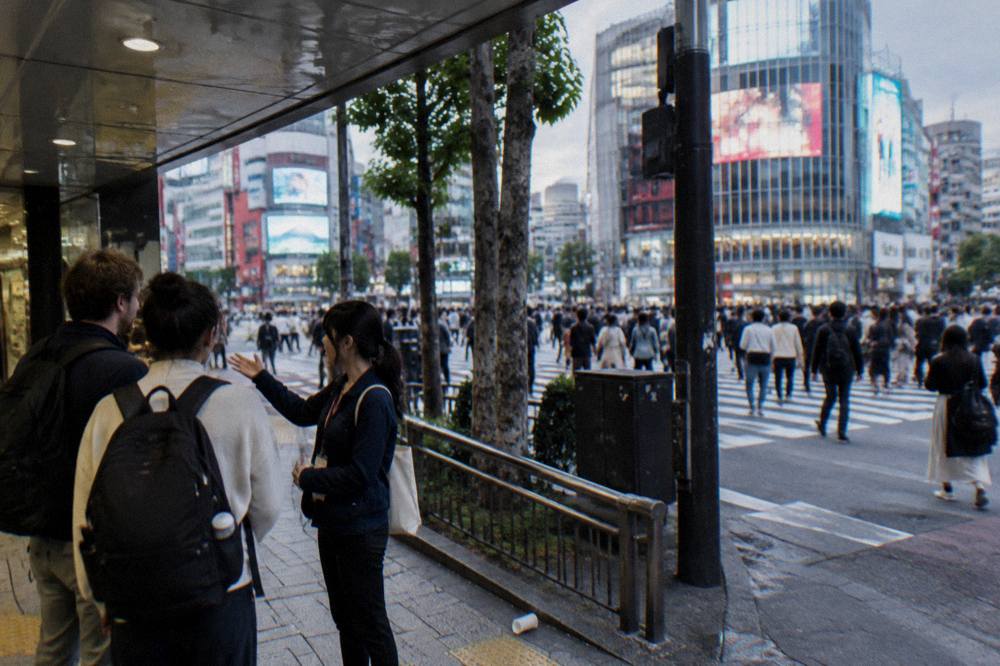
That is the general shape of free guided walks in Tokyo: every one is free, pay what you want, reserved on its platform, and introduced honestly by its meeting point, language, duration and rating. The 46 walks shipped on this site span the Imperial Palace district, Tsukiji, Asakusa, Ueno, Shibuya, Harajuku, Shinjuku, Akihabara and a few hidden neighborhoods, and the tower district's walks sit in the Imperial Palace and Central Tokyo group alongside them.
Which Free Walking Tours Cover This?
The tower district's own free walk is From The Ashes Of WWII, a GuruWalk walk meeting at Tokyo Tower, Shibakoen, two hours, English and Spanish, rated 4.88 out of 5 across 239 GuruWalk reviews. Beyond the district, the Imperial Palace walks pair well with a tower day, since the palace grounds are the other great free landmark of central Tokyo. Every walk in this roster is free, pay what you want, and reserved through GuruWalk.
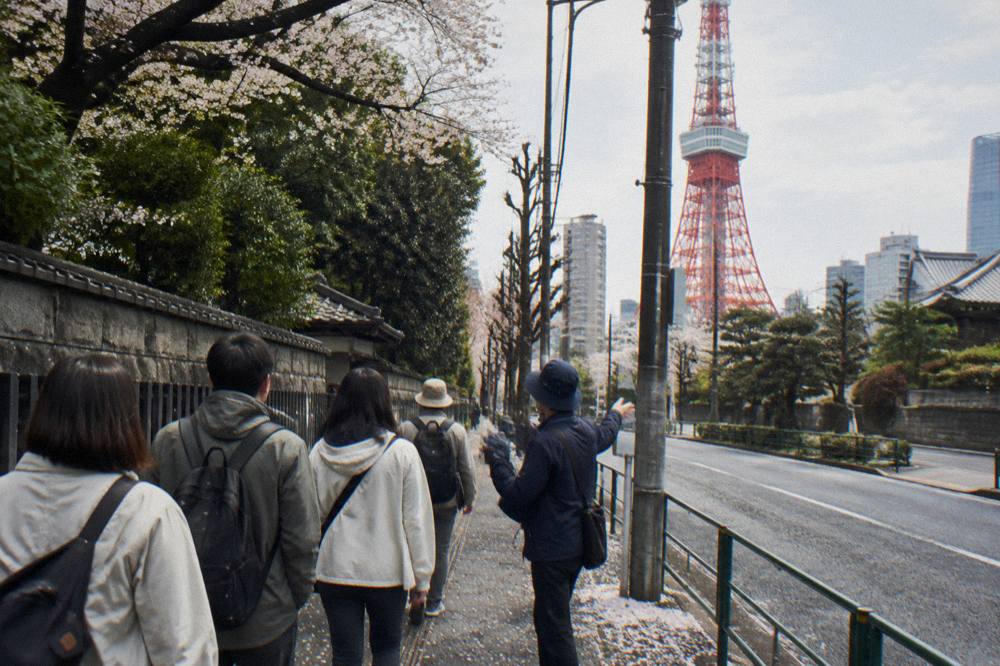
GuruWalk is where the walks live, and naming it plainly is part of honesty here: these are listings run by independent local guides on that platform, and this site neither operates them nor is affiliated with GuruWalk. The Palace Storytelling Walk, run by the operator 5 STORY, meets at the Imperial Palace, Kokyogaien, runs two hours in English, and carries a 4.85 out of 5 rating across 901 GuruWalk reviews. It is one of the most reviewed free walks in central Tokyo, and the palace district it starts from is a short transit hop from Shibakoen, which makes it a natural pairing with a free tower morning.
A second palace option finishes in a completely different district: the Palace Walk Ending At Tsukiji, run by Japan Navigators, rated 4.84 out of 5 across 587 GuruWalk reviews, two hours in English and Spanish, meeting at Sakuradamon Gate, Imperial Palace. It is what it says, a palace walk that ends at the market streets, so a visitor combining the free palace grounds with the free-to-walk Tsukiji lanes gets both in one guided outing. Food at Tsukiji is bought separately, a fact worth repeating for anyone who has read that the market walk is free.
Beyond the palace pair, the roster fans out across the city. In Asakusa, the Asakusa Old Town walk by Tokyo Genki Tours meets at Kaminarimon Gate, two hours in English, 4.78 out of 5 across 767 GuruWalk reviews, and the Oldest Temple Walk by Local Guide Stars meets at the Kaminarimon Police Box, 4.78 out of 5 across 248 reviews. In Shibuya, the Bilingual Shibuya And Harajuku walk by Japan Navigators meets at the Hachiko Statue, Shibuya Station, 4.88 out of 5 across 1,470 reviews, the largest review pool in the roster. Each is free, pay what you want, and each is reserved on its own GuruWalk page.
Two cautions complete the honest picture. The tower district's WWII walk has no age restriction. Only the Shinjuku red-light walk is adults only. And Spanish speakers are well served but should check language per walk: some run only in Spanish, a few in English and Spanish, and one in English and Polish.
Mistakes That Trip People Up At Tokyo Tower
The common mistakes are concrete: assuming the whole tower is free and arriving to find the decks ticketed from JPY 1,500; assuming the whole tower is paid and never realizing the base and Foot Town cost nothing; treating Zojo-ji as fully free when the Treasures Gallery charges JPY 700 and closes Tuesdays; and printing a single exact deck price when the operator uses dynamic pricing and publishes only "from" figures. Each mistake is avoidable with one fact.
The comparison is fair but the conclusion is wrong: the TMG observatories are a public facility, Tokyo Tower's decks are a commercial product. Visitors who want a free high view have one, just not at this tower. The second mistake, expecting a fully paid tower, wastes the genuinely free ground layer: the plaza, Foot Town and Zojo-ji precinct together make a full free outing, and skipping them means paying for the one part that is optional.
The third mistake, the Zojo-ji gallery, catches people on Tuesdays twice over: the gallery is both paid and closed that day. The fourth, quoting exact deck prices, is mostly committed by travel pages rather than travelers. The dynamic model means the honest sentence is "from JPY 1,500", and the honest planning move is checking the operator's own page for the specific date. A fifth, smaller mistake is conflating this tower's pricing with the Skytree's: the Skytree decks start from JPY 3,000, a different tower, a different floor, and a different article.
| Place | Free Or Ticketed | What Is Free | What You Still Pay For |
|---|---|---|---|
| Zojo-ji | Free on conditions | Temple grounds and main hall have no admission charge, with Tokyo Tower rising behind the gate. The Treasures Gallery below the main hall is ticketed. | Treasures Gallery JPY 700 adult, JPY 300 high school and younger, elementary and younger free; combination with the Tokugawa Shogunate Graveyard JPY 1,000; gallery closed Tuesdays (official English page). |
The last mistake is schedule-based: December visits. Zojo-ji's grounds stay walkable, but several nearby free sites close across the New Year window, the East Gardens from 28 December to 3 January among them, and seasonal events shift. The tower district itself is forgiving, but a December itinerary that assumes every free site is open will lose a day to a locked gate somewhere. Read each site's own page for the dates you will actually be there.
Common Questions On This Topic
Is Tokyo Tower Free To Visit?
Partly. The base, the plaza between the legs and the Foot Town complex are free to enter, and Zojo-ji's grounds next door are free too. The observation decks are ticketed, with the Main Deck from JPY 1,500 per adult on dynamic pricing. Seeing and entering the lower tower costs nothing; going up does not.
How Much Does It Cost To Go Up Tokyo Tower?
Main Deck tickets start from JPY 1,500 per adult, and the Top Deck Tour is priced above that on the same dynamic model, so the figure moves with date and demand. The operator's own page shows the exact price for the day you choose. No single flat yen figure can be honestly quoted here.
Can You Enter Tokyo Tower Without A Ticket?
Yes, at ground level. The plaza beneath the legs, the base and the Foot Town complex are open without a ticket. The elevators to the decks sit behind ticket purchase, so the boundary between free and paid is physical and clearly marked inside Foot Town.
Is Zojo-ji Temple Free Next To Tokyo Tower?
The grounds and main hall are free. The Treasures Gallery inside the precinct charges JPY 700 and is closed on Tuesdays. A JPY 1,000 combo ticket covers the Treasures Gallery plus the Tokugawa Shogunate Graveyard. The temple precinct never charges entry, but the gallery is a separate paid part within it.
Are There Free Walking Tours At Tokyo Tower?
Yes. The GuruWalk walk called From The Ashes Of WWII meets at Tokyo Tower, Shibakoen, runs two hours in English and Spanish, and is rated 4.88 out of 5 across 239 GuruWalk reviews. Every walk on this site's roster is free, pay what you want, reserved through GuruWalk.
Is The Tokyo Tower Light-Up Free To Watch?
Yes, illumination is viewed from the street at no cost. A 65th-anniversary retrospective light-up appeared on the official page for 10 November 2026, sunset to 22:00. Specific light-up schedules are published per event by the operator, so check the tower's own page for the dates of your visit.