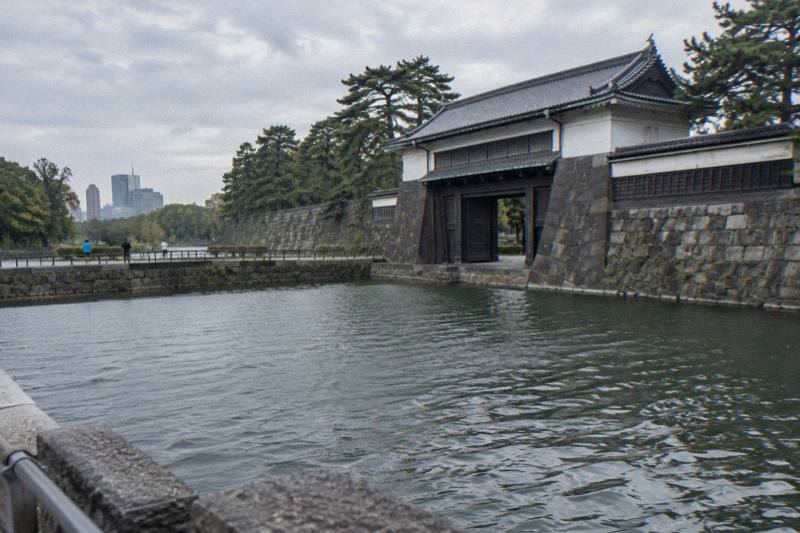
Is The Imperial Palace Open To The Public?
Yes, in part. The Imperial Palace grounds are closed as a residence, but the East Gardens, the Outer Garden plaza and a free guided tour are open to visitors at set times. Here is exactly what you can and cannot enter.
In Short
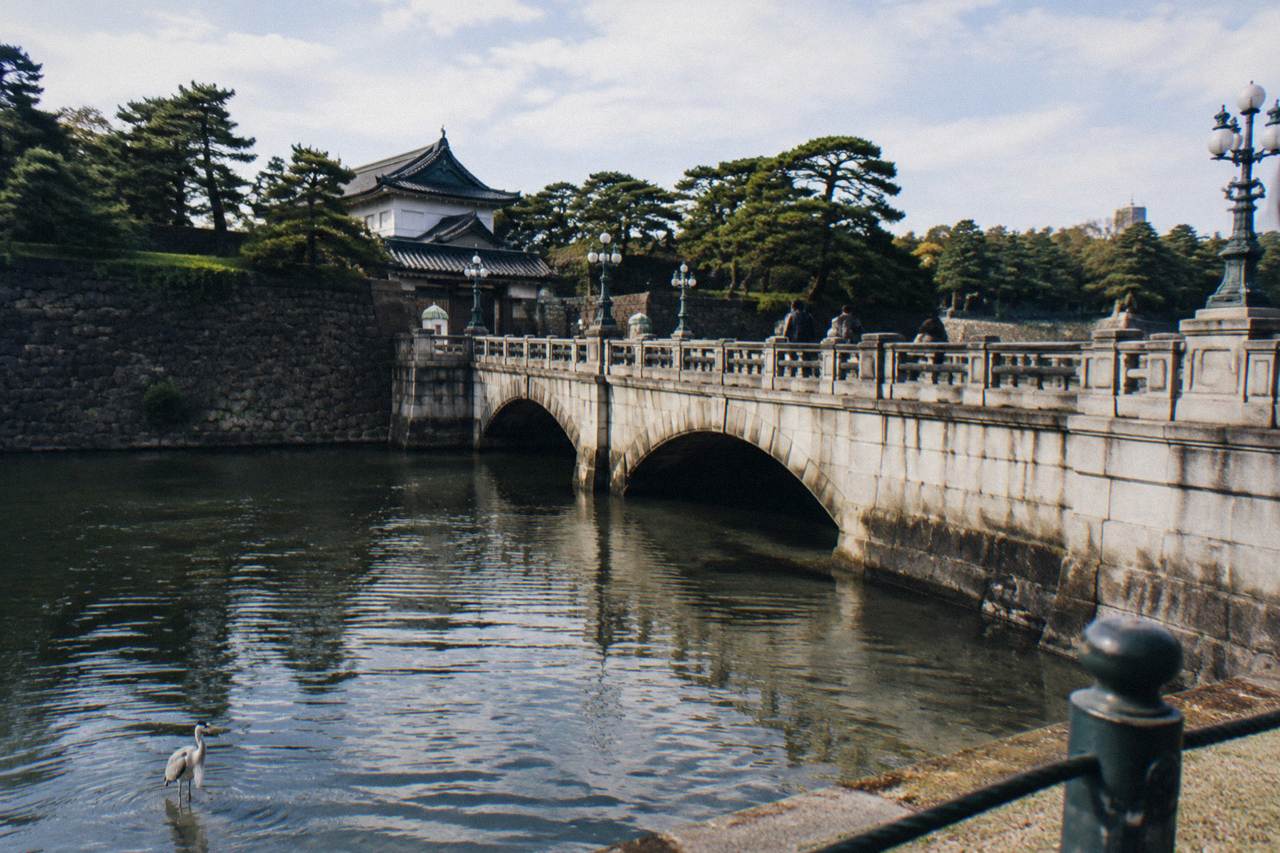
Yes, in part. The inner palace grounds where the Emperor lives are closed to the public. But the Imperial Palace East Gardens are free and open most days, the Outer Garden plaza at Kokyogaien is open public space, and the Imperial Household Agency runs a free guided tour of part of the palace precinct with an advance application. None of the three asks for an entry fee.
This question sits inside the Imperial Palace Tokyo guide.
Quick Facts
| Question | Answer |
|---|---|
| Is the palace itself open? | No. The residence is closed; you cannot walk through it unaccompanied |
| What is free to enter? | East Gardens, Outer Garden plaza at Kokyogaien, Kitanomaru Park, the free guided tour |
| What needs an application? | The guided tour, which is free but requires advance booking with the Imperial Household Agency |
| When are the East Gardens closed? | Every Monday and Friday, plus 28 December to 3 January and days of Imperial Court functions |
| Winter hours, East Gardens | 9:00 to 16:00, entry until 15:30 |
| Nearest free walk platform | GuruWalk, with walks meeting at Kokyogaien, Sakuradamon Gate and Tokyo Station |
Is The Imperial Palace Open To The Public?
Yes, the Imperial Palace is partly open to the public: the buildings where the Imperial family lives and works stay closed to casual visitors, but three large areas are accessible. The East Gardens are free with no ticket needed, the Outer Garden plaza at Kokyogaien is open space anyone can walk onto, and the Imperial Household Agency runs a free guided tour of part of the precinct for visitors who apply in advance.
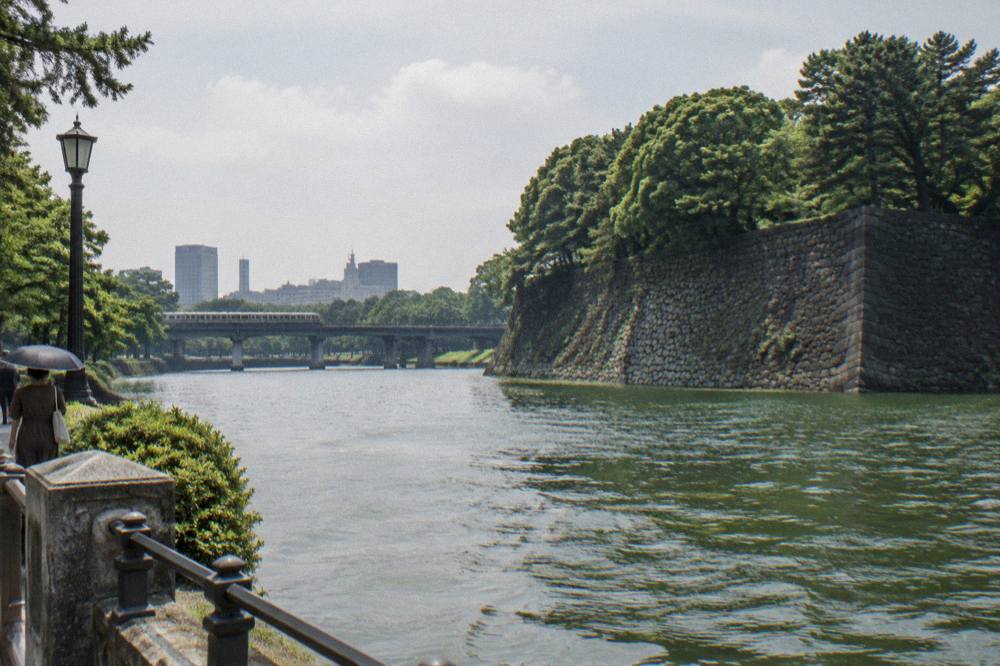
The clearest way to picture the site is as rings. The innermost ring, the palace buildings themselves, stays shut except for the guided tour route and a small number of set-piece days. Around it sits a wide belt of gardens, lawns, moats, walls and wooded parkland that belongs to the public and costs nothing.
The Innermost ring does open on rare, scheduled occasions. The Imperial Palace New Year General Greeting is the best known: the last confirmed edition was held on 2 January 2026, with entry from 9:30 to 14:10 via the Main Gate, and the Imperial Household Agency publishes the notice for each edition on its own pages. That event is free and unticketed, but the 2027 notice had not been posted at the time of this article, so anyone planning around it should check the Agency's official visitor site rather than assume a repeat.
For everyday visits, the free rings are more than enough for a morning. The East Gardens alone cover the old castle's inner defences, lawns and the foundation of the keep, and the Outer Garden gives the classic view of the stone bridges over the moat. Add Kitanomaru Park on the north side, which is free and open around the clock apart from restrictions on state occasions, and you have a full circuit of the palace without ever buying a ticket or entering a closed door.
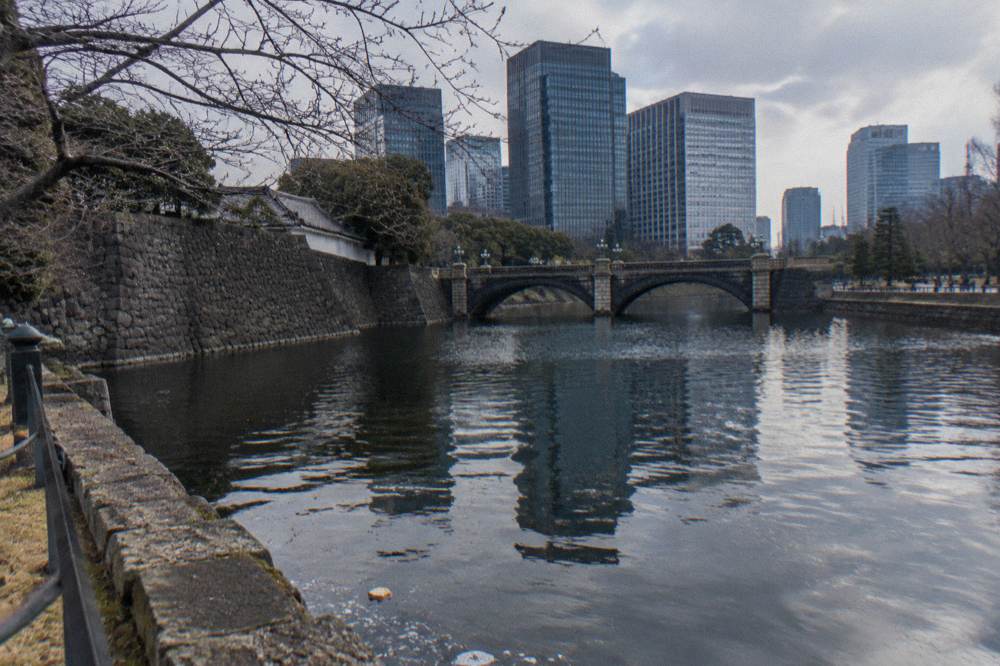
This is also one of the districts where a free, pay what you want walk does the orientation work for you. The palace cluster is one of the categories this site covers, with walks on GuruWalk meeting at Kokyogaien, at Sakuradamon Gate and at Tokyo Station.
What Does The Free Part Include?
The free part covers four things: the Imperial Palace East Gardens, the Outer Garden plaza at Kokyogaien with its gravel expanse and pine trees, Kitanomaru Park to the north, and the free guided tour run by the Imperial Household Agency. All four cost nothing to enter, though only the tour requires an advance application, and the East Gardens turn you away on their closed days and after entry closes 30 minutes before the gates shut.
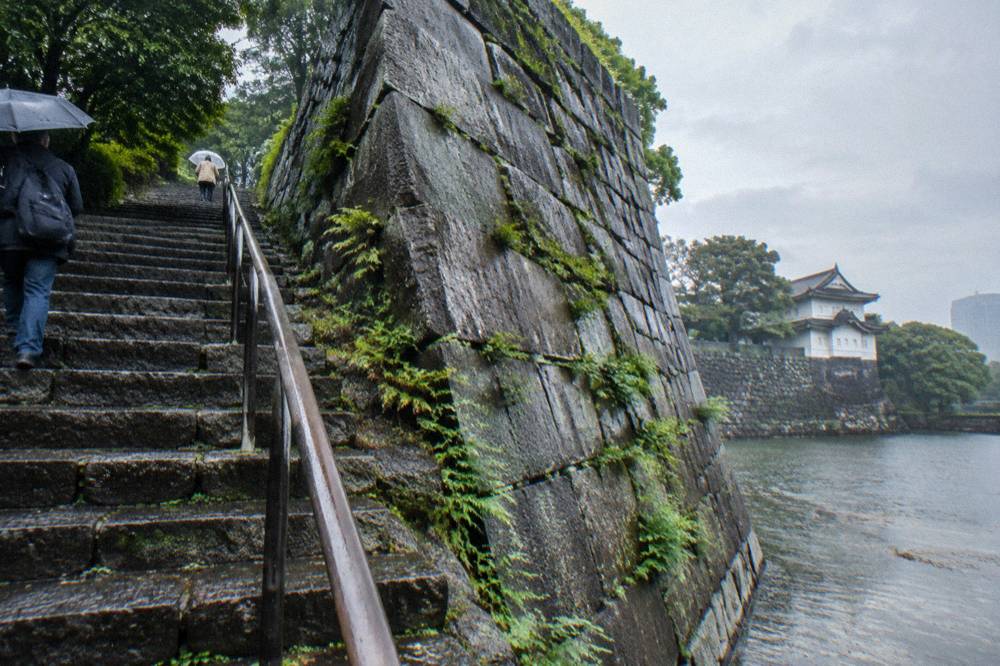
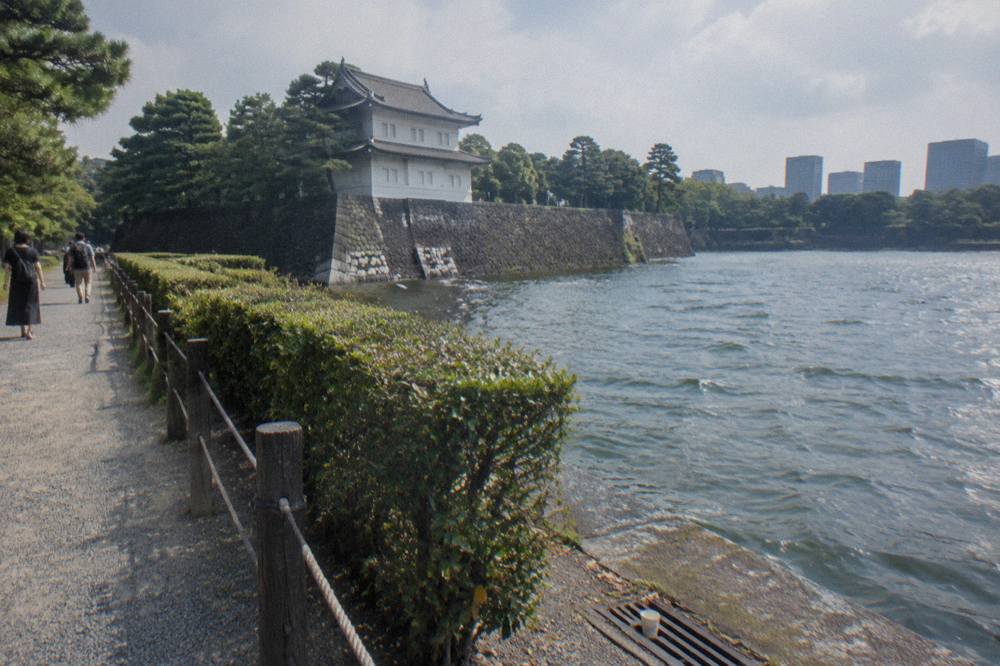
The East Gardens are the substantial piece. They sit on the ground of the former Edo castle inner circles, and the gardens mix kept lawns, moat walls, guardhouses and the stone base of the old keep, which you can climb for a view over the tree canopy. Entry is through assigned gates, there is no ticket and no fee, and the whole space is managed by the Imperial Household Agency, which sets the hours and the closure calendar. In winter the gardens run 9:00 to 16:00 with the last entry at 15:30.
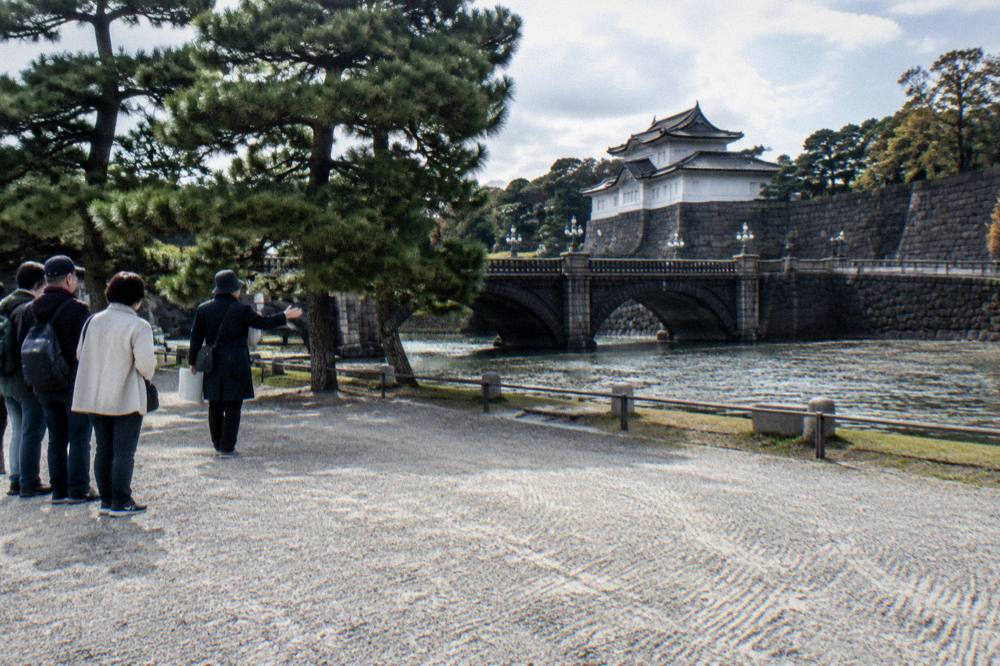
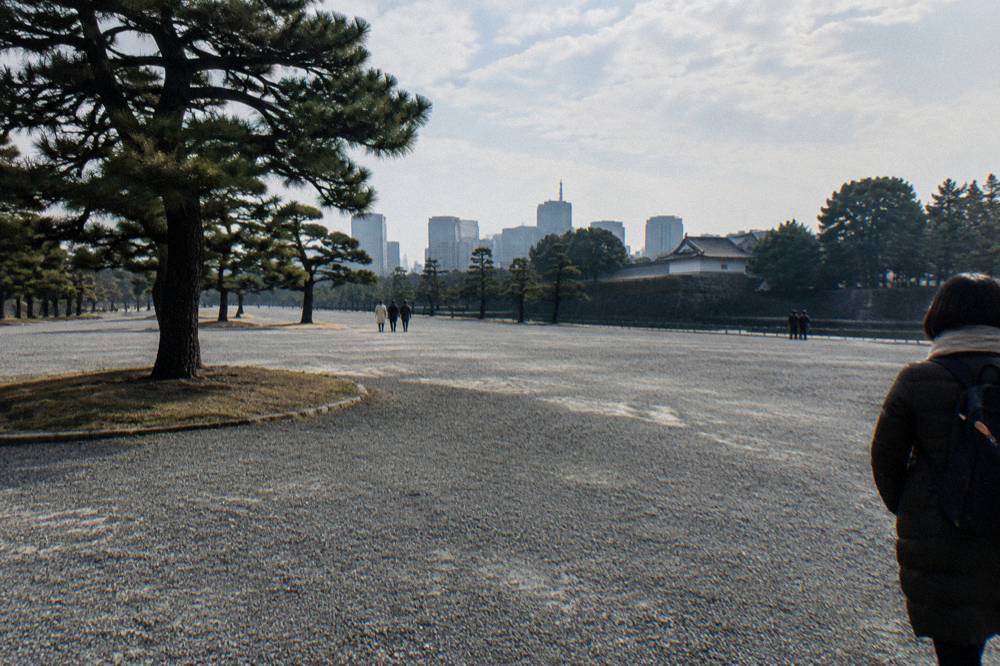
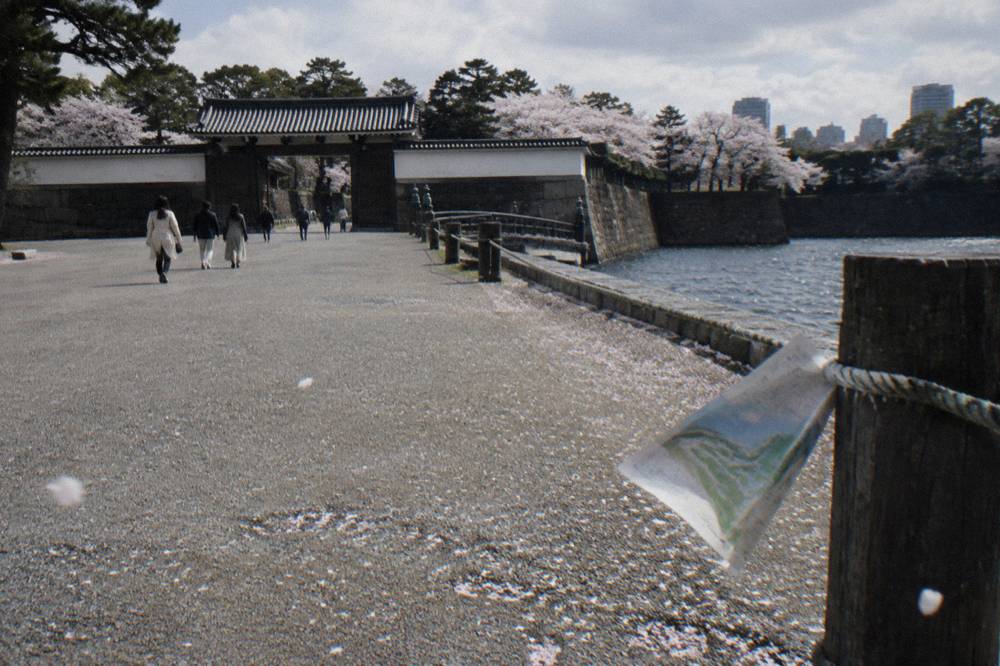
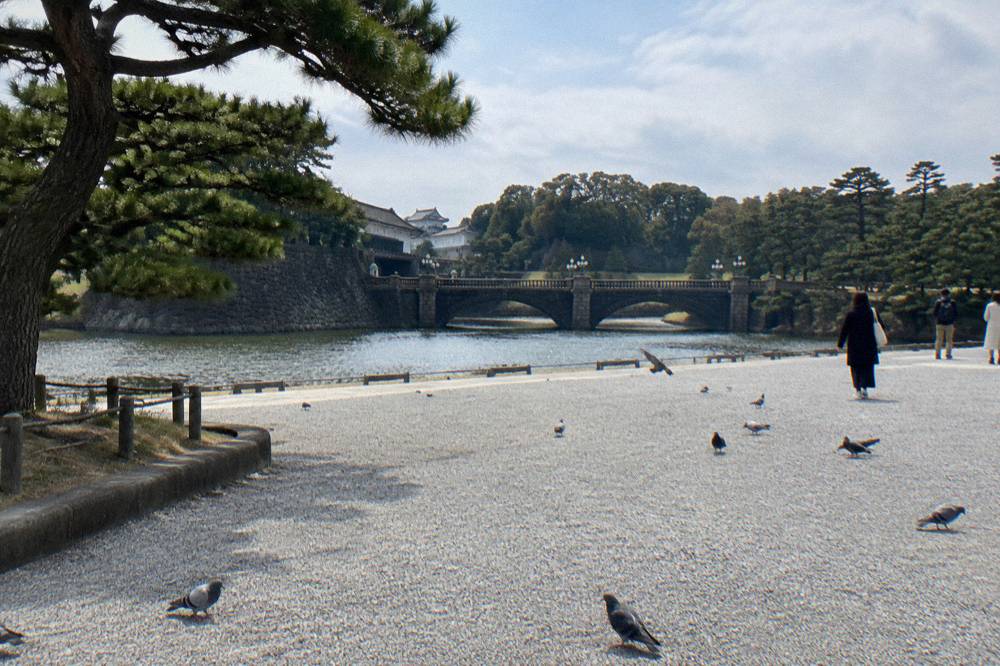
The Outer Garden, Kokyogaien, is different in kind: not a garden with gates and hours but a wide open plaza facing the palace moat. There is no gate, no fee and no closing time to plan around; it functions as open civic space. The plaza is also the meeting point the palace walks on GuruWalk use, which makes it a practical start as well as a photogenic one.
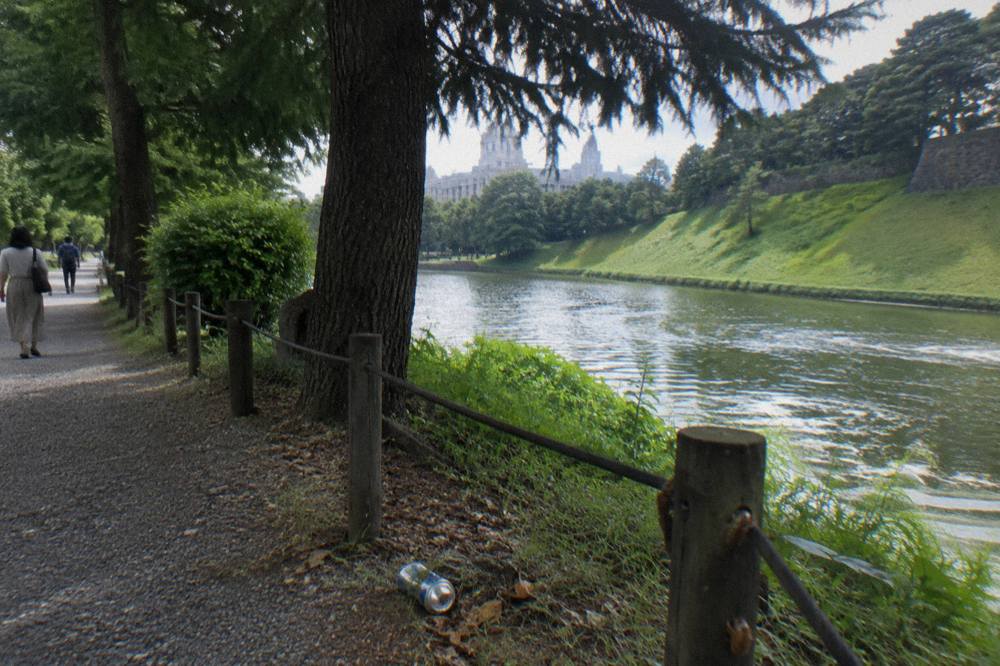
Kitanomaru Park continues the green belt north of the gardens. It is free and open at all hours, with the caveat that the grounds can be restricted when state functions are held. Rounding out the free list is the guided tour itself: a free walking tour of part of the palace precinct, which the Agency runs for visitors who apply ahead. The application, not the fee, is the barrier, and it is worth doing if you want the one experience that carries you past a boundary casual visitors cannot cross.
| Free element | What it is | Condition |
|---|---|---|
| East Gardens | Landscaped grounds of the former Edo castle inner circles | Closed Mondays and Fridays; winter hours 9:00 to 16:00, entry to 15:30 |
| Outer Garden, Kokyogaien | Open plaza with the stone bridge view | Open public space, no gate or fee |
| Kitanomaru Park | Wooded park north of the gardens | Free, open 24 hours, restricted on state occasions |
| Guided palace tour | Agency-led walk through part of the precinct | Free, advance application required |
Because this district is so walkable, several free tours build a visit around it. The Free Things To Do In Tokyo site exists exactly for these overlaps: the palace ground is free, and the walks that interpret it are free, pay what you want as well. The Palace Storytelling Walk on GuruWalk, rated 4.85 out of 5 across 901 GuruWalk reviews, runs two hours in English and meets at the Imperial Palace, Kokyogaien, the plaza described above.
What Do You Still Have To Pay For?
Everything inside the palace compound stays free, so the only costs come from nearby paid attractions: Shinjuku Gyoen charges JPY 500 for adults, the metropolitan gardens of Hama-rikyu, Koishikawa Korakuen and Rikugien cost JPY 300 each, and the observation decks at Tokyo Tower and Tokyo Skytree carry their own ticket prices.
It sits in the broader palace-and-park mental map visitors build, and it is often assumed free because it is a park. It is not. Shinjuku Gyoen is a ticketed national garden charging JPY 500 per adult, with reduced rates of JPY 250 for students and visitors over 65, and free entry for children 15 and under. It is closed Mondays except during the special autumn period of 1 to 15 November, when it opens daily. If your plan says "free garden day in Tokyo," the palace East Gardens are the free one; Shinjuku Gyoen is the paid one.
The metropolitan gardens are the other paid cluster. Hama-rikyu, Koishikawa Korakuen and Rikugien each charge JPY 300, and all are managed by the Tokyo Metropolitan Park Association, the same body that runs the genuinely free parks: Ueno, Yoyogi, Hibiya and Inokashira. The pattern to hold onto is that in Tokyo, parks are generally free and landscape gardens generally charge. The palace follows the pattern: its park-like pieces are free, and there is no paid garden hidden inside it.
| Place | Free Or Ticketed | What Is Free | What You Still Pay For |
|---|---|---|---|
| Kitanomaru Park | Free | Entry free, open at all times, no closing days; public use is restricted on days of state functions. | Parking, the Science Museum and the Budokan events are paid separately. |
| Hibiya Park | Free | Entry free, open at all times; the service centre is staffed 8:30 to 17:30 except at New Year. | Some facilities and events are paid. |
Resellers are a real hazard here. A site called tokyoimperialpalace.com sells "tickets" to the East Gardens, which are free, and it should not be used or trusted. Booking a paid ticket for a free attraction is the single easiest way to waste money on this visit. The same caution applies to anything offering skip-the-line access to the guided tour: the tour is booked through the Imperial Household Agency's own process, at no charge.
Around the district, the paid items are the towers and decks. Tokyo Tower's Main Deck starts from JPY 1,500 per adult, and Tokyo Skytree's observation decks start from JPY 3,000, both with dynamic pricing. The free alternative with a palace connection is the Tokyo Metropolitan Government observatories, both free at 202 metres with no reservation, a short trip west in Shinjuku. The table below draws the line cleanly.
| Attraction | Free part | Paid part |
|---|---|---|
| Imperial Palace | East Gardens, Outer Garden, Kitanomaru Park, guided tour | None |
| Shinjuku Gyoen | Children 15 and under | JPY 500 adult, JPY 250 student and over 65 |
| Metropolitan gardens | Garden free days not announced | JPY 300 at Hama-rikyu, Koishikawa Korakuen, Rikugien |
| Tokyo Tower | Tower base and Foot Town walkable | Main Deck from JPY 1,500 adult |
| Tokyo Skytree | Solamachi complex walkable | Decks from JPY 3,000 adult |
| TMG observatories | Both decks, no reservation | None |
When Is The Free Option Available?
The free option is available whenever the grounds themselves are open. The East Gardens admit visitors Tuesday, Wednesday, Thursday, Saturday and Sunday from 9:00 to 16:00 in winter, with last entry at 15:30, while the Outer Garden plaza is public space with no hours and Kitanomaru Park stays open around the clock; the gardens close every Monday and Friday, from 28 December to 3 January, and on days of Imperial Court functions.
The Monday and Friday closure is the detail that breaks the most plans. Two closing days a week is unusual for a Tokyo attraction, and visitors who budget a Friday for the palace arrive to shut gates. The Imperial Household Agency's official pages carry the calendar, including the New Year closure from 28 December to 3 January and the extra closures when court functions are held, which are announced rather than fixed to a weekday.
Hours shift with the seasons. In winter the gardens run the short day, 9:00 to 16:00, and the gates stop admitting 30 minutes before closing, so a 15:40 arrival in January is a closed gate. Summer hours run longer, and the seasonal schedule is on the Agency's visitor pages. Planning by the winter numbers when travelling in another season, or the reverse, is a small but common error.
The guided tour has its own availability logic. It is free, but admission is by advance application made with the Imperial Household Agency, and the application must go in ahead of your visit; the Agency's guidance sets the window, and walk-ups are not accepted. Tour days and start times follow the published schedule, and functions at the palace can suspend them, so the application step and the calendar check belong together.
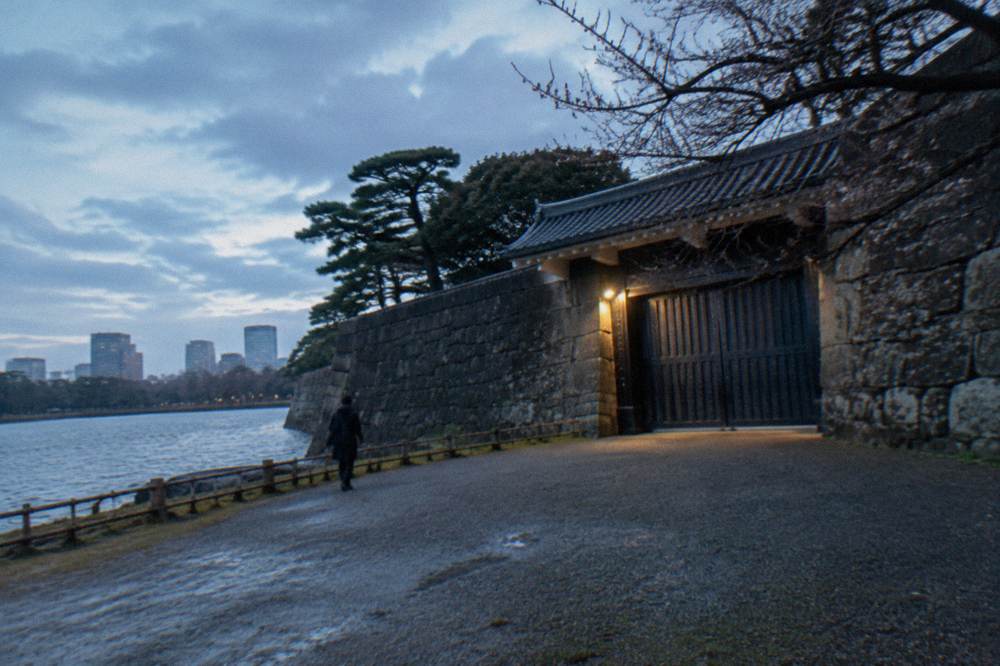
The New Year period deserves a line of its own. The gardens shut for the 28 December to 3 January window, while the New Year General Greeting, when it runs, opens the Main Gate for the public appearance: the 2 January 2026 edition ran entry from 9:30 to 14:10. The two events bracket the same week, one closing the gardens and one opening the palace, and each is published separately by the Agency.
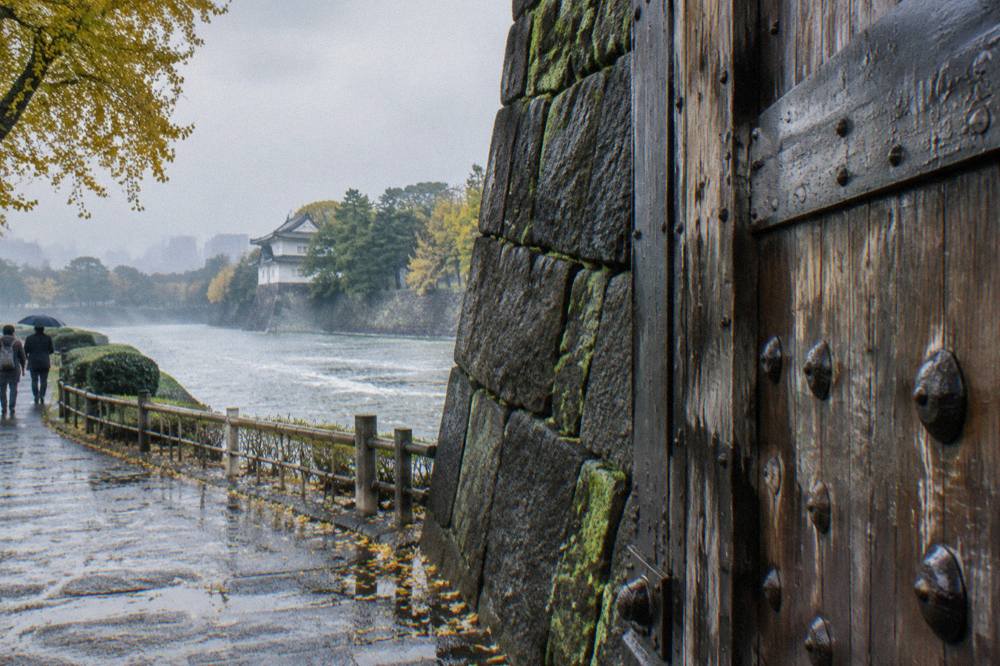
Where Does The Free Visit Start?
The free visit starts at one of the East Gardens' designated gates, most practically from Tokyo Station on the Marunouchi side, or at the Outer Garden plaza at Kokyogaien, which needs no gate at all. The free walks that cover the district meet at named points around the compound: the Imperial Palace at Kokyogaien, Sakuradamon Gate, and Tokyo Station's Marunouchi South Exit. Meeting points are stated exactly on each walk's own page.
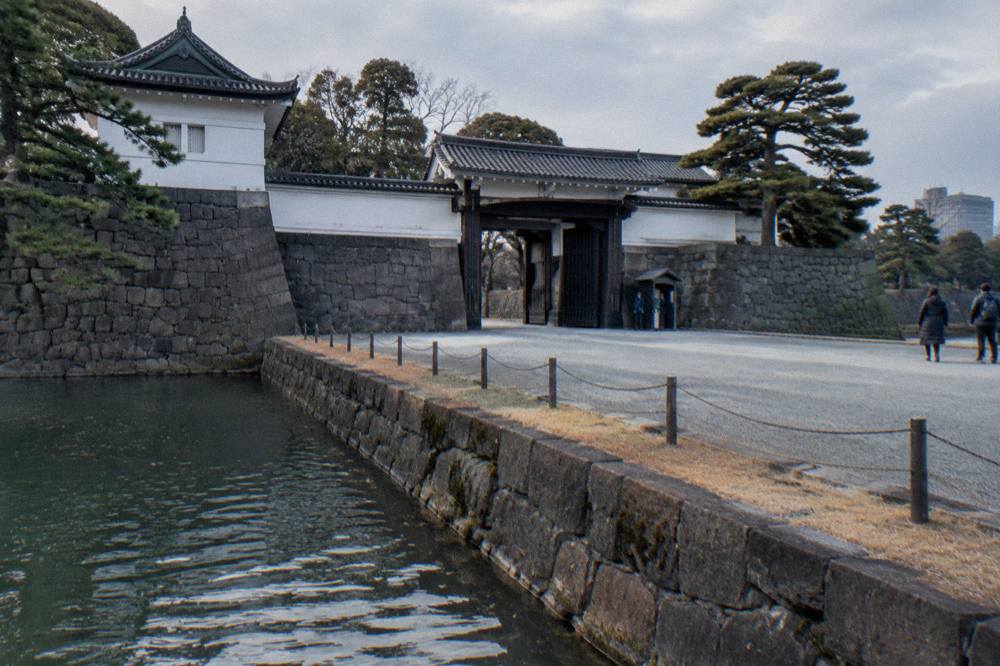
The geography rewards a simple decision. Coming from Tokyo Station, the Marunouchi side puts you at the eastern edge of the compound, and the East Gardens' gates sit on that side, reached through the business district. Coming from the south, Sakuradamon Gate is the classic entry associated with the bridge views, and the plaza spreads out from there. Kitanomaru Park connects on the north side of the gardens, so a circuit is possible: plaza, gardens, park, and back toward the station.
The guided tour has its own start arrangement, set out in the application process, and the New Year Greeting uses the Main Gate with its published entry window. Those are the exceptions to the "walk on from any side" freedom of the rest of the ground.
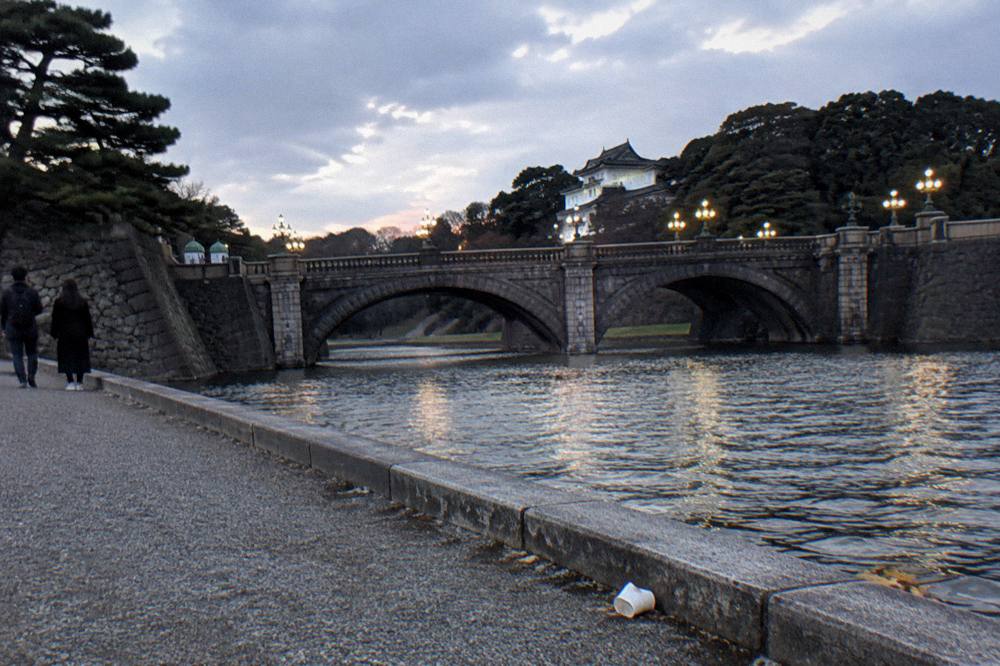
The free walks make the same points of the compass their meeting spots, and their meeting points are the practical anchor of a first visit. The table lists the palace-district walks and where each one starts, exactly as their listings state them.
| Walk | Platform | Meets at | Duration |
|---|---|---|---|
| Palace Storytelling Walk | GuruWalk | Imperial Palace, Kokyogaien | 2 hours |
| Palace Walk Ending At Tsukiji | GuruWalk | Sakuradamon Gate, Imperial Palace | 2 hours |
| Shogun History Walk, English | GuruWalk | Imperial Palace, Kokyogaien | 2 hours |
| Palace Intro, 1 Hour | GuruWalk | Tokyo Station, Marunouchi South Exit | 1 hour |
| 3-Hour Imperial Gardens, Spanish | GuruWalk | Kudankita, Chiyoda | 3 hours |
Two notes on language and scope. The 3-Hour Imperial Gardens walk runs in Spanish, not English, which its listing states plainly. And no walk's route is promised beyond its meeting point and neighbourhood: what each walk covers is on its own page on GuruWalk, and the meeting point is the fixed, published fact to plan around. The 18-plus night walk in Shinjuku, if you see it on the same platform, is adults only, though it belongs to a different district entirely.
| Place | Free Or Ticketed | What Is Free | What You Still Pay For |
|---|---|---|---|
| Imperial Palace East Gardens | Free | Admission is free. Open 9:00 to 16:00 from November to the end of February (entry to 15:30); 9:00 to 16:30 in October. | Nothing to pay. Season hours widen to 18:00 in summer. |
Which Free Walking Tours Cover This?
Several free, pay what you want walks run in the palace district on GuruWalk, including the Palace Storytelling Walk (4.85 out of 5 across 901 GuruWalk reviews), the Palace Walk Ending At Tsukiji (4.84 out of 5 across 587 reviews), the Shogun History Walk (4.65 out of 5 across 295 reviews), and the one-hour Palace Intro (15 reviews, too few for a score yet). All meet at published points and are reserved through GuruWalk.
“Keiko was extremely knowledgeable and very friendly. She explained the history very well and at the end of the tour made sure that we got to the correct metro station by taking us there. Thank you Keiko.”
Gregory Allen, GuruWalk review of Shogun History Walk, English
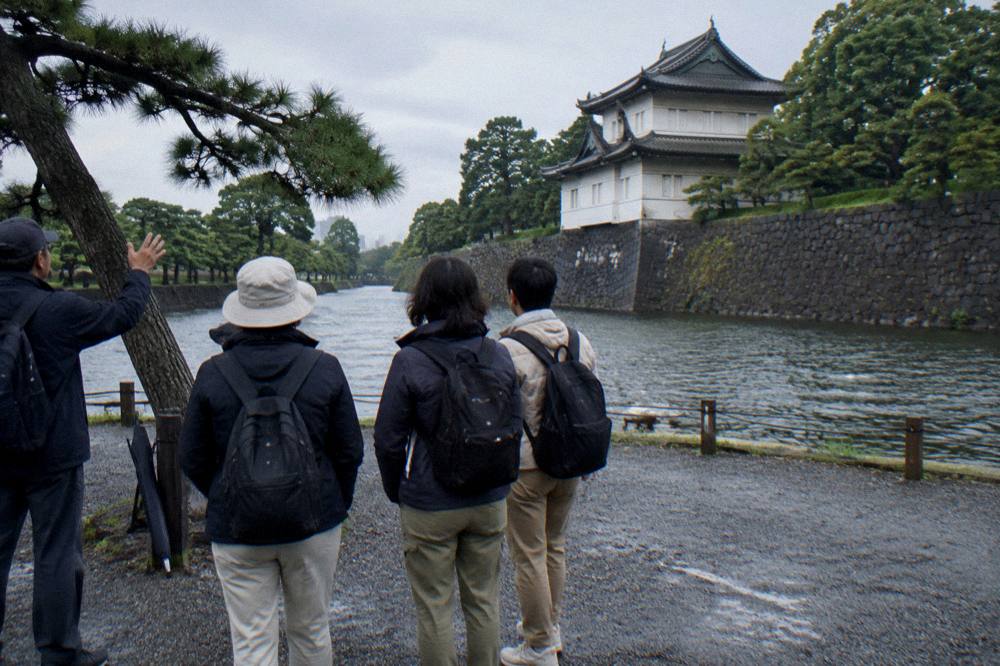
The walks differ in shape more than in quality. The Palace Storytelling Walk, from the guide group 5 STORY, is the district's flagship: two hours, English, meeting at the Imperial Palace, Kokyogaien. The Shogun History Walk by Local Guide Stars covers the same ground from the history angle, also two hours and in English. The Palace Intro, one hour from Tokyo Station's Marunouchi South Exit, is the compressed version for a tight schedule, with 15 GuruWalk reviews so far, too few for an overall score yet.
The bilingual option is the Palace Walk Ending At Tsukiji by Japan Navigators, two hours in English and Spanish, rated 4.84 out of 5 across 587 GuruWalk reviews, meeting at Sakuradamon Gate, Imperial Palace. As its name says, it finishes at Tsukiji, which pairs the palace morning with the market lanes, where the outer market streets are free to walk and food is bought separately. If a December visit is on your plan, note that the market's official site asks sightseers and group tours to stay away during the New Year shopping rush.
“George was really a great guide! He had lots of information and answered all of our questions. All the places we went to the food was great!”
Patrick P, GuruWalk review of Tsukiji Street Food, 1h 30m
For Spanish speakers, the 3-Hour Imperial Gardens walk by Ignacio, rated 4.92 out of 5 across 718 GuruWalk reviews, runs three hours in Spanish from Kudankita, Chiyoda. Every one of these walks is free, pay what you want, and reserved on GuruWalk's own page for each listing.
If the palace is your first stop on a longer free-walking itinerary, the city's other districts have their own equivalents, from Asakusa's temple walks to Shibuya's crossing circuits, and the total roster this site ships covers 46 of them across the city. The related question of what to pay at the end of a pay-what-you-want walk has its own answer, which the free walking tour tipping explainer covers in detail.
Mistakes That Trip People Up At The Imperial Palace
The common mistakes are assuming the whole palace is visitable, showing up on a Monday or Friday when the East Gardens are closed, buying a reseller ticket for a free attraction, confusing the free palace gardens with the paid Shinjuku Gyoen, and missing the 15:30 winter entry cutoff. Each mistake is avoidable with one fact: what is free, what is closed, and what the official application process is.
The reseller trap first, because it costs money. Sites like tokyoimperialpalace.com sell tickets to the East Gardens, which charge nothing at the gate. The same applies to paid "skip-the-line" offers for the guided tour: the tour is booked with the Imperial Household Agency, free, by application. Any third party selling access to either is selling something that is already free.
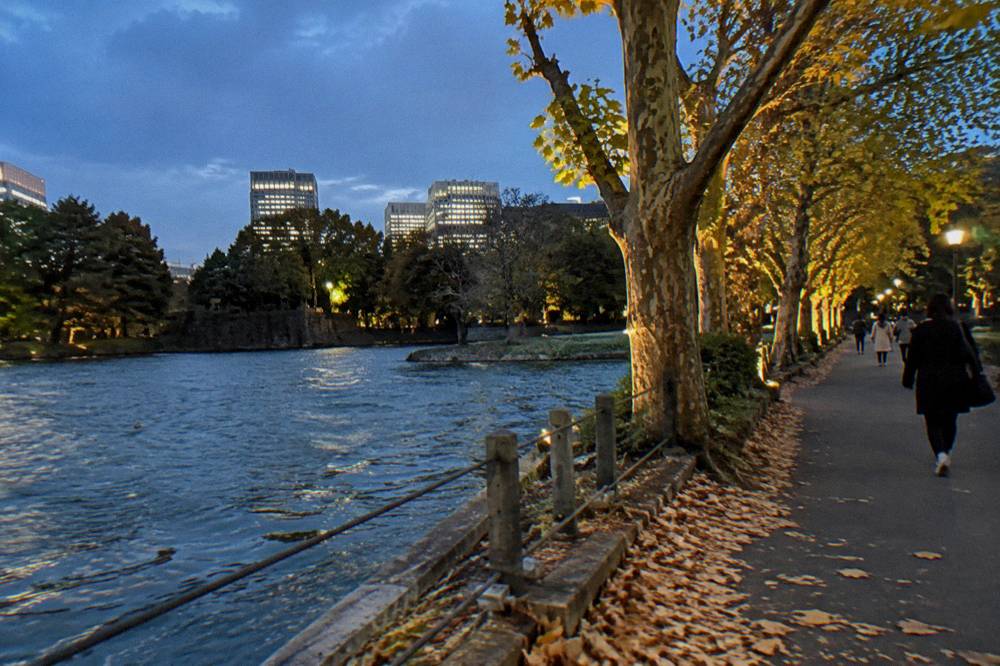
The calendar trap is next. Two closed weekdays, Monday and Friday, plus the 28 December to 3 January window, plus court-function days, means the garden is shut more often than a typical attraction. Check the closed days before you fix your itinerary, not after you reach the gate. And in winter, the 15:30 last entry sits half an hour before the 16:00 close, so the cutoff that matters is the earlier one.
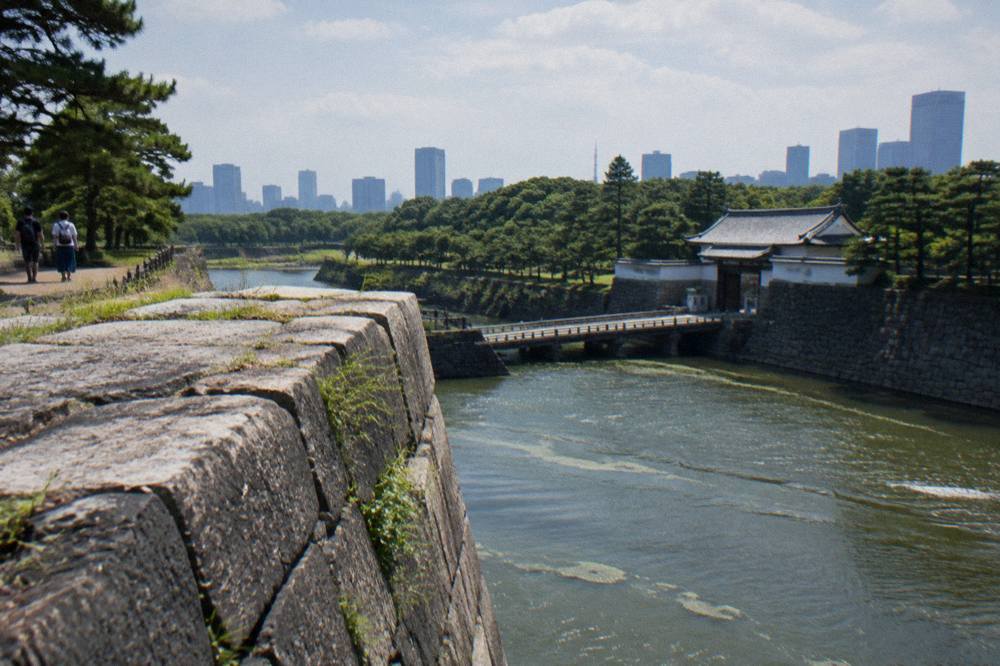
The garden-name trap mixes up free and paid. Shinjuku Gyoen, JPY 500, closed Mondays, is not a free park and not part of the palace. The metropolitan gardens at JPY 300 are separate again. The palace's own pieces, the East Gardens, the plaza and Kitanomaru, are the free ones, and no museum or tower nearby inherits that status: the rule everywhere in Tokyo is that a paid part never inherits a free part's price. For the full breakdown of which districts hold free attractions, the Tokyo on a budget guide lines them up.
The last mistake is expecting the residence itself. The palace buildings are not open for wandering, on any day. What is open is the garden ring, the plaza, the park, the tour route on application days, and the rare scheduled openings such as the New Year Greeting. Plan for those, and the visit delivers everything it promises and nothing it does not.
Common Questions On This Topic
Is The Imperial Palace Open To The Public?
Partly. The residence is closed, but the East Gardens, the Outer Garden plaza at Kokyogaien and Kitanomaru Park are free and open to the public, and a free guided tour of part of the precinct runs for visitors who apply in advance with the Imperial Household Agency.
Are The Imperial Palace Gardens Open?
The East Gardens are open Tuesday, Wednesday, Thursday, Saturday and Sunday, closed every Monday and Friday, with winter hours of 9:00 to 16:00 and last entry at 15:30. They also close from 28 December to 3 January and on days of Imperial Court functions.
Can You Actually See The Imperial Palace In Tokyo?
Yes, from the outside. The Outer Garden plaza at Kokyogaien gives the classic view of the stone bridges over the moat, framed by black pines, and it is free open space. The buildings themselves can only be seen on the guided tour route or at scheduled public appearances such as the New Year Greeting.
Do You Need Tickets For The Imperial Palace East Gardens?
No. The East Gardens are free and there is no ticket. Any site selling tickets to them, such as tokyoimperialpalace.com, is selling access to something that is free at the gate. Only the guided palace tour requires anything in advance, and that is a free application, not a purchase.
How Do You Book The Free Imperial Palace Tour?
The guided tour is run by the Imperial Household Agency and admission is by advance application made before your visit; walk-ins are not accepted. The application process, tour days and start times are published on the Agency's official visitor pages, and the tour itself is free.
Is The Imperial Palace New Year Greeting Free?
Yes. The New Year General Greeting is free public access through the Main Gate; the last confirmed edition was 2 January 2026 with entry from 9:30 to 14:10. The notice for each edition is published by the Imperial Household Agency, so check their pages before planning around it.